
The Marquesas Islands: Volcanic Cathedrals at the Edge of the World
Exploring the Ancient Culture and hidden Valleys of French Polynesia
After twenty-two days with nothing on the horizon but the uninterrupted curve of the Pacific, Louie finally called the two words we had been waiting to hear: “Land ho!” It was still dark when his voice carried below deck. One of our friends and I climbed out of our bunks and joined him above, searching the black horizon for some discernible shape. At first, there was almost nothing to see, only a deeper darkness against the night sky, an interruption in the otherwise empty seam where the sea met the beginning of dawn.Slowly, the island of Ua Huka emerged from the half-light: shadowed cliffs and an unfamiliar coastline rising from the sea. After three weeks in the open ocean, the thought of land felt almost difficult to grasp. It had been so long since we had seen a tree, a road, a mountainside, or anything rooted to the earth that even the faint outline of the island carried a strange gravity. We had crossed an ocean, and there, materializing in the first light of our twenty-second day, was the proof that we had completed our 3,000 nautical mile journey.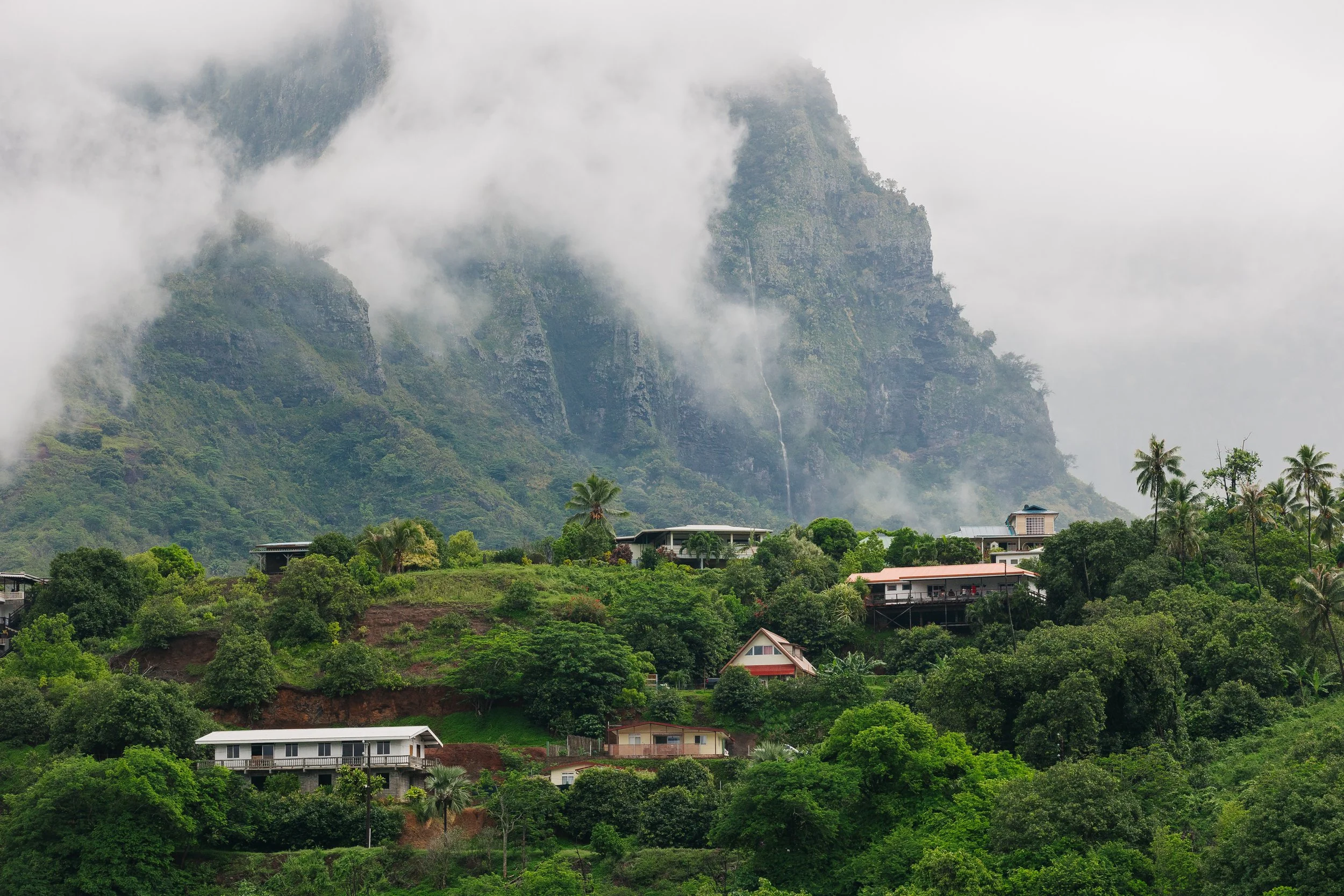
Hiva Oa
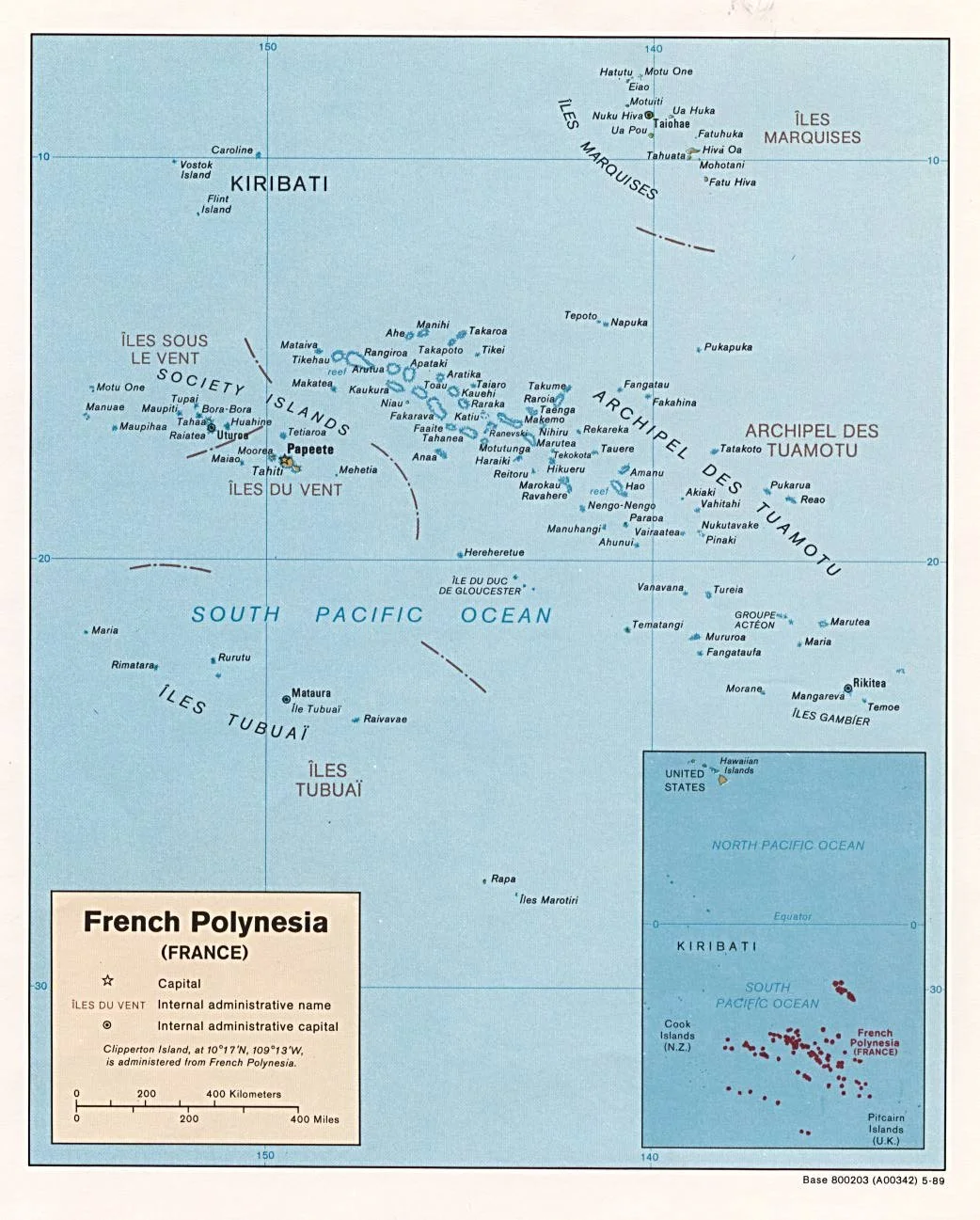
The Marquesas were our introduction to French Polynesia, but our first taste of them looked nothing like what we had imagined. There were no placid turquoise lagoons or pale coral reefs encircling palm-lined islands, no calm or truly protected places to anchor and relax in with the boat. Instead, volcanic mountains rose almost directly from the deep Pacific. Red mountainsides plunged into wavy open water, and valleys folded into the interiors of immense basalt fortresses. Known in the northern islands as Te Henua ʻEnana, the "Land of Men", the Marquesas lie roughly 870 miles northeast of Tahiti and thousands of miles from the nearest continental shore. They are among the most remote inhabited islands on Earth, and their isolation has shaped nearly everything about them: their plants, their fish, their birds, their languages, and the communities that developed within their steep and often inaccessible valleys.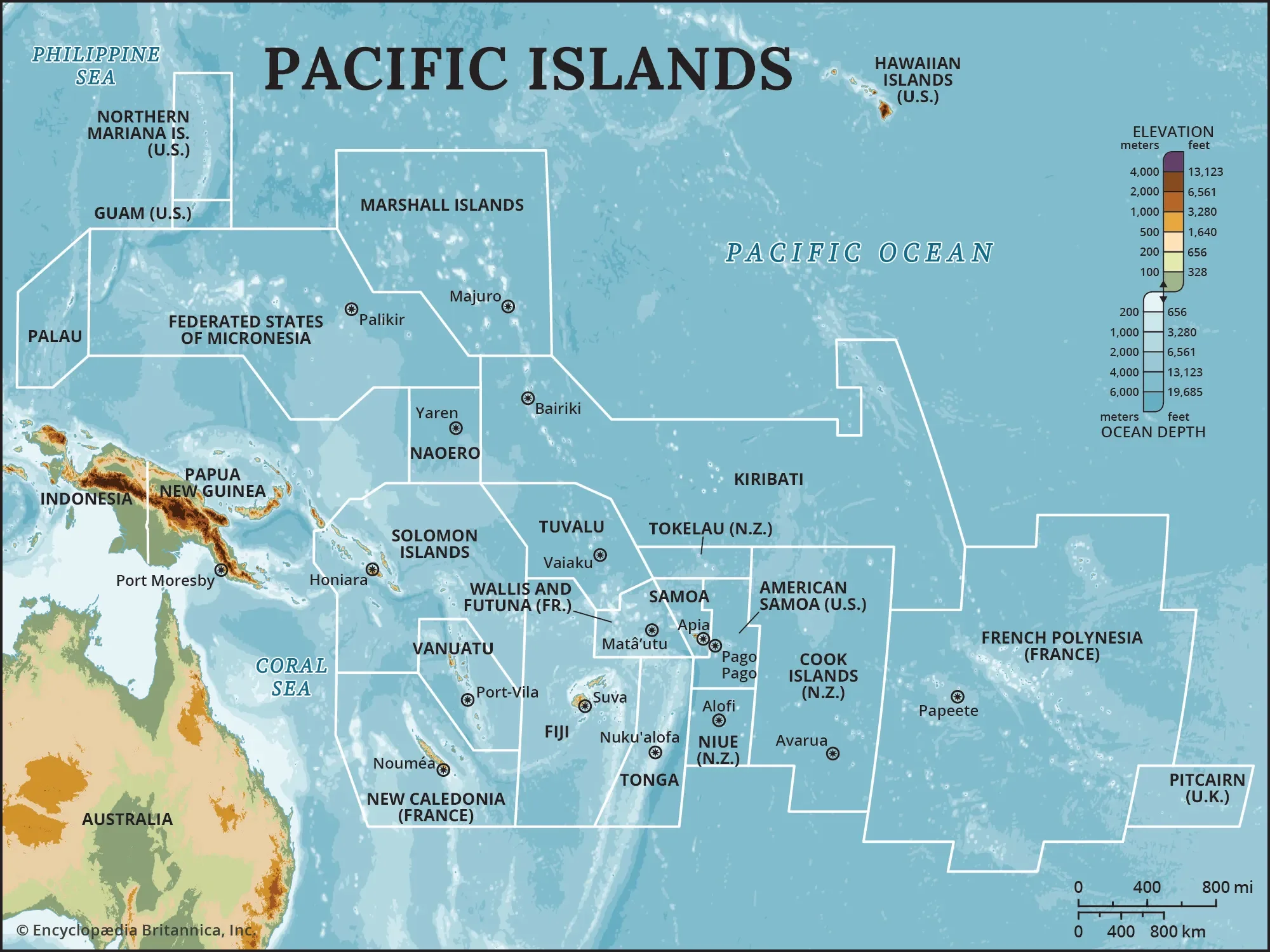
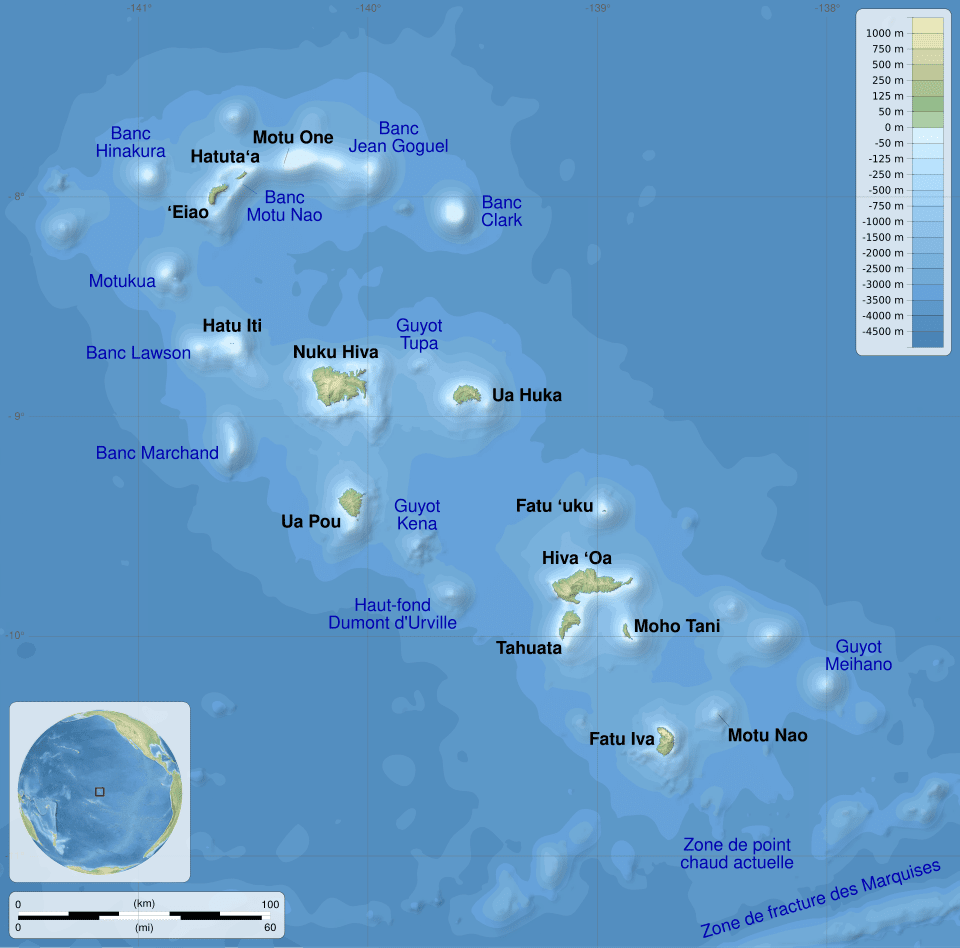
More than half of the native vascular plants found within the UNESCO-listed region are endemic, having evolved nowhere else. More than 40 percent of the coastal fish species within the Marquesan marine ecoregion are also endemic, an extraordinary concentration of life unique to this distant corner of the Pacific. The islands support one of the richest seabird assemblages in the tropical South Pacific, including nesting grounds for more than twenty species.Even the human history of the islands developed through isolation. Rugged mountains divided one valley from another, and neighboring communities sometimes functioned almost like separate kingdoms, each with its own chiefs, alliances, ceremonial centers, and variations of language. The Marquesas felt less like the tropical paradise of postcards and more like one of the Pacific’s last great frontiers: ancient, vertical, elemental, and still profoundly shaped by the open sea.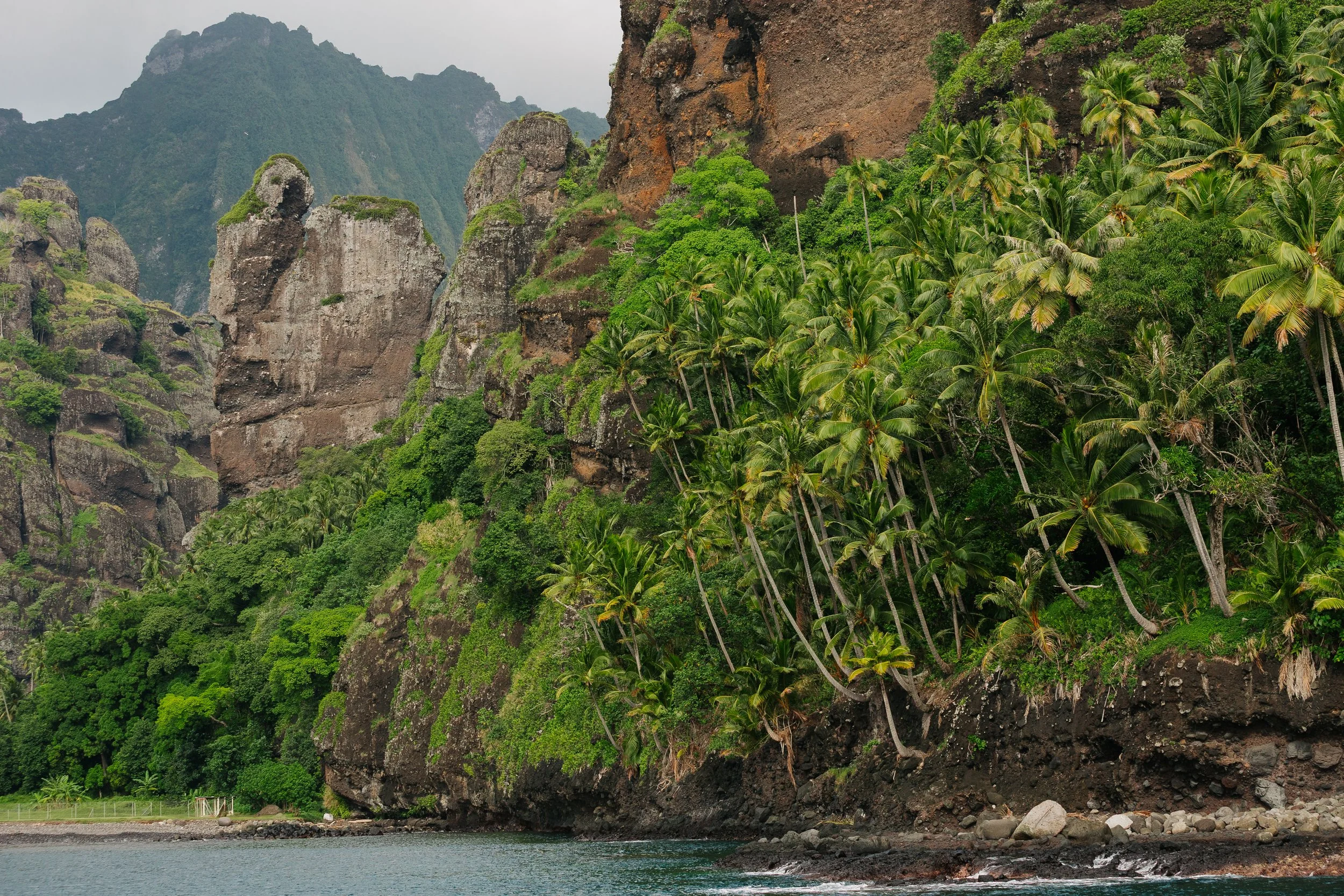
Fatu Hiva
Ua Huka: Landfall
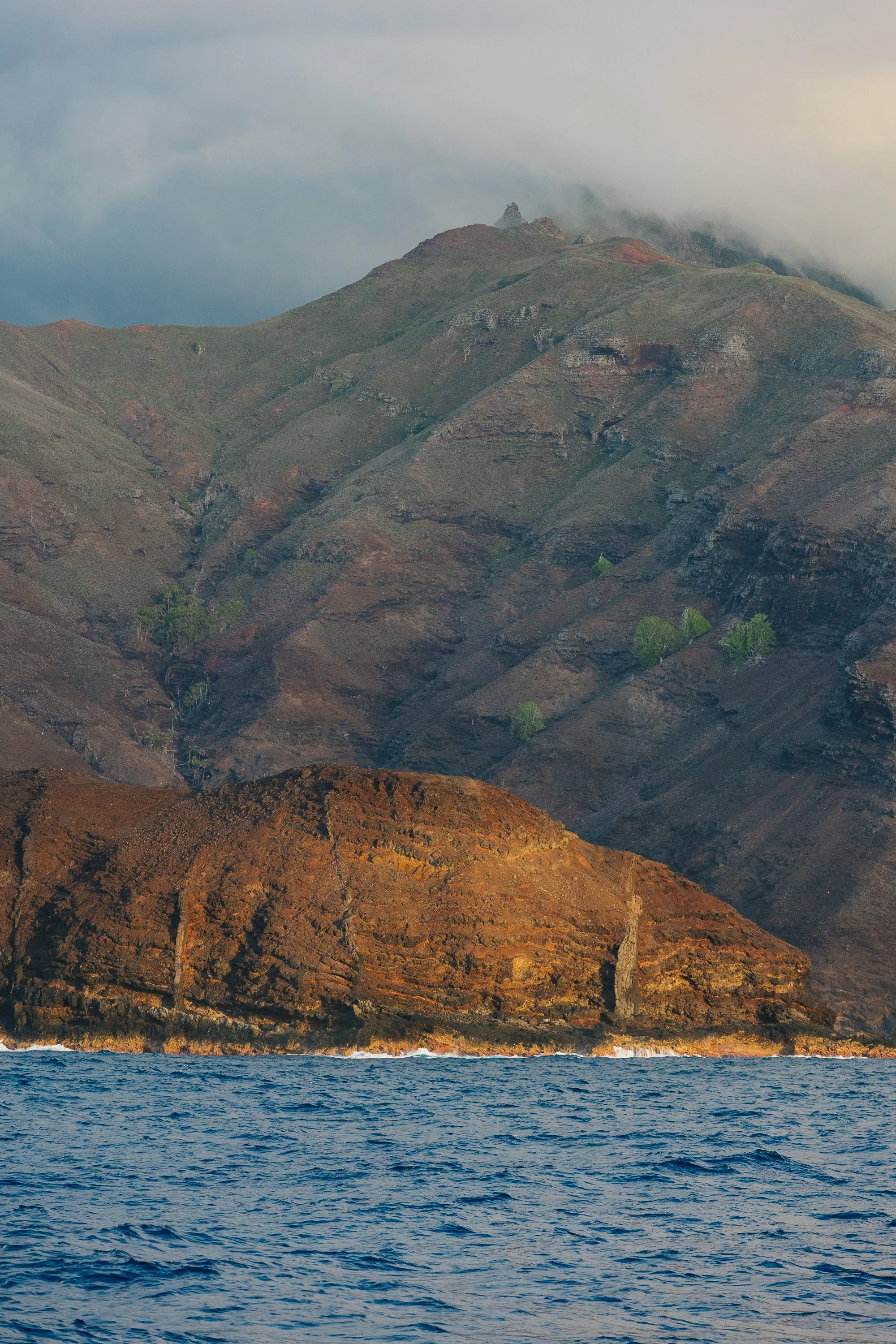
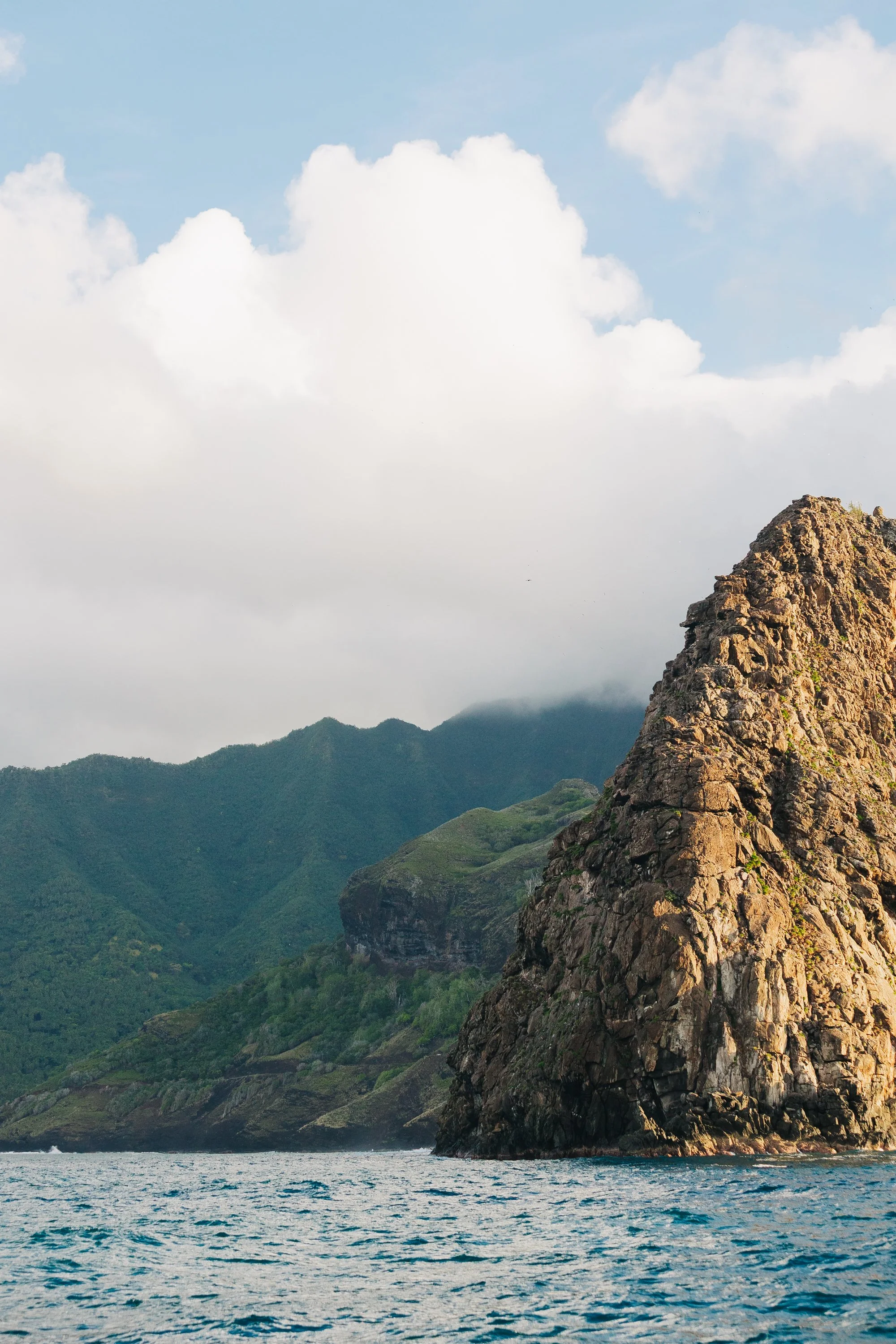
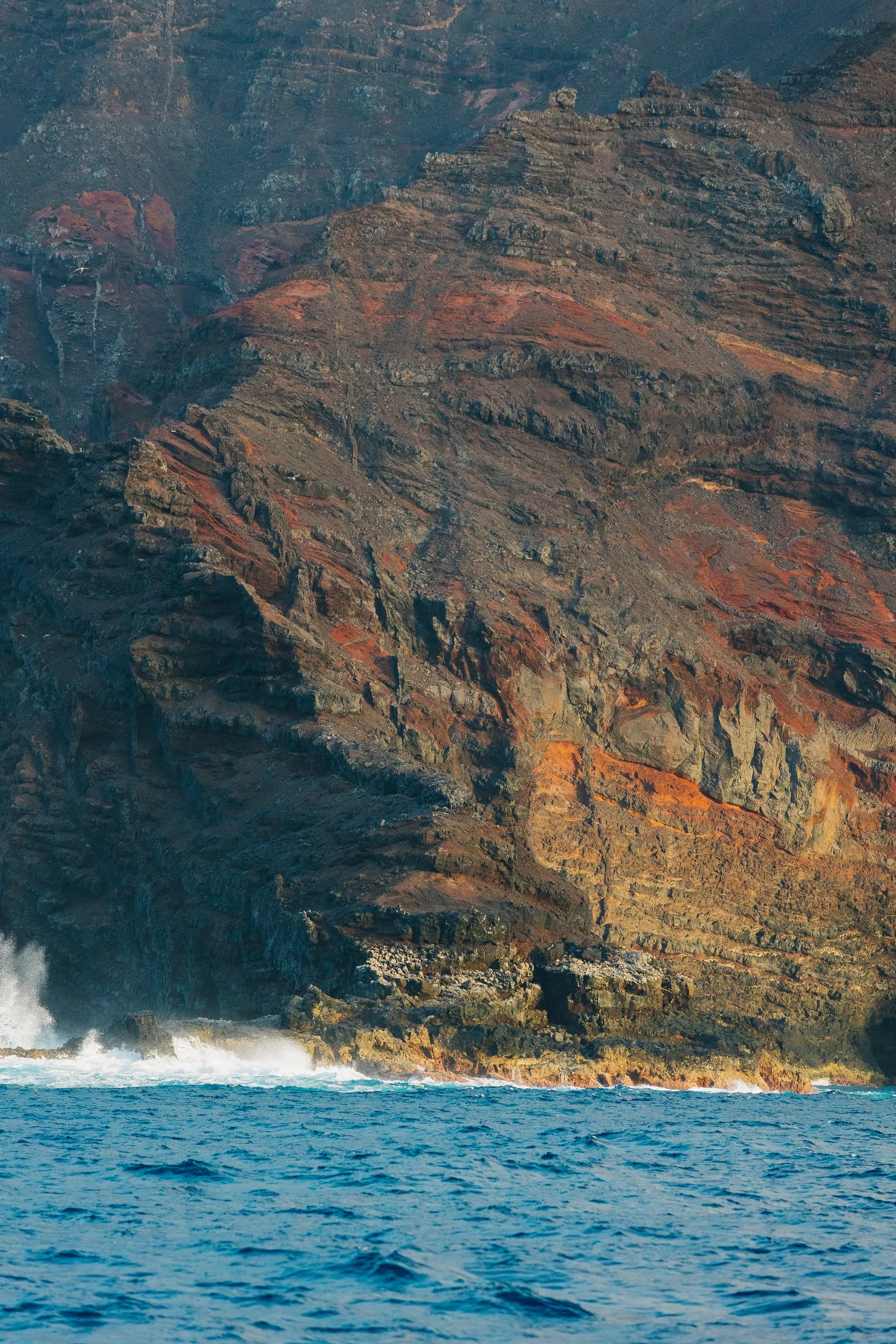
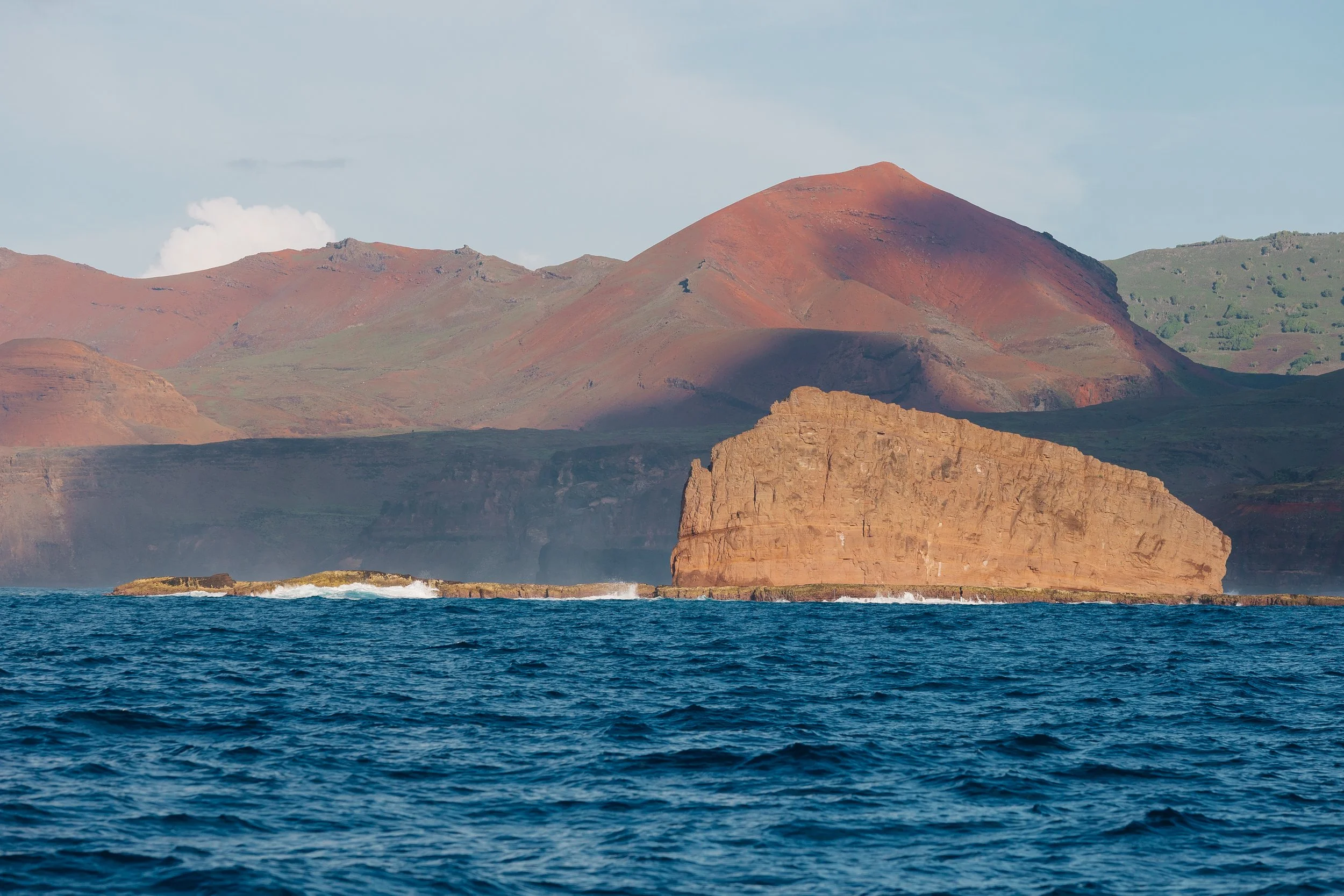
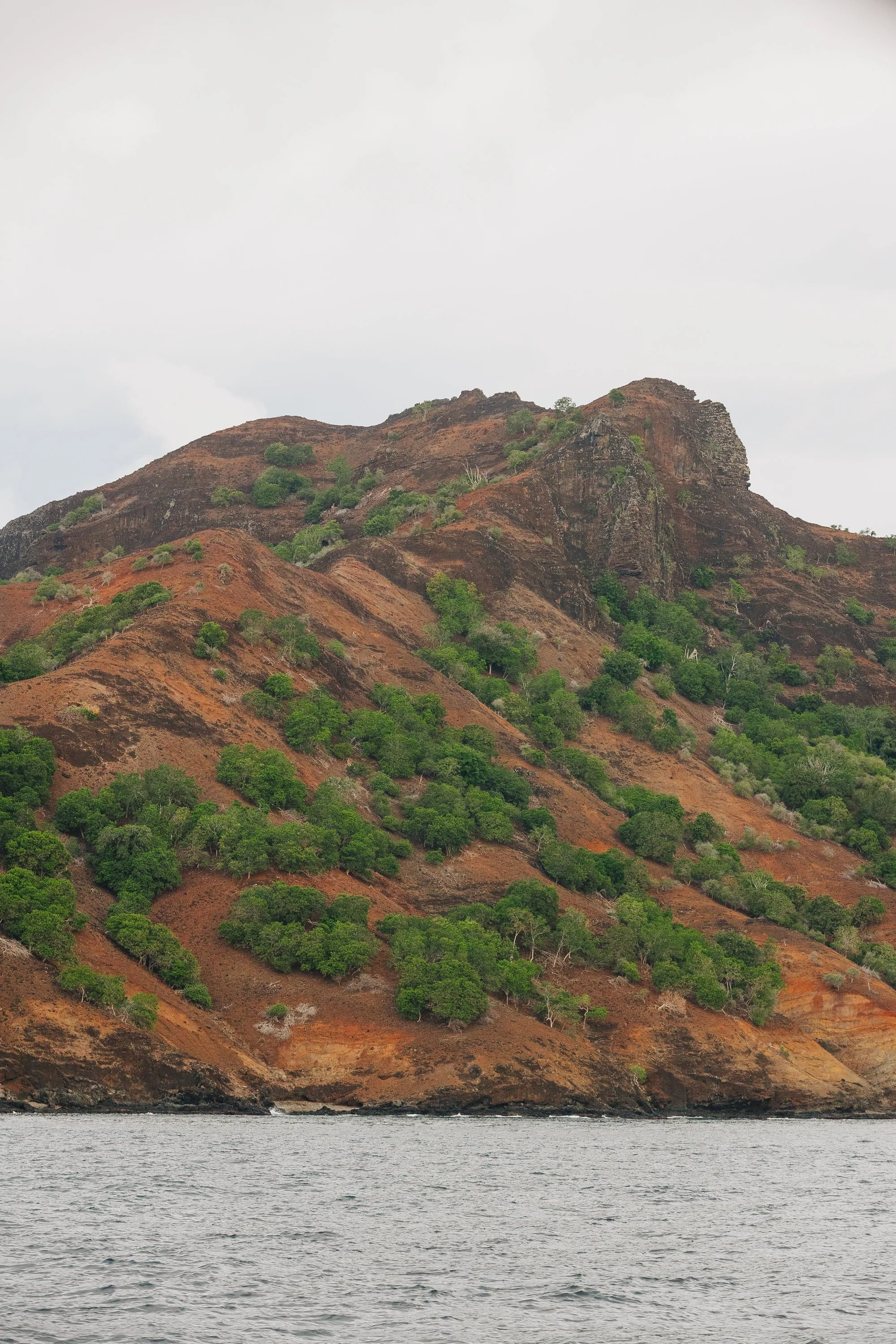
Ua Huka has a population of only around 700 people, and from the water, it appeared sparsely inhabited. It was also far drier than we had expected. As we drew closer, the island reminded us less of the lush South Pacific we had envisioned and more a mix between vegetated areas and dry spots, evidence of rain shadows affecting various valleys. Sweeping hills of rust-colored volcanic earth rolled toward the sea, interrupted by black cliffs and occasional pockets of green. Ua Huka possessed the volcanic drama of Hawaiʻi and the sunburnt austerity of the Sea of Cortez, yet it belonged fully to neither. Its dry hills, exposed ridgelines, and raw coastline made it one of the most distinctive landscapes we would encounter anywhere in French Polynesia.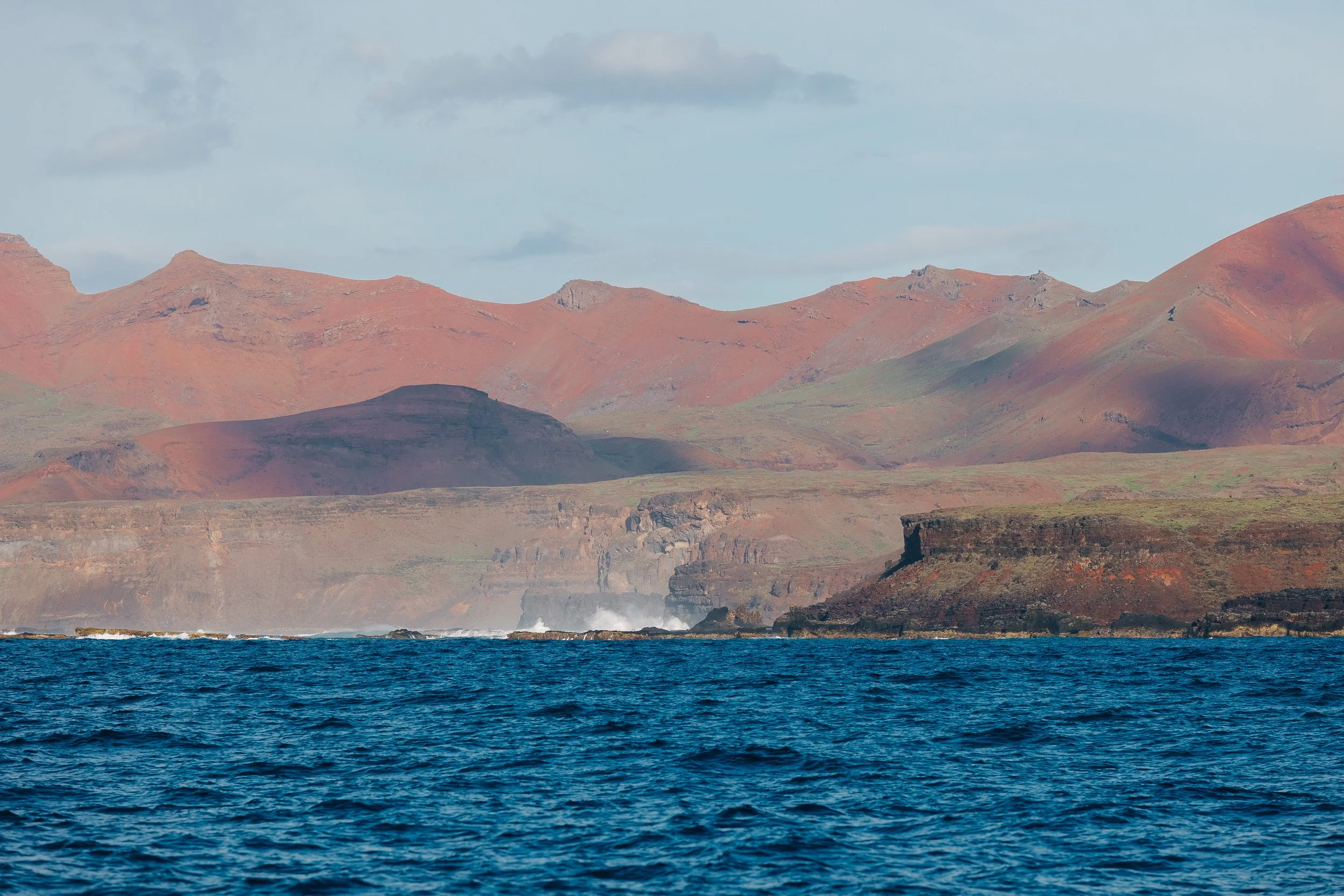
Ua Huka
Ua Huka
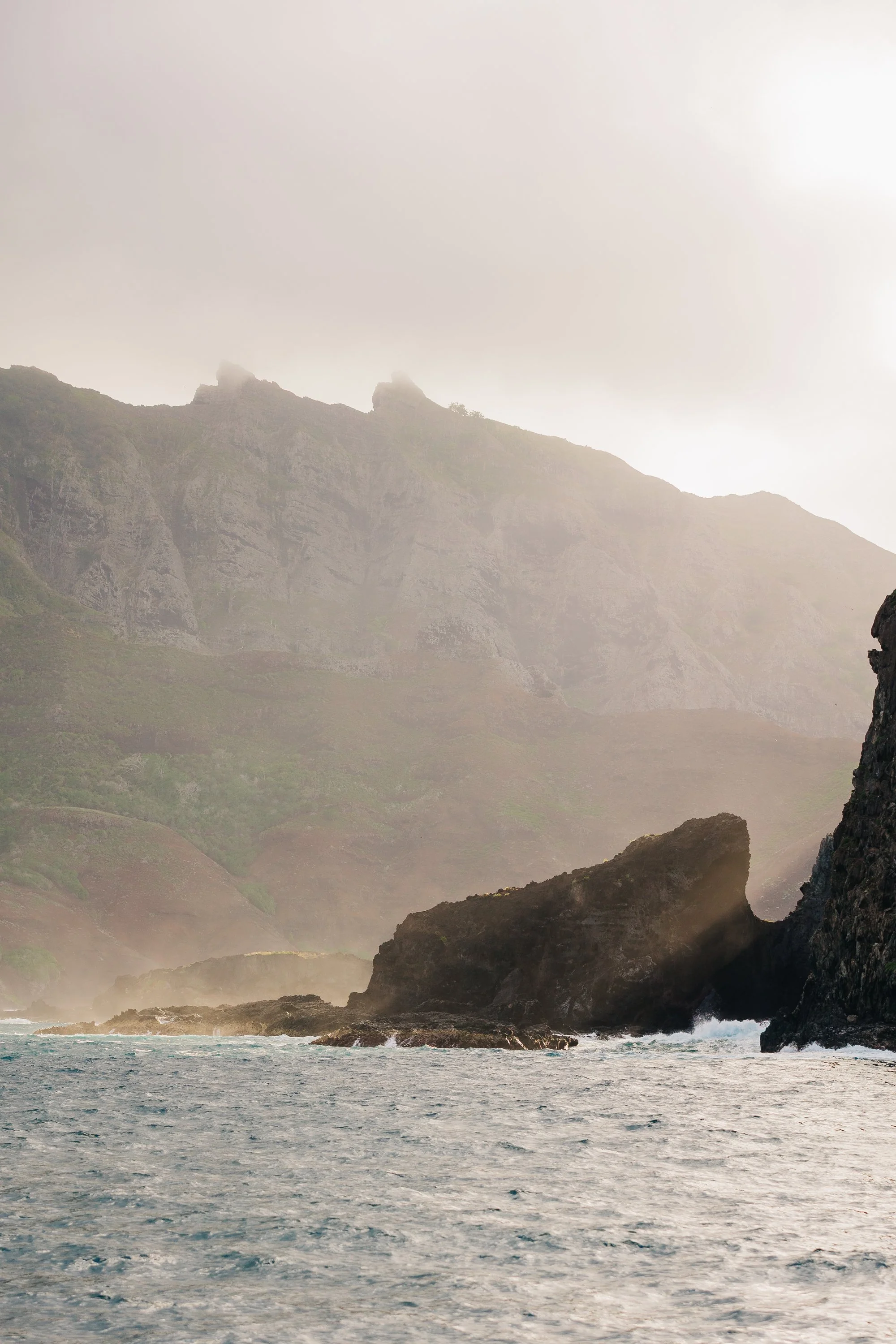
Ua Huka
Ua Huka
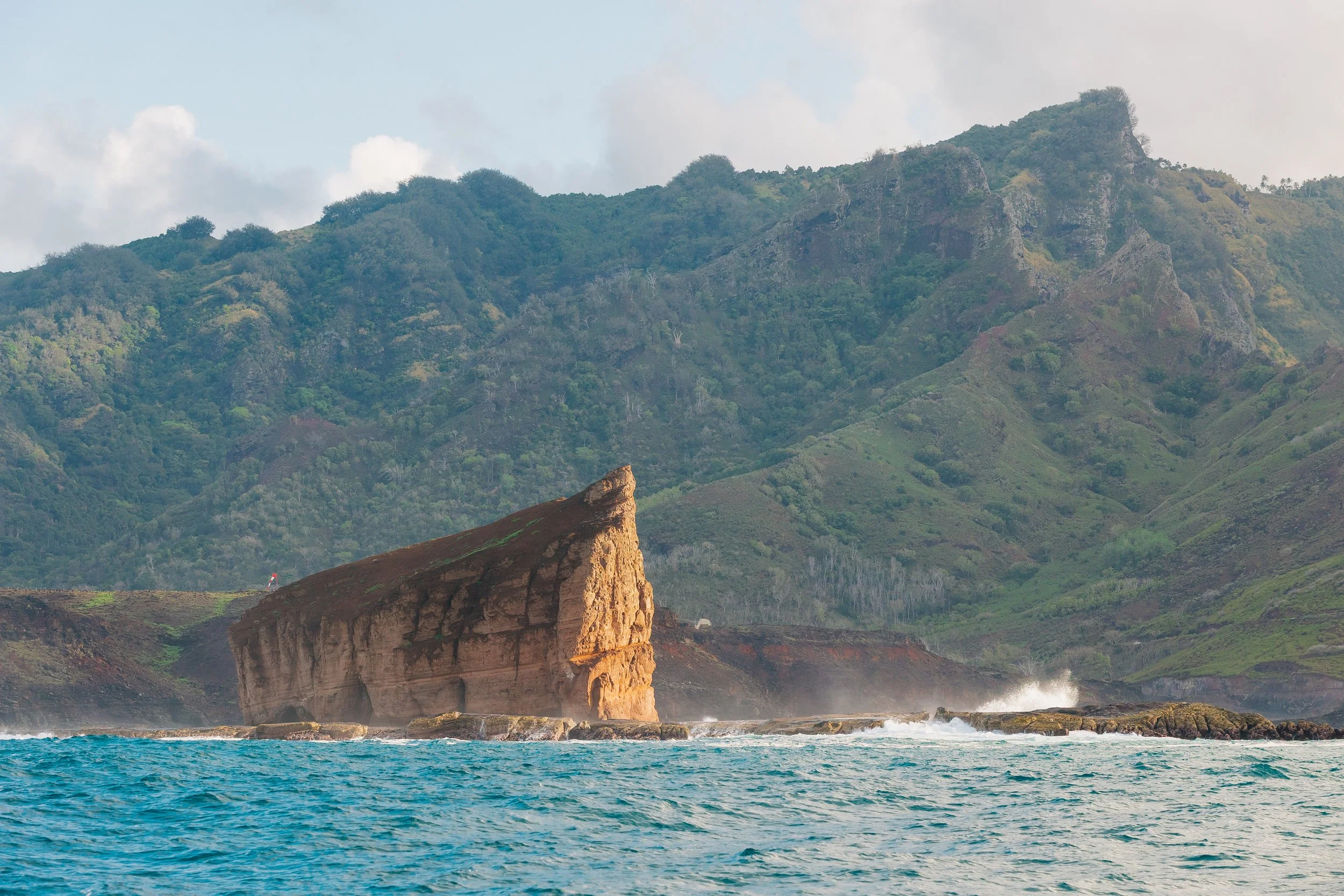
Ua Huka
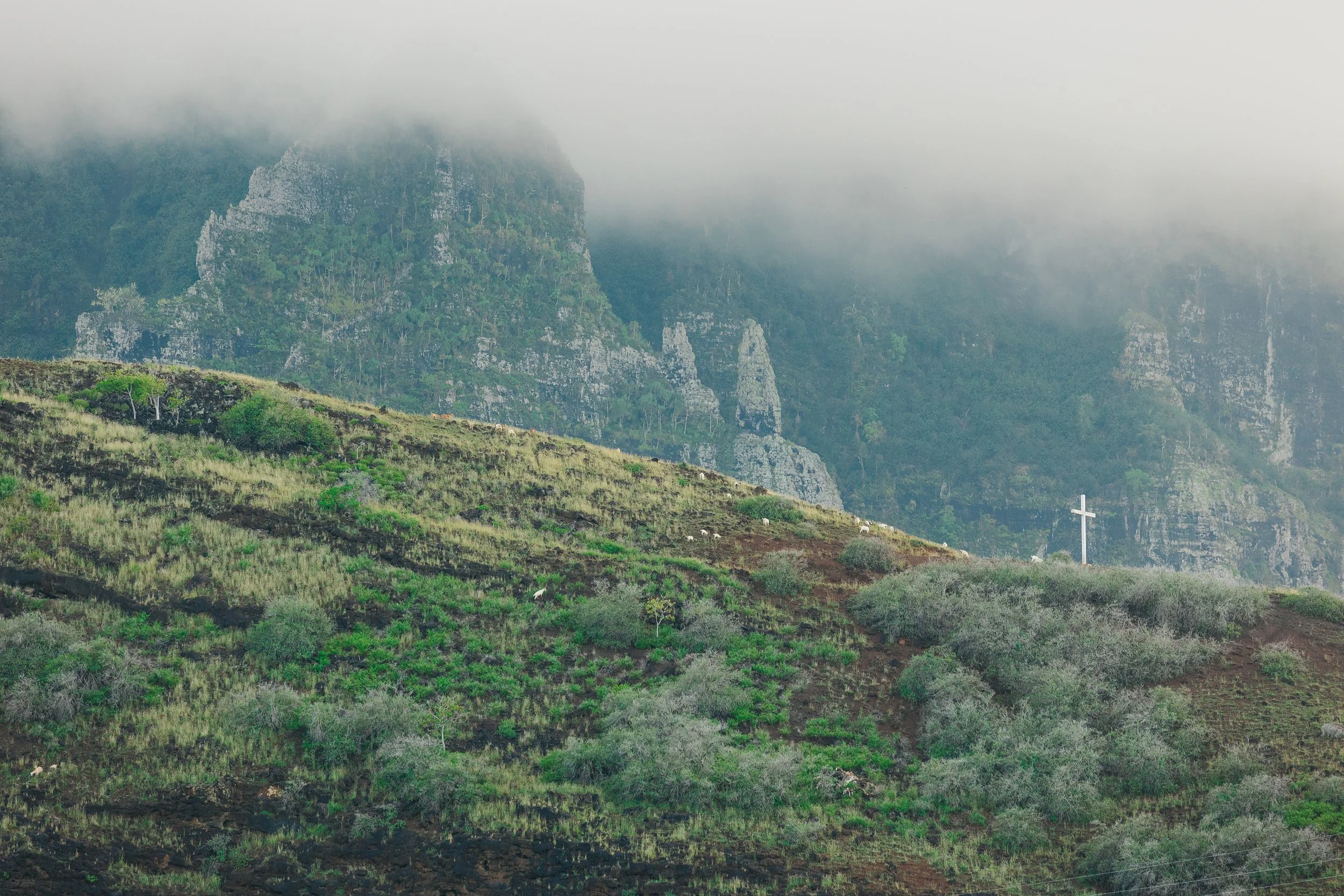
We continued west along the island, easing Arcturus into one bay after another to investigate possible anchorages. Hane, Baie de Vaipaee, and Anse Hatuana each offered tantalizing glimpses of life ashore, but the ocean swell rolled steadily into them. After twenty-two days at sea, we were desperate to drop anchor, yet none of the coves offered enough protection for us to feel comfortable staying. From the deck, we watched small villages appear between the folds of the hills. Roads traced improbable lines across the mountainsides above jungle-covered cliffs. Goats grazed across the open slopes, and occasional crosses stood alone on distant ridgelines, silhouetted against the morning sky.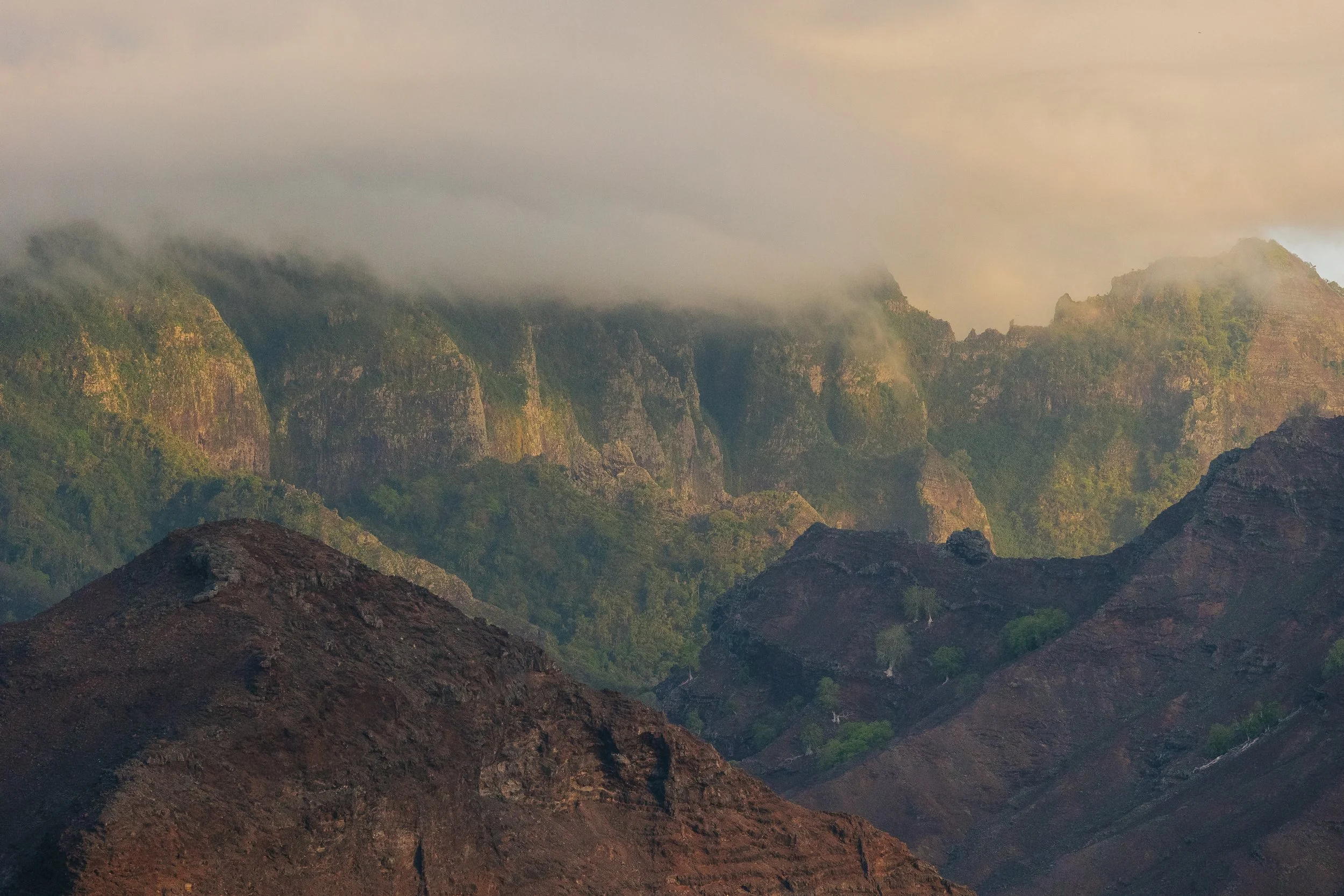
Ua Huka
Ua Huka
Ua Huka
Ua Huka
As we approached the western side of Ua Huka, we began to feel the heat of the daytime sun as we gazed at a sandy beach beneath a fringe of palms, looking almost painfully inviting. We could imagine stepping ashore, lying beneath the trees, and feeling something beneath our feet that did not rise and fall with every passing swell. But the anchorage remained exposed, and the seabed appeared too rocky to trust.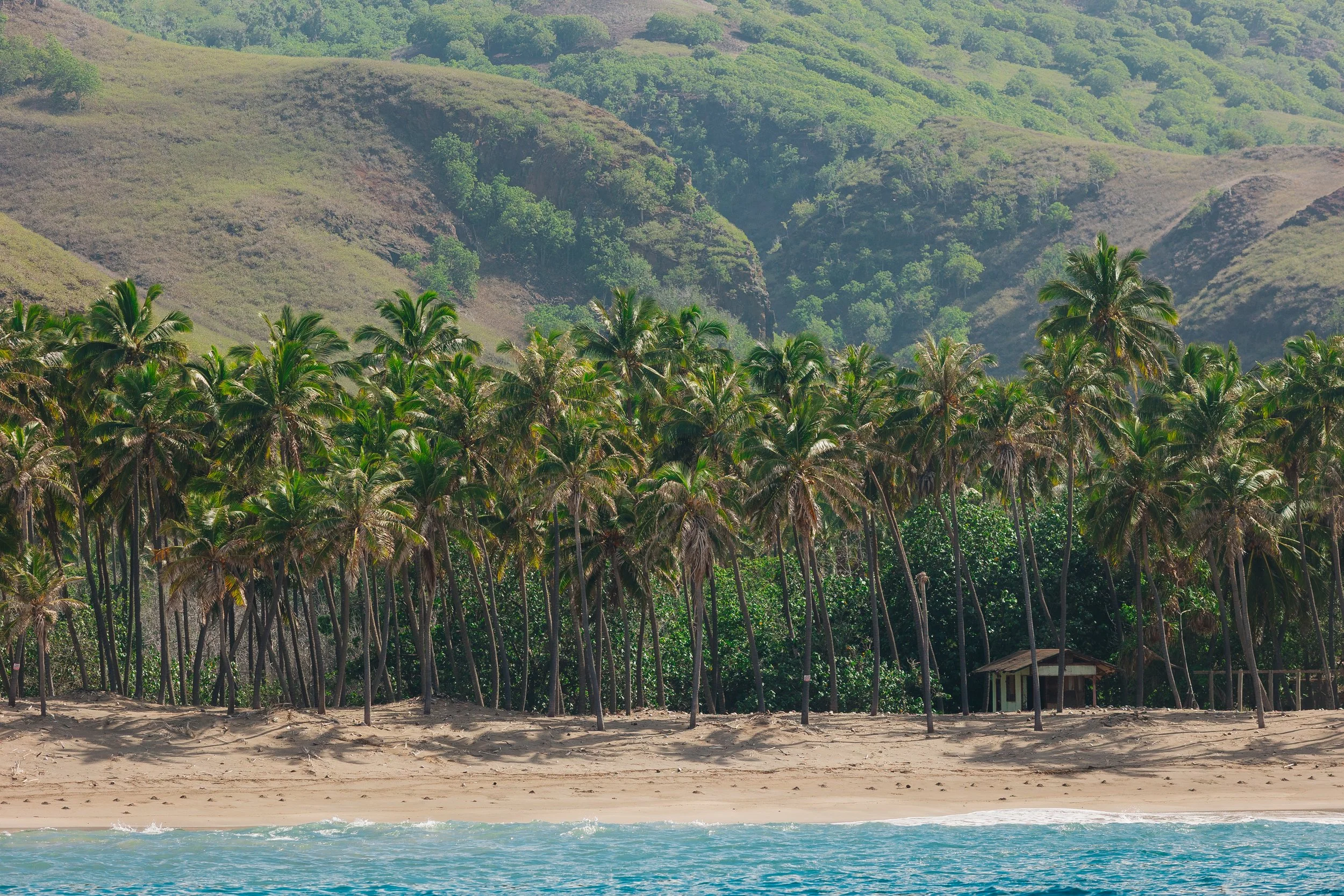
Ua Huka
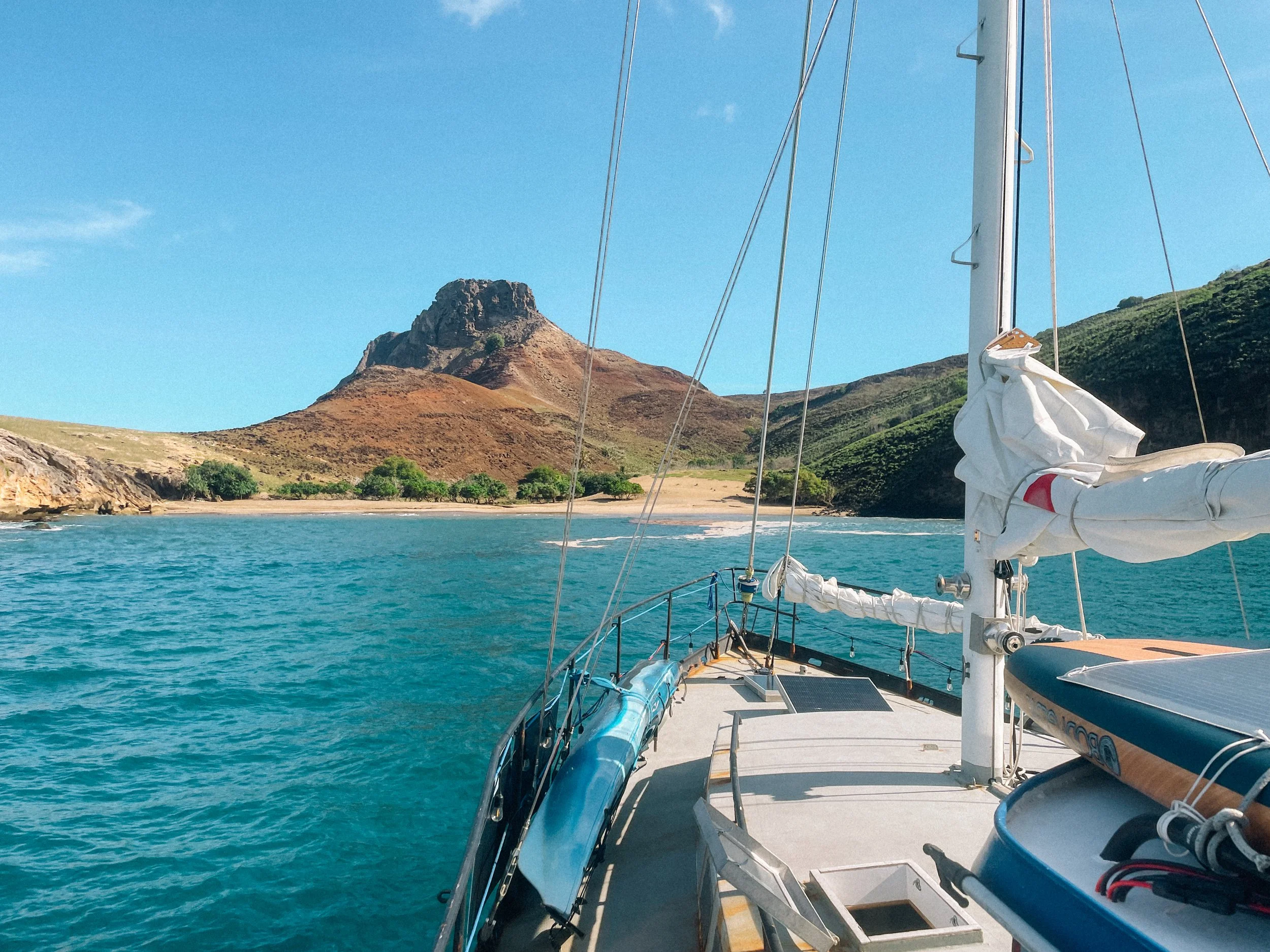
Ua Huka
Reluctantly, we continued onward. We had not yet touched shore, but sailing slowly into Ua Huka’s bays and watching the island reveal itself in the dawn remains one of the most vivid memories of our crossing. There are moments at sea that stay suspended outside ordinary time, and seeing land after so long was one of them. We had not simply reached another island, but returned to the world of mountains, trees, roads, animals, and people. With Ua Huka fading behind us, we altered course for Ua Pou.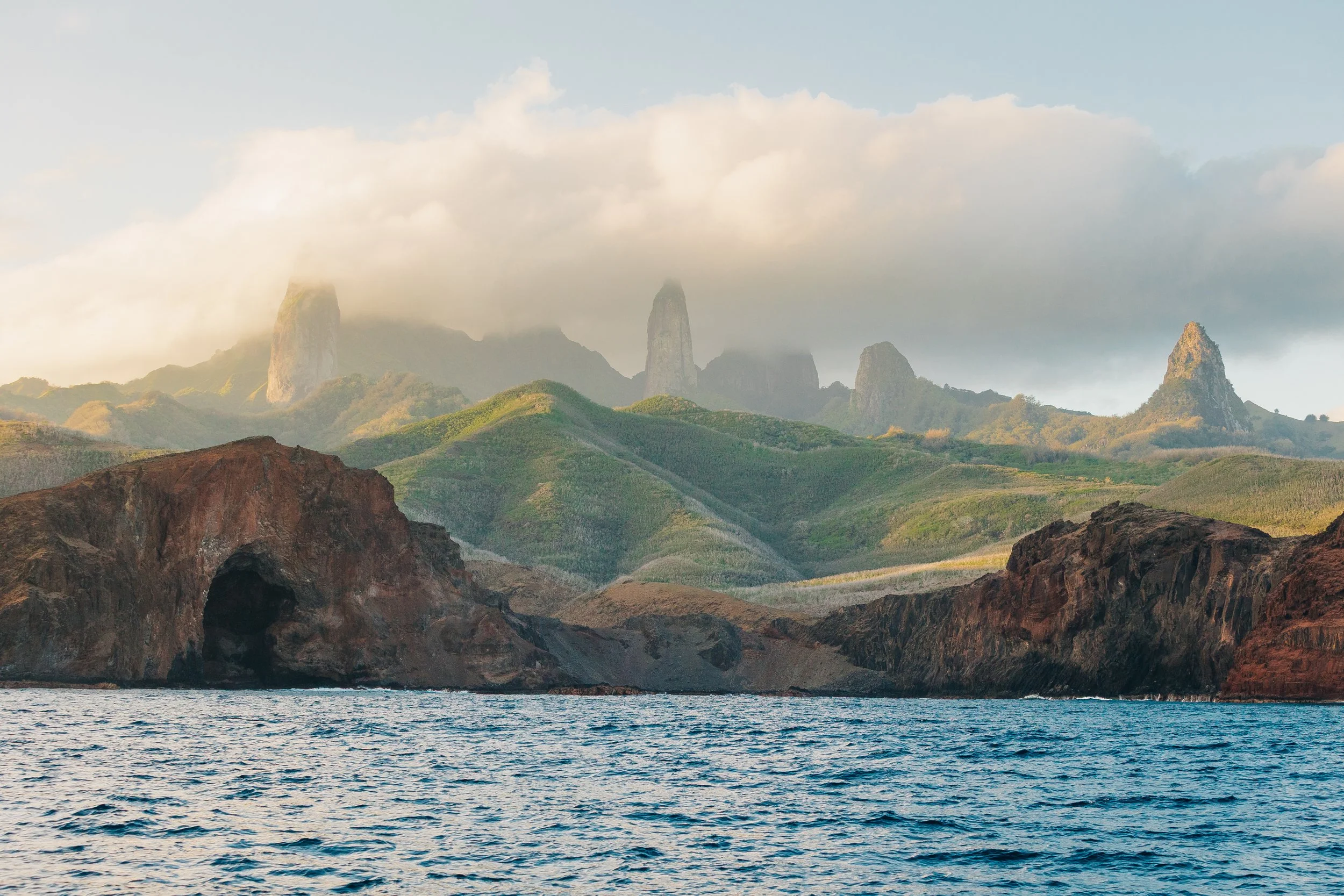
Ua Pou
Ua Pou: The Island of Stone Cathedrals
Hakahetau
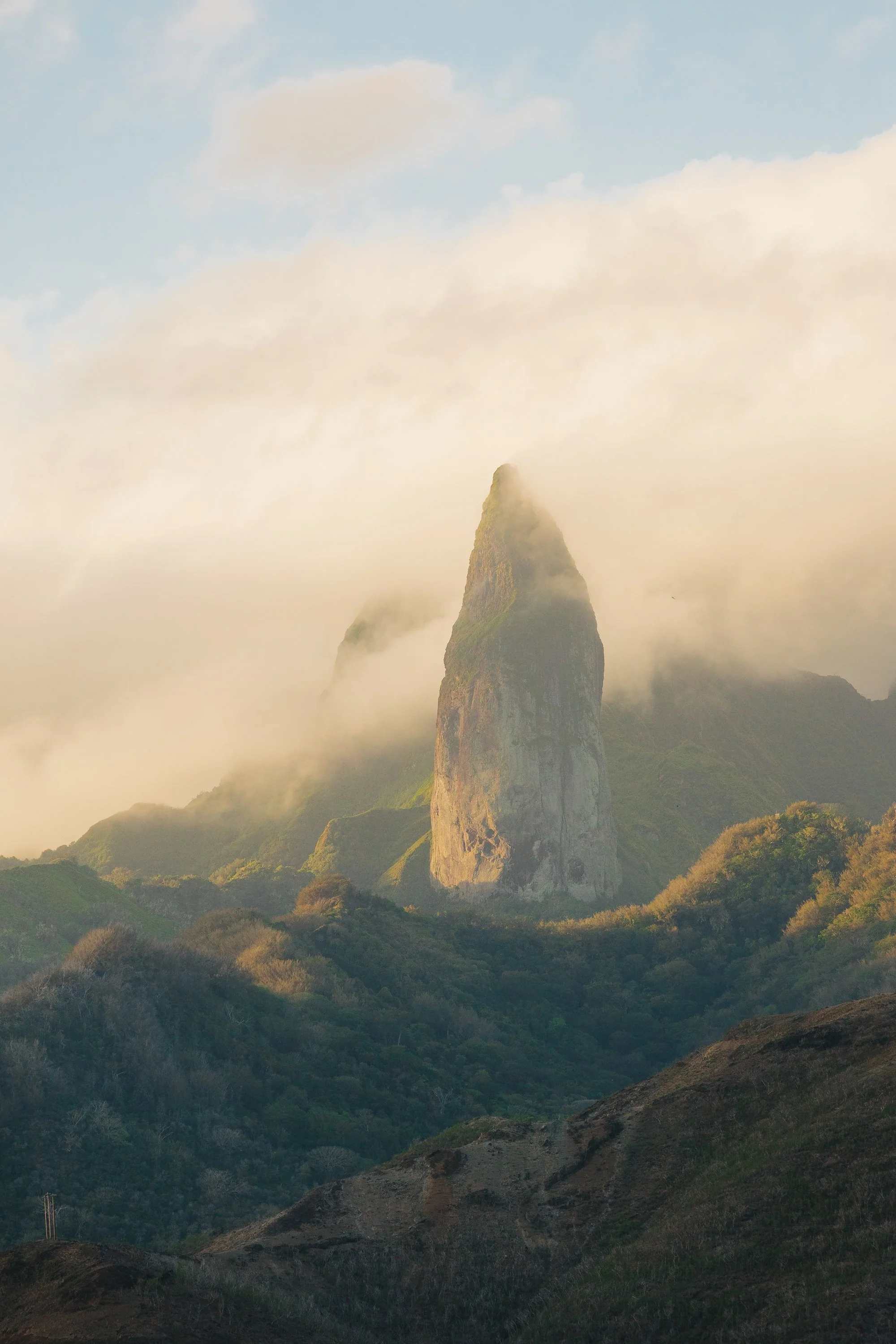
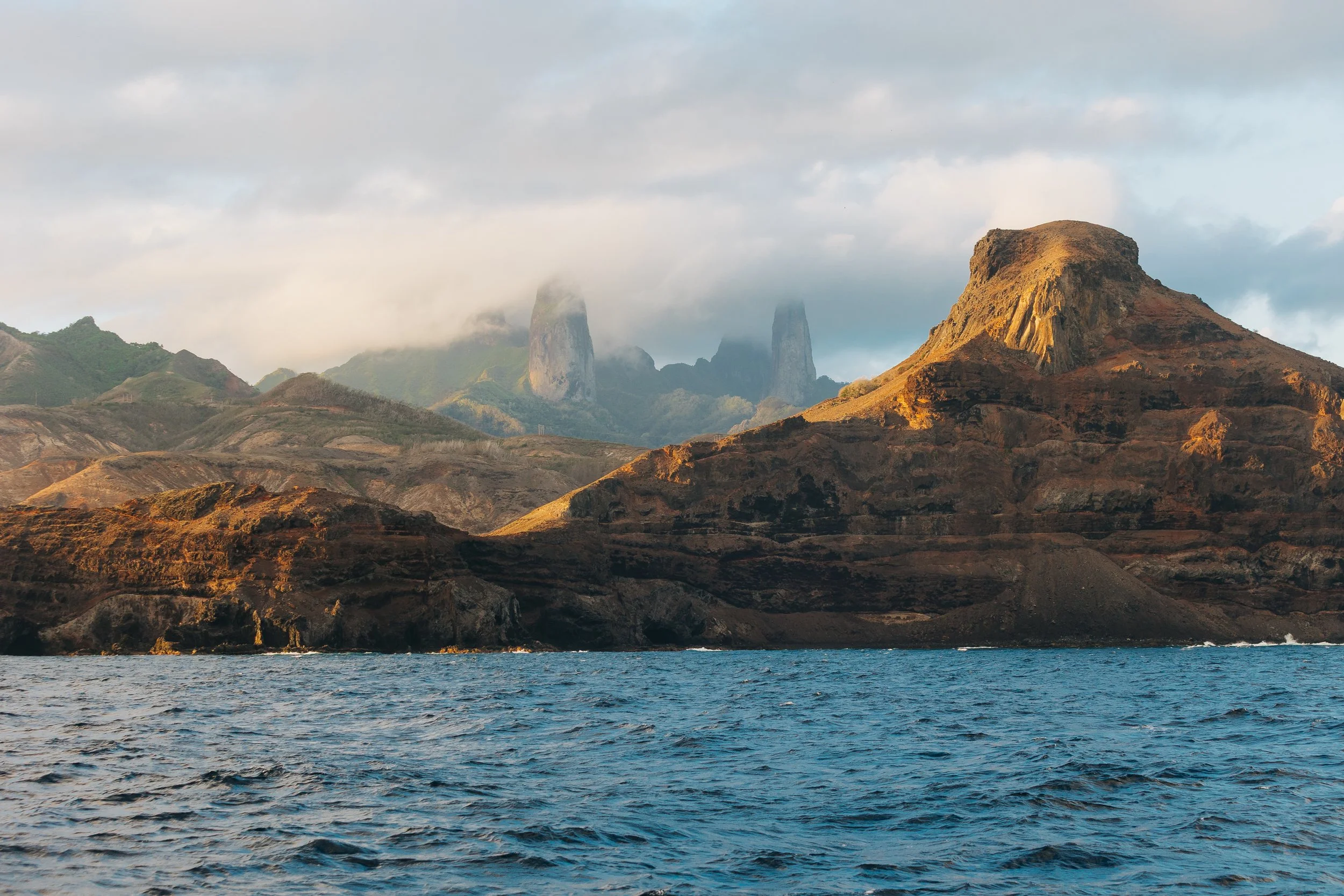
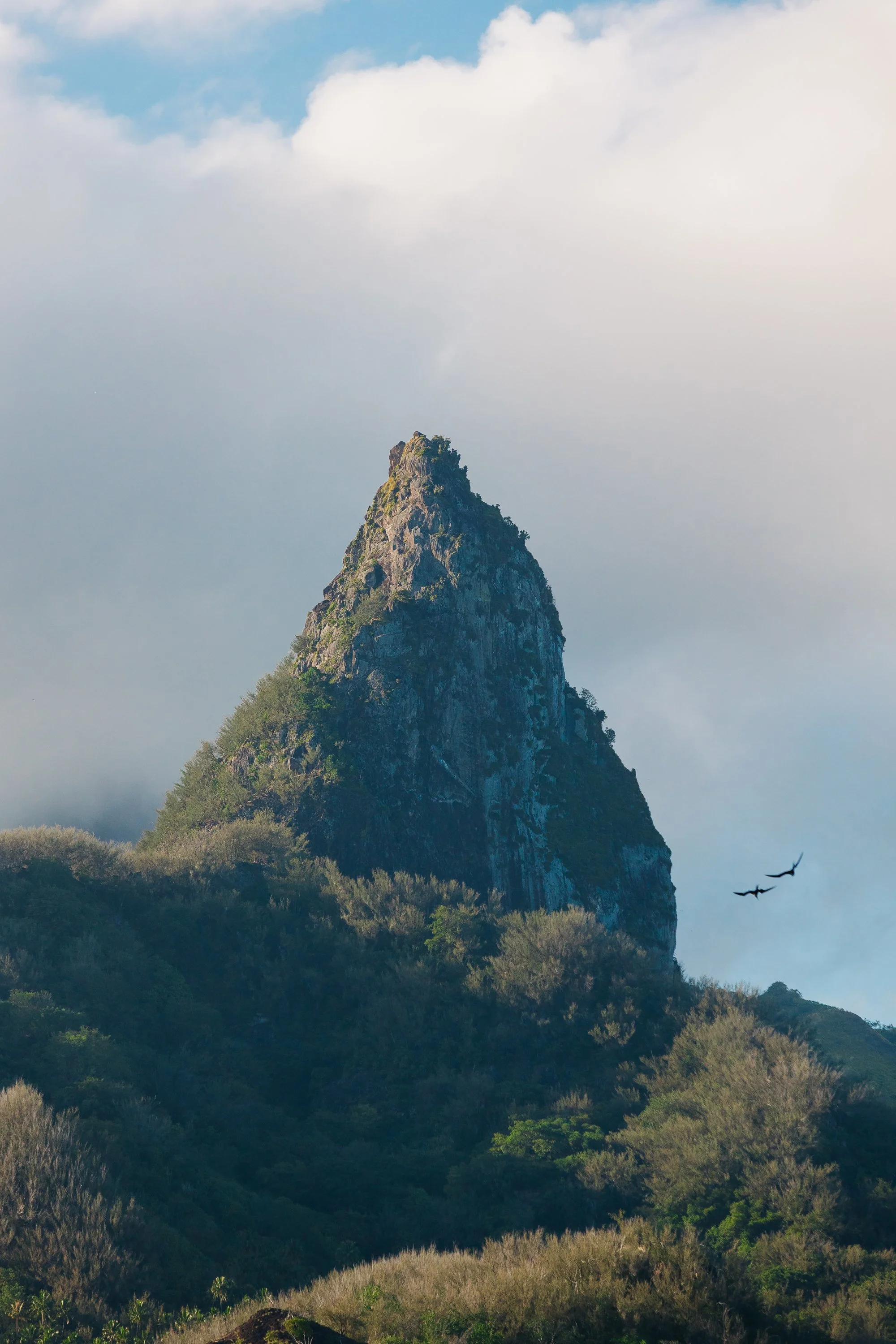
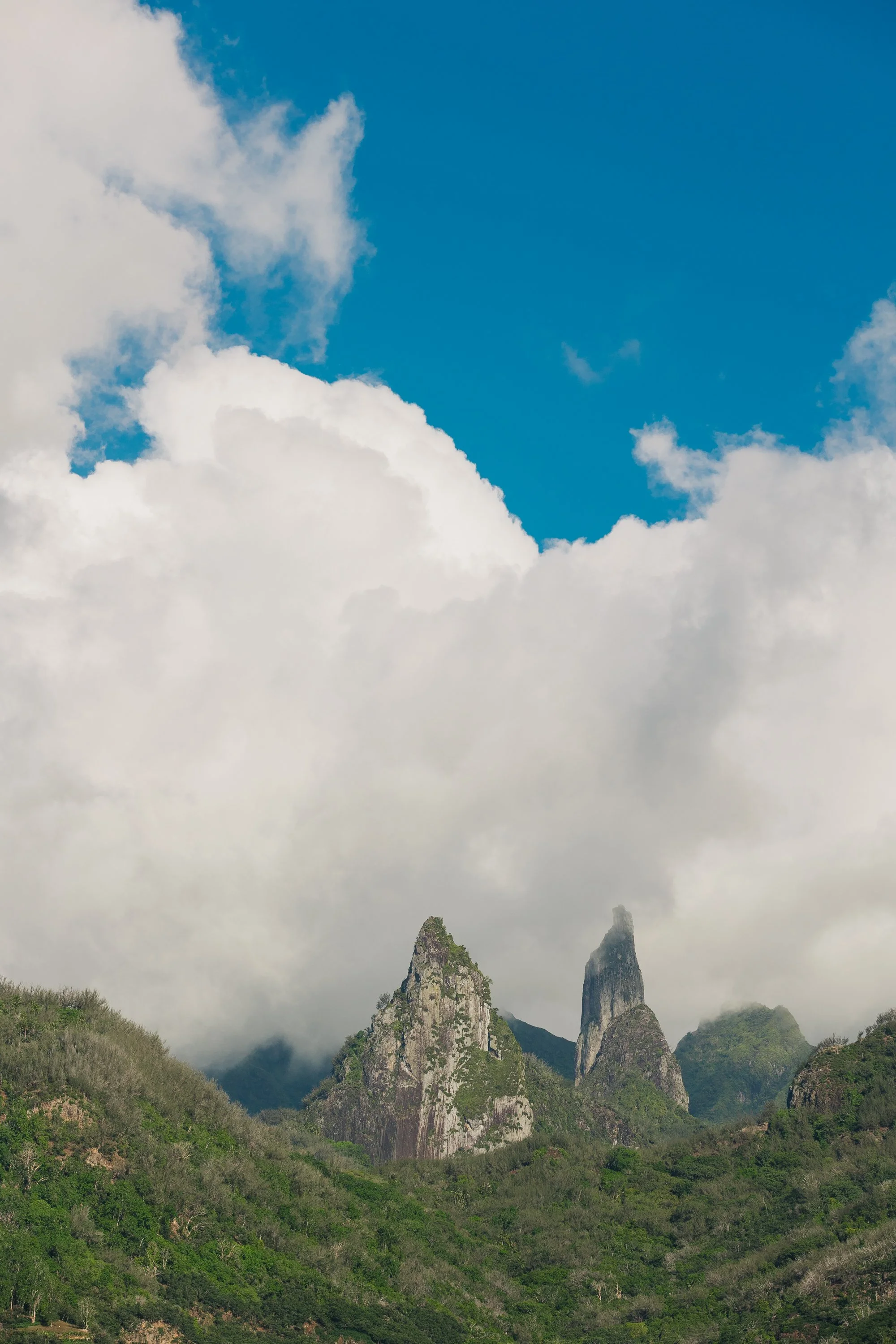
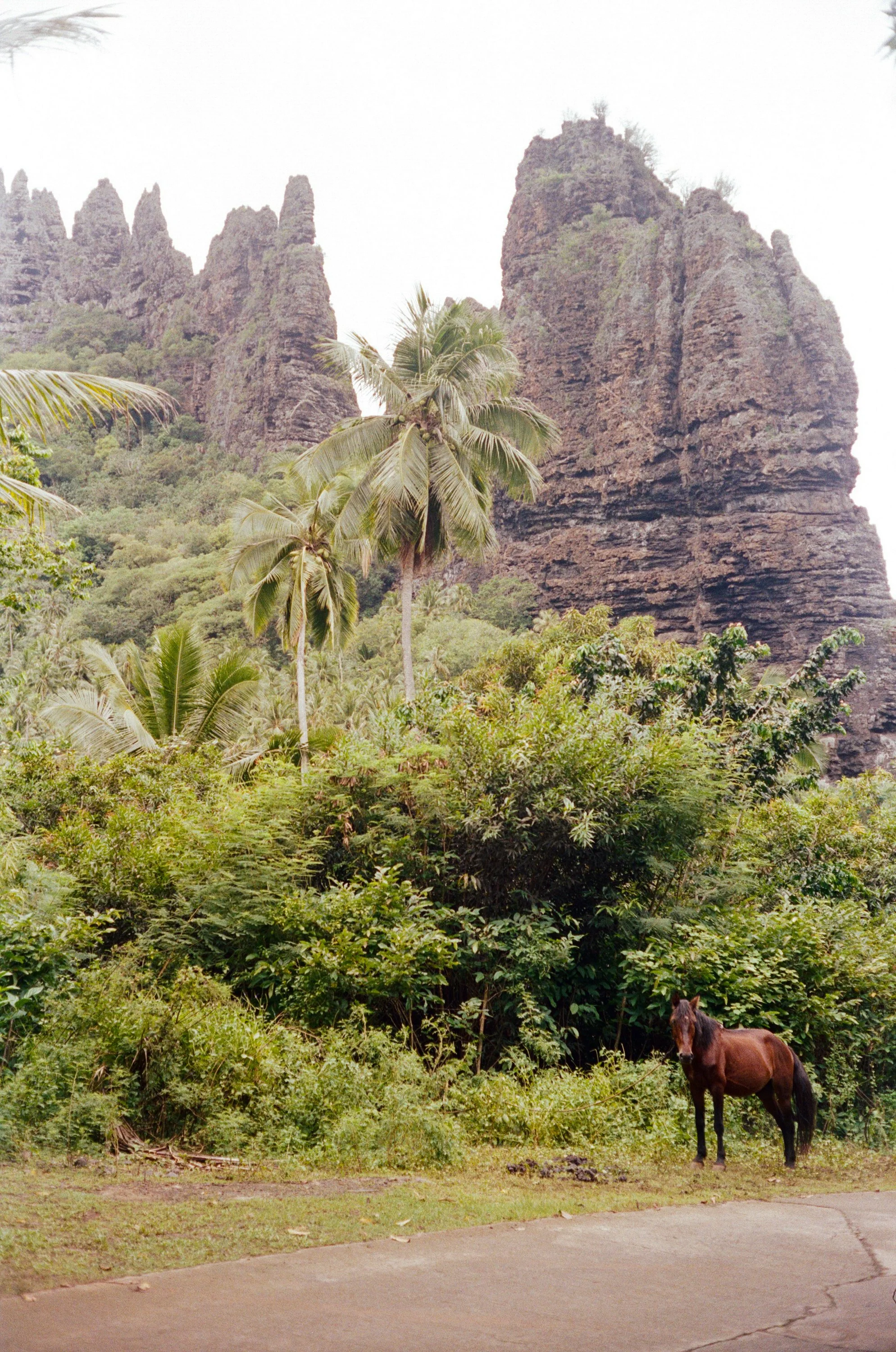
The silhouette of Ua Pou is unmistakable. Rather than broad volcanic mountains, the island is crowned by immense phonolite spires, towering remnants of ancient volcanic activity that rise like stone fingers from the interior. Some reach more than 3,000 feet into the clouds. They have been compared to Gothic cathedrals, natural skyscrapers, and the ruined towers of some forgotten civilization. From offshore, they looked almost unreal. As we approached, their summits appeared and disappeared behind drifting clouds. The island seemed less built from earth than carved from it, its sharp pinnacles rising above green valleys and black volcanic coastline.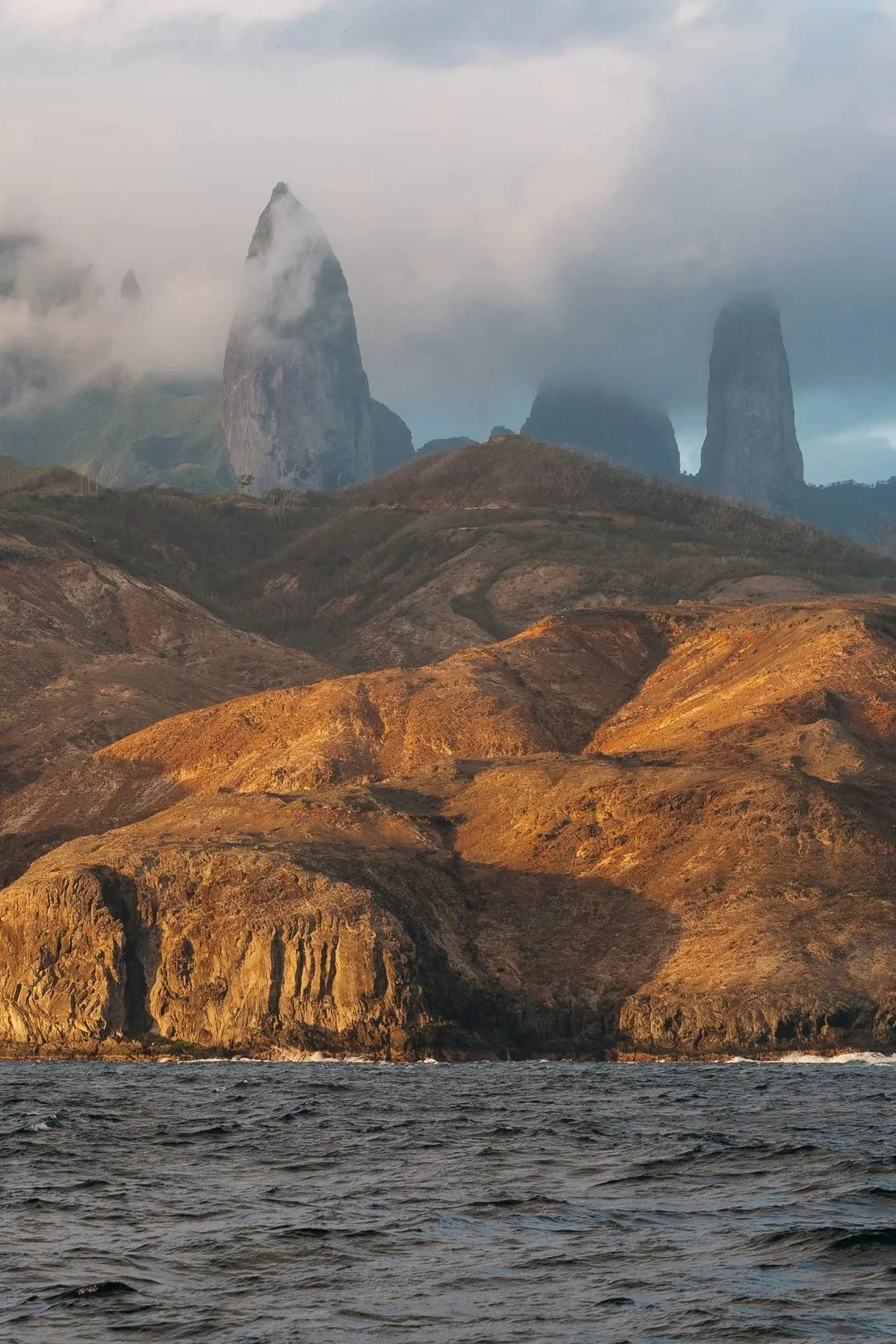
Ua Pou
Ua Pou
Ua Pou
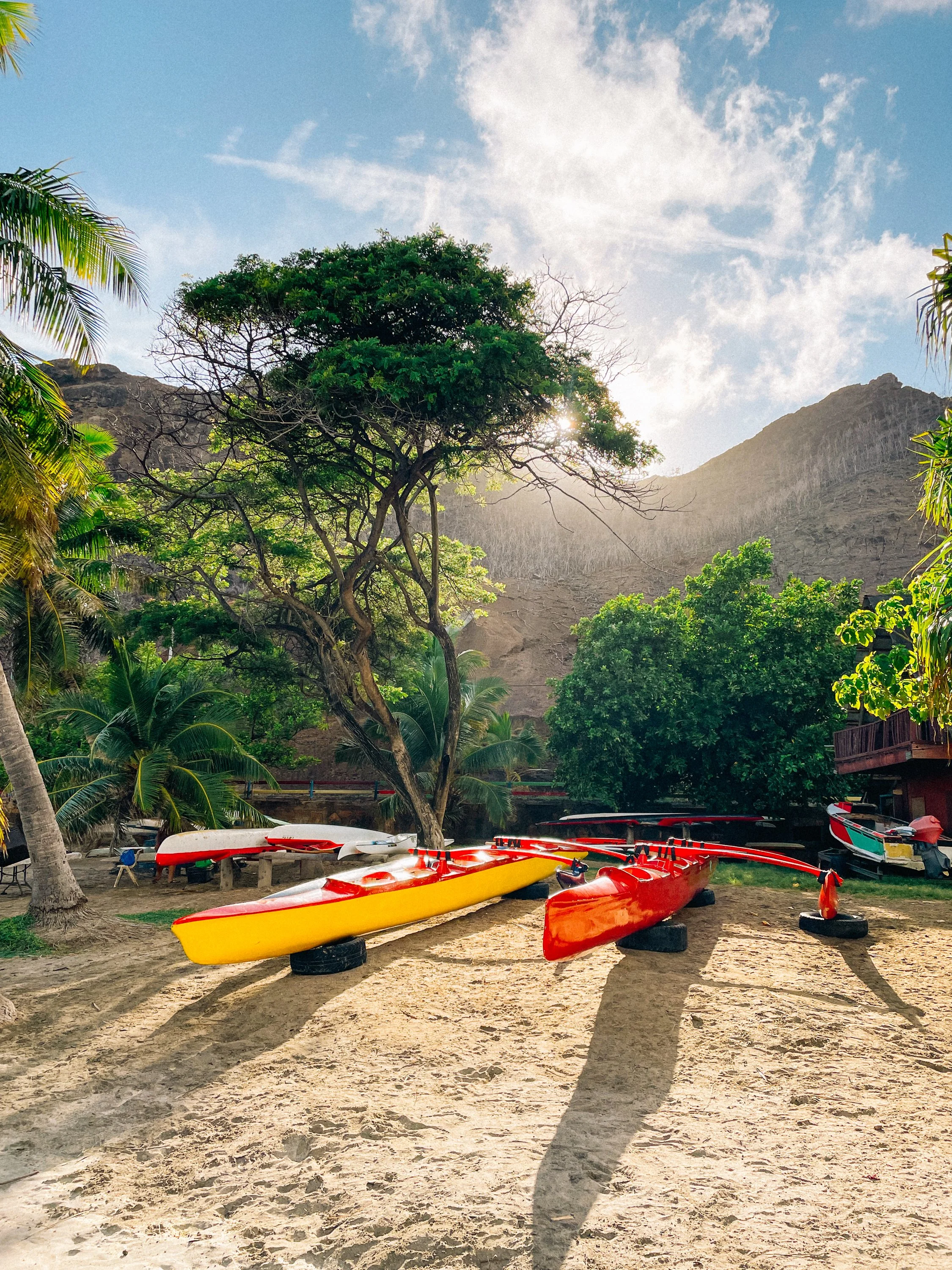
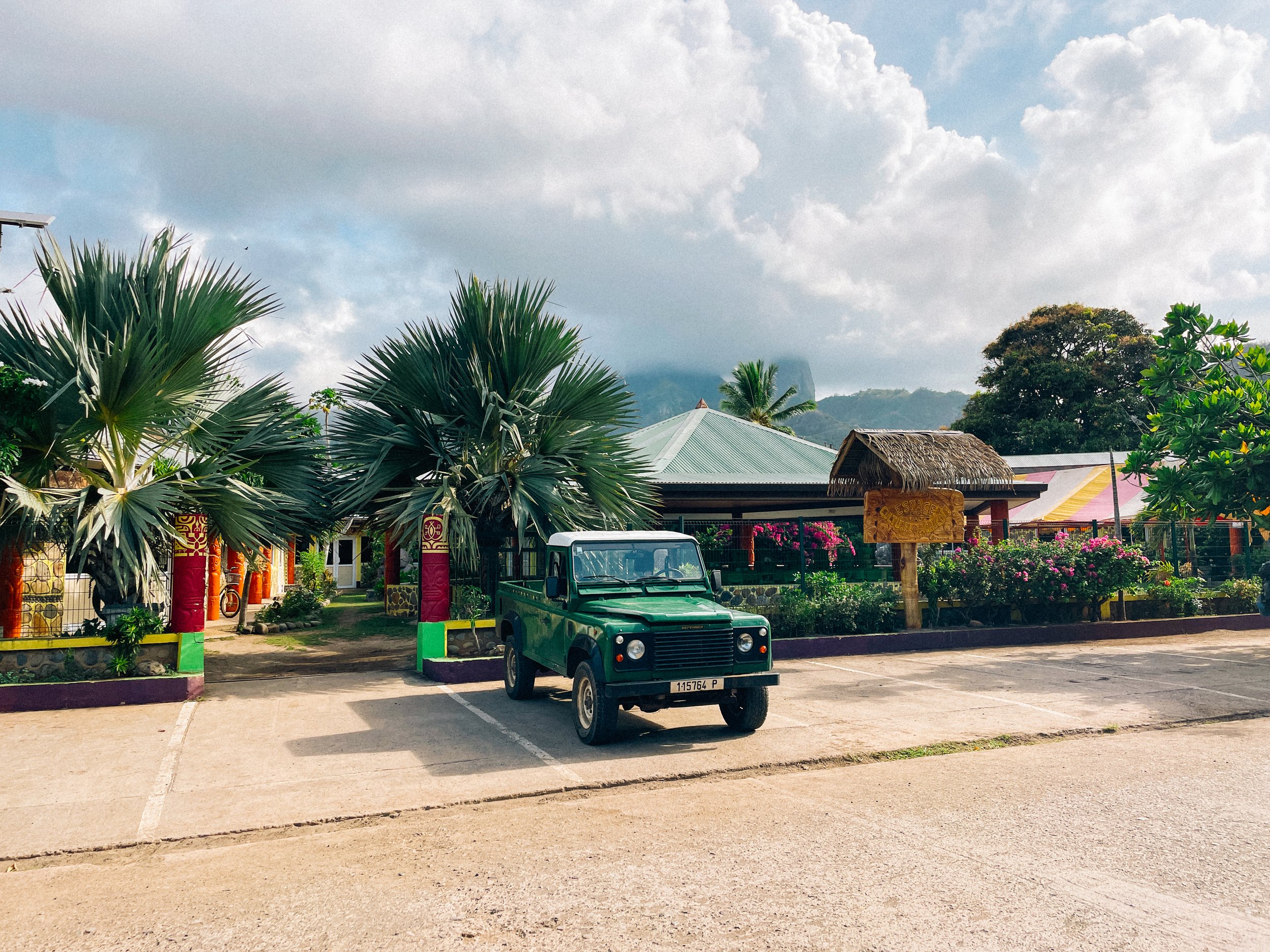
After the dry hills of Ua Huka, Ua Pou felt like another world entirely. We anchored near Hakahau, the island’s principal village and home to a large portion of Ua Pou’s population of just over two thousand residents. It was here that we received our first real introduction to Marquesan hospitality. People seemed deeply connected to one another: friendly, content, generous, and community-minded. Life unfolded at an unhurried pace, yet the village was far from inactive. During our first trip ashore, outrigger paddlers moved across the bay, their canoes slicing cleanly through the water.I had paddled outrigger canoes for two years while living in Santa Barbara, and seeing them here stirred an immediate sense of familiarity. It was a sport I had come to love deeply, but until that moment I had always experienced it thousands of miles from the Polynesian cultures where outrigger voyaging and paddling traditions originated. Watching the canoes glide across a Marquesan bay made the distance we had traveled suddenly feel more tangible. After weeks of open ocean, it was one of those small moments when it truly settled in: we had crossed the Pacific and arrived in Polynesia.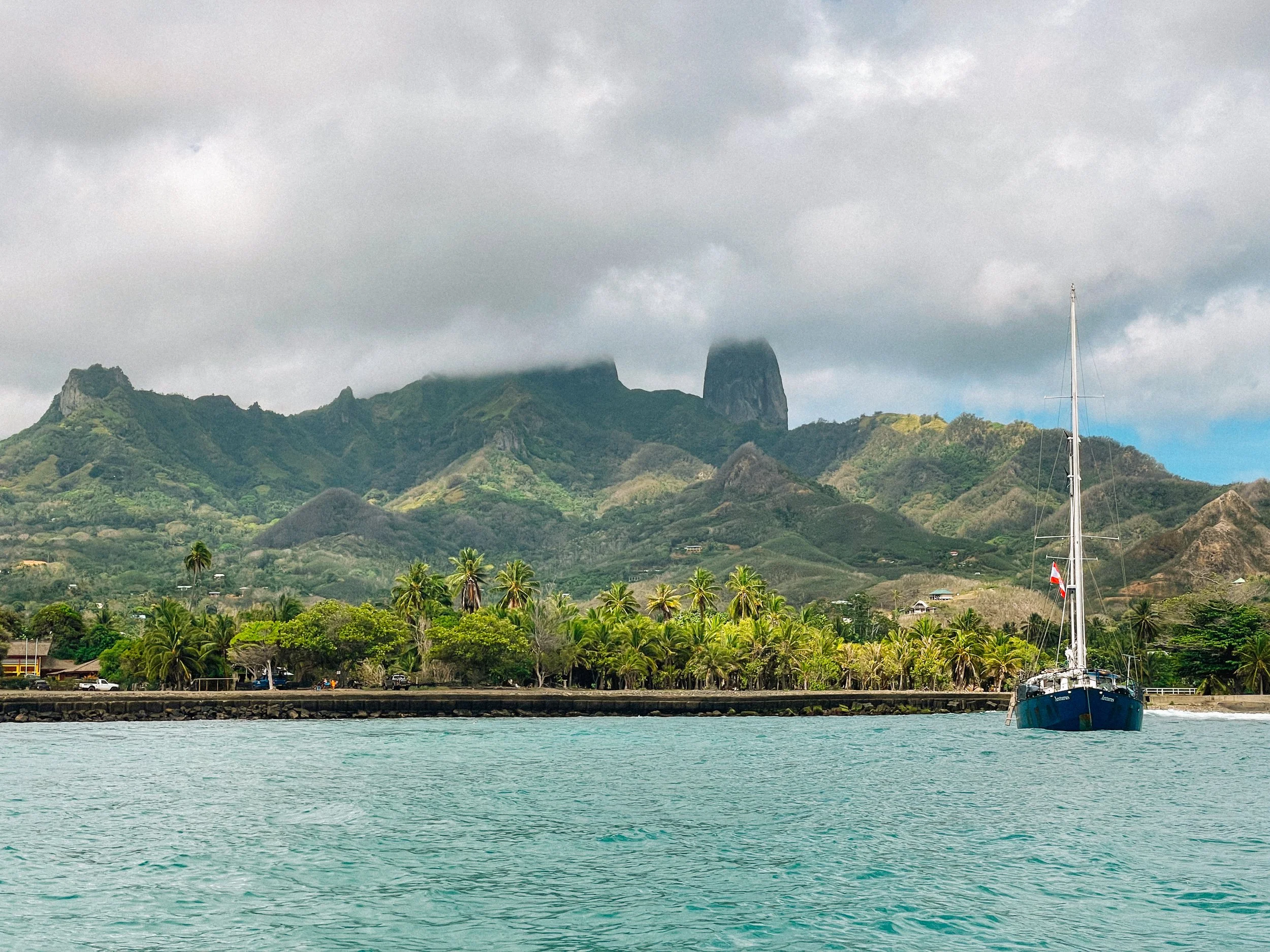
Ua Pou
Ua Pou
Ua Pou
Ua Pou
It was also in Hakahau that we learned our first lesson in Marquesan language. Before leaving Mexico, we had looked up how to greet people in French Polynesia and found the Tahitian salutation “Ia ora na”. Tahiti is the political and population center of French Polynesia, and online searches often treat Tahitian culture as though it represents every archipelago. But this was not Tahiti. Here, people greeted us with “Ka oha”, a phrase whose pronunciation seemed to shift subtly depending on who said it and how the vowels were emphasized.It took us an embarrassingly long time to repeat it in a way that sounded remotely correct. That small linguistic mistake introduced us to something we would continue discovering throughout the Marquesas: French Polynesia is not culturally uniform. Marquesan is broadly divided into two principal language groups. Northern Marquesan, or ʻeo ʻenana, is spoken on Nuku Hiva and Ua Pou, with Ua Huka often considered transitional. Southern Marquesan, or ʻeo ʻenata, is spoken on Hiva Oa, Tahuata, and Fatu Hiva. Within those larger divisions, each island retains recognizable variations in pronunciation and vocabulary. Historically, even neighboring valleys could develop differences after generations of relative isolation.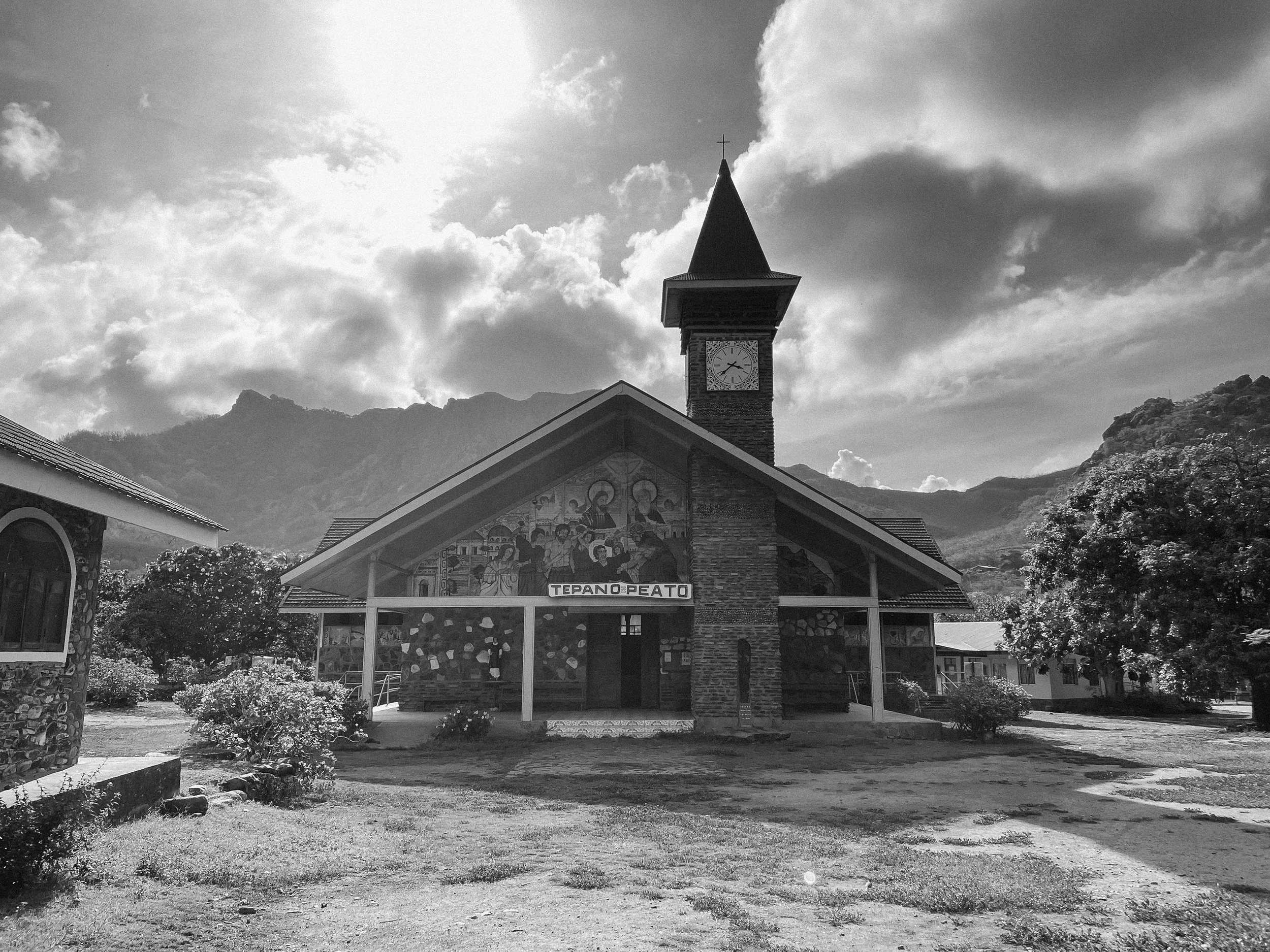
Ua Pou
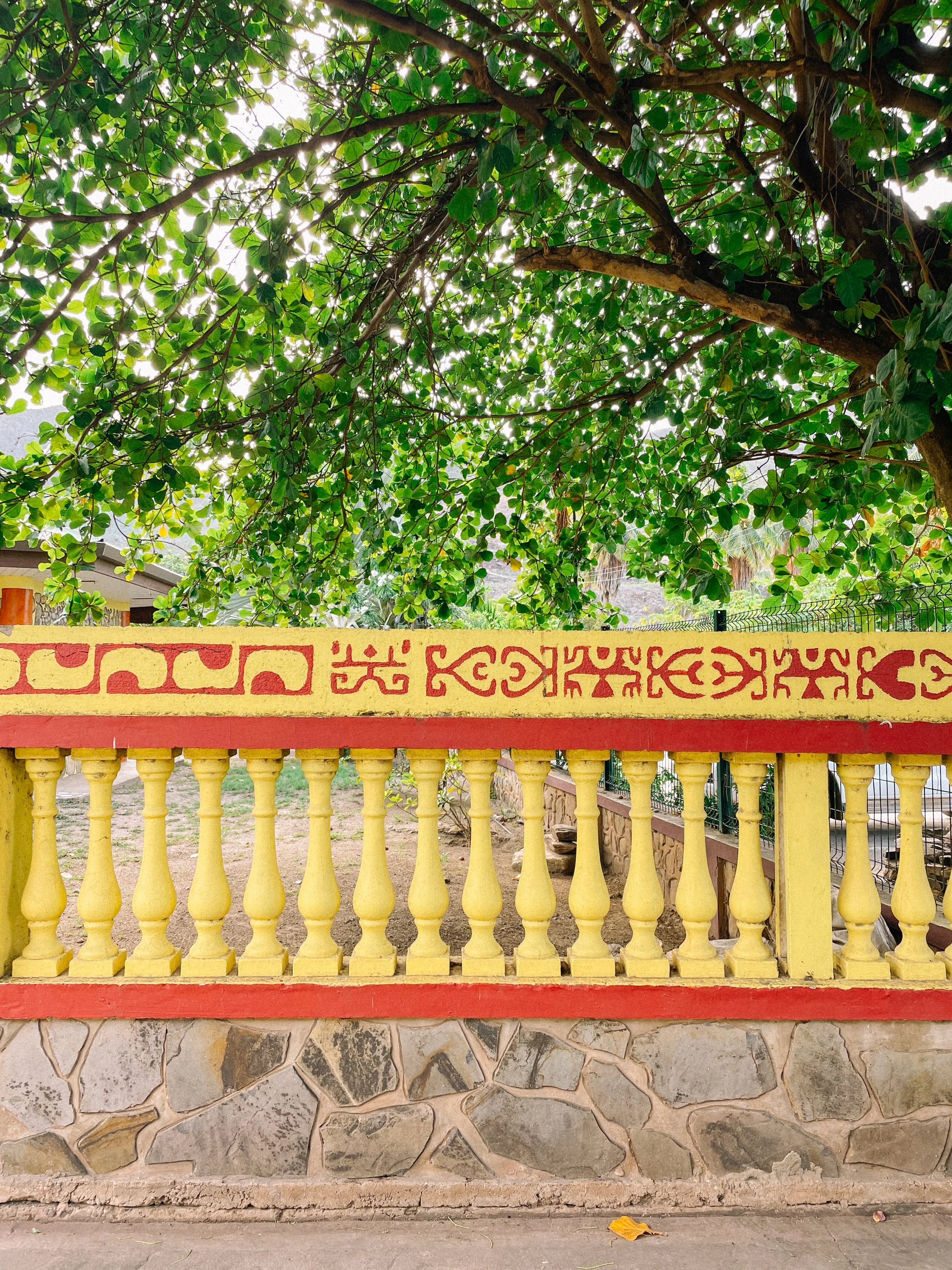
Mountains had divided not only the landscape but, in subtle ways, language itself. Our first days ashore were filled with simple pleasures. We wandered through the small markets in search of fresh fruit and vegetables, grateful for anything crisp, green, or recently harvested after nearly a month of passage food. One evening, we found a small restaurant serving pizza. “Nightlife” in the Marquesas was a generous term, as the villages became quiet soon after sunset, so we carried the pizza down to the beach and ate beneath the stars.Everything here felt intensely vivid. The light near the equator had a quality that was difficult to describe. Colors seemed more saturated, as though the sun had reached down and polished every surface. Green leaves appeared almost illuminated from within. The red earth glowed. Even ordinary buildings seemed painted in pigments too bright to be real. Perhaps it was simply the angle of the sun. Perhaps it was the contrast after three weeks of blue ocean. Whatever the cause, French Polynesia seemed to exist in a different spectrum.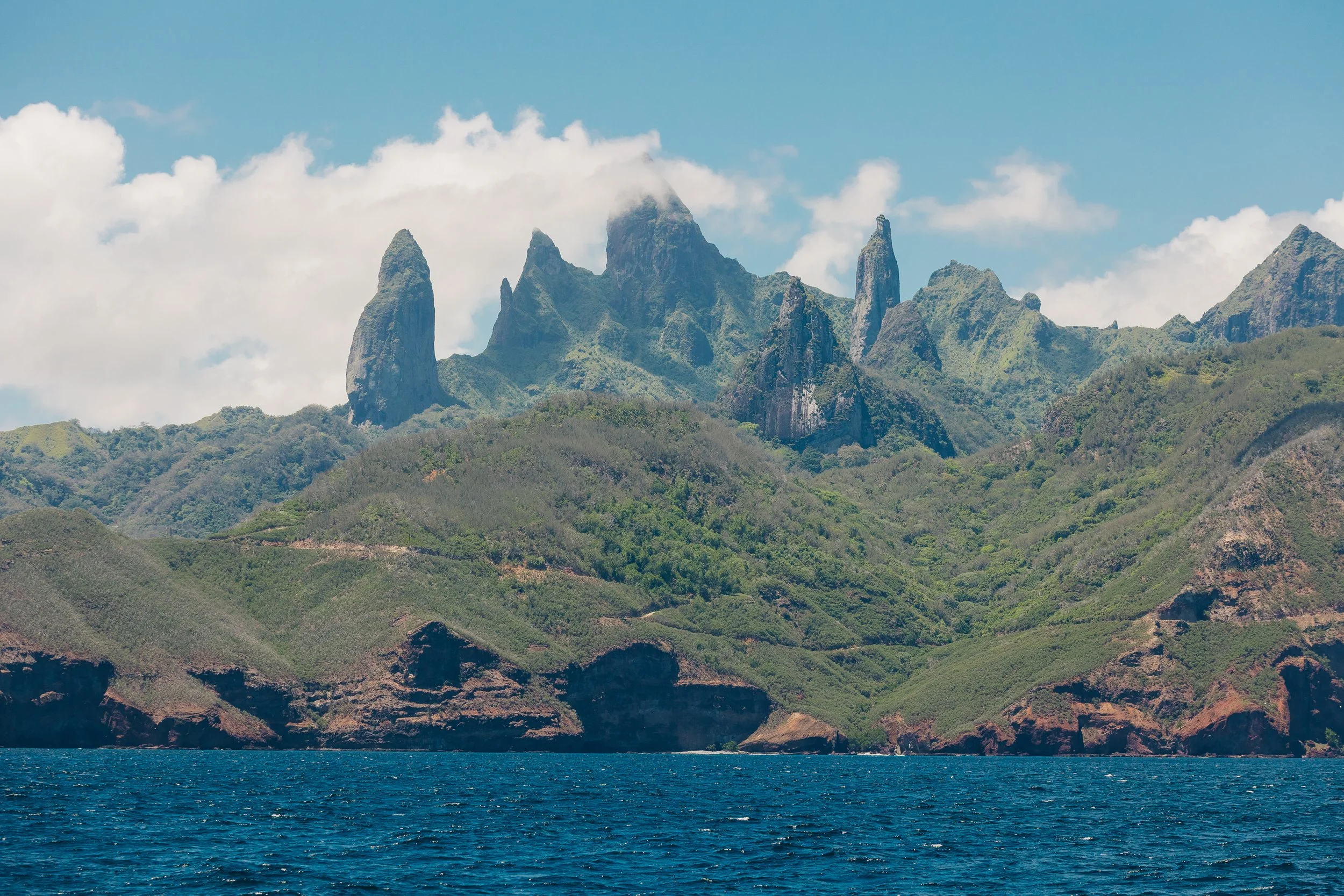
Ua Pou
Hakahetau
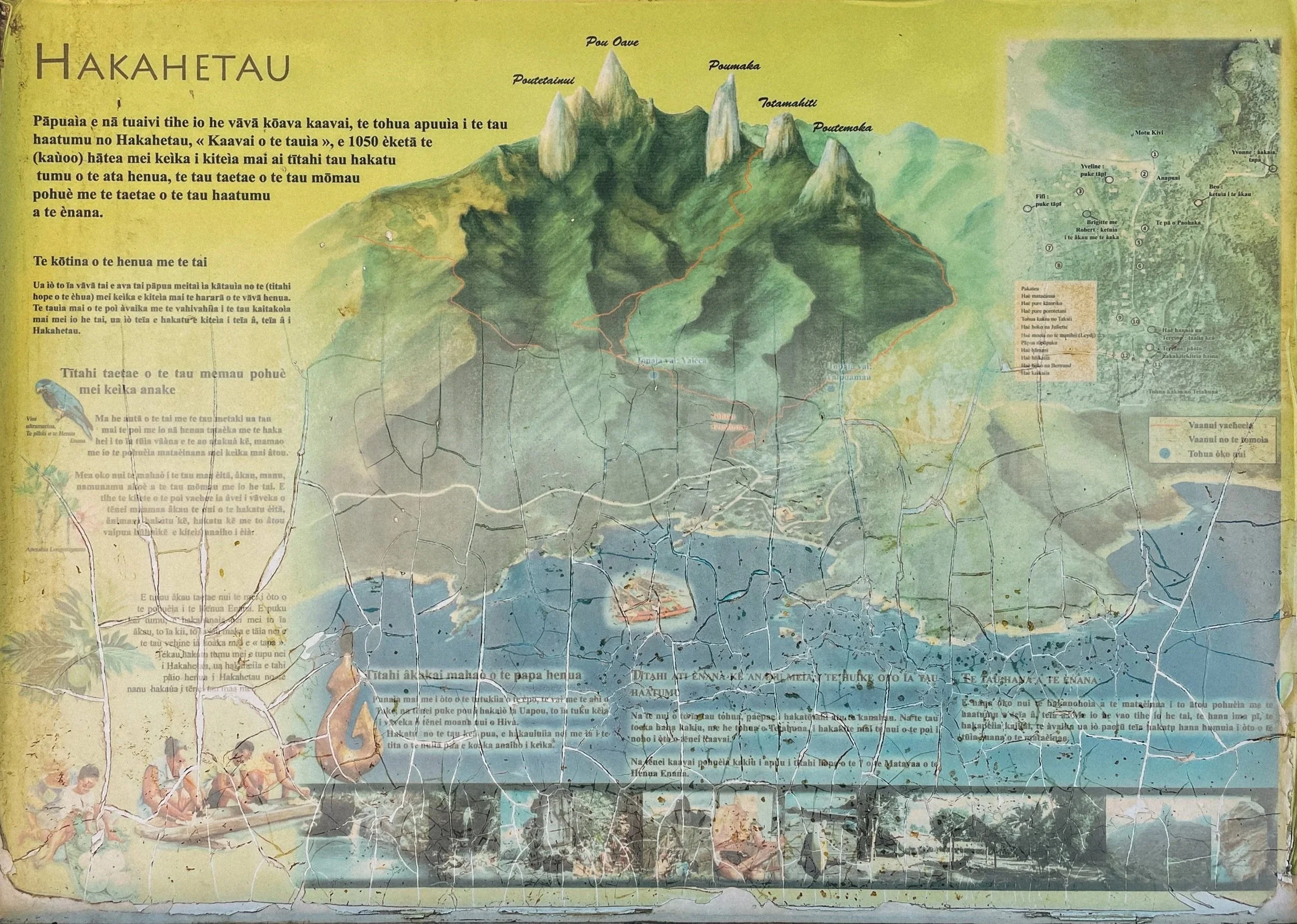
From Hakahau, we continued around the island to the much smaller village of Hakahetau, gaining an entirely different perspective on Ua Pou’s mountainous interior and the dramatic stone spires that rose above it. Along the waterfront, a concrete jetty and boat ramp occupied one side of the small bay, while a rocky beach on the other remained fully exposed to whatever swell wrapped around the coastline.We were quickly learning that getting ashore in the Marquesas could be an adventure in itself. Many of the beaches were too steep or surf-stricken to safely leave a dinghy, while docks and jetties often offered little protection from swell. More often than not, Louie would drop the rest of us ashore and then return to Arcturus, or find some improvised way to secure the dinghy without leaving it to be battered against concrete or rocks, usually involving a small boat mooring and him swimming to shore. The luxury of simply pulling a tender onto a quiet sandy beach was proving far less common here than we had imagined.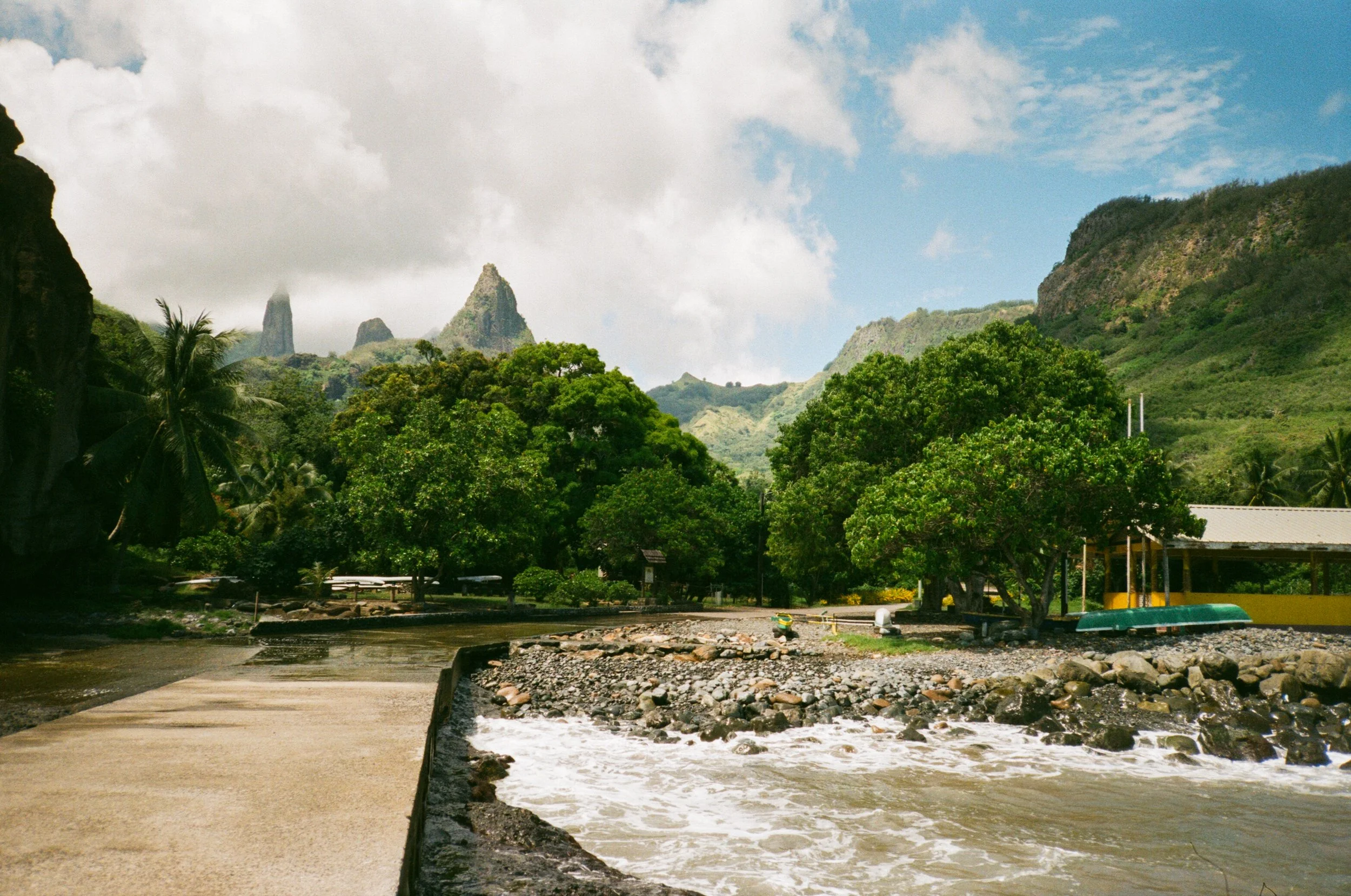
Ua Pou
Once ashore, we visited the small store, or magasin, before heading up the trail toward the waterfall. The landscape changed as we climbed inland, with the village and bay gradually disappearing behind layers of vegetation. Above us, volcanic pinnacles pierced the clouds, sometimes visible for only a moment before the mist folded around them again. As passionate hikers, we were tempted to continue farther into the mountains and toward the spires, the sort of all-day hike we ordinarily would have jumped at. But the sweltering tropical heat had a remarkable ability to dampen our ambitions. More than ever, we were realizing that perhaps we simply were not hot-weather people. Alaska, it seemed, really was our ideal environment.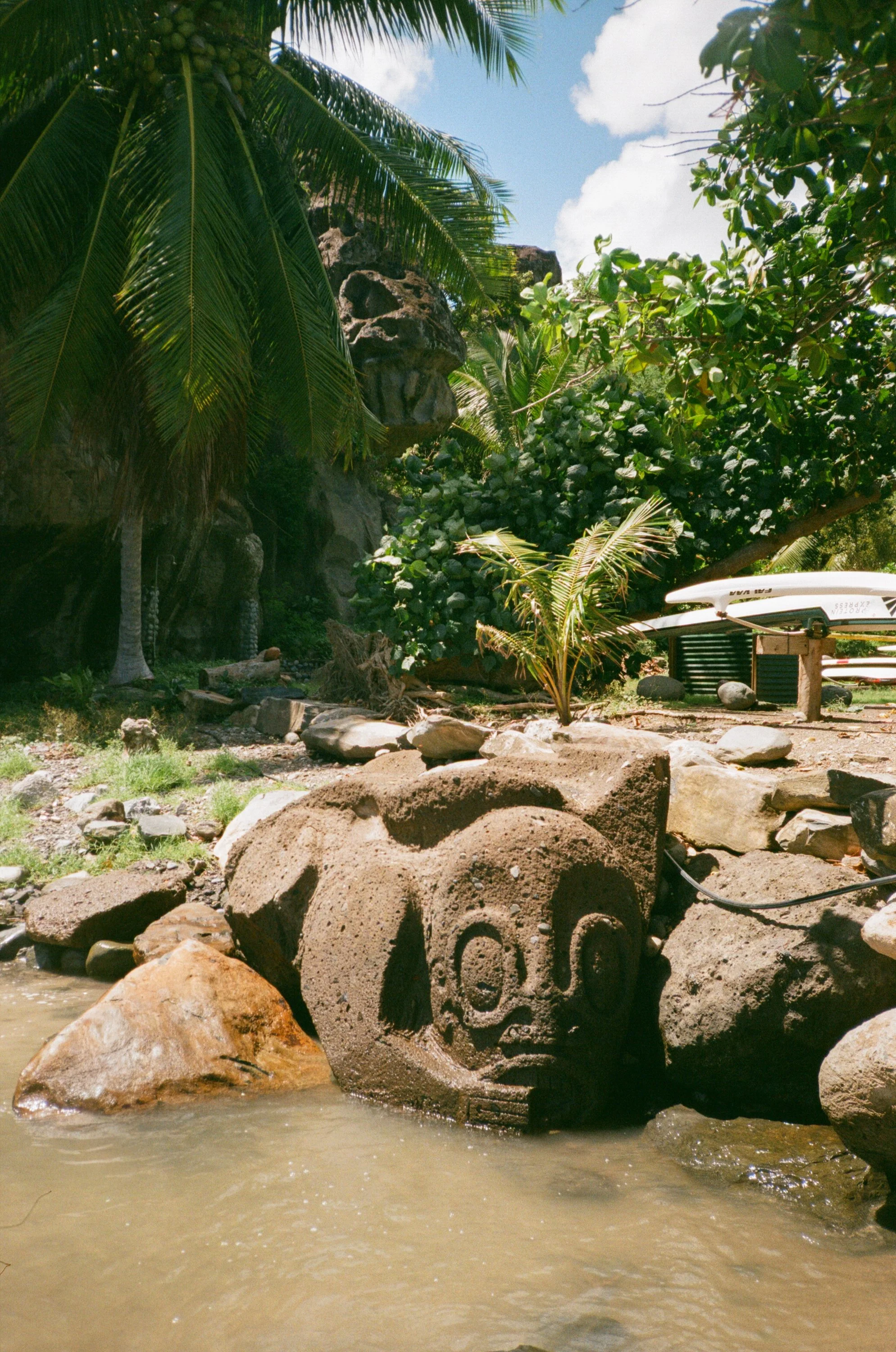
Ua Pou
Ua Pou
Regardless, the hike to the waterfall was beautiful. We followed the trail into the rainforest and eventually reached a cool pool beneath the falls, where we swam and stood beneath the rushing water, grateful for any reprieve from the heat. Along our hike we discovered many mango and avocado trees along the trail, taking some of what had fallen to the ground. When we made it back to the small village, we bought more fruit from a local farmer, including a large stock of bananas which we proudly hung on the back deck of the boat. There is a superstition among seafaring folk that bananas on boats are bad luck, but that superstition is quickly dispelled after you’ve crossed an ocean and are desperate for fresh fruit, especially when it is in abundance.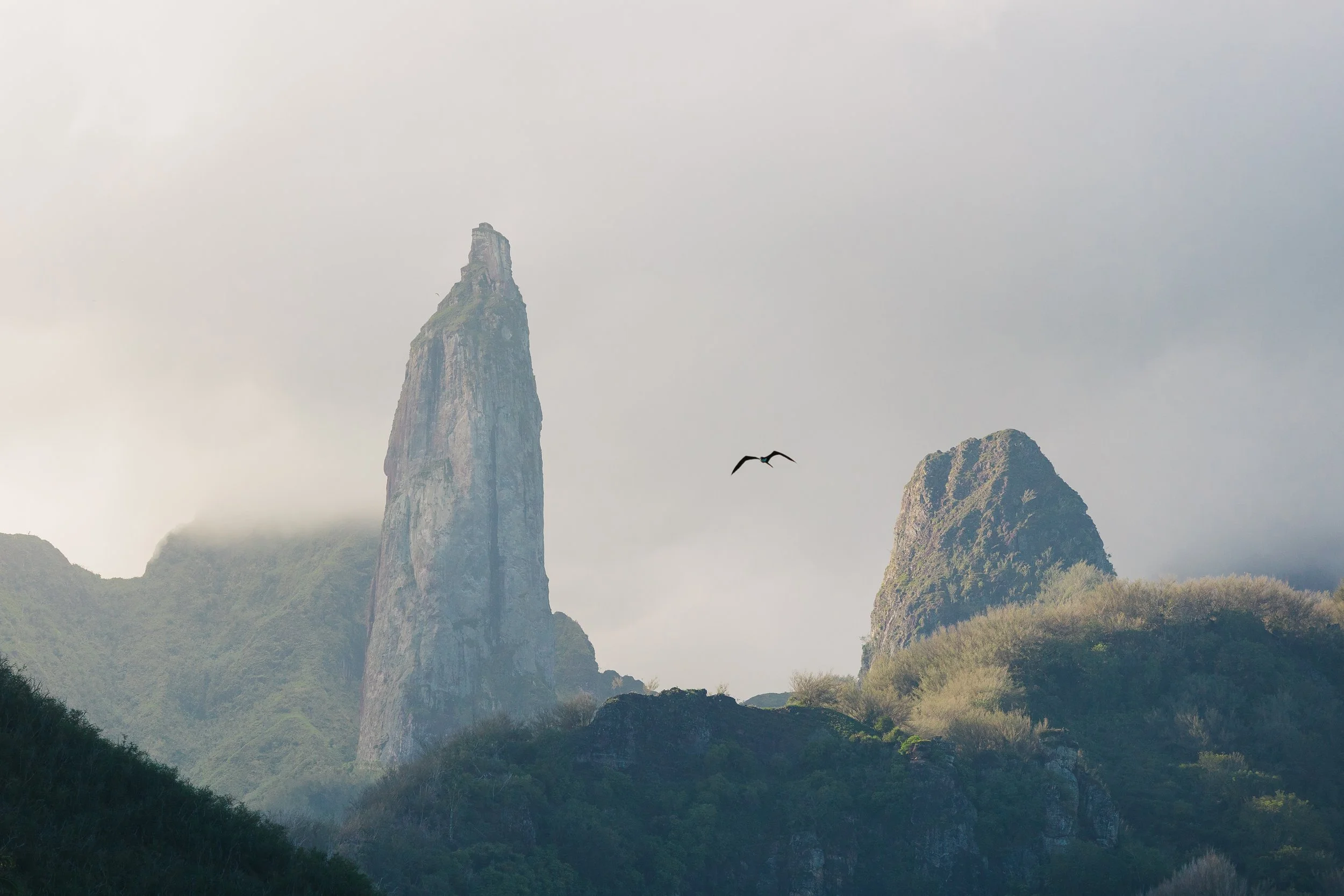
Ua Pou
Ua Pou
Ua Pou
Ua Pou
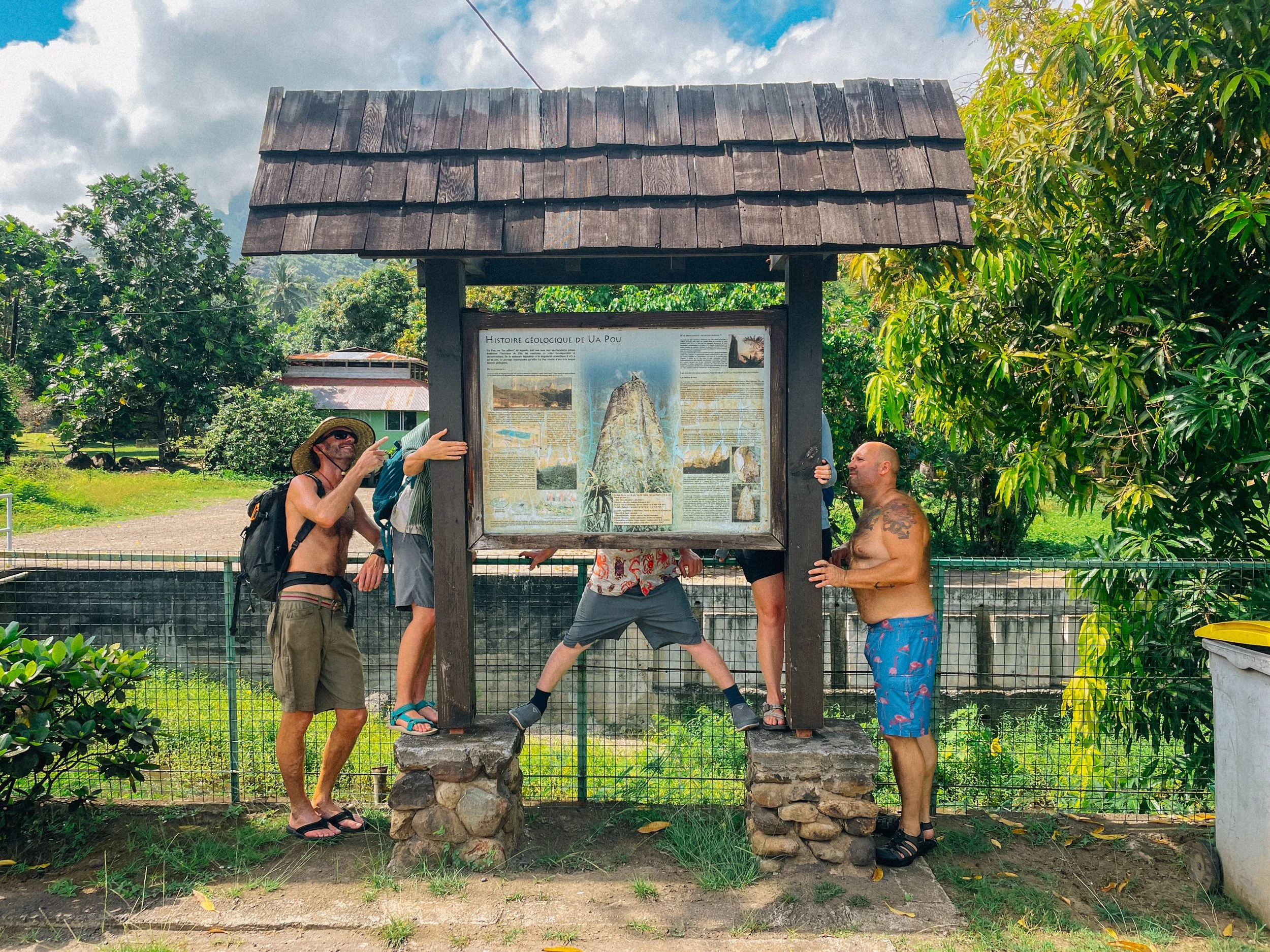
While researching Hakahetau on Google Maps and NoForeignLand, we had also come across a rather intriguing landmark: a German expatriate named Manfred, known locally among sailors as the “Chocolate Man” or “Shoko Man.” He had developed something of a reputation for welcoming travelers to his home in the mountains, where he made chocolate that he sold beyond the islands. The entire situation naturally piqued our curiosity.When we reached his property, we were greeted first by a collection of cats and dogs and then by Manfred himself, who appeared to be somewhere in his late seventies or early eighties. He spoke very little English. One of our friends who had visited before us had advised us to arrive prepared for dirty jokes, and within a few minutes of meeting him, we understood exactly why. His sense of humor wandered cheerfully into nearly every inappropriate subject imaginable, occasionally leaving us unsure whether to laugh or simply nod along. But the chocolate was excellent. We sampled several varieties and bought a handful of bars to bring back to the boat, one more unexpected souvenir from an already unusual afternoon.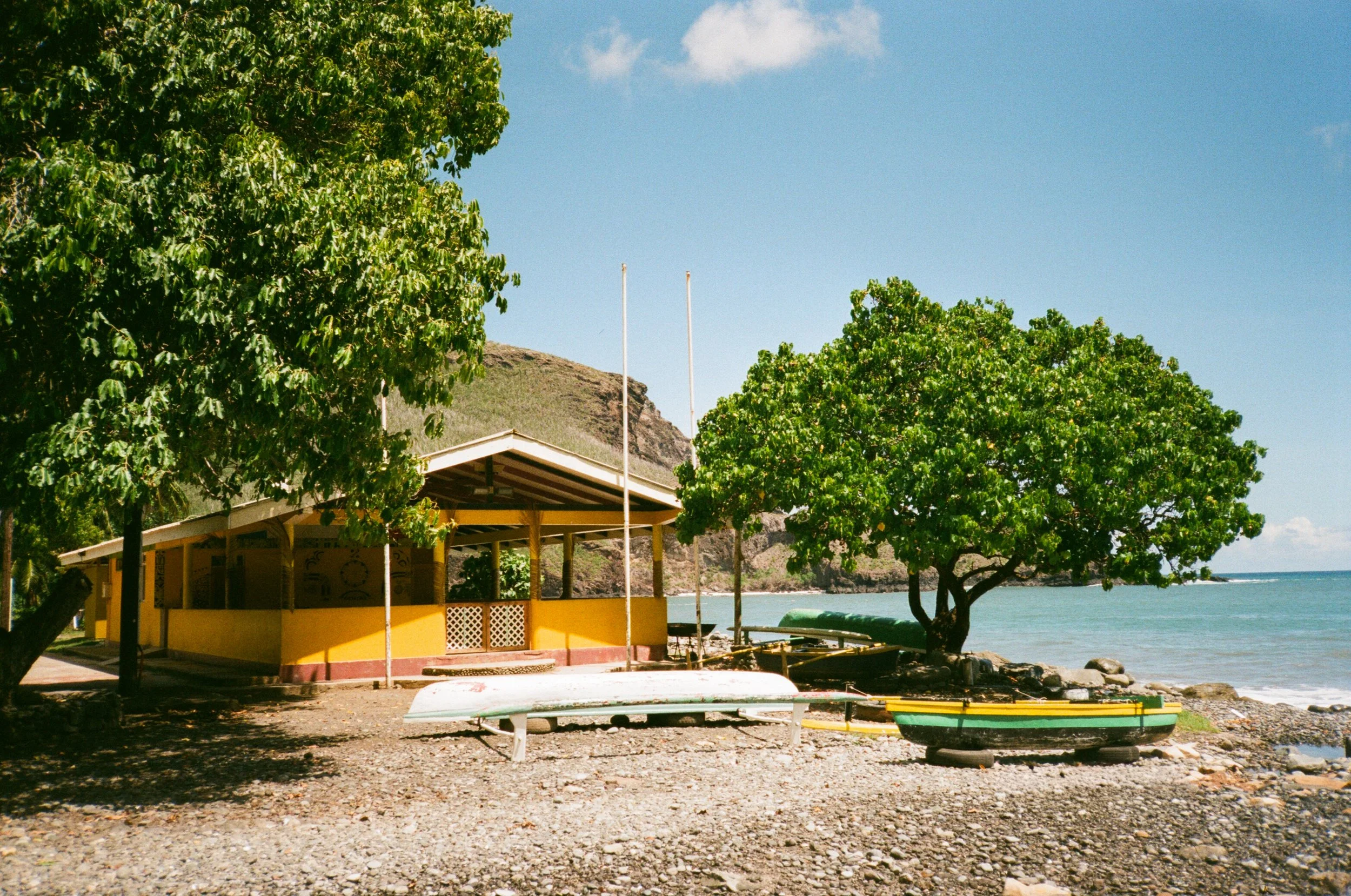
Ua Pou
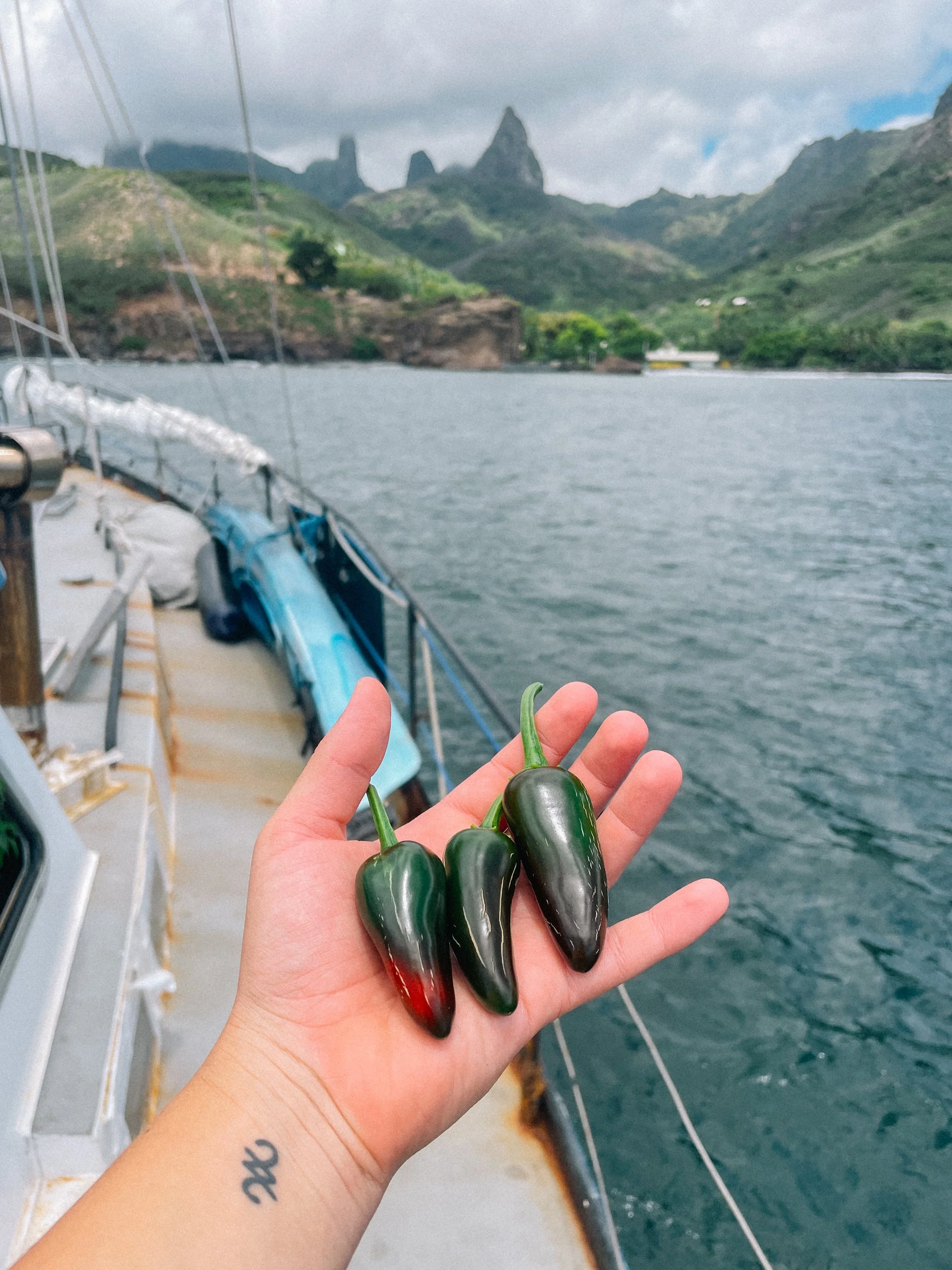
Homegrown jalapenos
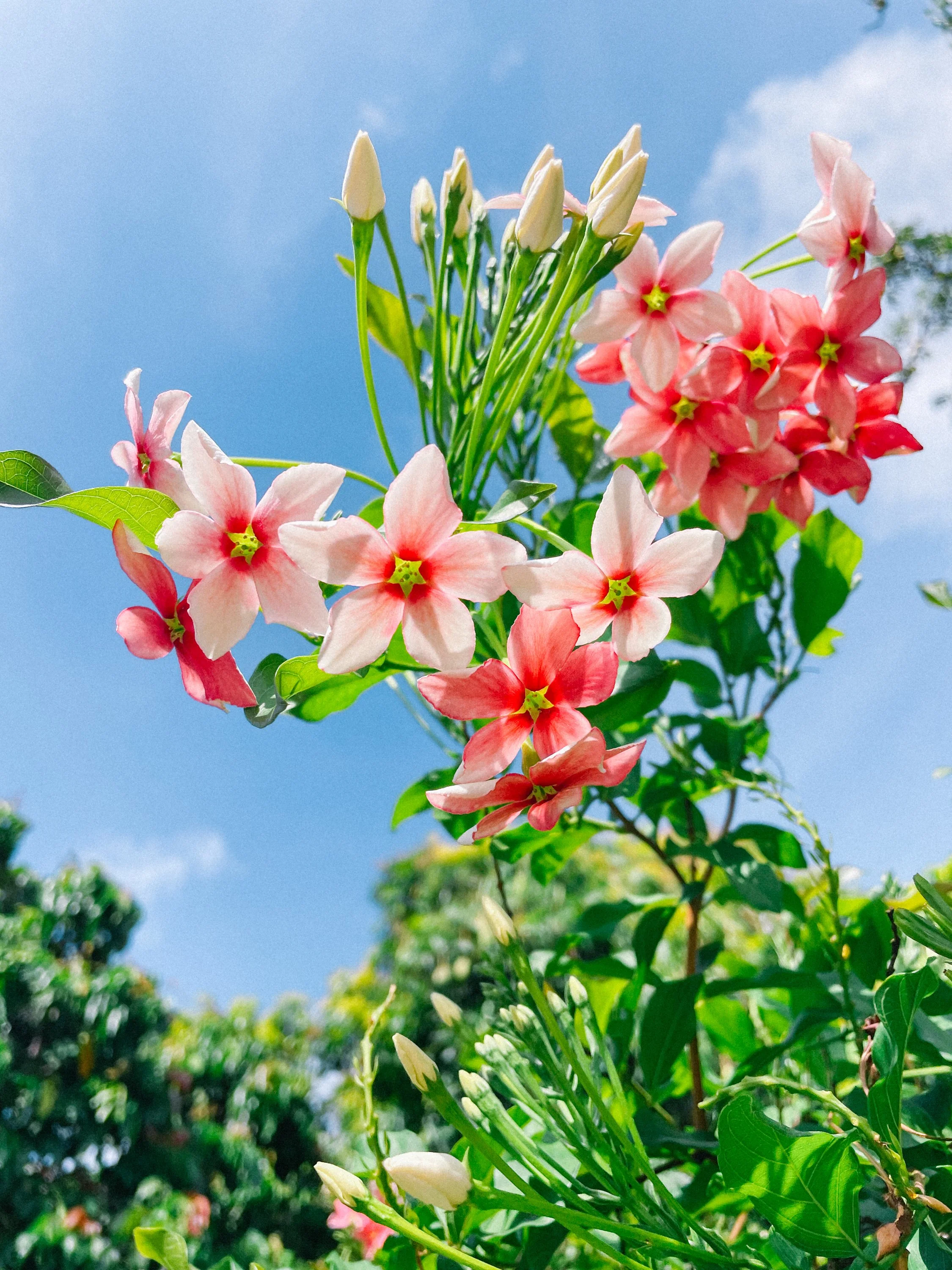
Ua Pou
We had brought ashore a jar of our home-canned tuna along with a few sandwich ingredients, and on our way back from the hike, we picked up a fresh baguette from the village. By the time we returned to the boat ramp, the scene along the waterfront had completely changed. The village children appeared to have just gotten out of school and were playing in the surf where it washed across the ramp, festive music echoing around the little bay while several fathers watched nearby.We settled beneath a tree and assembled tuna sandwiches as a couple of our friends wandered over to join the children, sliding around on the wet boat ramp and hoping the local youngsters might teach them the proper technique. It was one of those wonderfully ordinary afternoons that made a place feel more memorable than any landmark could: a waterfall in the jungle, homemade chocolate in the mountains, a fresh baguette beneath a tree, and children laughing in the surf as music carried across the bay.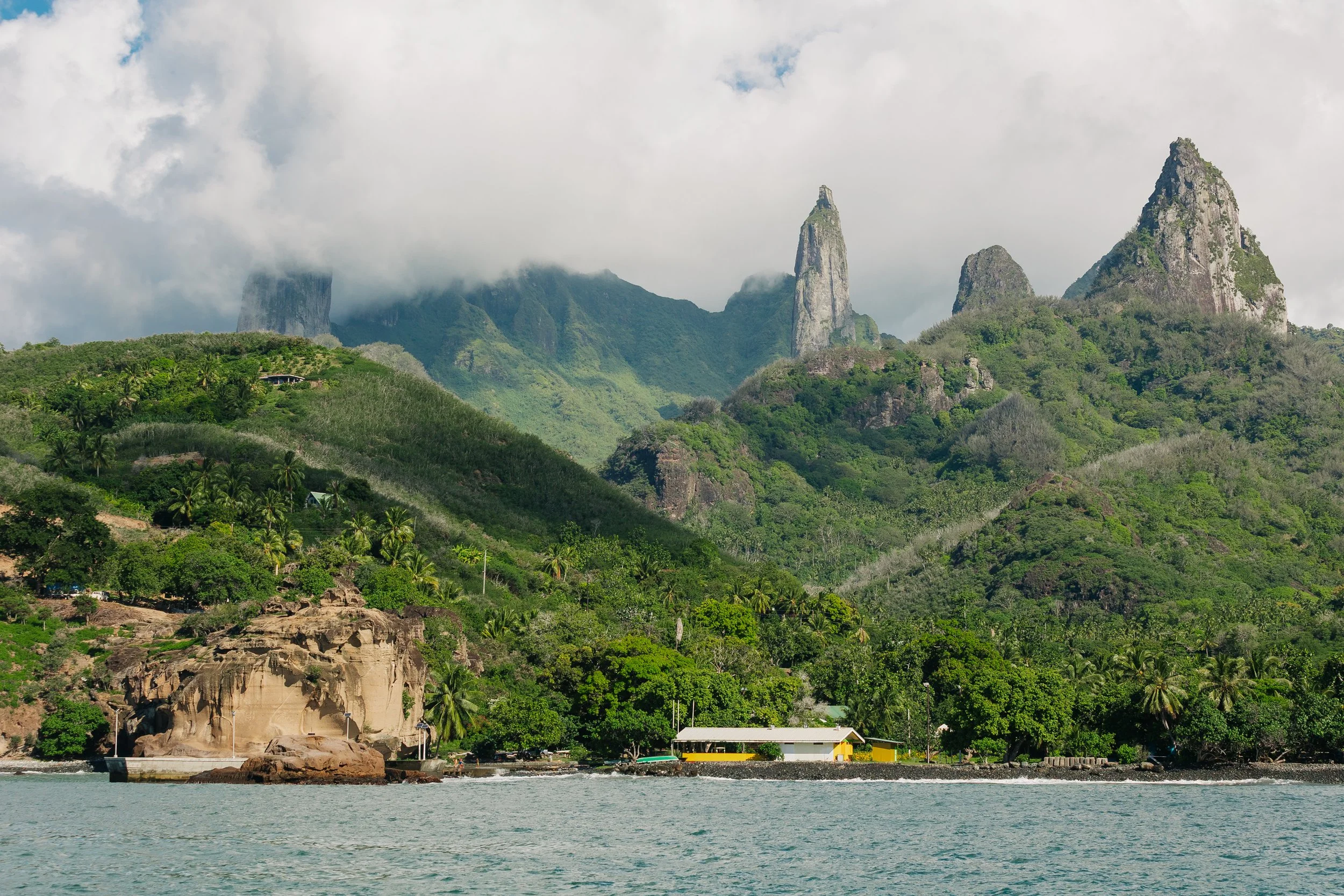
Ua Pou
Baie Hakaotu
Baie Hakaotu farther south offered a quieter kind of beauty. We snorkeled, combed the beach, and finally began cleaning the evidence of our Pacific crossing from the hull of Arcturus. During the twenty-two days from Mexico, colonies of gooseneck barnacles had attached themselves to the hull, transforming parts of the boat into a drifting ecosystem. Removing them became one of our less glamorous landfall rituals, but a necessary one. We slipped into the water with scrapers and masks, working along the hull while the boat floated gently above us. Below, the seafloor dropped toward the deeper blue.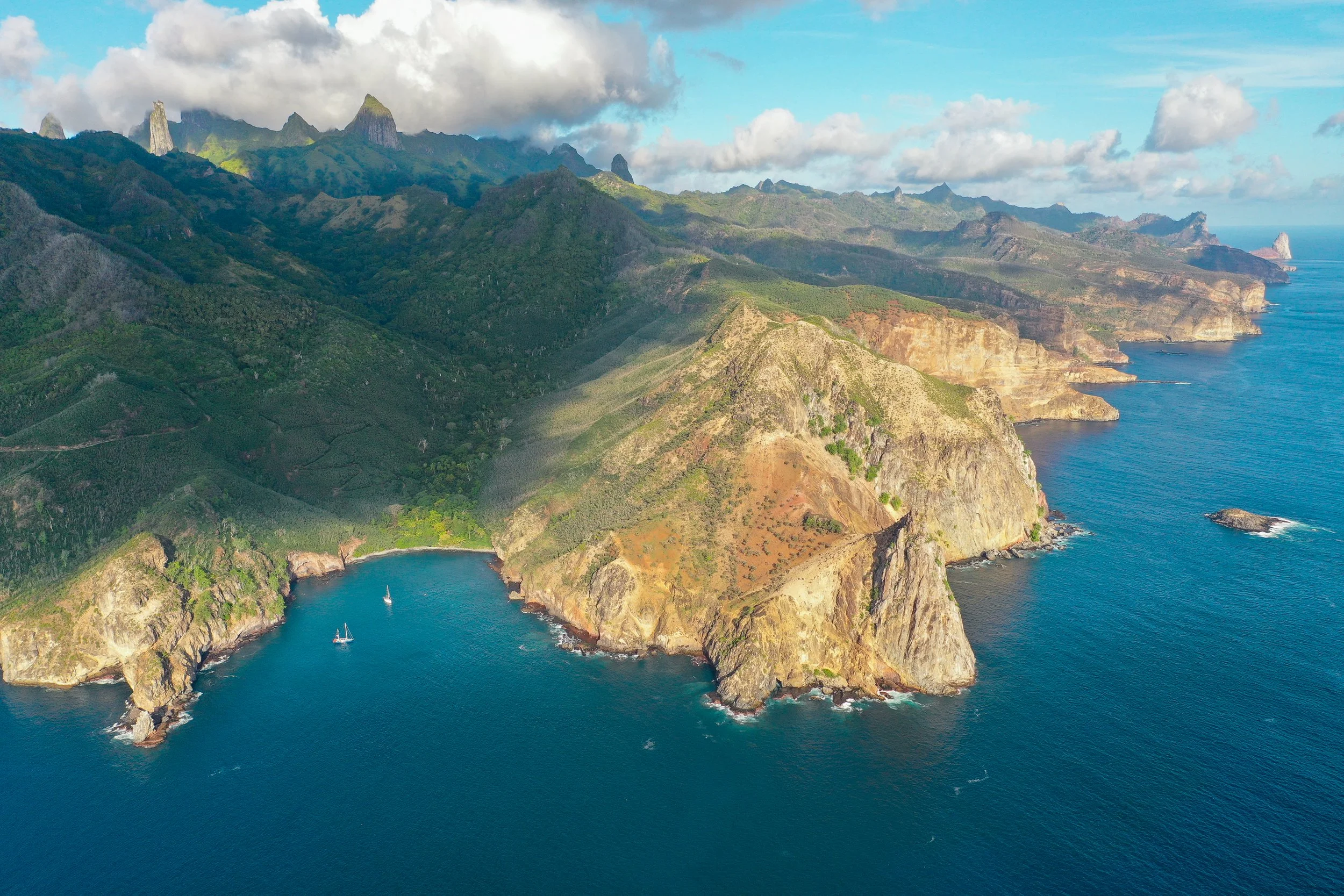
Ua Pou
Without barrier reefs around the Marquesas, the ocean does not gradually soften into shallow lagoons. Deep Pacific water begins almost immediately offshore, and the swell follows boats into many of the anchorages. That exposure made finding protected places to anchor more difficult, but it also meant that pelagic life was never far away. Manta rays, dolphins, sharks, turtles, and other open-ocean species moved close to the islands’ shores.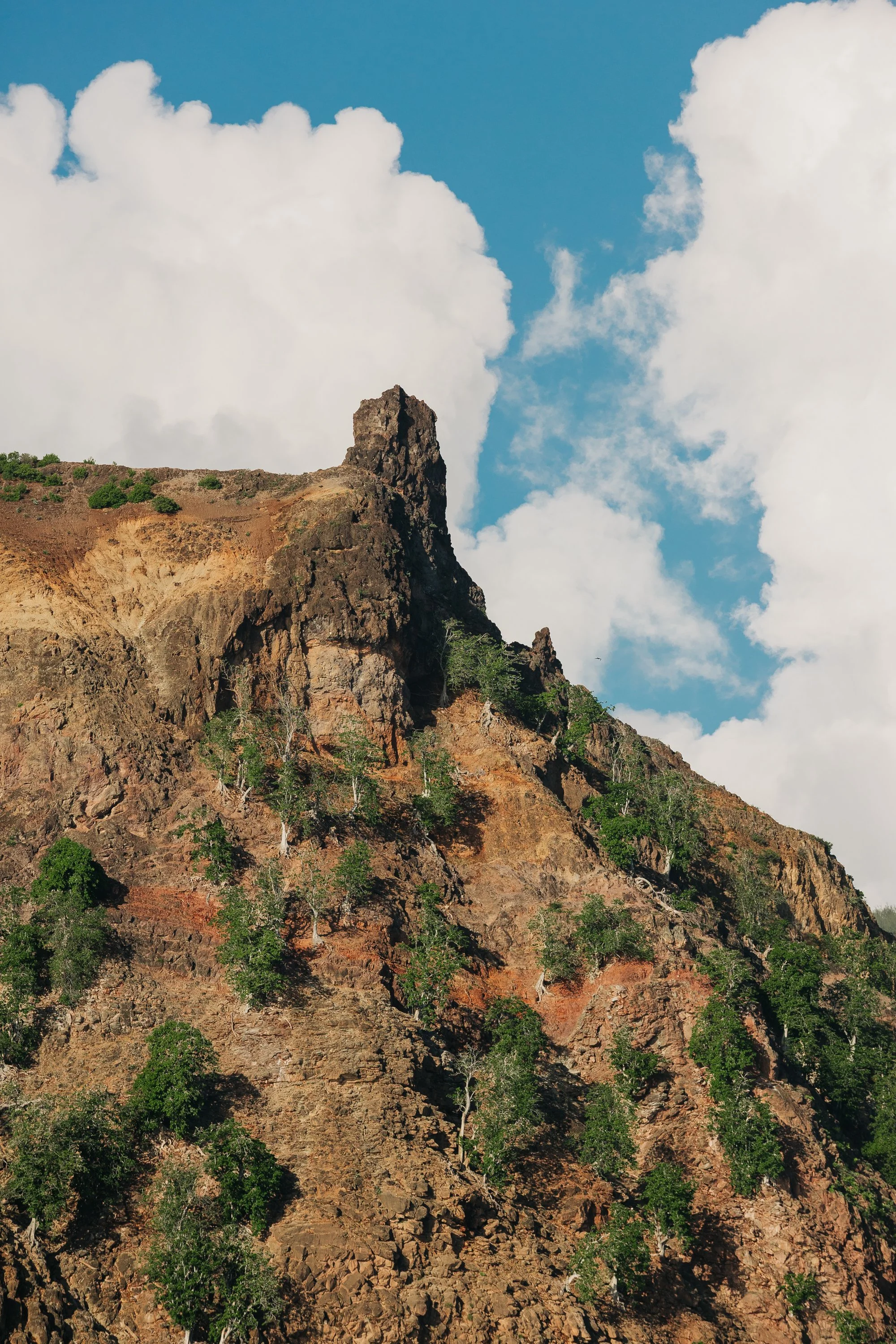
Ua Pou
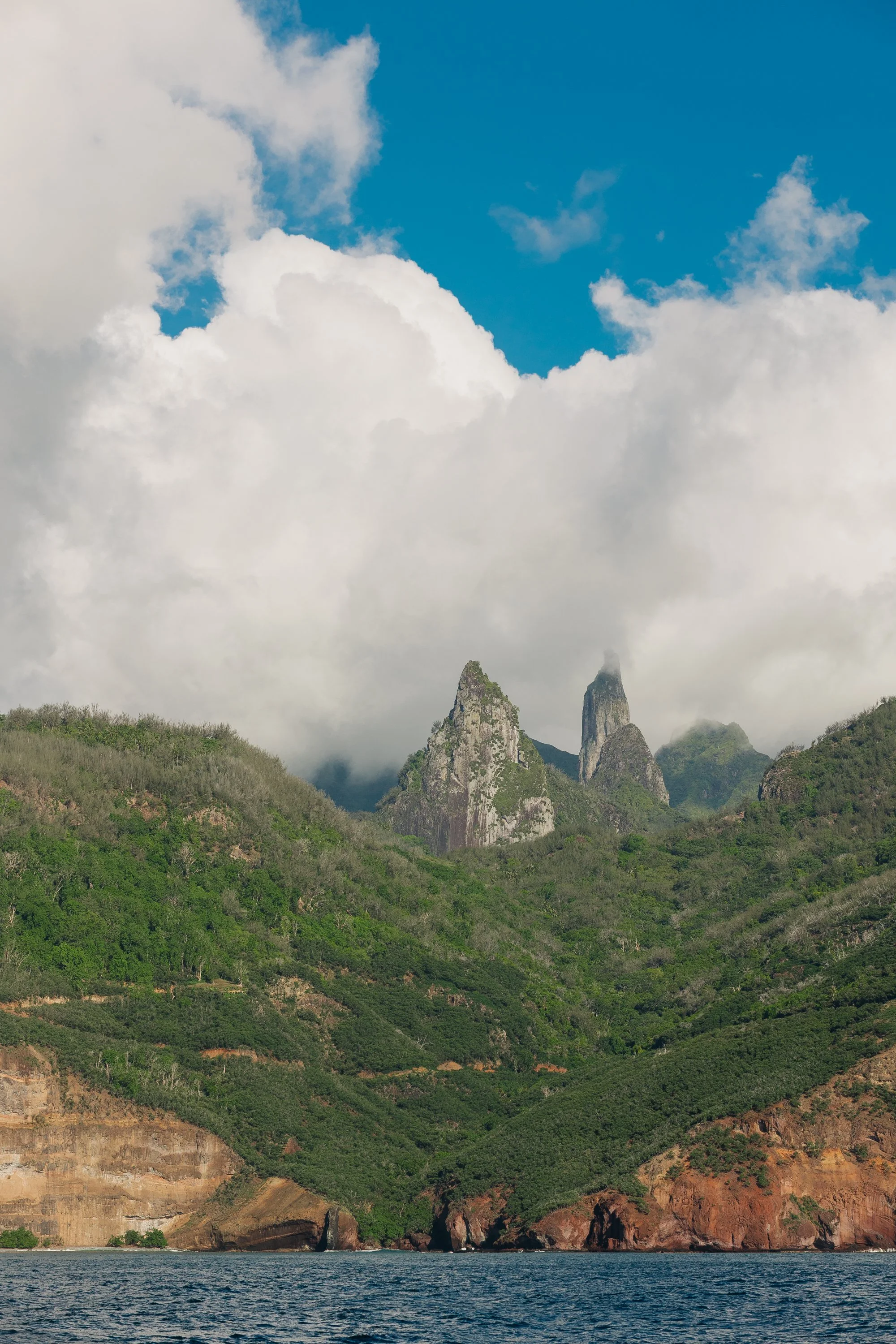
Ua Pou
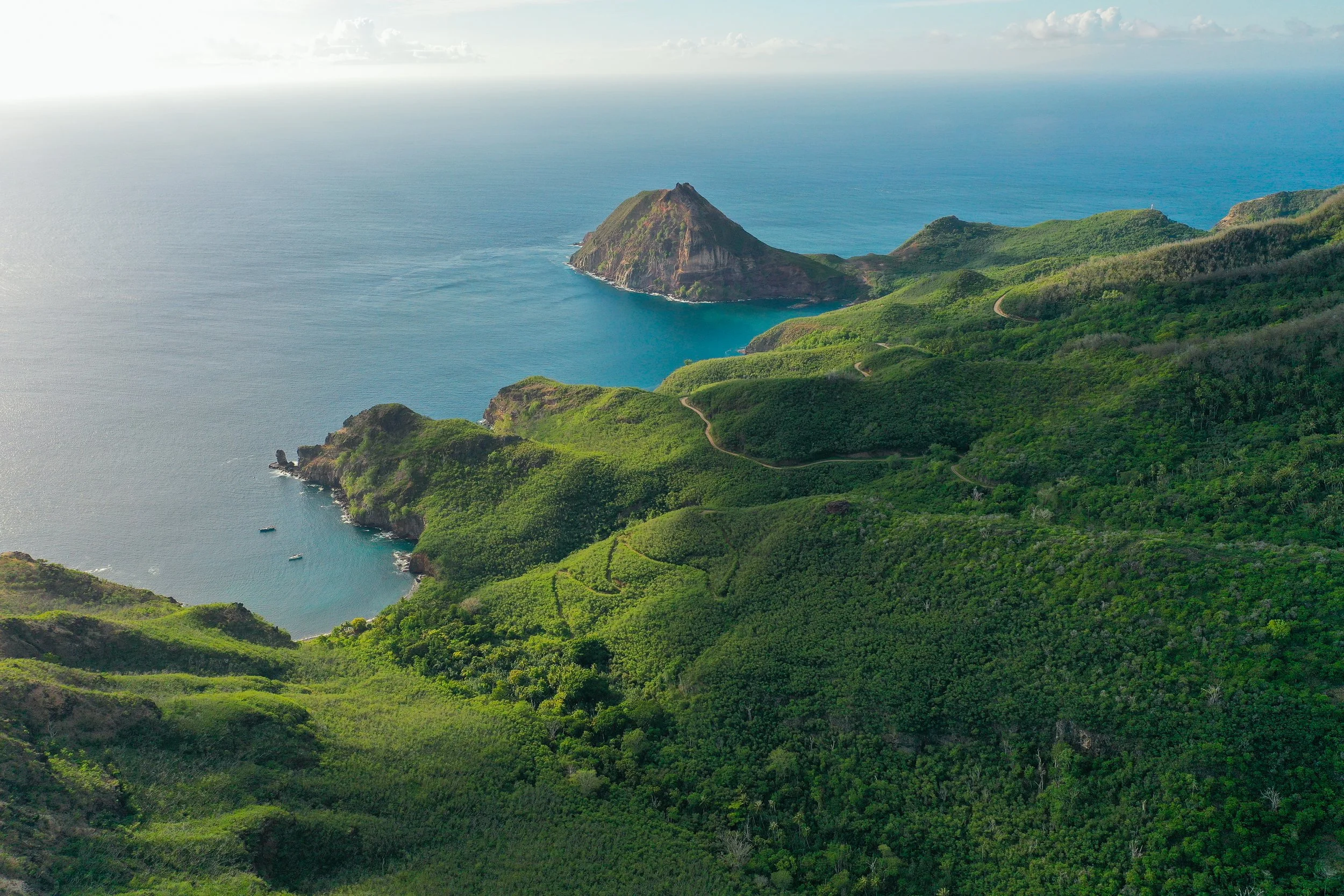
Ua Pou
In the evenings, the sun descended over the same vast Pacific we had just crossed. From the anchorage, we watched the horizon turn gold and then violet, the sea extending uninterrupted to the west. The heat, however, was relentless. We had read that March was often among the wettest and most humid months in the Marquesas, falling at the tail end of their wet season, with conditions gradually becoming less oppressive through April. All we could do was hope that seasonal change would arrive soon. Until then, the air inside the boat felt much as it had during the second half of our ocean crossing: like a perpetual sauna, and certainly not the kind that boasts dry heat.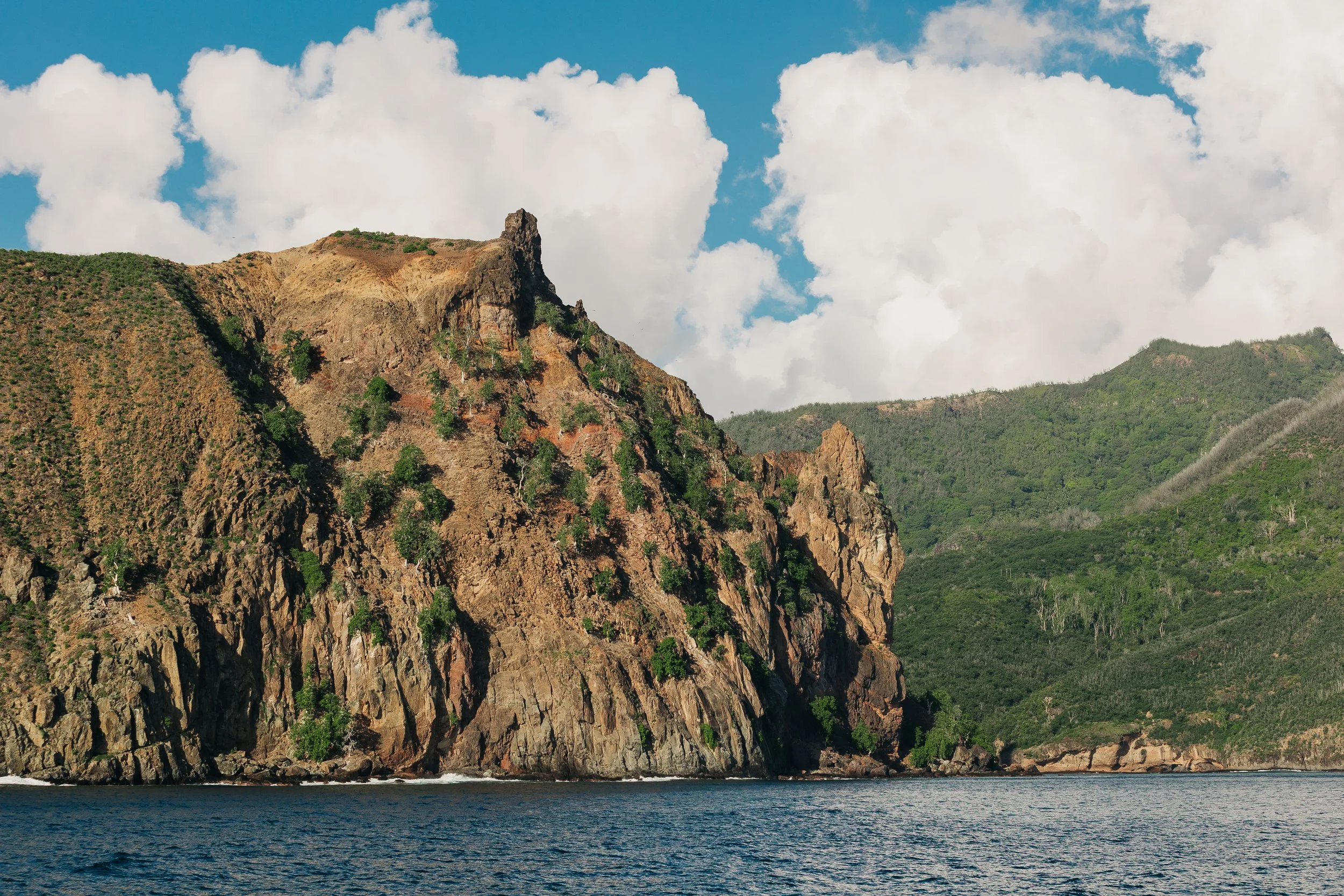
Ua Pou
Nuku Hiva: The Wild Heart of the Marquesas
From Ua Pou, we sailed north to Nuku Hiva, completing a triangle through the three inhabited islands of the northern Marquesas. Nuku Hiva is the largest island in the archipelago and, with a population of roughly 3,200 people, its most populous. Immense valleys divide its mountainous interior, while sea cliffs, waterfalls, archaeological sites, and forests make it feel almost continental compared with the smaller islands surrounding it.We would spend more time here than on any other island in the Marquesas. It was also here that we learned the practical rhythms of life in French Polynesia. Businesses often opened early, closed for an extended break during the hottest hours of the afternoon, and reopened briefly before sunset. Saturdays were quiet, and Sundays quieter still; businesses were seldom open on Saturday and almost never on Sunday. The schedule felt distinctly French, adapted to an equatorial climate.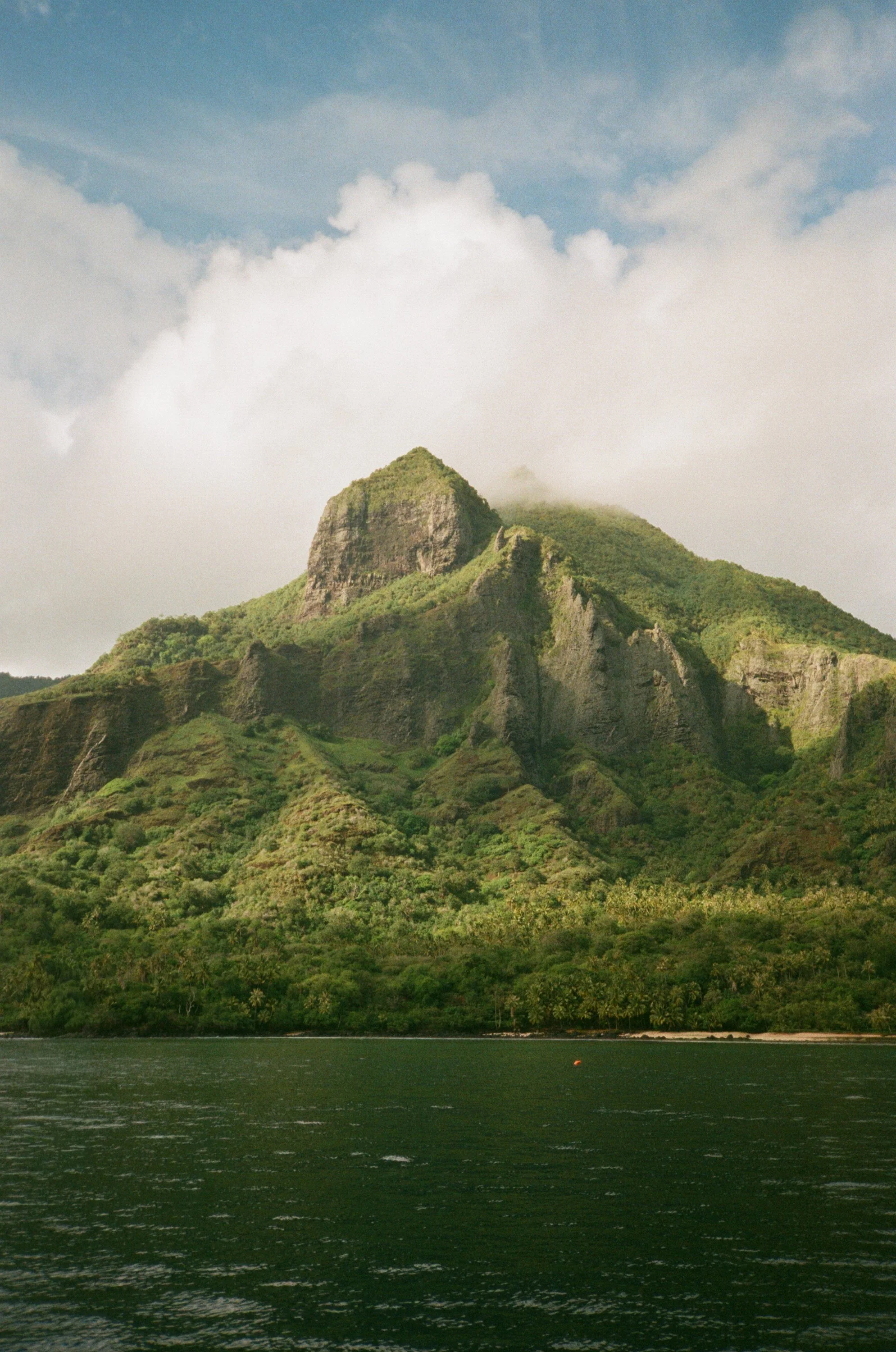
Nuku Hiva
Nuku Hiva was also where we completed our formal entry into French Polynesia. The process was refreshingly straightforward: we gathered our paperwork, visited the local gendarmerie, and had our passports stamped. Friends who had sailed through several weeks ahead of us had tipped us off about what to expect, sparing us some of the uncertainty that normally accompanies arriving in a new country by boat. Since we had joined the Pacific Puddle Jump, we also worked with Tahiti Crew, a customs agent, to help the process run more smoothly.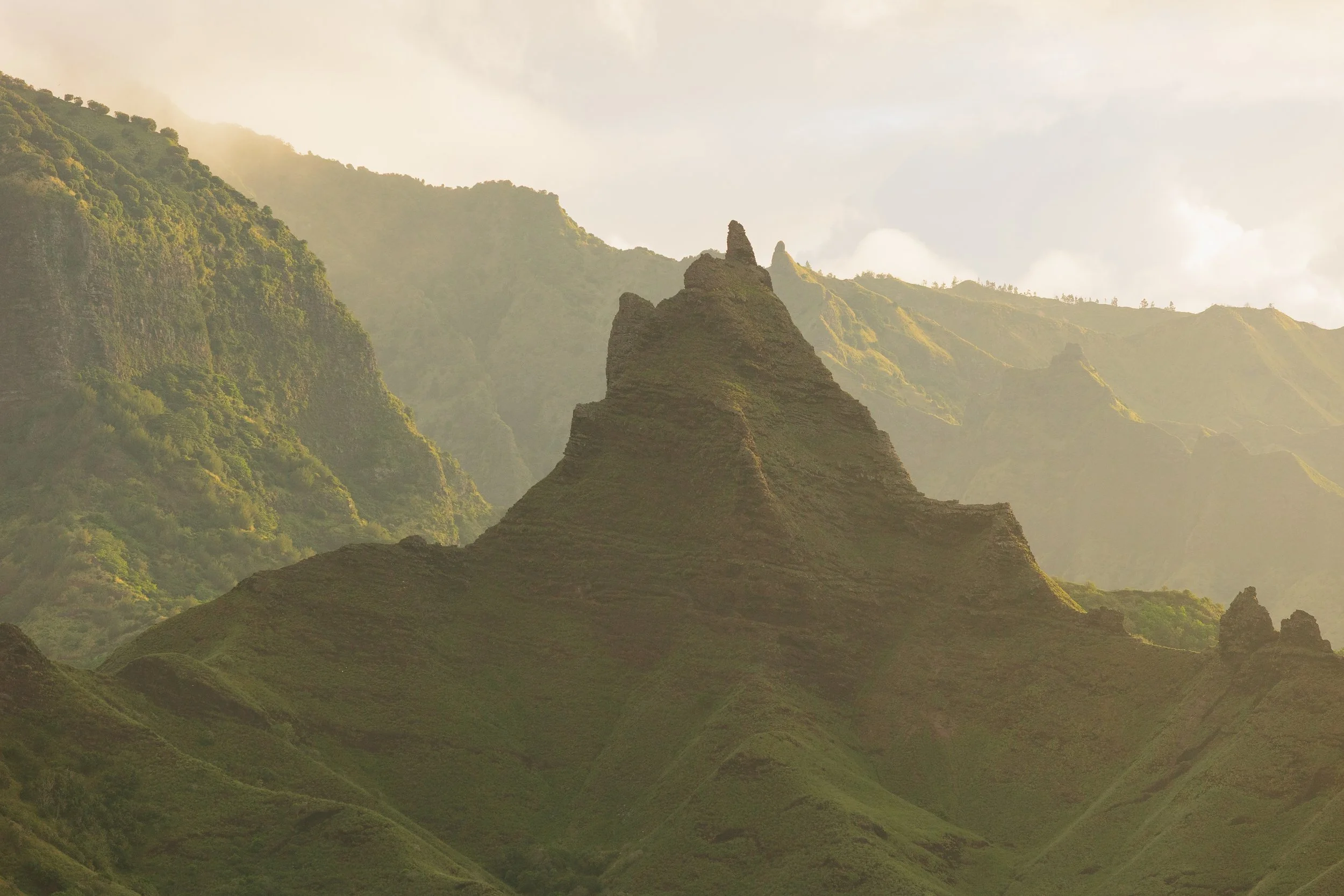
Nuku Hiva
Taiohae
Taiohae was the closest thing the Marquesas had to a city. The broad bay held government offices, shops, restaurants, fuel, and more sailboats than we had seen since leaving Mexico. We arrived around the same time as the World ARC, an organized eighteen-month circumnavigation rally whose fleet temporarily filled the anchorage. After weeks of quiet bays and sparsely populated villages, the sudden congregation of masts felt almost metropolitan.It was also here that we crossed paths once again with Bruce aboard Bob. After the gauntlet of Mexican customs and the long Pacific crossing, there was something wonderfully satisfying about seeing a familiar boat on the other side of the ocean. He invited us aboard for a cold glass of water, which felt surprisingly luxurious in the sweltering heat, and we traded stories from the crossing along with plans for where we hoped to sail next. He was ultimately bound for New Zealand, a destination that was also beginning to take shape on our own horizon.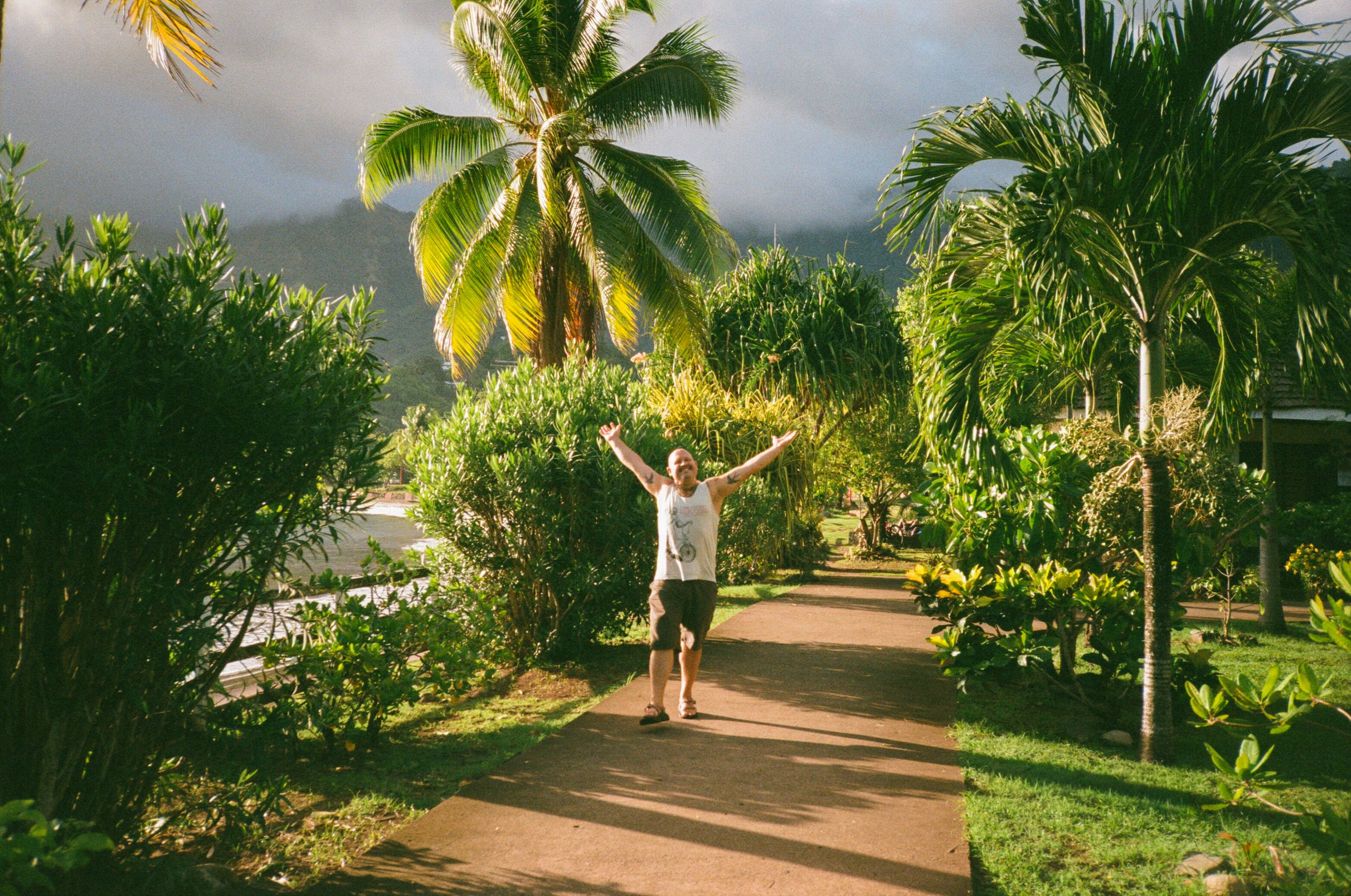
Nuku Hiva
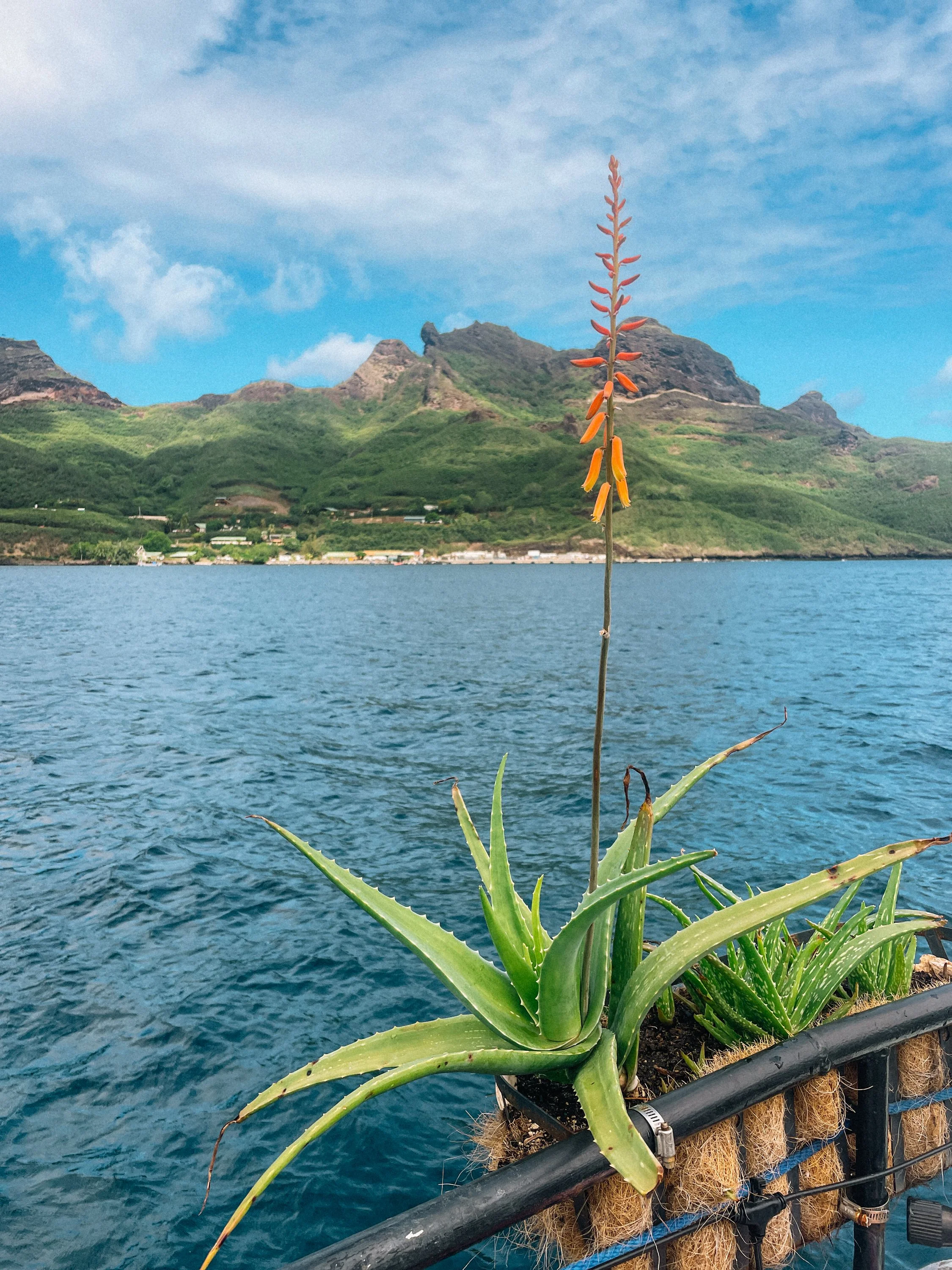
Nuku Hiva
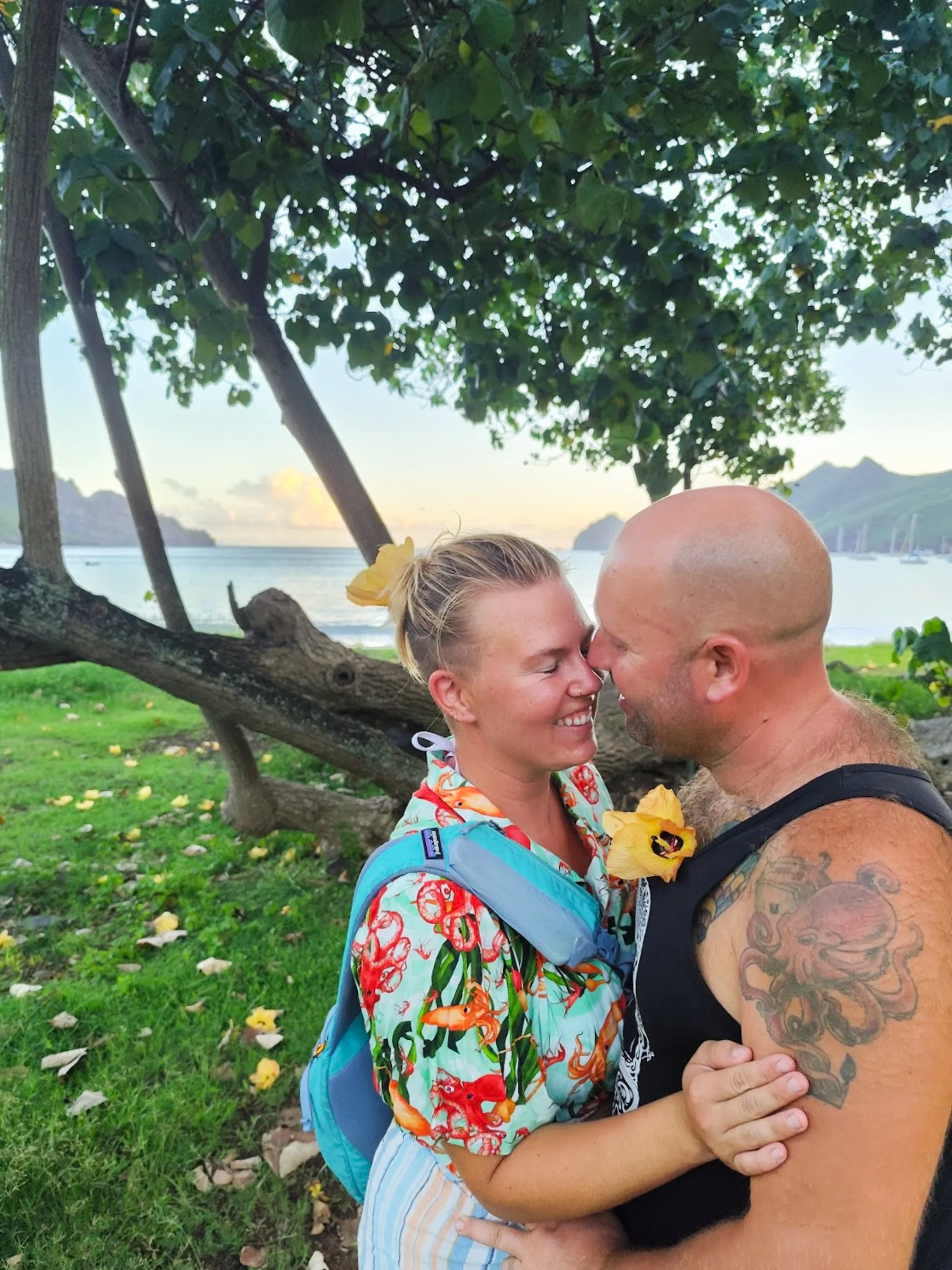
Nuku Hiva
While in Taiohae, our friends who had done the crossing with us decided to commemorate crossing the equator with tattoos. In seafaring tradition, a sailor who crosses the equator is transformed from a “pollywog” into a “shellback.” A turtle tattoo has become one way of marking that passage, although the customs and designs vary widely among sailors. There could have been few more meaningful places to receive one. Tattooing is deeply embedded in Marquesan culture. The English word “tattoo” comes from the Polynesian tatau, and the Marquesas developed one of the Pacific’s most complex and visually influential traditions. Historically, tattoos communicated identity, genealogy, social standing, achievement, protection, and relationships to family and place. Designs could cover much of the body, turning the skin into a living record. In Taiohae, the modern sailing ritual of marking an ocean crossing met an artistic tradition far older than any of our vessels.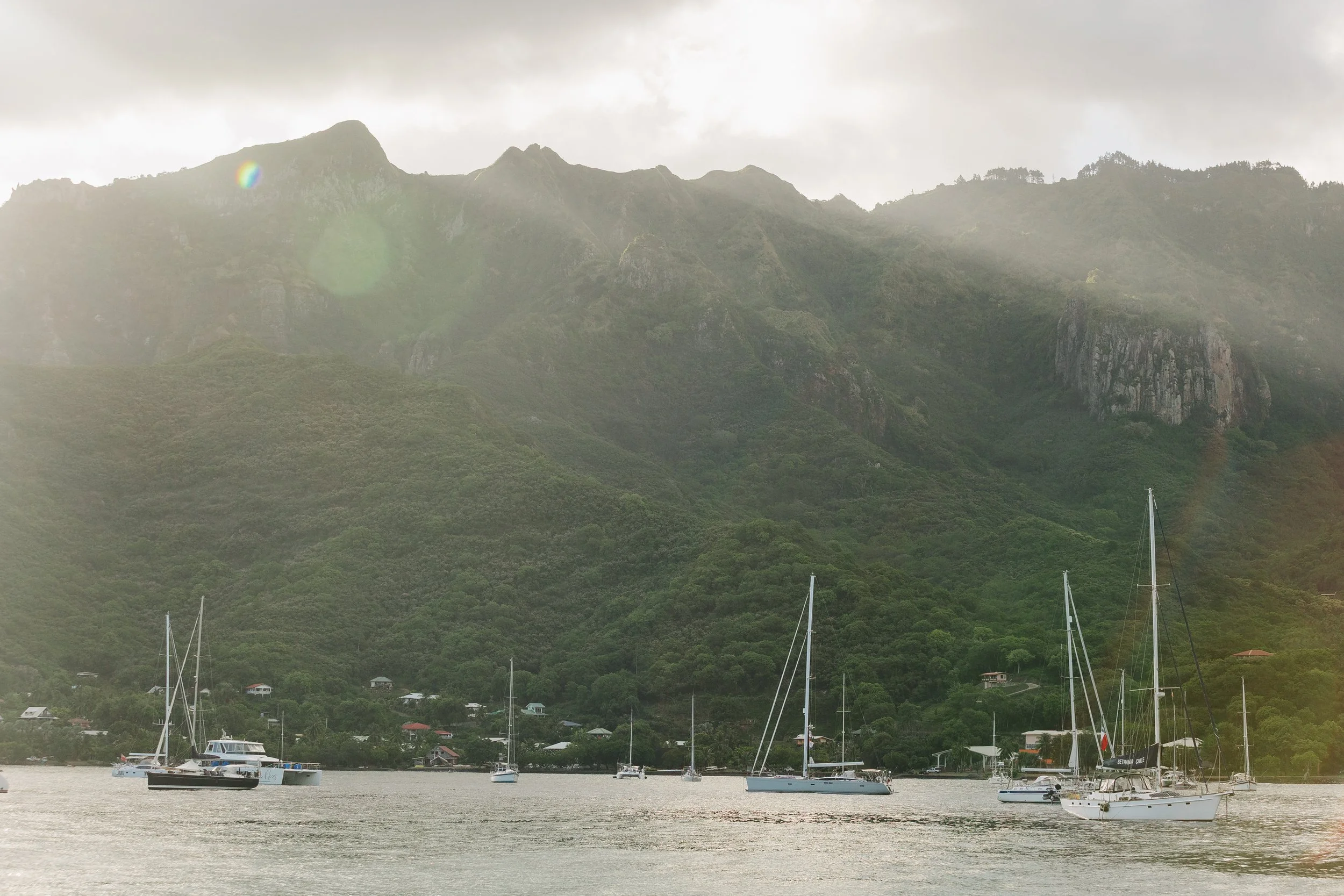
Nuku Hiva
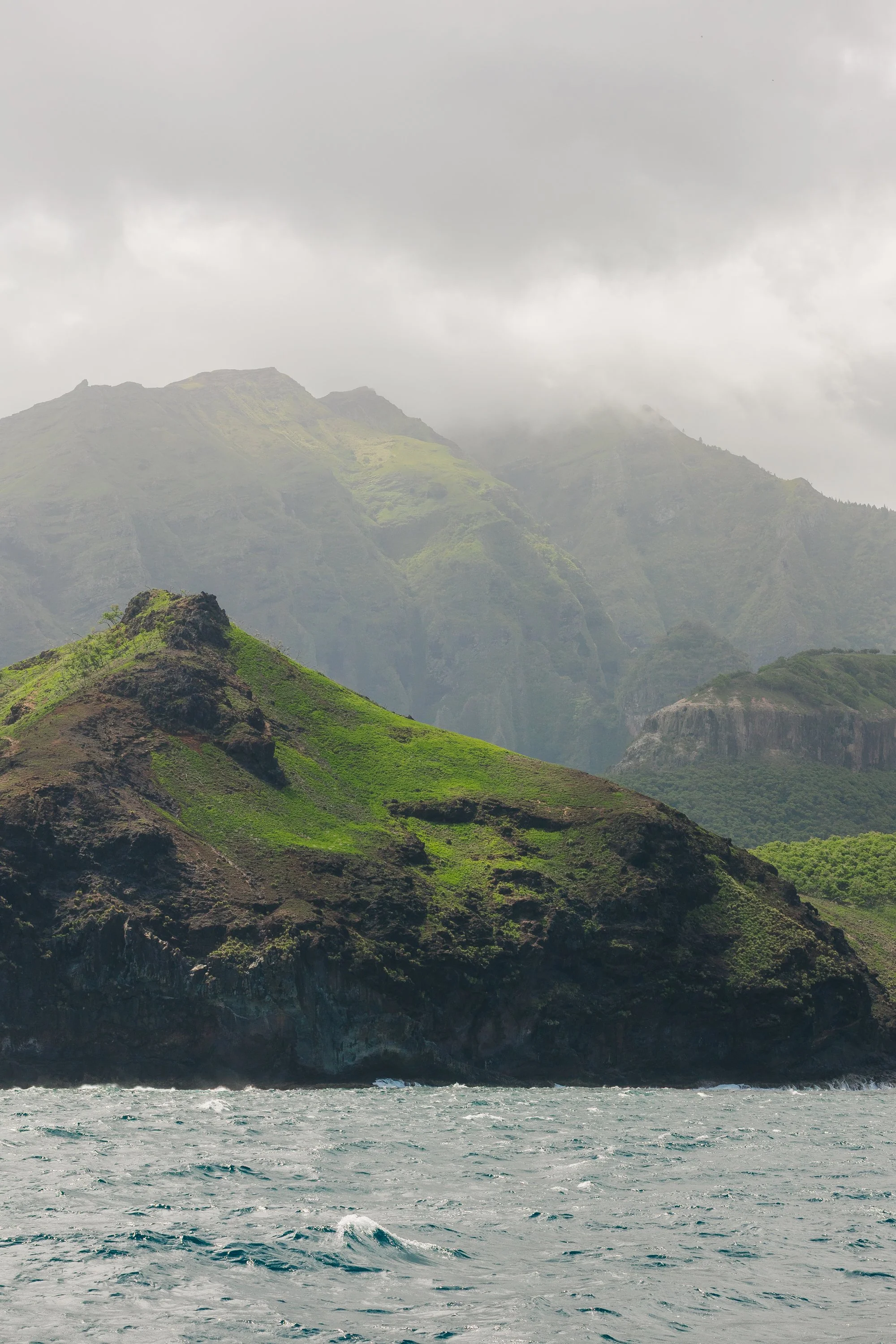
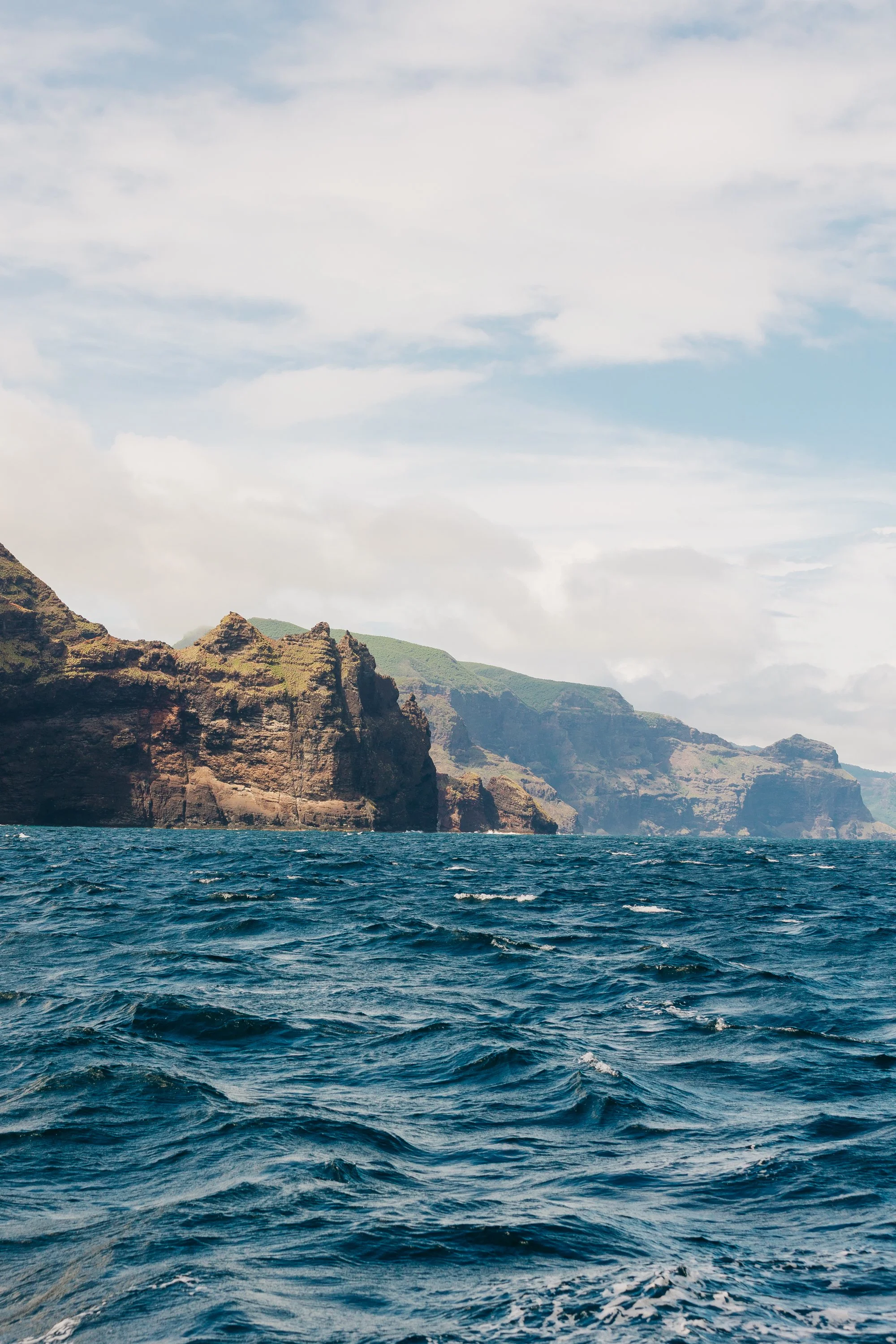
Once we bid them farewell, we were joined by four of our other friends from Alaska, who flew out to meet us in Nuku Hiva, first stopping in Tahiti and Moorea before making the roughly 870-mile flight back northeast to the Marquesas. Considering how far they had already traveled from North America, the additional journey east emphasized just how remote these islands truly were. They arrived with impressions from the Society Islands: flowers, dance, lagoons, and the softer imagery many people associate with French Polynesia. The Marquesans, they had been told, were the warriors and cowboys of the islands: strong, rugged, and proud of a culture shaped by mountains, horses, ocean crossings, and physical artistry.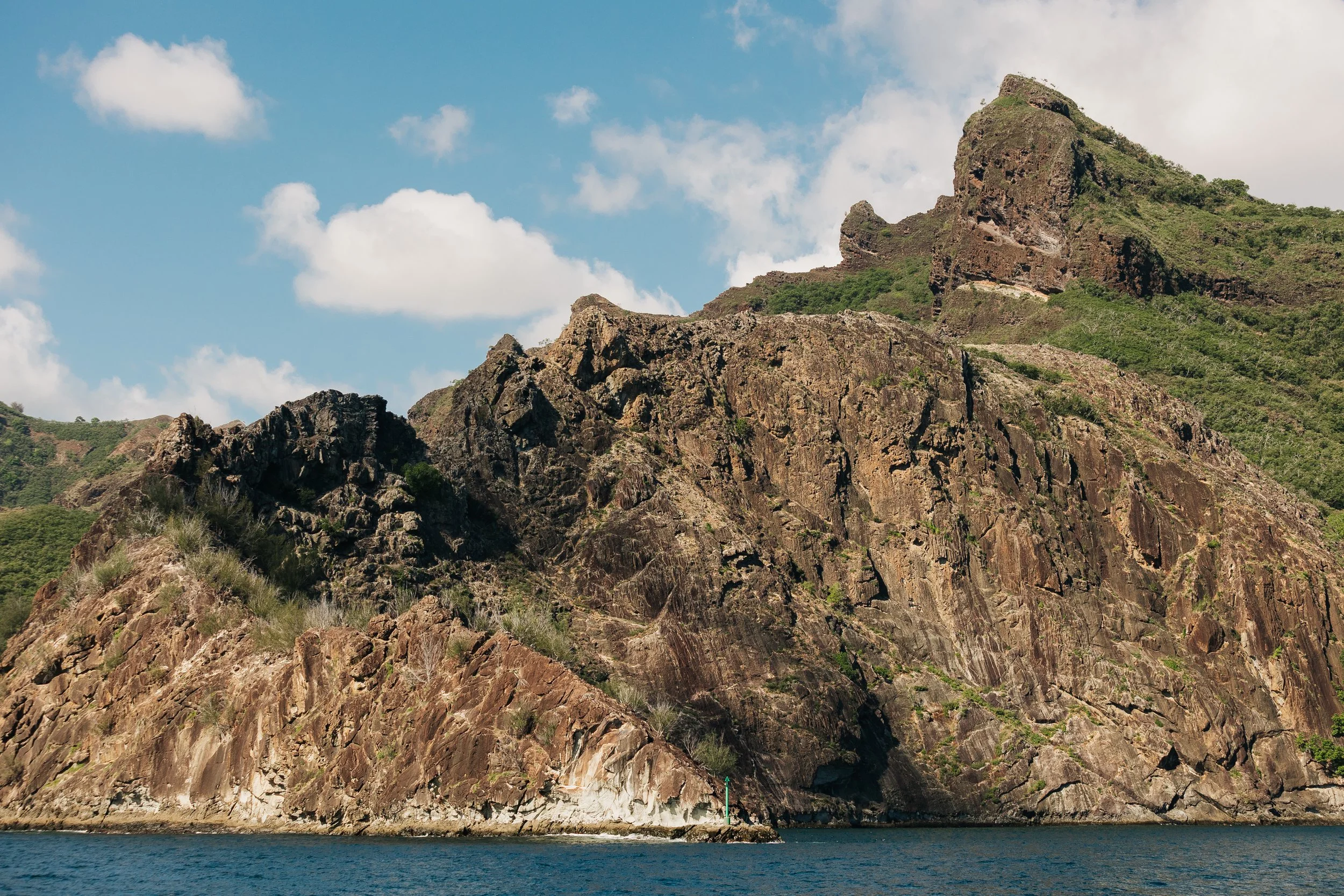
Nuku Hiva
Nuku Hiva
Nuku Hiva
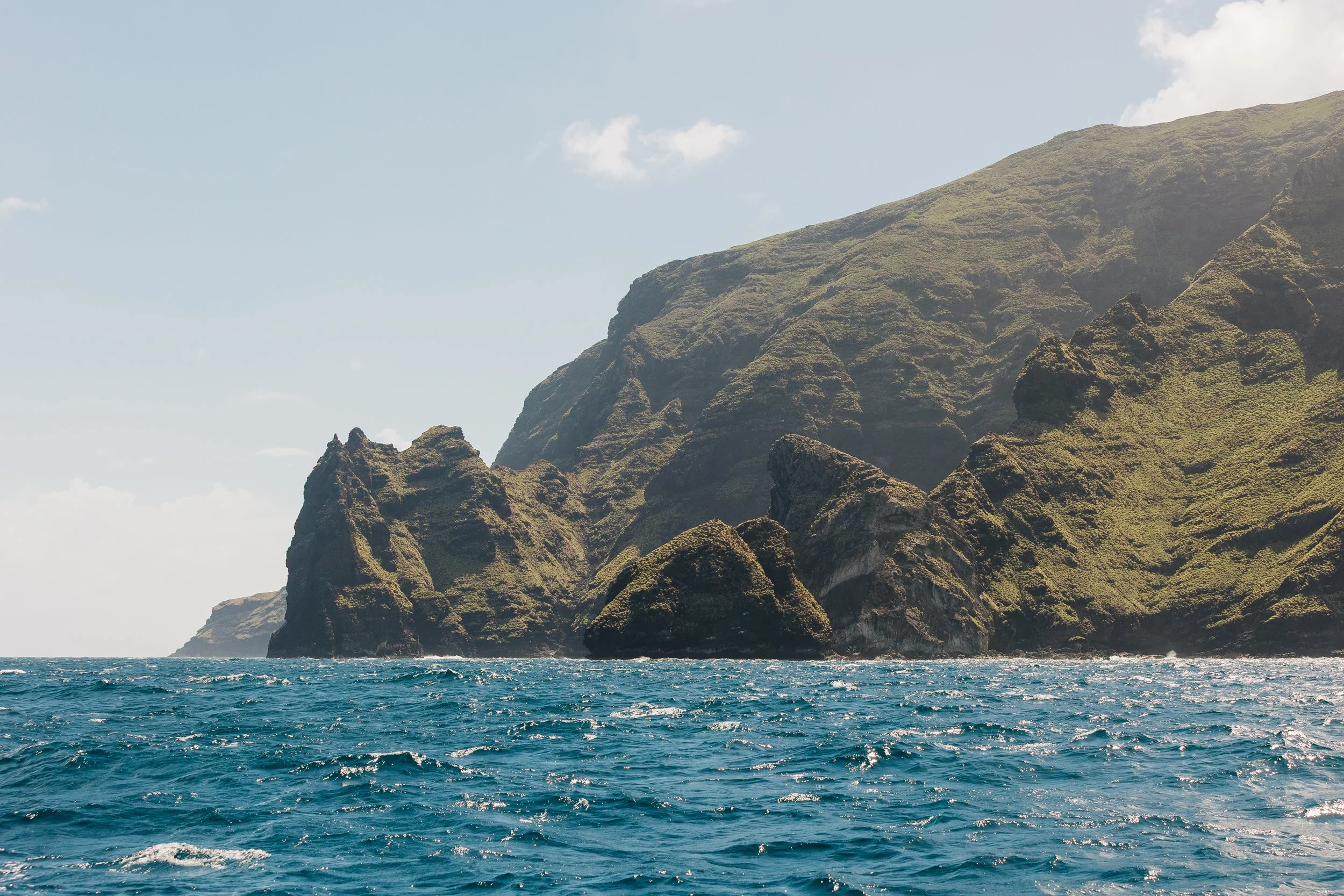
Nuku Hiva
Hakaui Valley
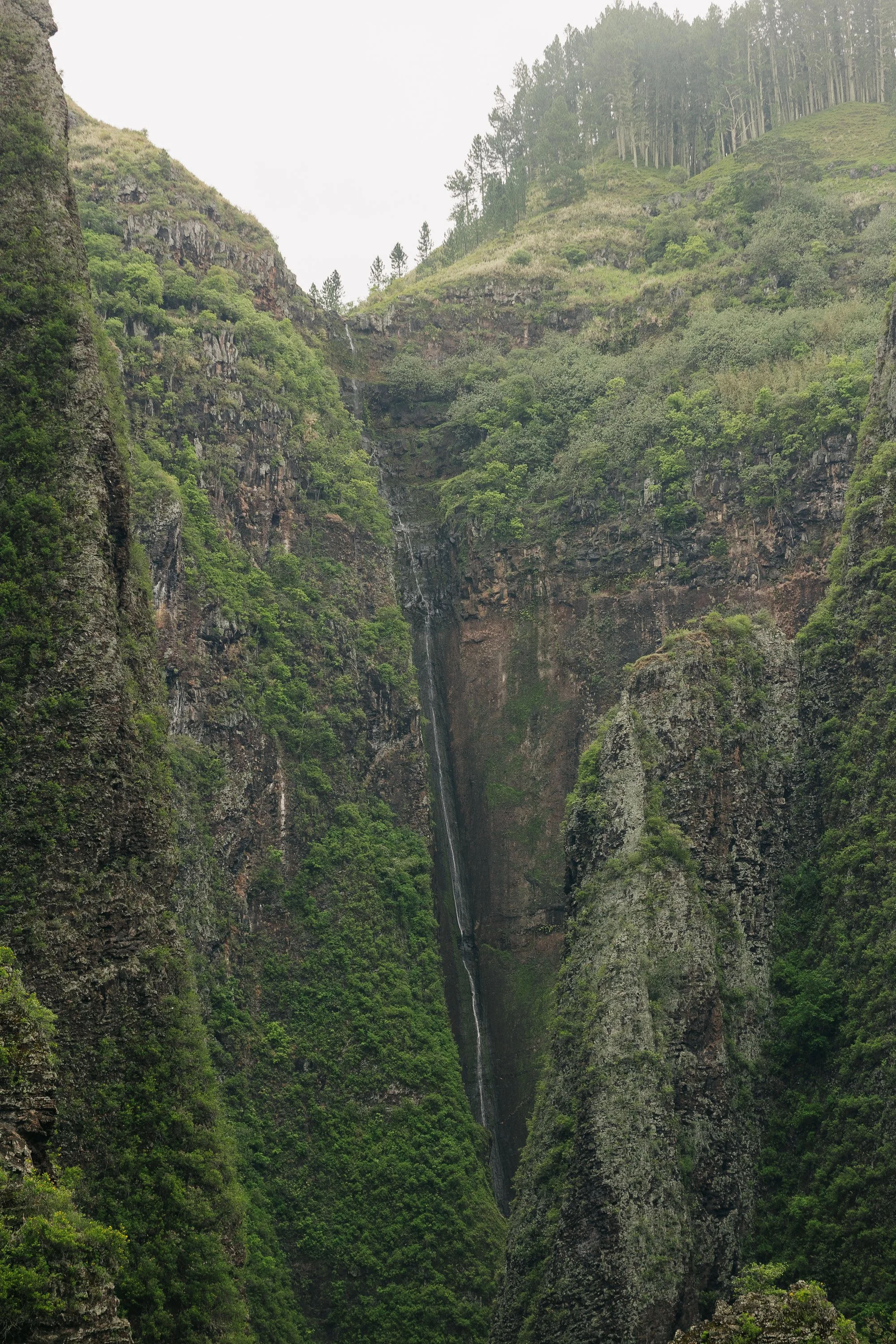
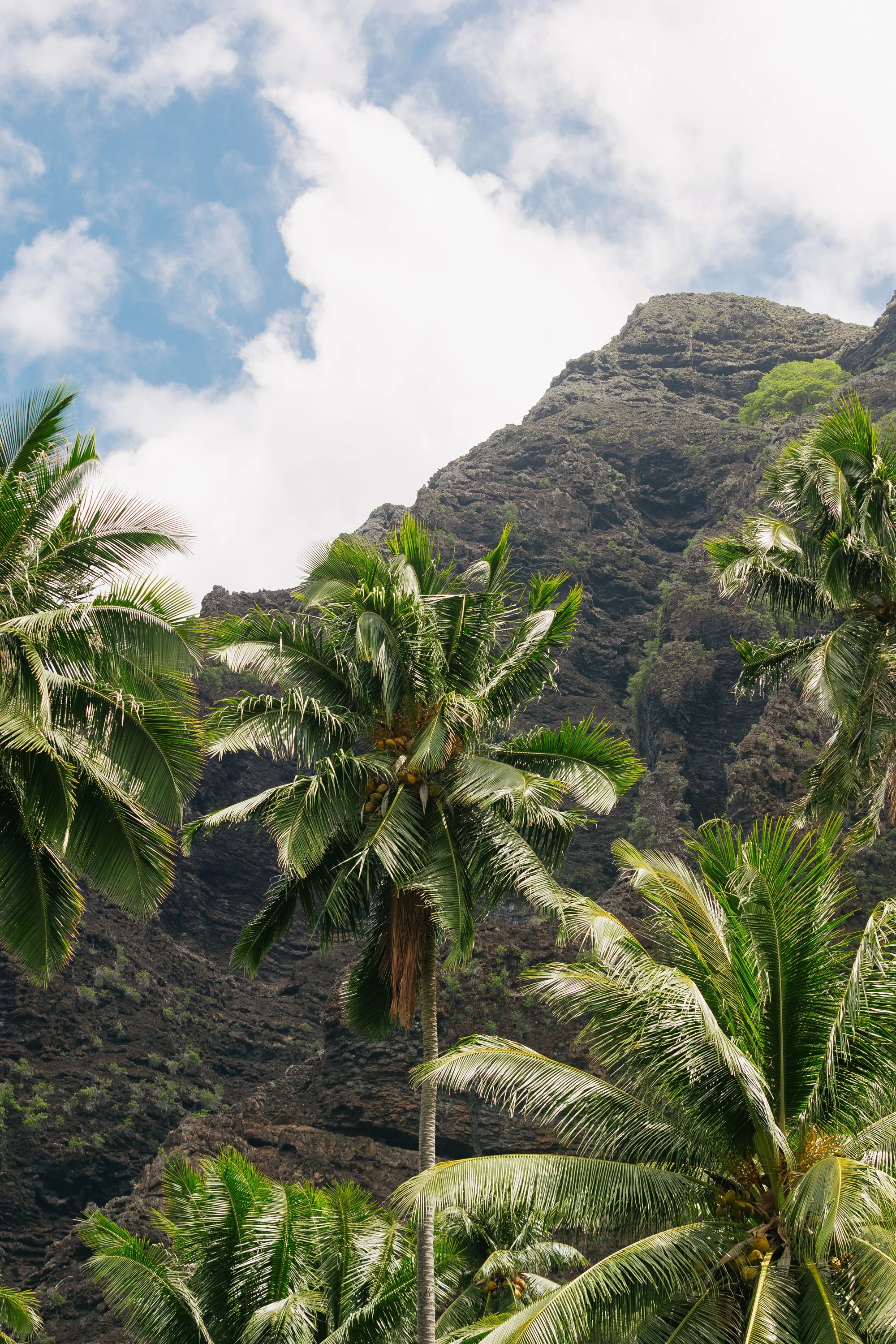
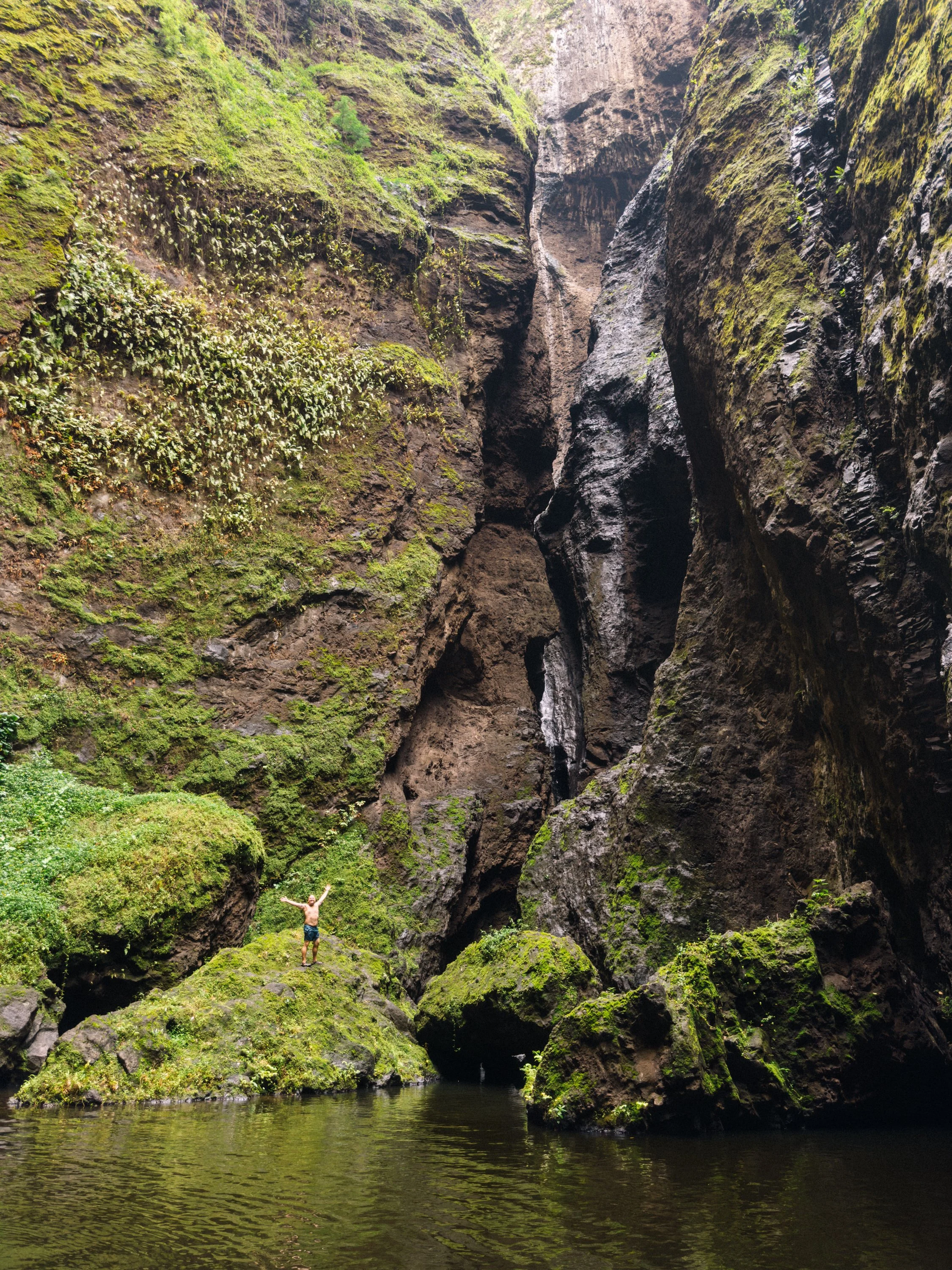
From Taiohae, we traveled into Hakaui Valley, where the rock walls in the bay rose steeply and the landscape seemed to close around us. Towering cliffs stood on either side, draped in vegetation and carved by streams descending from the mountains. Deep within the valley, Vaipo Waterfall drops roughly 1,150 feet from the cliffs above, disappearing and reappearing behind trees and mist. Today, only a handful of people live in Hakaui. Its quietness makes it difficult to imagine the scale of the community that once occupied the valley. The waterfall may be the destination most people come to see, but the valley itself tells a much larger story.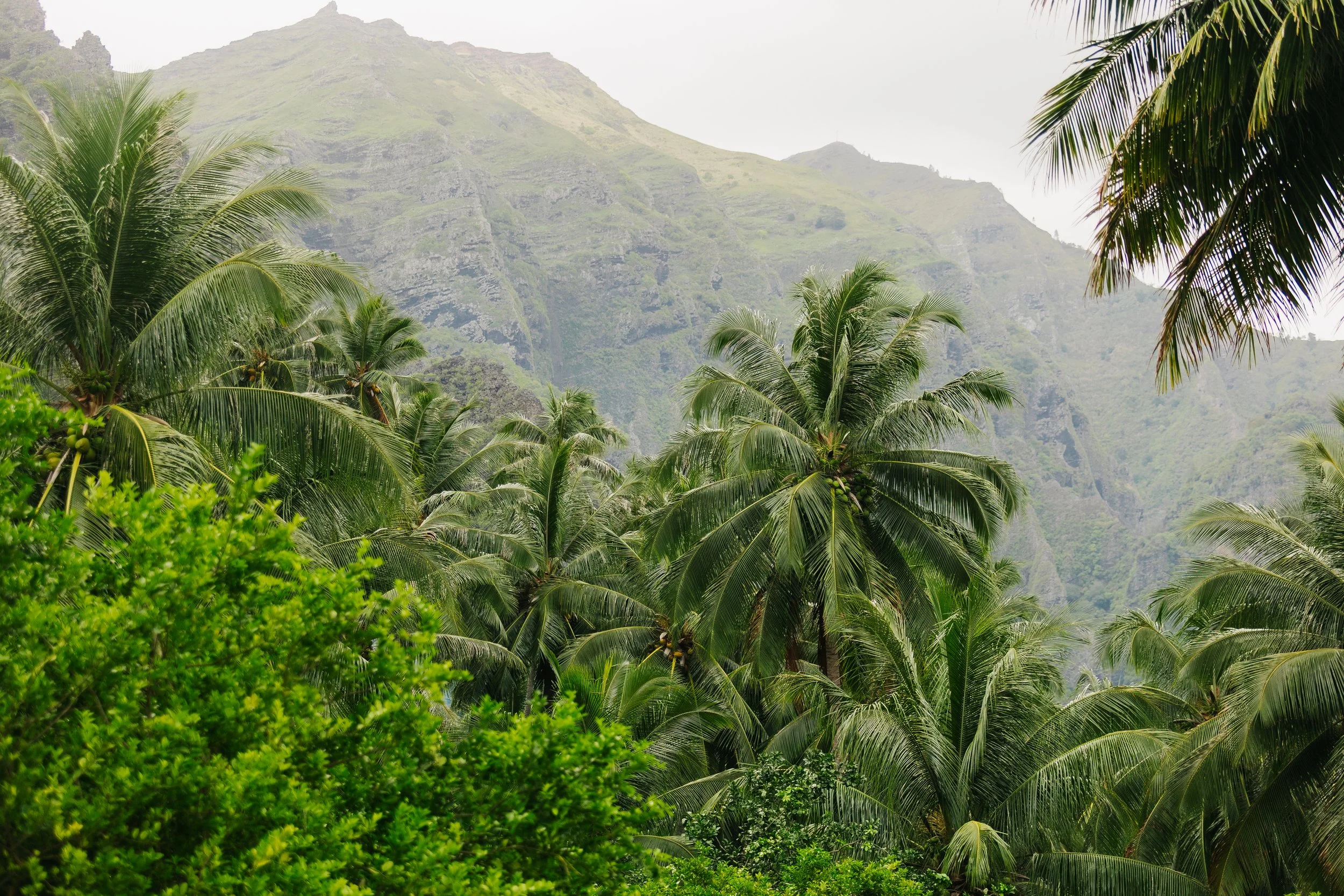
Nuku Hiva
Nuku Hiva
Nuku Hiva
Before European contact, Hakaui was one of Nuku Hiva’s principal population centers. Historical accounts and oral traditions describe settlements extending from the coast deep into the interior. The fertile valley supported breadfruit, taro, bananas, coconuts, and other crops, sustaining a population that may once have numbered in the thousands. Some oral histories place the figure as high as eight thousand, although that estimate has not been archaeologically confirmed. The Marquesas as a whole are thought to have once supported between 50,000 and 100,000 inhabitants. Today, the entire archipelago has a population of approximately 9,500. Diseases introduced after European contact spread through communities with no prior immunity, and by the late nineteenth and early twentieth centuries, the Marquesan population had been reduced to only a fraction of its former size.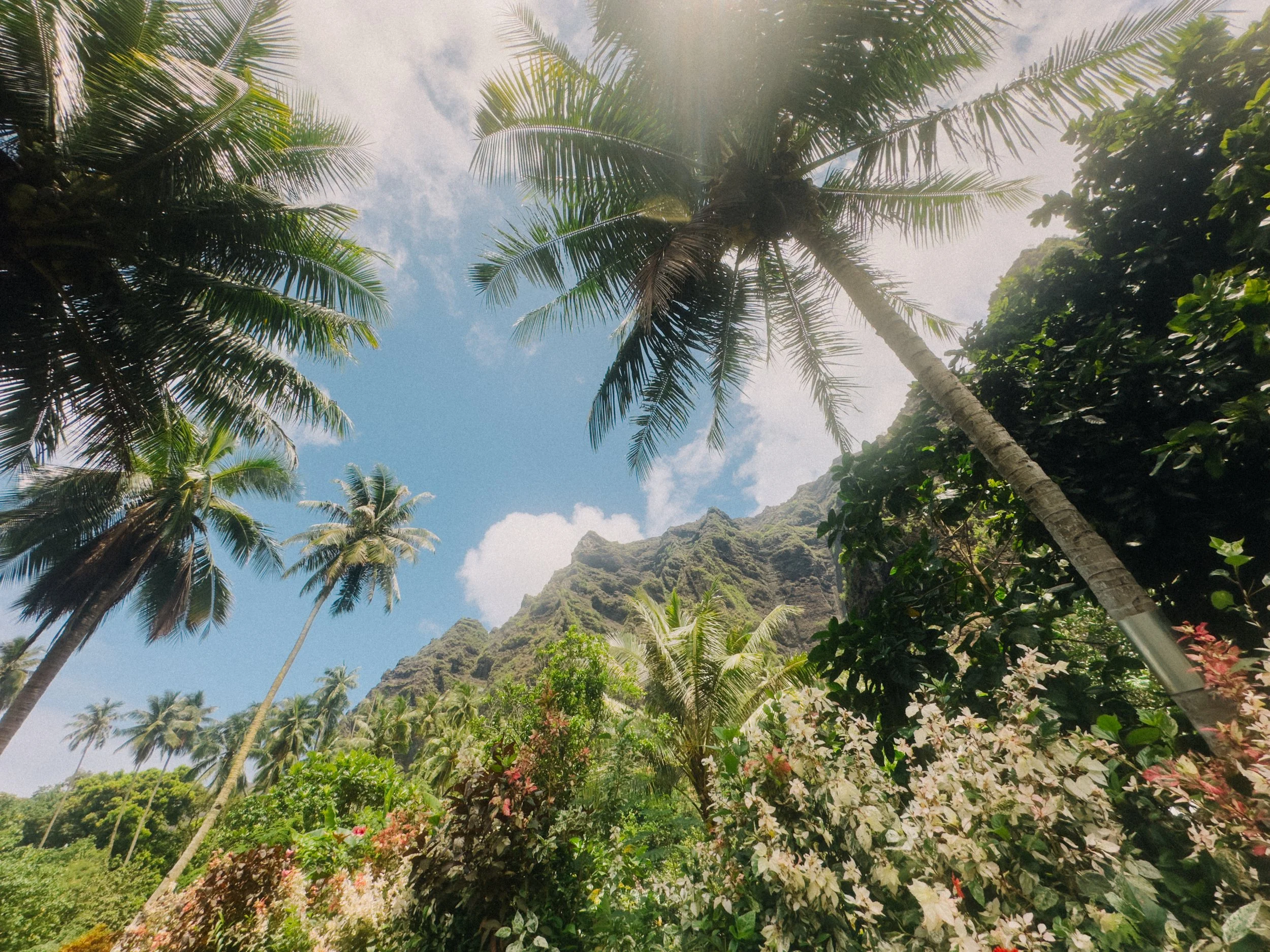
Nuku Hiva
Nuku Hiva
Nuku Hiva
Walking through Hakaui, traces of that earlier world remain beneath the forest. Stone house foundations, known as paepae, lie among breadfruit roots and vines. Ceremonial spaces, agricultural terraces, and sacred sites are scattered across the valley, often so thoroughly absorbed by the vegetation that visitors may pass them without realizing they are walking through the remains of a once-thriving cultural landscape.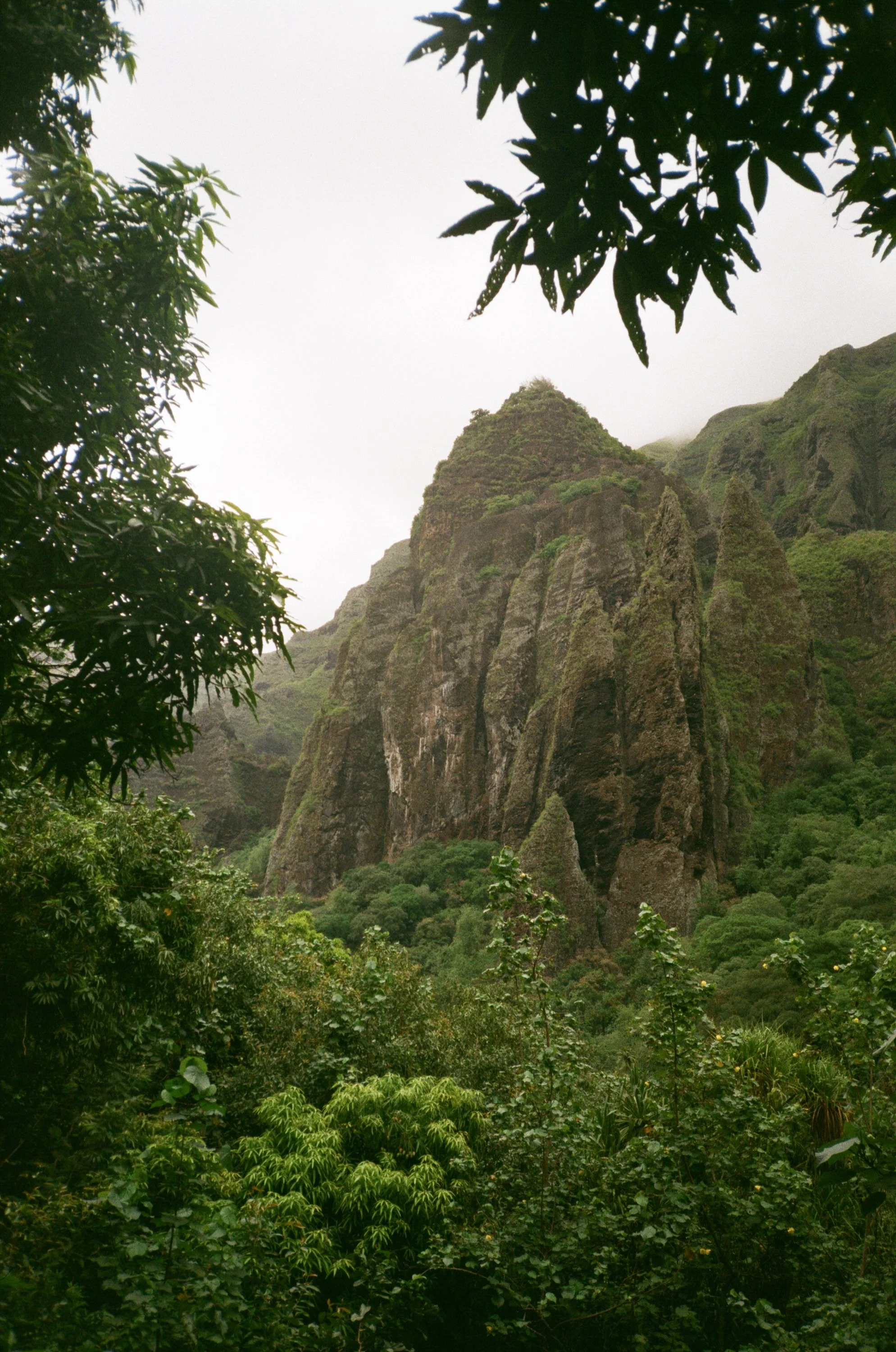
Nuku Hiva
Around the Northern Coast
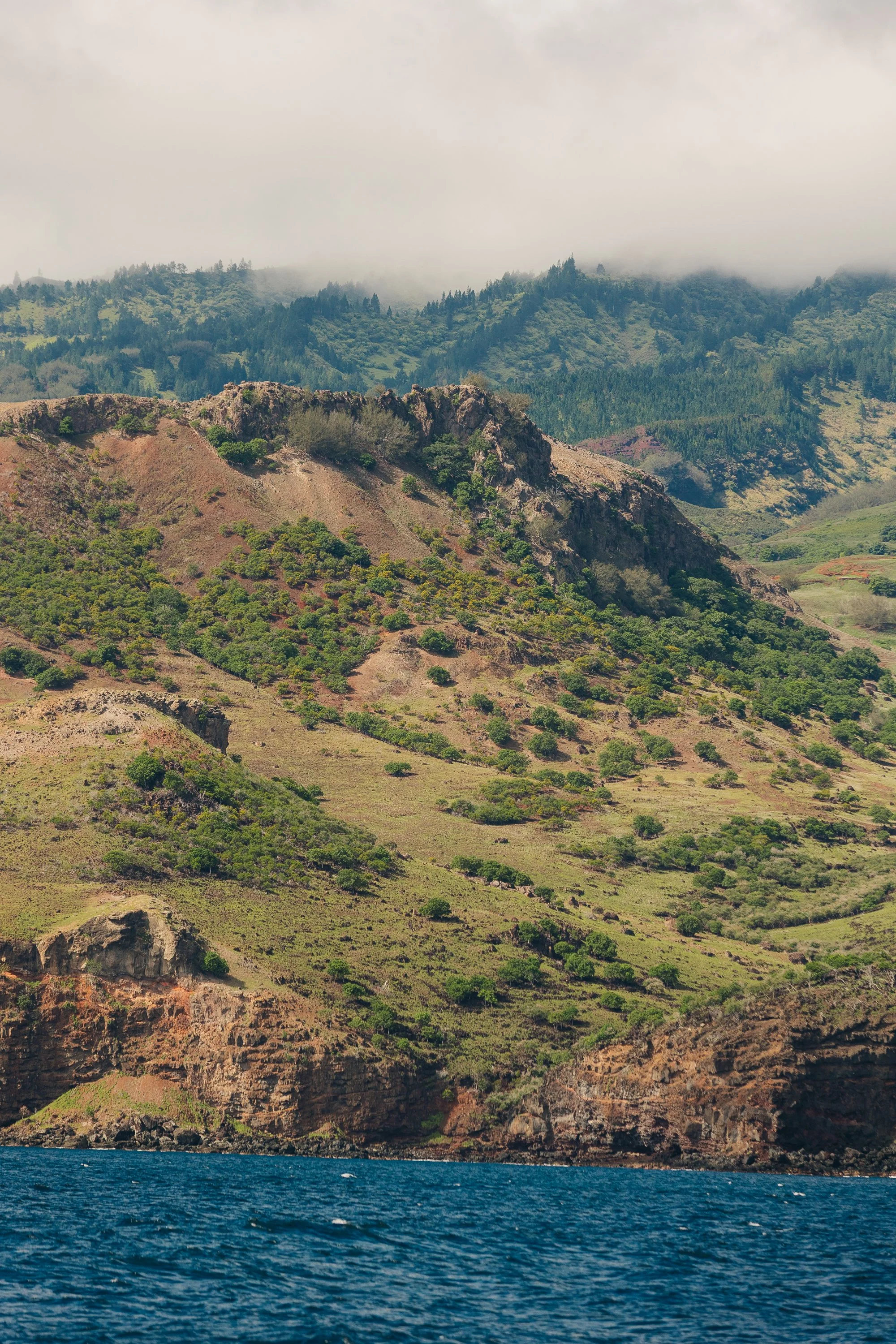
Sailing around the northern “backside” of Nuku Hiva revealed yet another version of the island. High in the mountains, we could see pine trees rising above the tropical vegetation, another unexpected sight in the middle of the Pacific. Roads climbed inland from the coast, disappearing into high country hidden from those of us traveling by sea. Our friends told us about renting a car near the airport and driving through the mountains before joining us aboard. Their descriptions made us wish we had done the same. Sailing offers an intimate view of coastlines, but it can also leave an island’s interior tantalizingly out of reach. In hindsight, exploring those mountain roads is one of the things we would most want to return and do.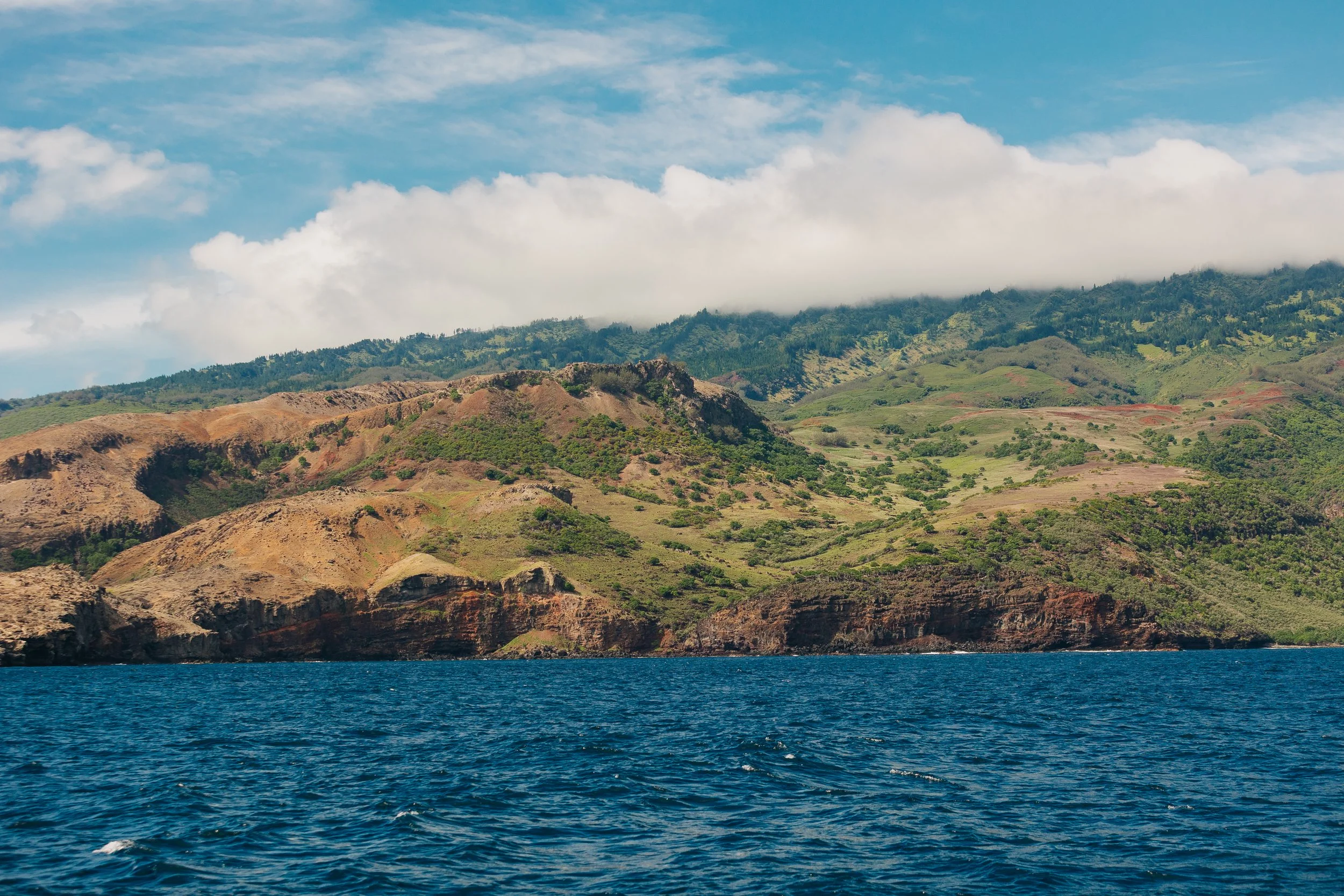
Nuku Hiva
Nuku Hiva
Nuku Hiva
Nuku Hiva
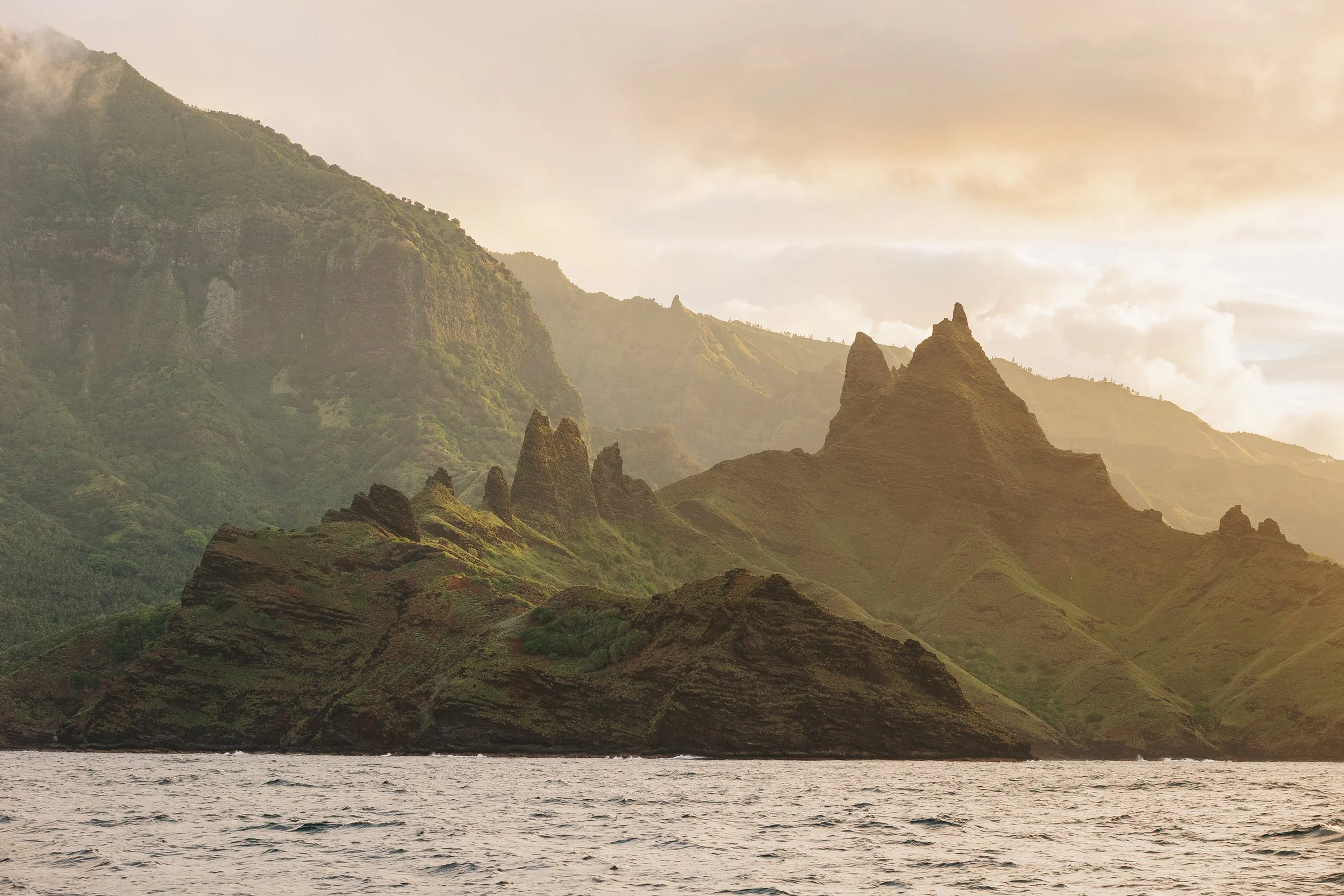
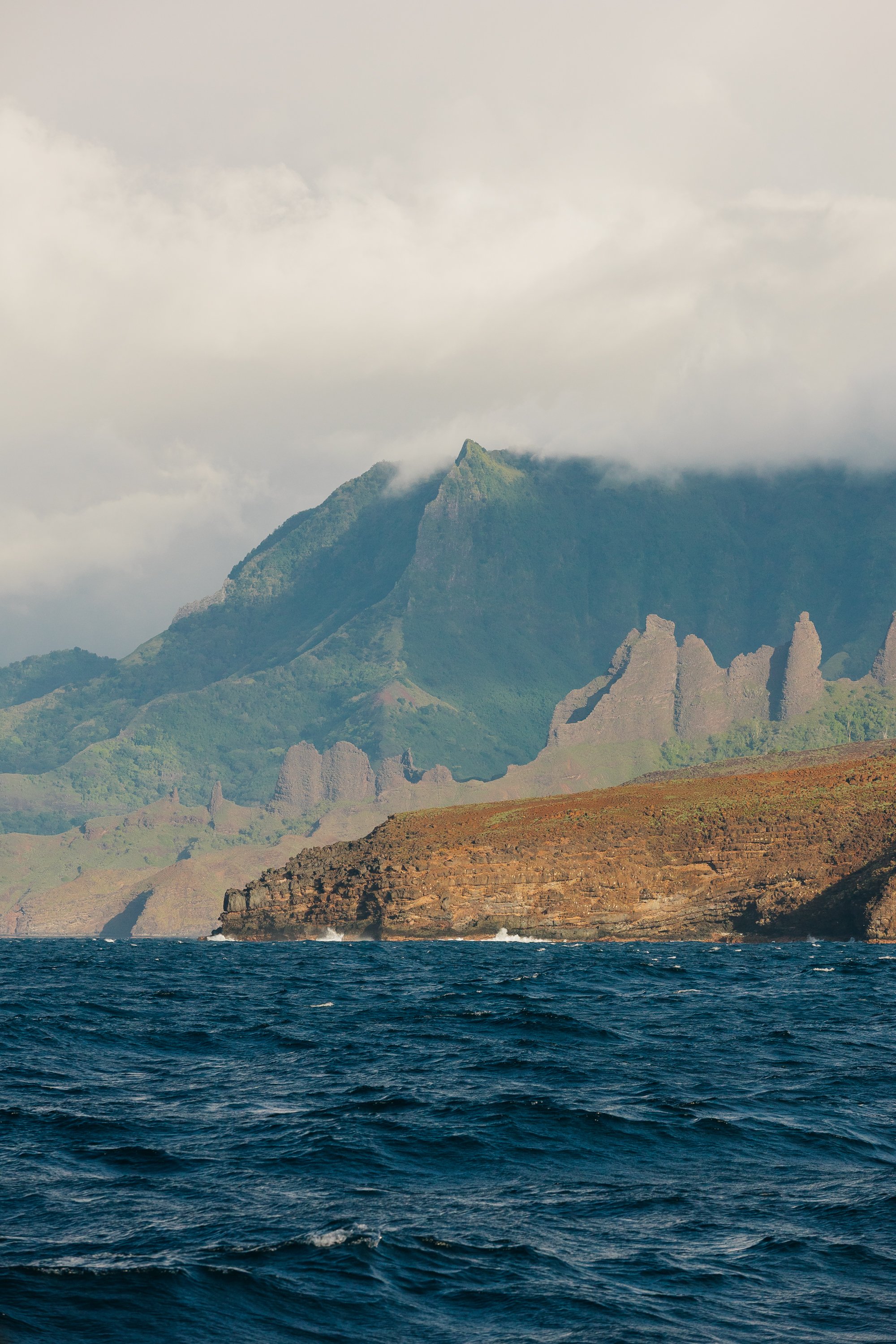
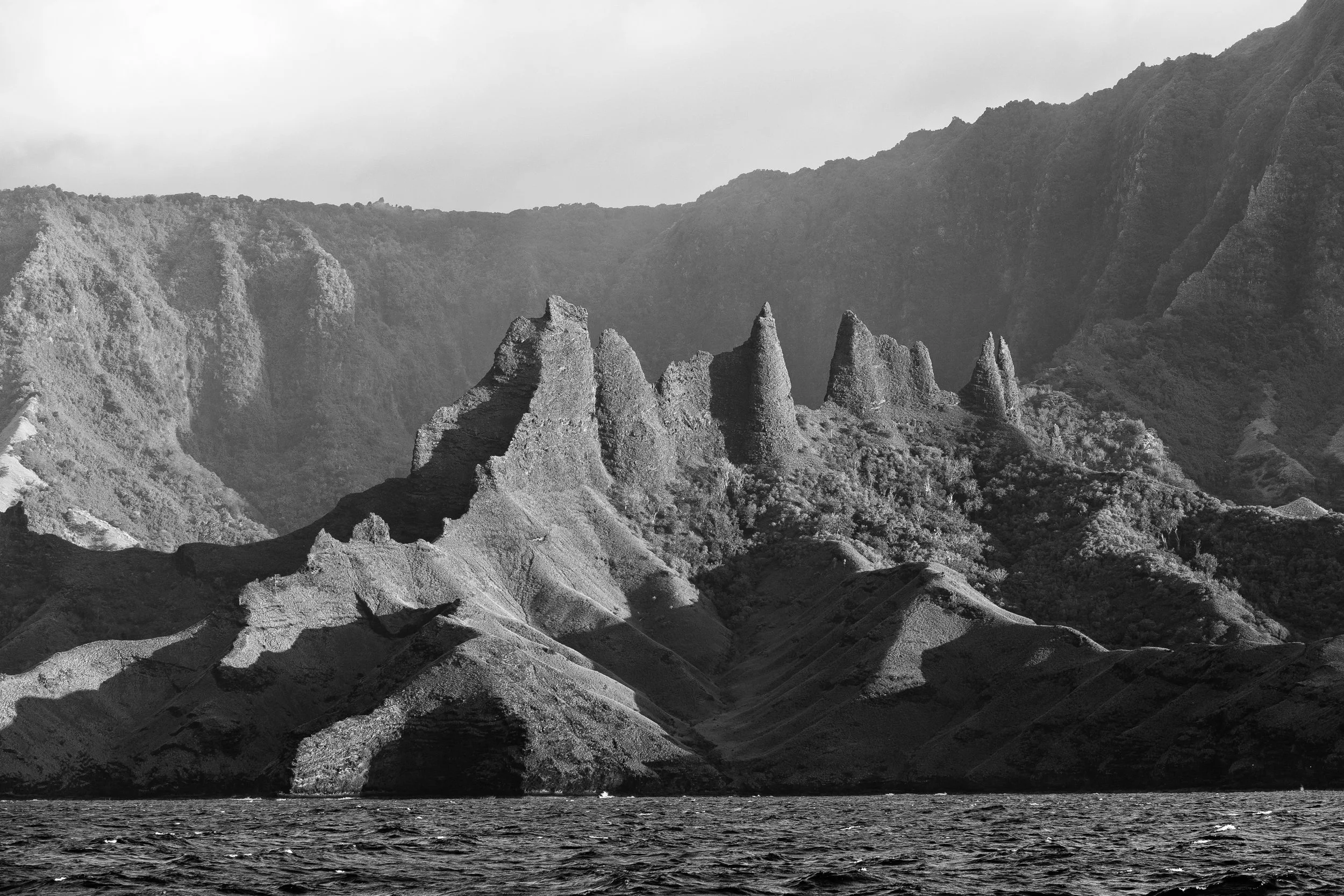
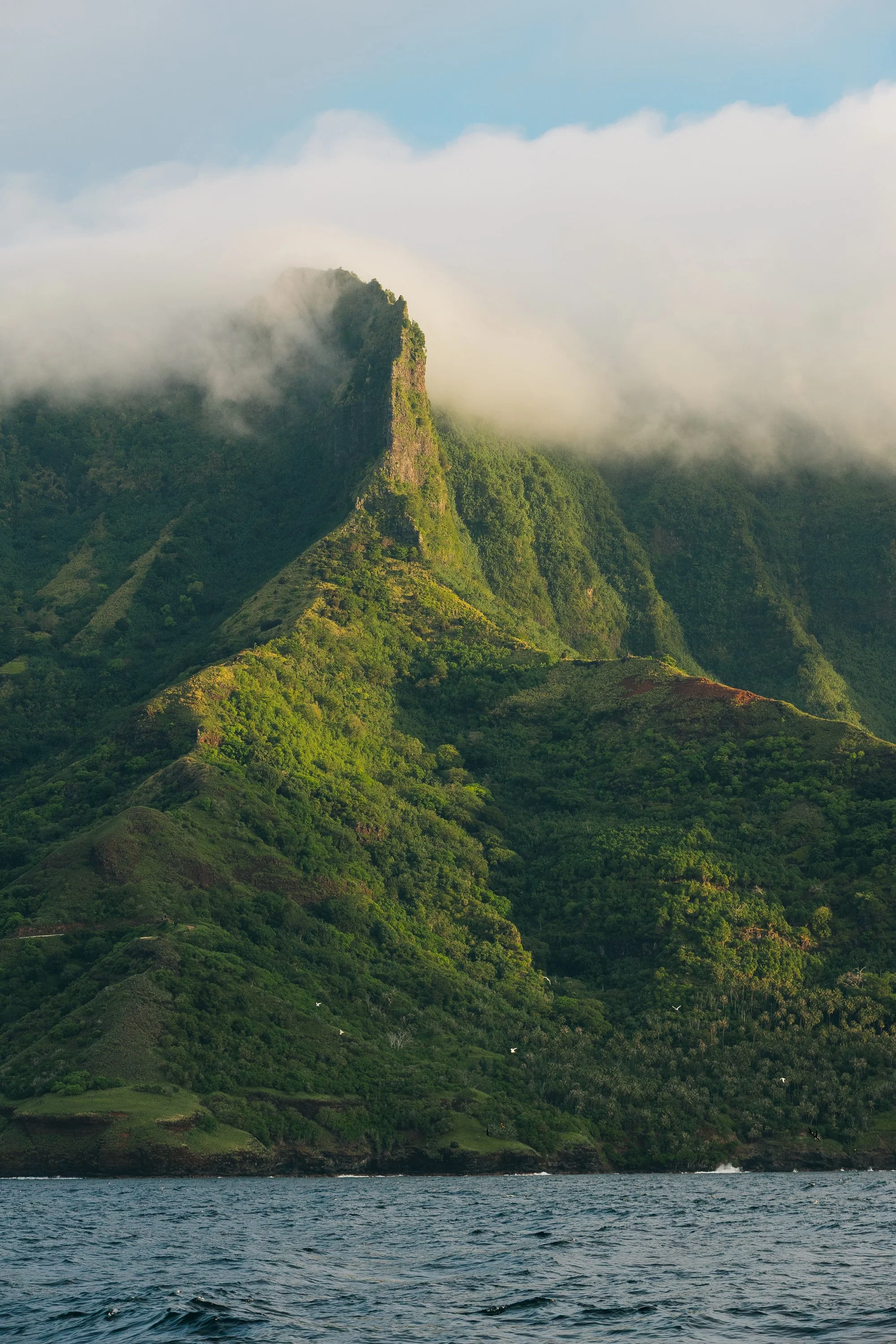
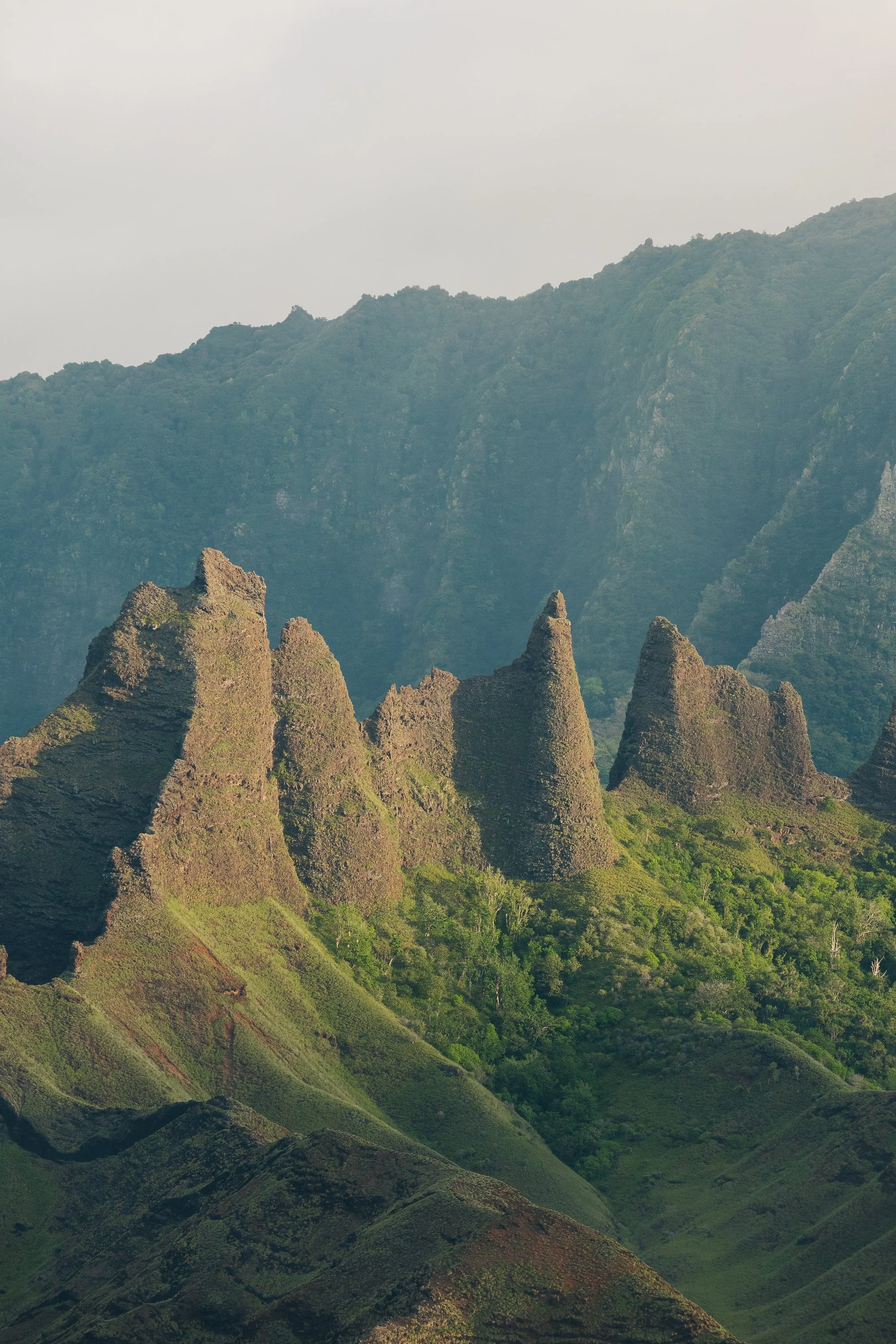
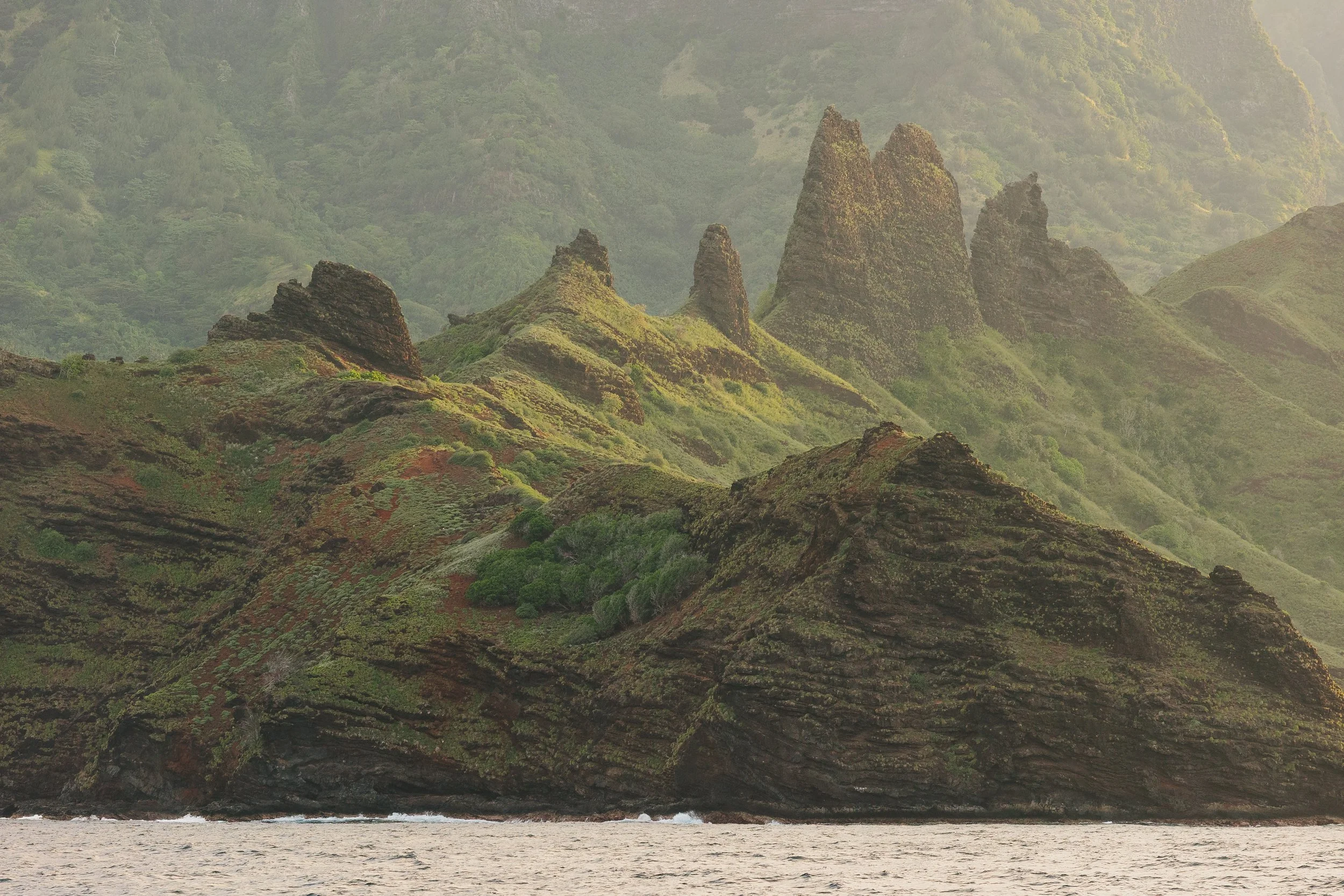
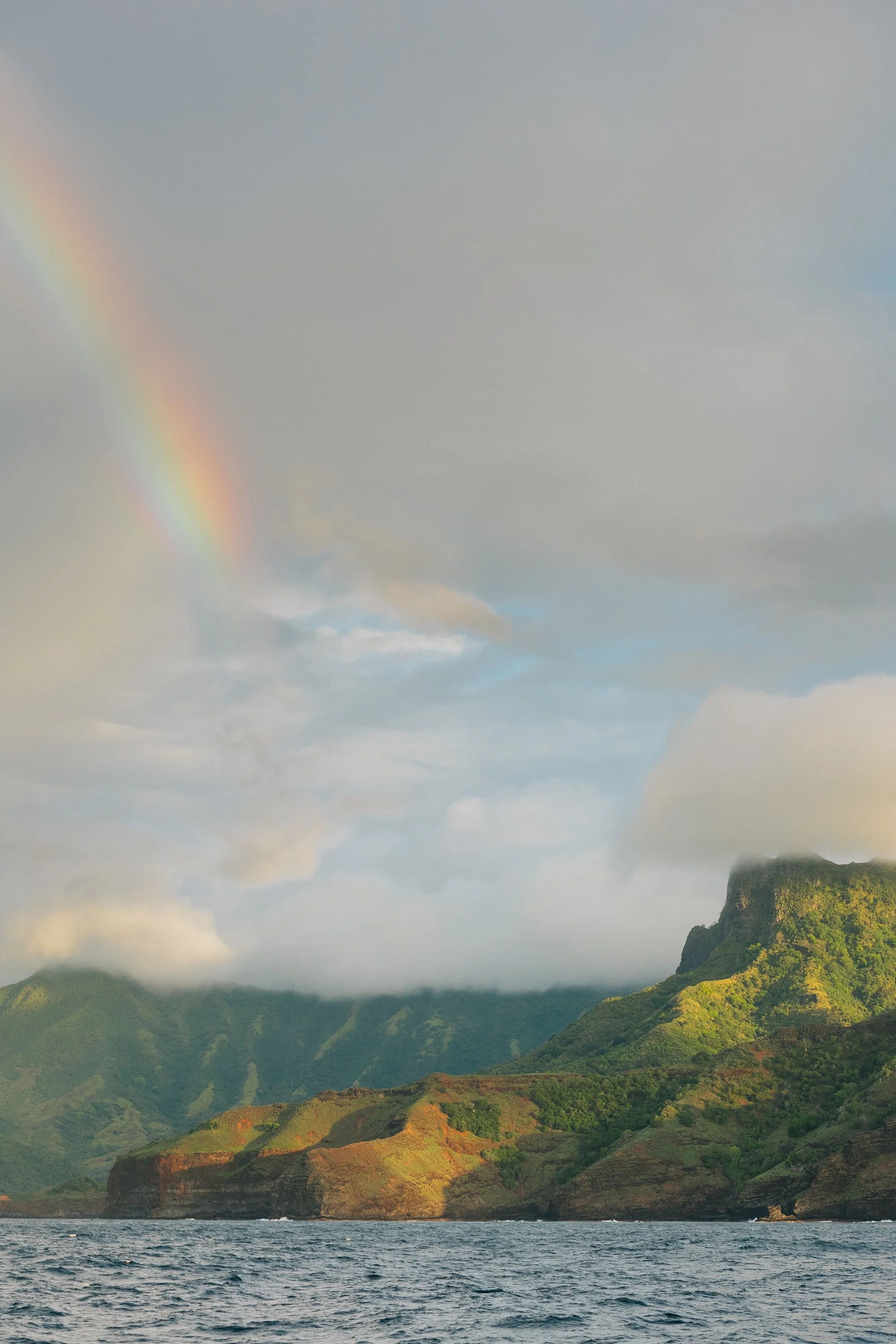
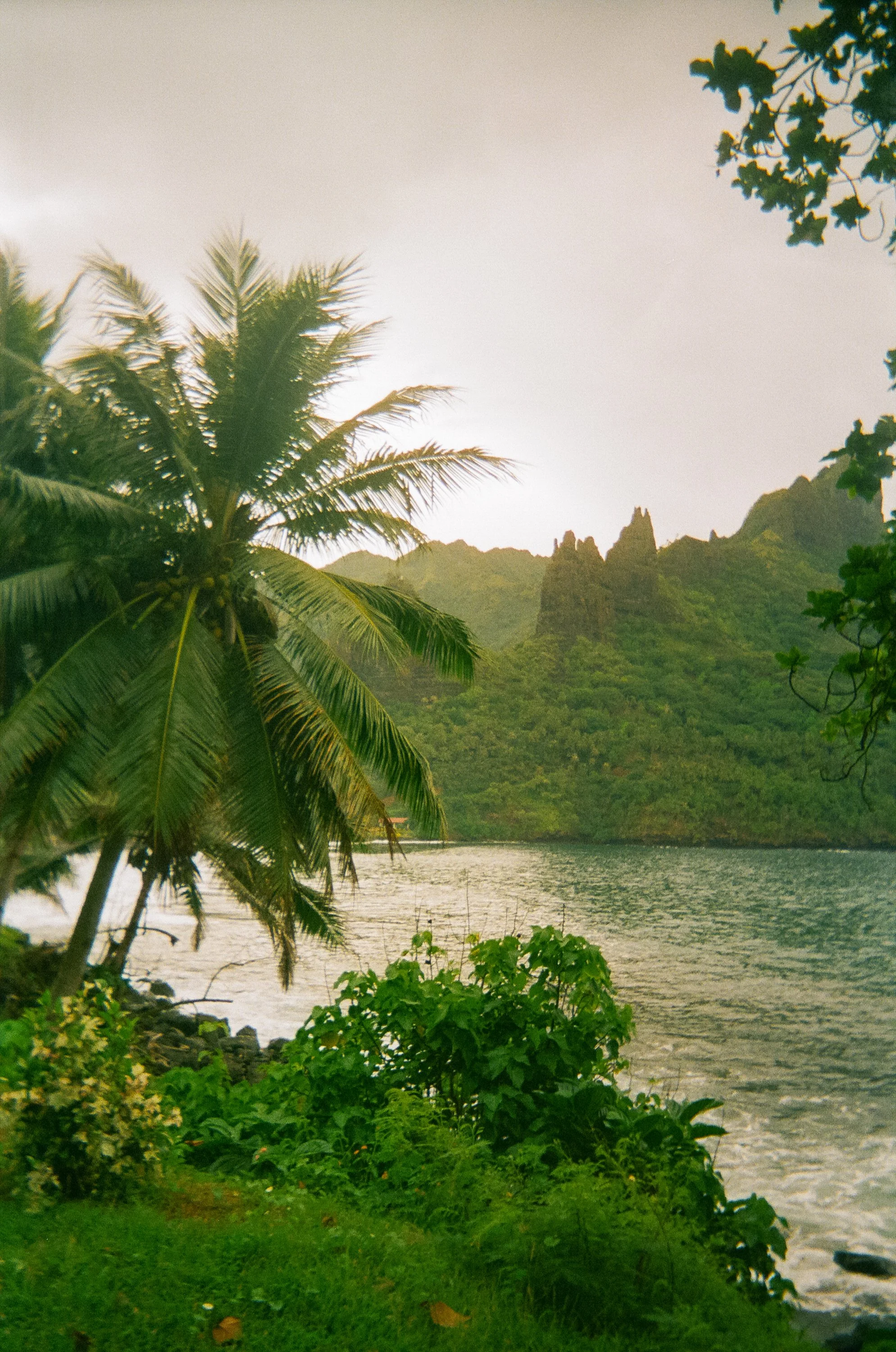
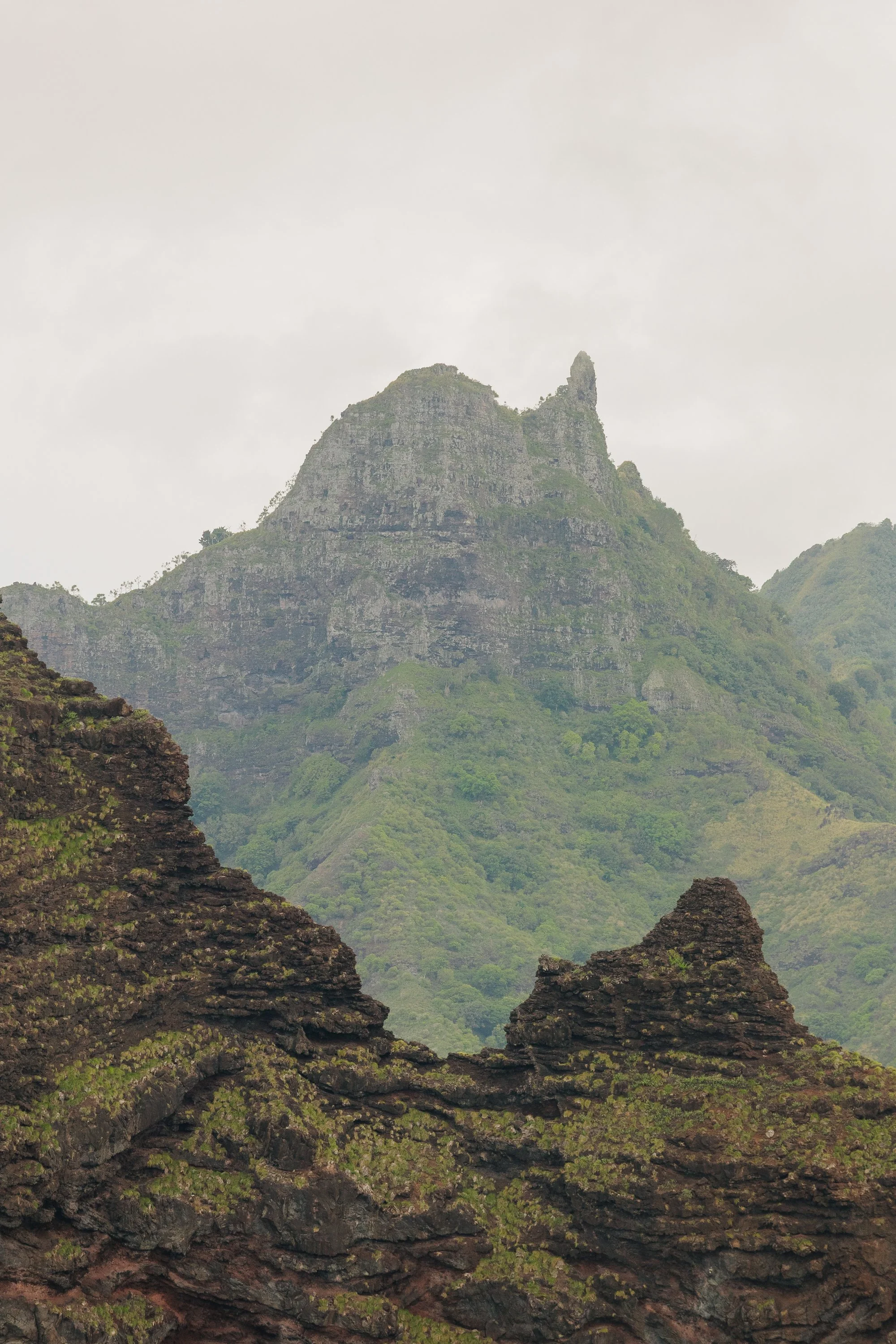
As we continued east with our sights set on Hatiheʻu, the late-afternoon light transformed the coastline near Baie Vaionea. Golden sun spilled across the volcanic ridges, illuminating perfectly sculpted rocky outcroppings that rose from the sea as though carved with deliberate precision. Behind them, deep-green mountains loomed in layers, their upper slopes beginning to disappear into shadow. It was one of those fleeting hours when the landscape seemed almost impossibly dramatic, every ridge and spire sharpened by the low light before evening settled over the island.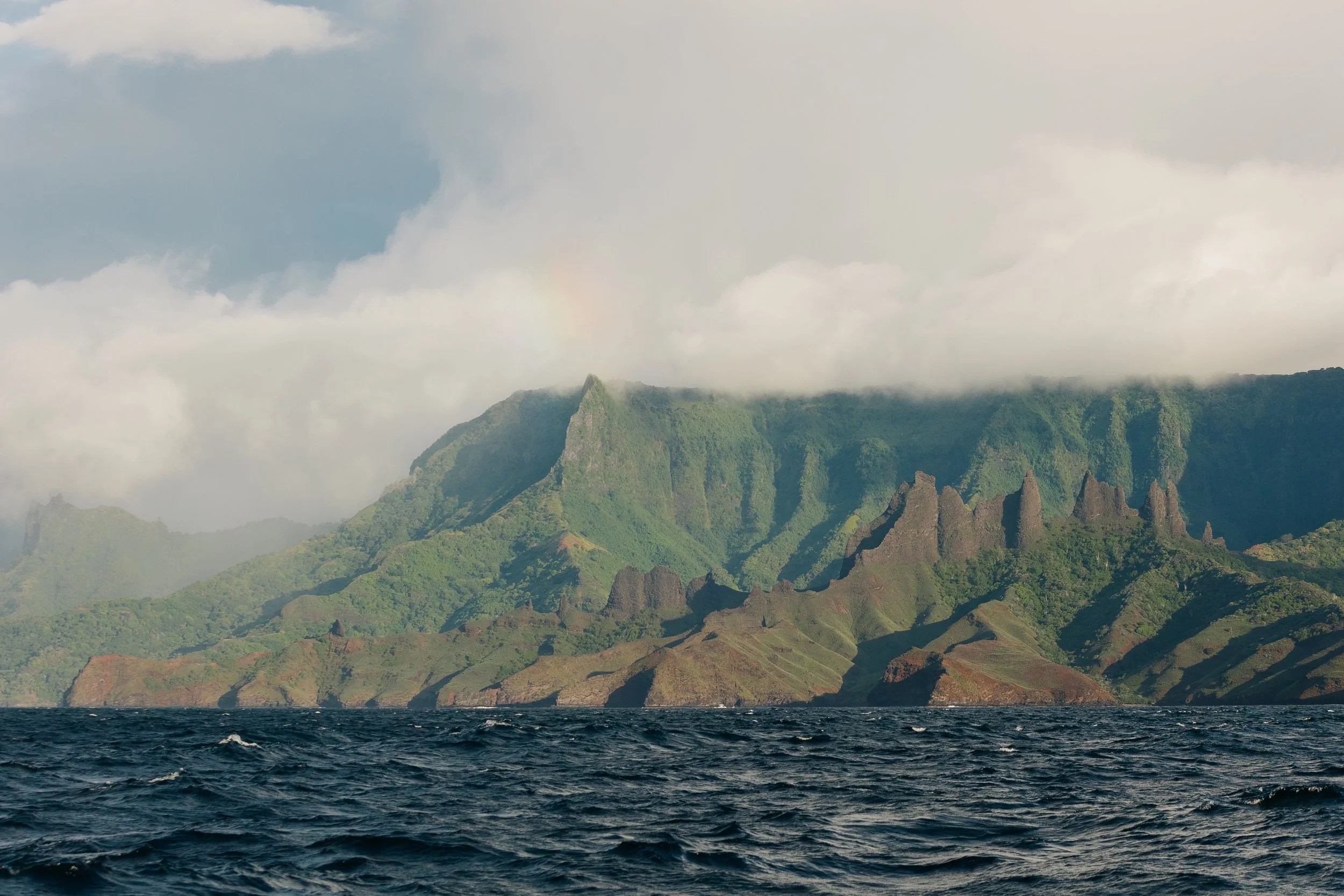
Nuku Hiva
Nuku Hiva
Nuku Hiva
Nuku Hiva
Nuku Hiva
Hatiheʻu
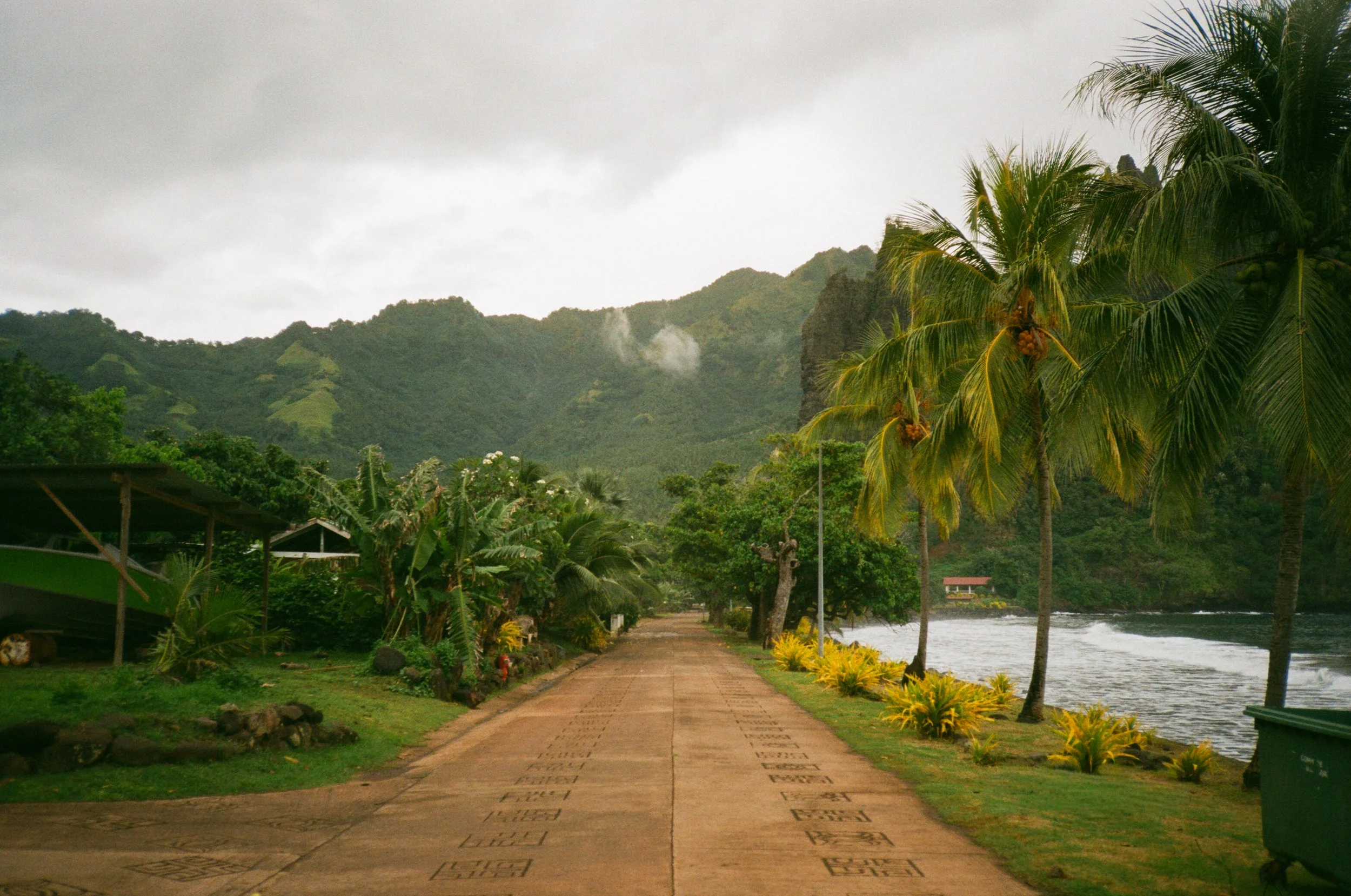
Along Nuku Hiva’s northern coast, two neighboring bays offered very different experiences. The first was Hatiheʻu, a small village surrounded by a valley of immense archaeological significance. As we walked along the waterfront, we admired the rocky spires we had sailed past the evening before and were greeted warmly by locals along the way.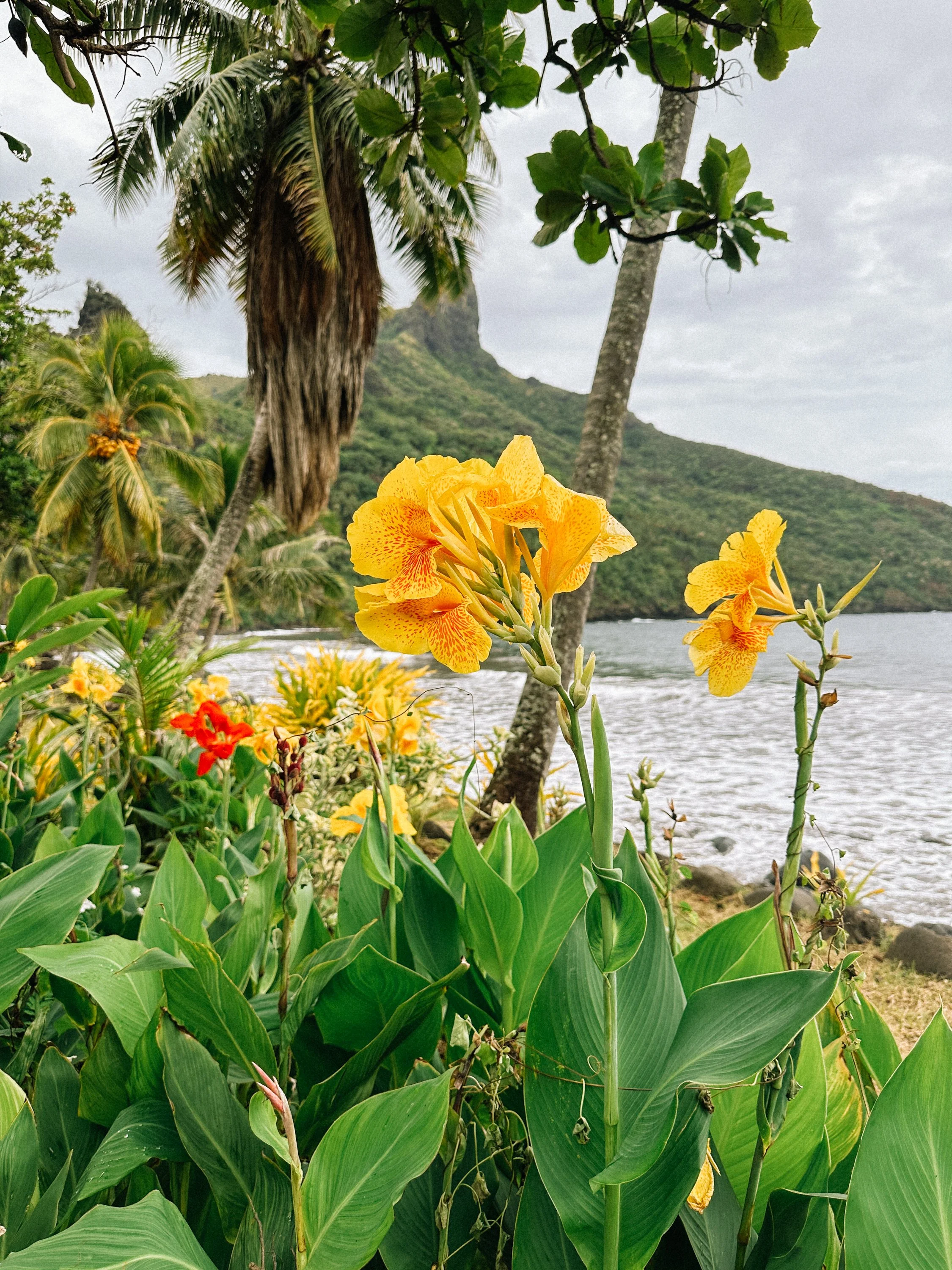
Nuku Hiva
Nuku Hiva
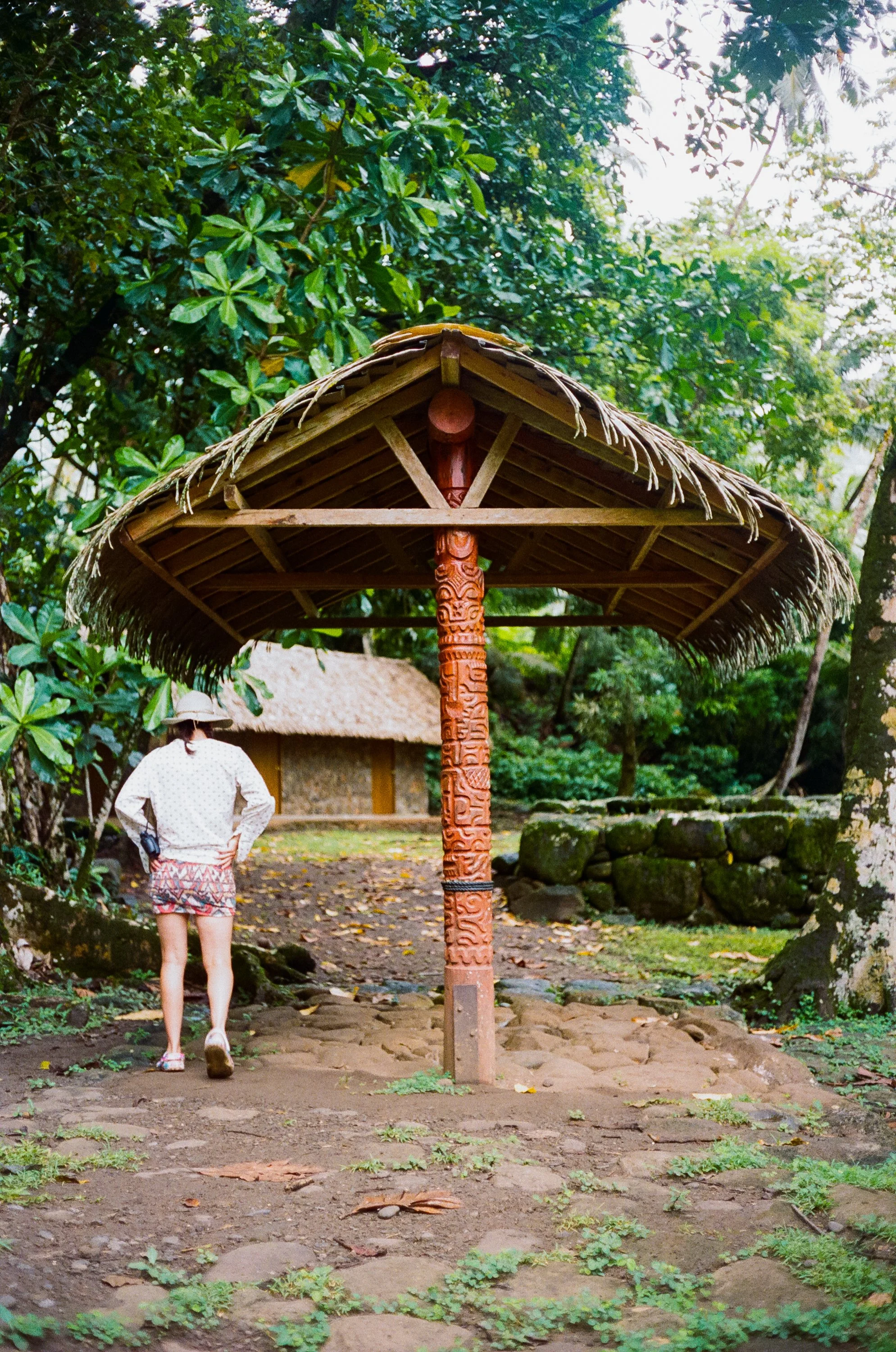
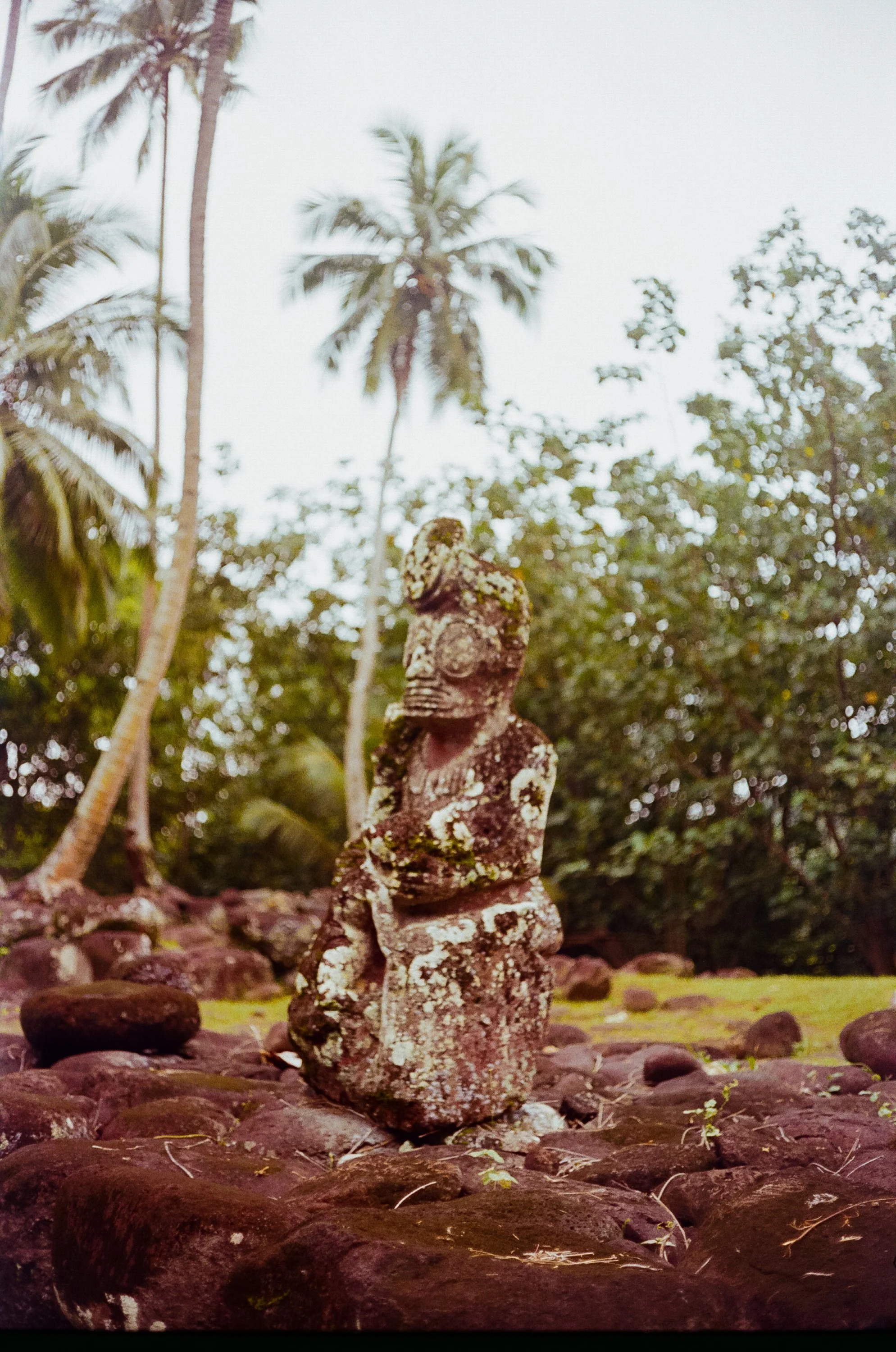
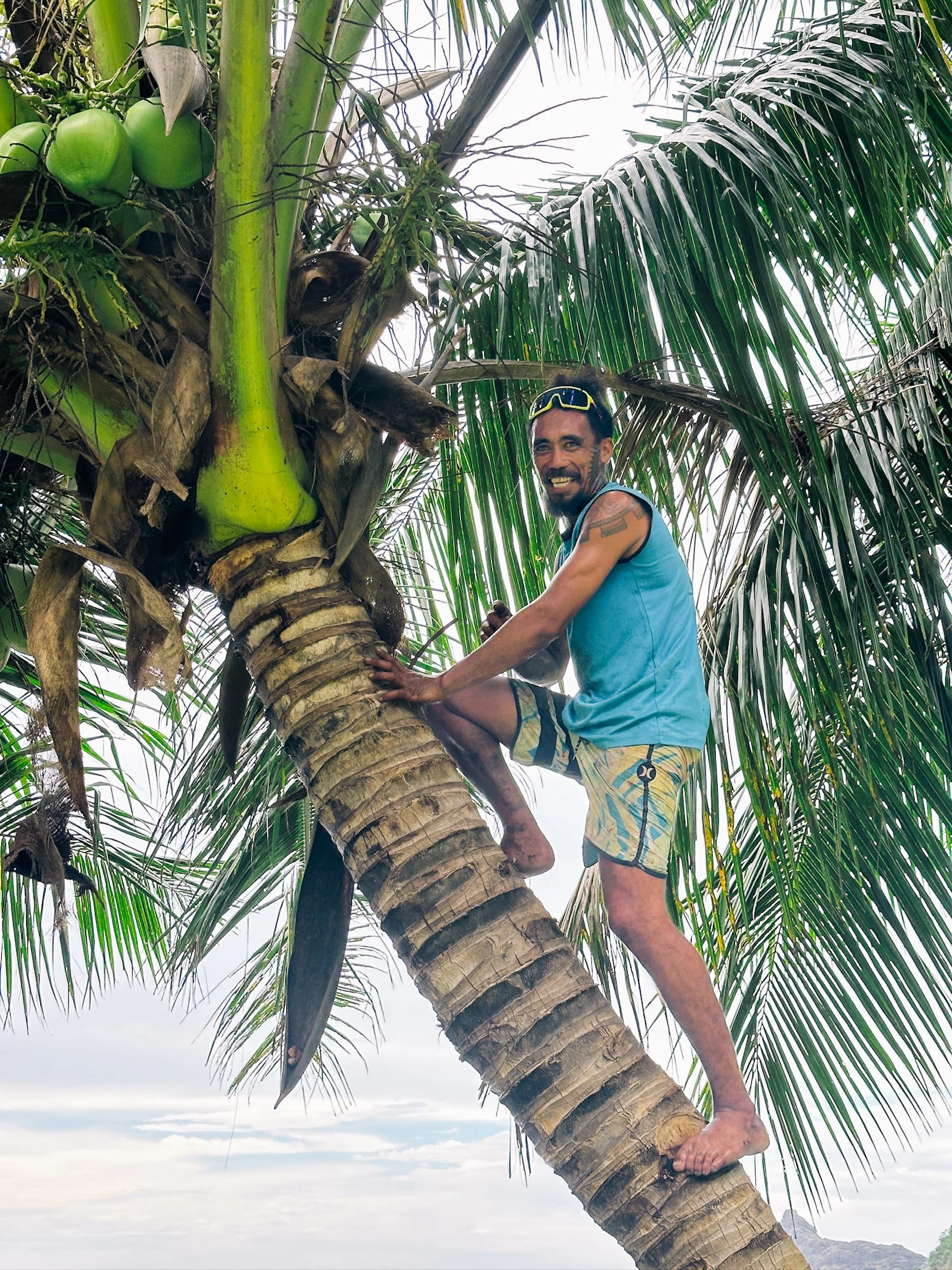
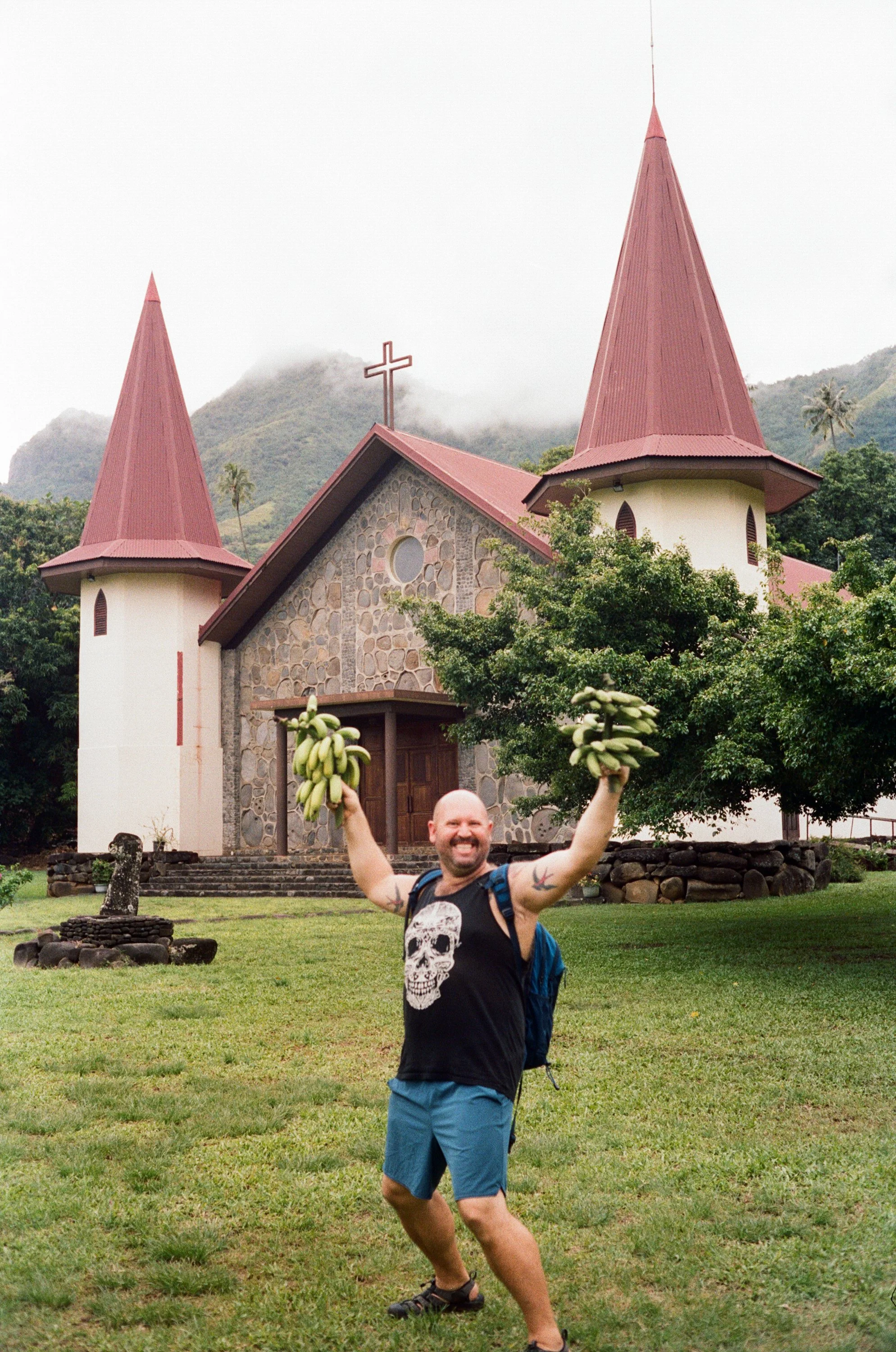
We continued up the road toward the first archaeological site, Hikokua Tohua, where stone platforms, ruins, and tiki stood beneath the trees. There, we were approached by a local man who had been gardening nearby. He spoke very little French and no English, yet his warmth and enthusiasm needed little translation. We soon learned his name was Stevie, and through an animated series of gestures and miming, he explained that the space had once been used for dancing and ceremony. Before long, Stevie asked if we wanted to see the larger archaeological complex farther up the road and offered to guide us there himself. Along the way, he turned the walk into something of a tropical harvest. He harvested star fruit, pamplemousse (an oversized local citrus similar to grapefruit) and coconuts for us to carry along the trail, handing each one over with the casual generosity of someone sharing from his own backyard.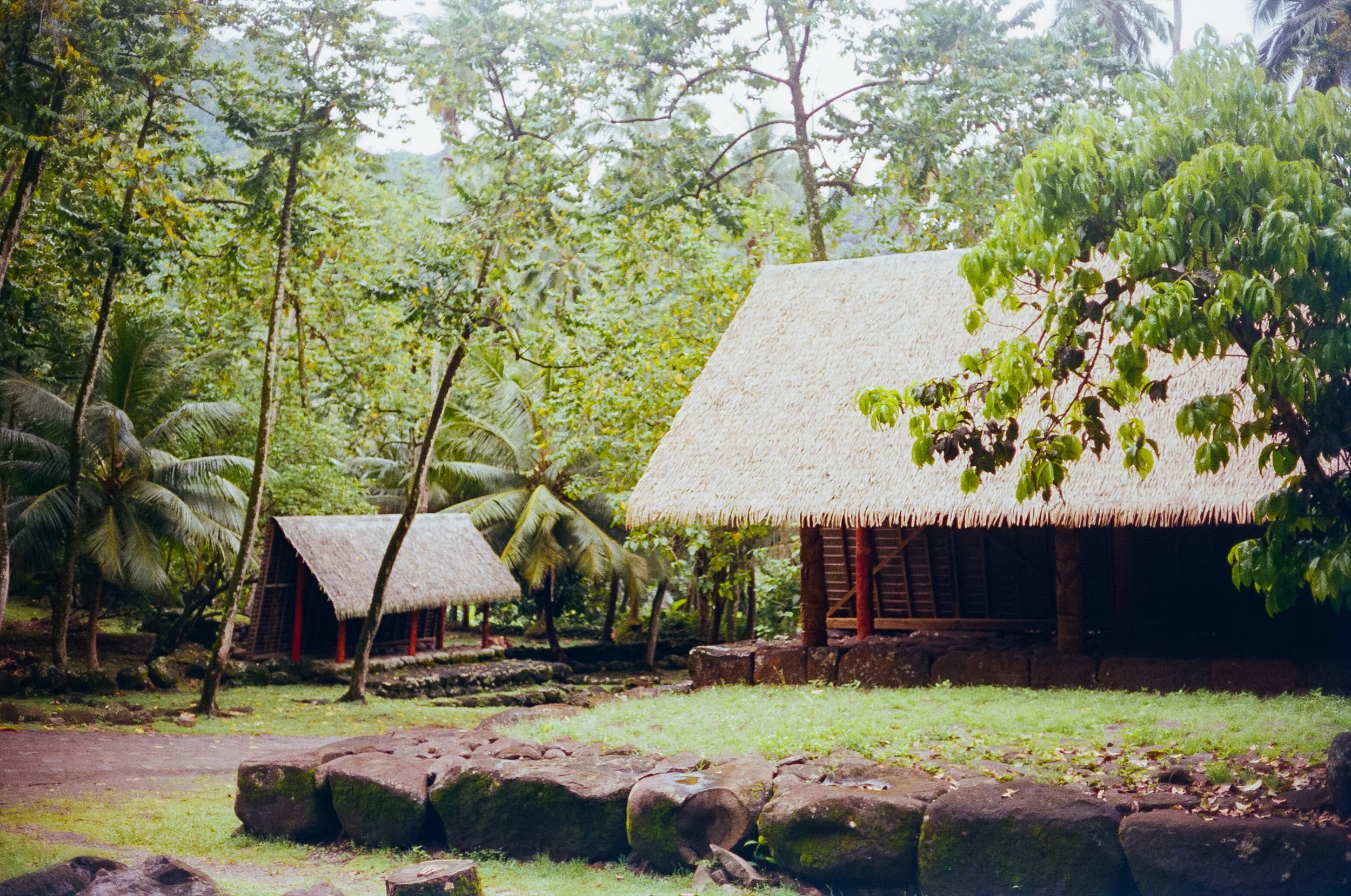
Nuku Hiva
Nuku Hiva
Nuku Hiva
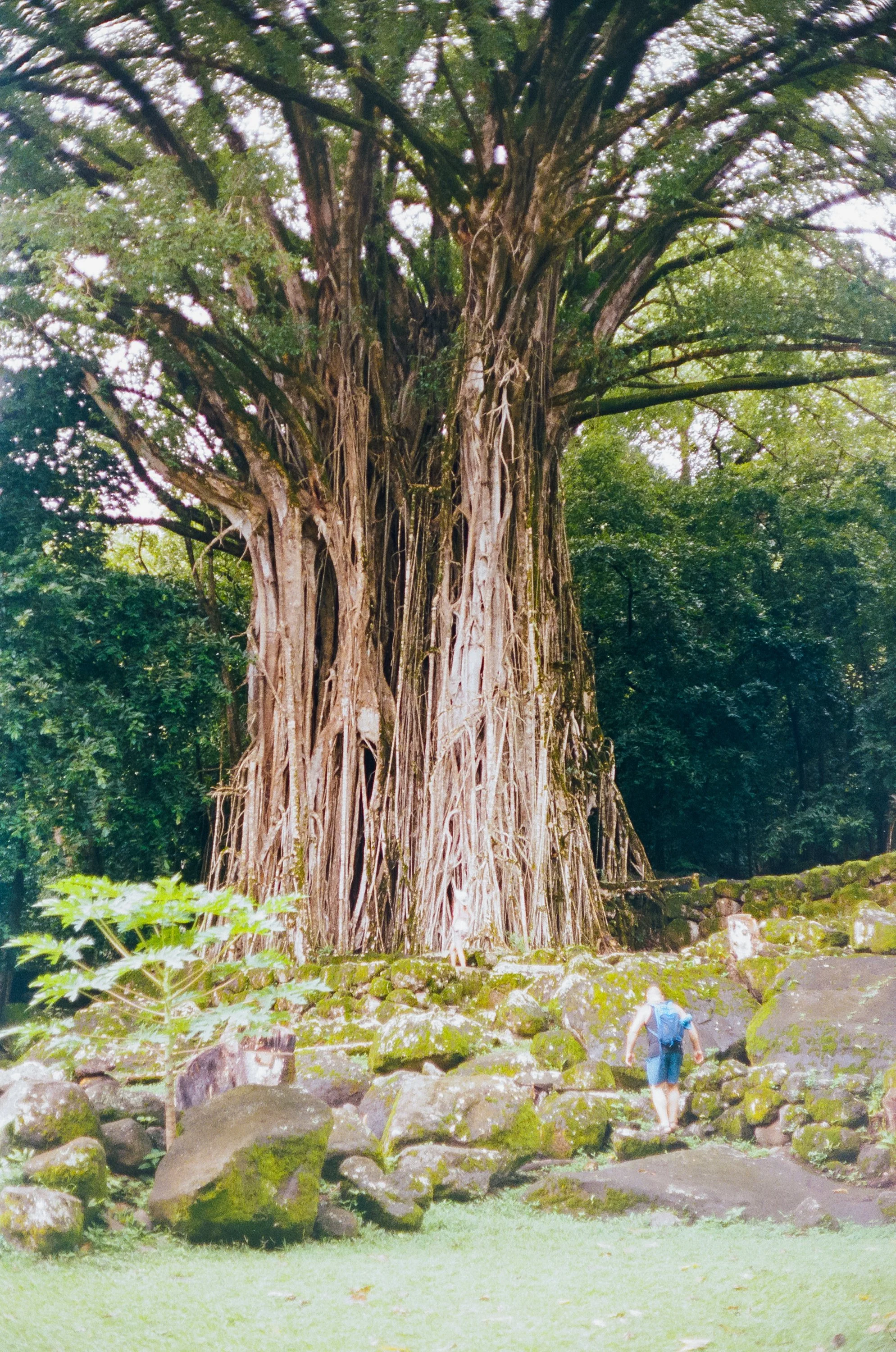
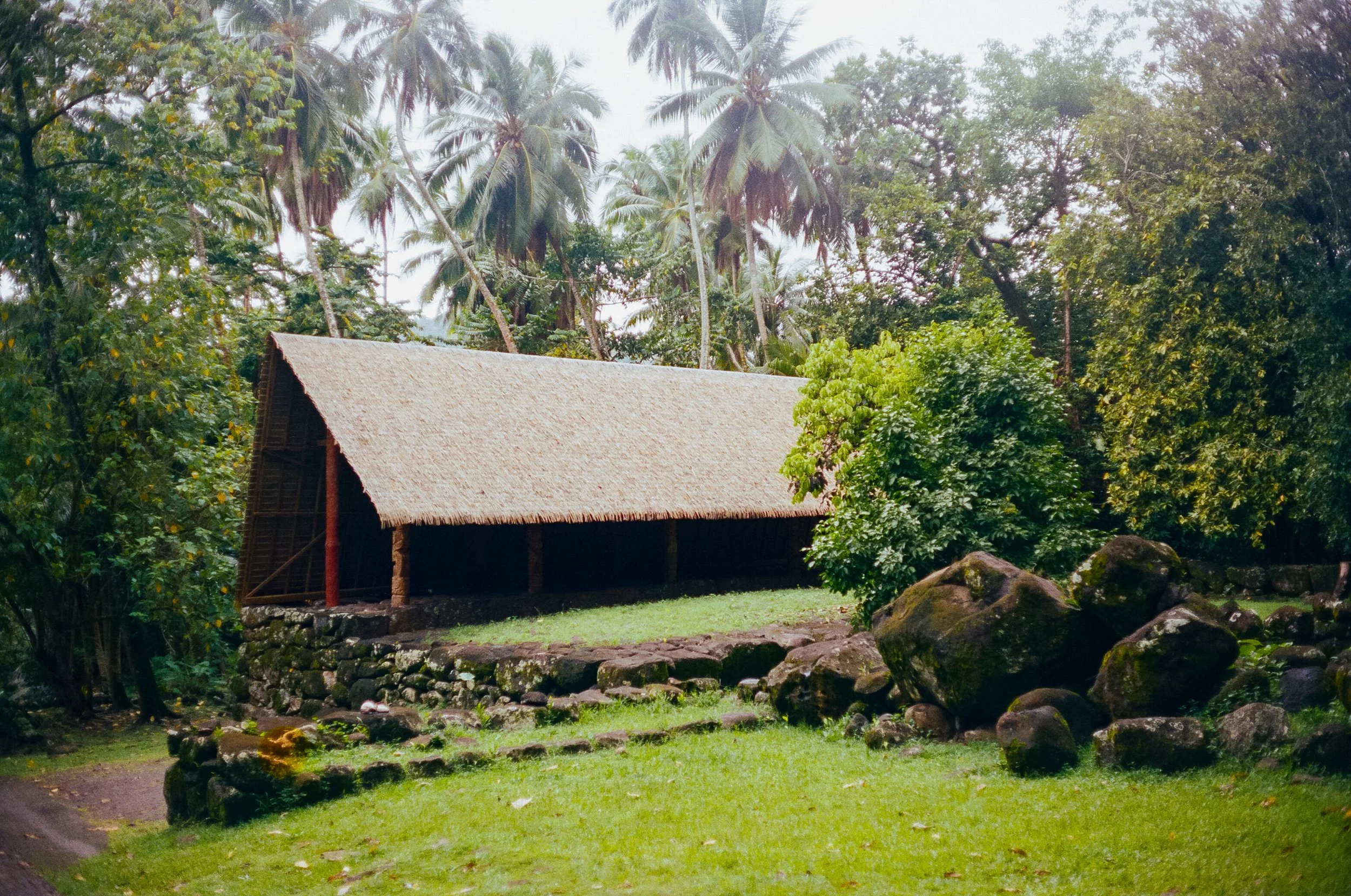
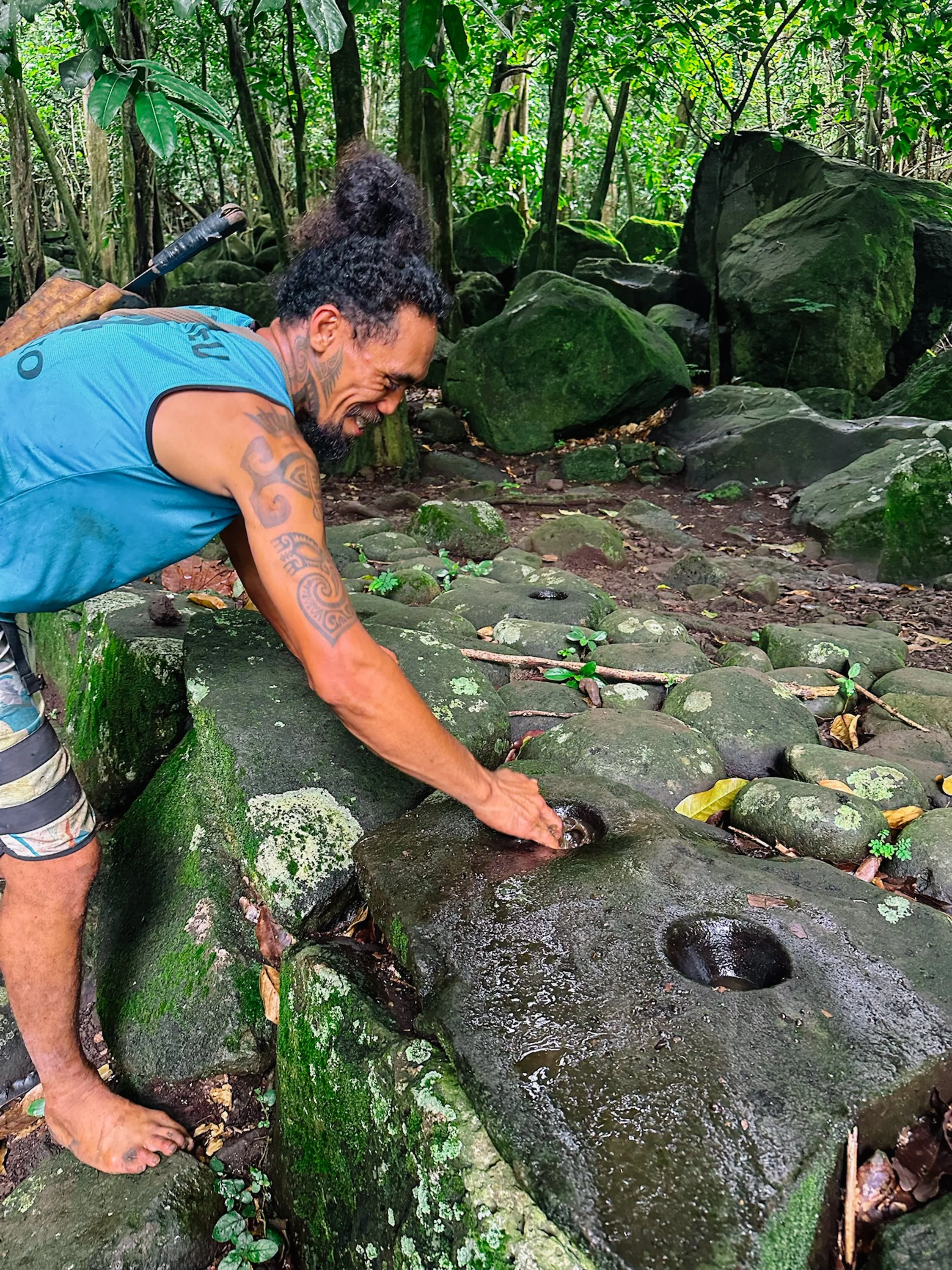
At first, some of the stones appeared almost natural, moss-covered walls, terraces, and raised foundations disappearing beneath leaves. But as we continued, the organization of the landscape became unmistakable. These were not random remnants. We were walking through what had once been an extensive settlement. Archaeologists have documented roughly four hundred features throughout the Hatiheʻu Valley, including six large ceremonial plazas, known as tohua, as well as house platforms, petroglyphs, burial structures, agricultural terraces, and other stone architecture. Permanent settlement may have begun as early as the late thirteenth or fourteenth century, with occupation continuing for approximately six hundred years through the pre-contact and early colonial eras.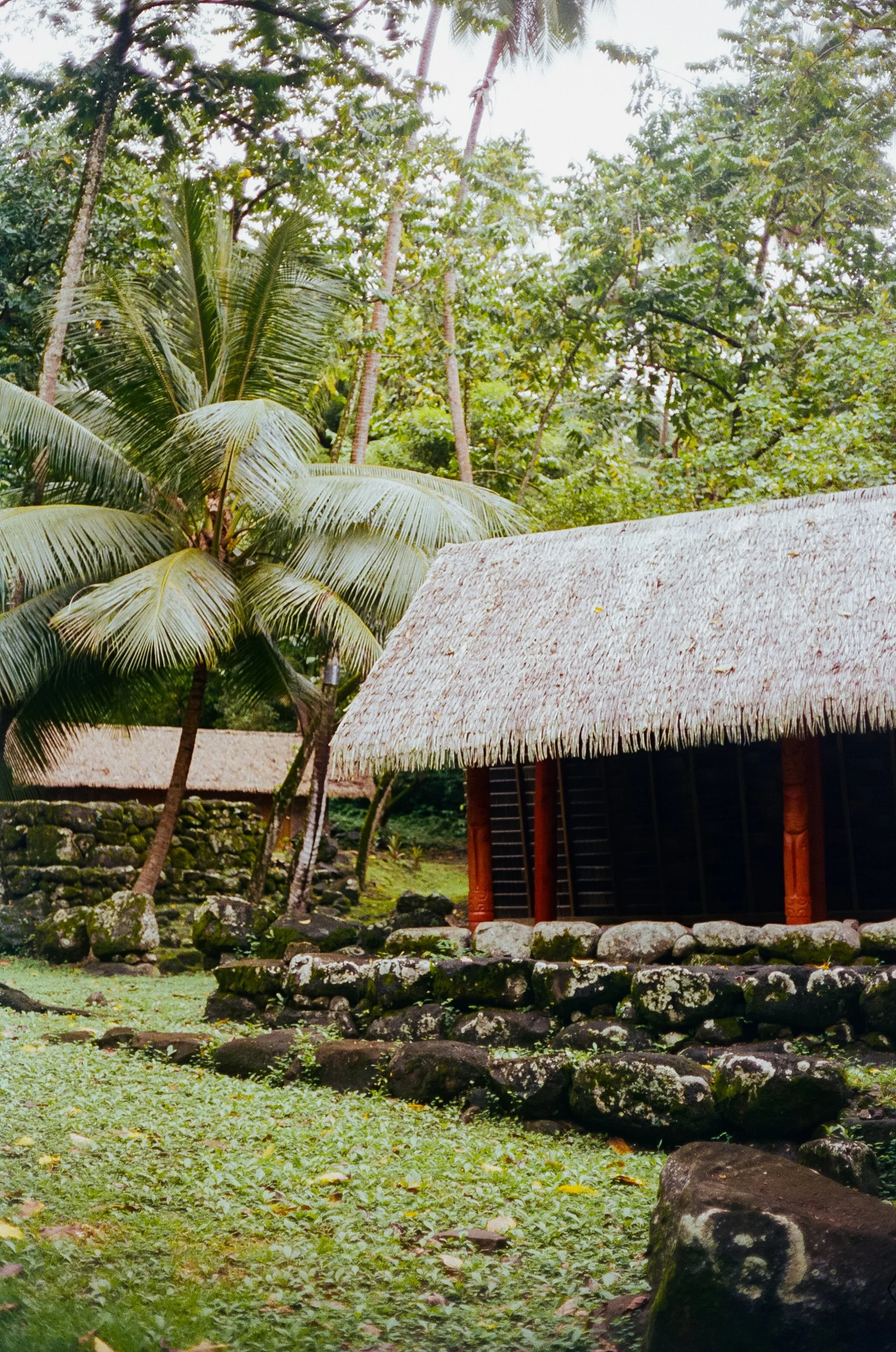
Nuku Hiva
Nuku Hiva
Nuku Hiva
At the restored Kamuihei ceremonial complex, a roughly 600-year-old sacred banyan tree embraced stone platforms and gathering spaces once used for feasts, political meetings, ceremonies, performances, and ritual life. The scale of the site reveals a society that was highly organized long before European ships appeared on the horizon. Stone tools discovered in the valley have also been traced to quarries on other islands, evidence that communities throughout the Marquesas remained connected by sophisticated voyaging and exchange networks. The mountains may have divided individual valleys, but the sea linked the archipelago together.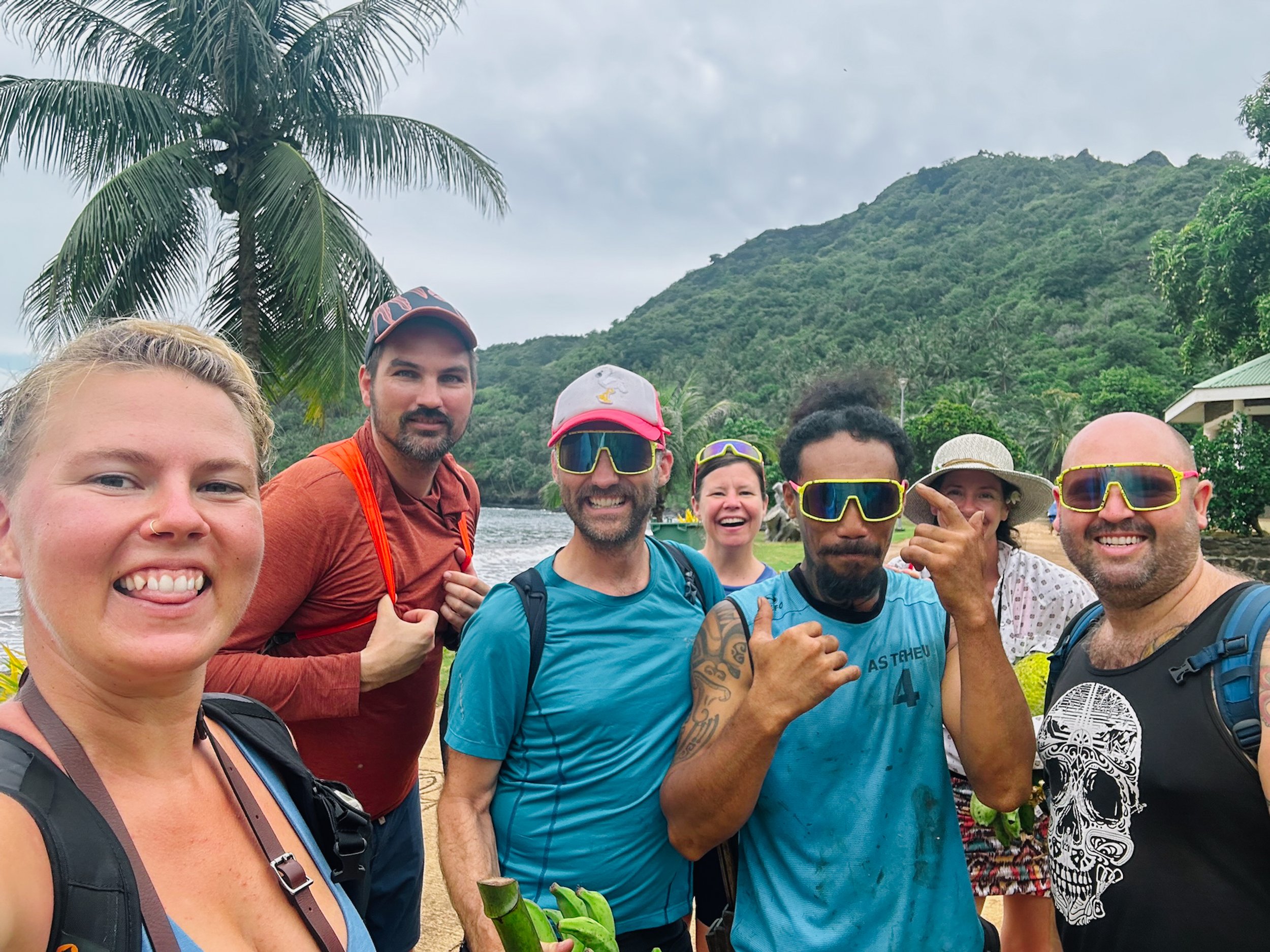
Nuku Hiva with local guide, Stevie
Nuku Hiva with local guide, Stevie
Nuku Hiva with local guide, Stevie
Nuku Hiva
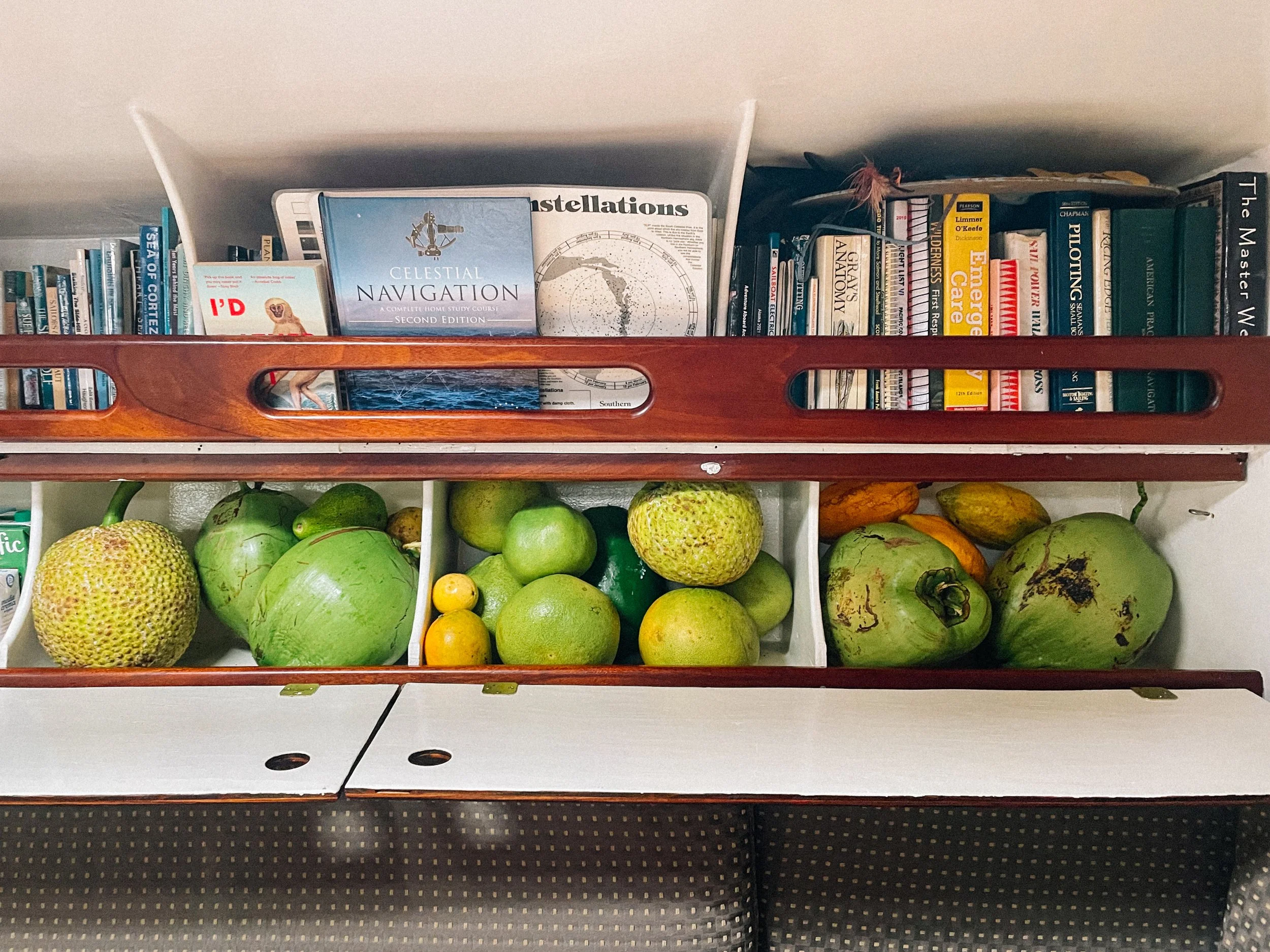
On our way back down the road into town, Stevie continued asking if we wanted more fruit. Whenever we said yes, he would disappear briefly into the vegetation and return with his machete and another addition to our growing haul. He took us to his parents’ house to collect bananas, then onward to his sister’s home for breadfruit, and even harvested taro root from the local stream along the way.By the time we reached the waterfront, we were carrying far more than we could reasonably manage ourselves, so Stevie insisted on helping us all the way back to the jetty where our raft was tied. When it came time to say goodbye, we asked what we owed him for his time and all the food he had gathered. He shook his head and told us it was a gift for us as visitors to his village. We were deeply touched by the gesture, but after insisting several times, he reluctantly accepted some money. Then he helped us load our bounty into the raft, stood waving from the jetty as we pushed off, and, just when we thought the goodbye was over, broke into a dance before launching himself into the water with an acrobatic backflip. His sheer joy, generosity, and seemingly endless energy are some of the things that will stay with us most vividly from Hatiheʻu.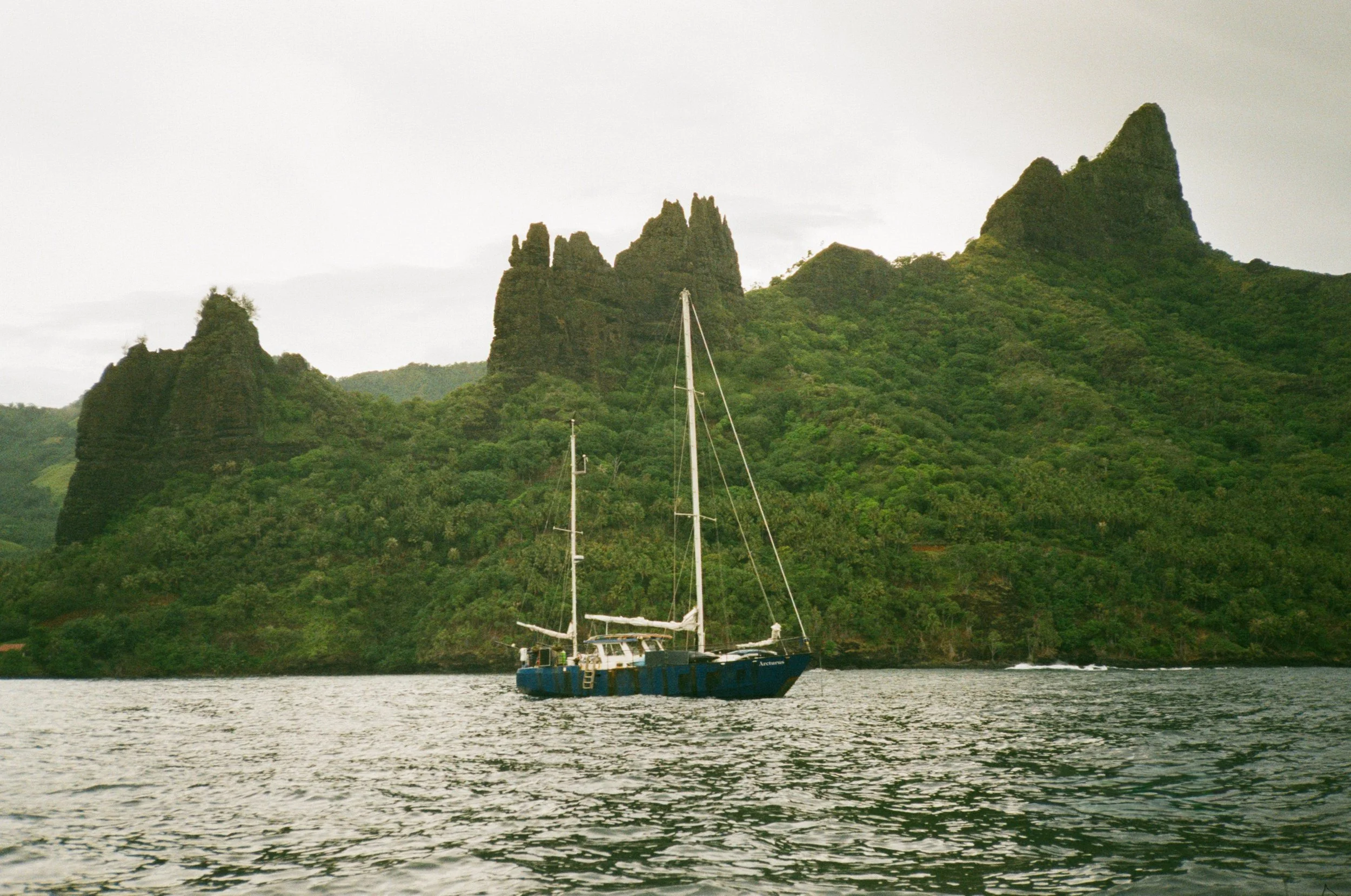
Nuku Hiva
Nuku Hiva
Nuku Hiva
Anaho
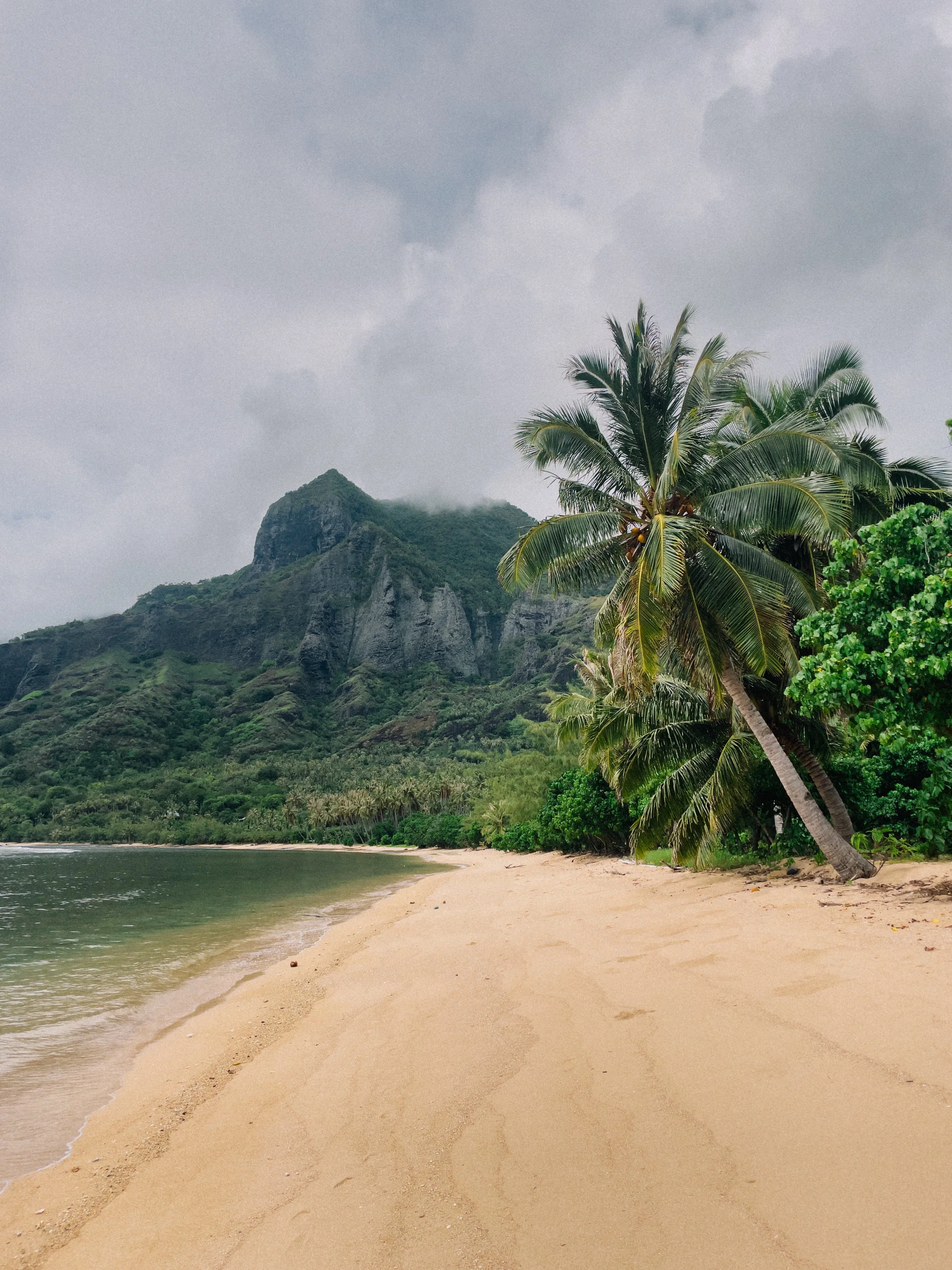
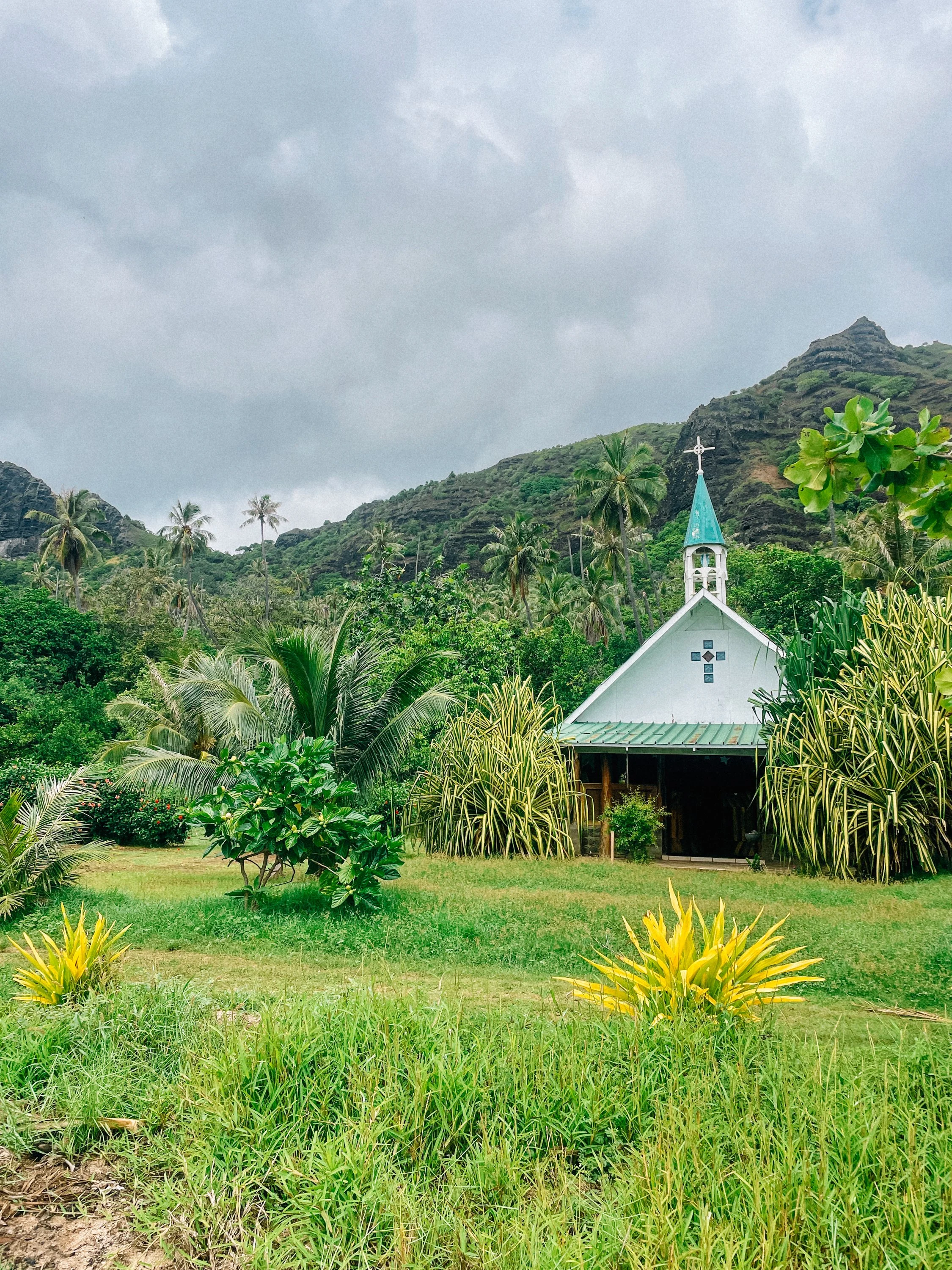
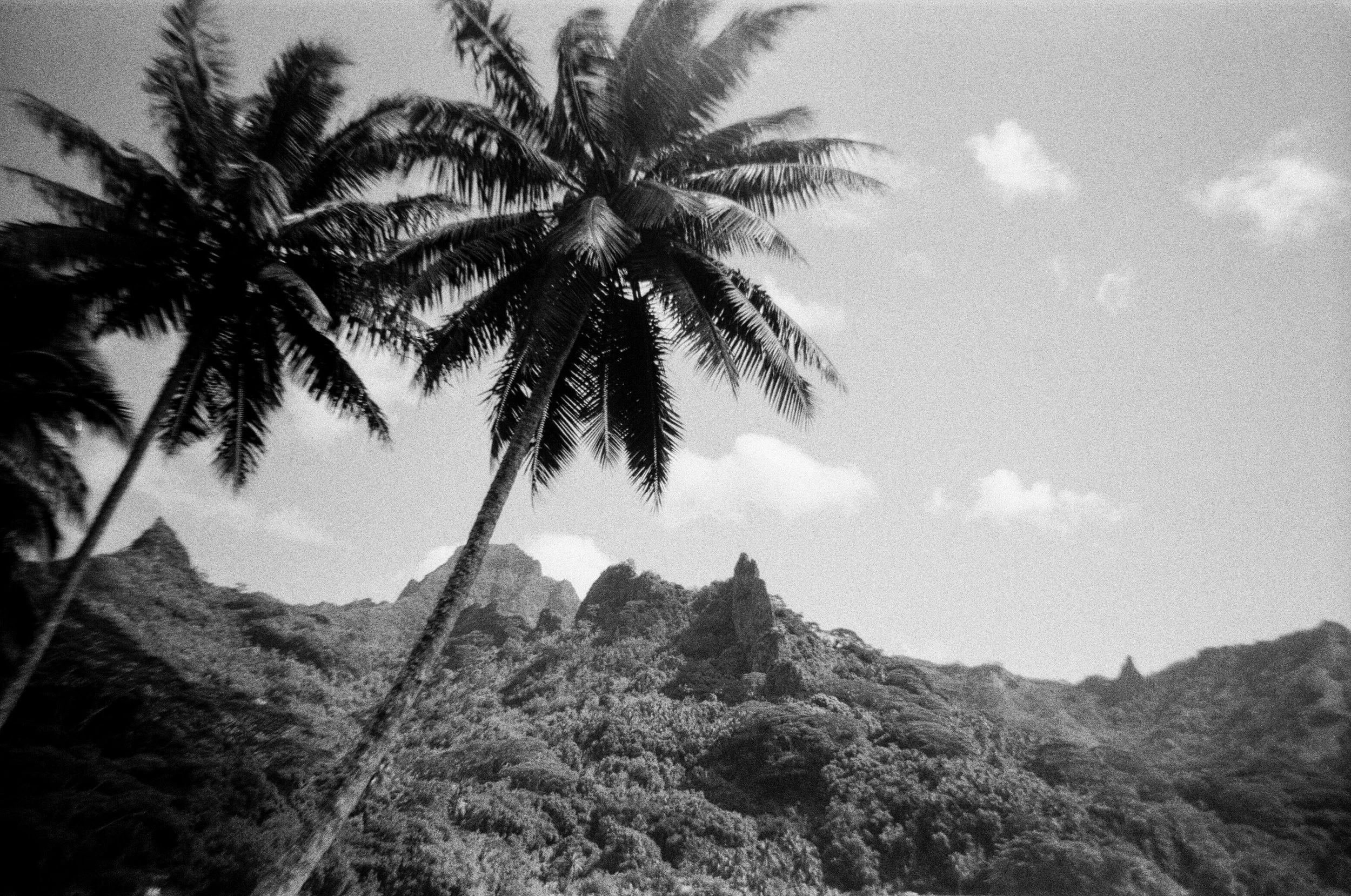
The neighboring bay of Anaho felt softer and more secluded than much of what we had seen elsewhere on Nuku Hiva. A crescent of pale beach curved beneath green mountains, with a small settlement tucked quietly behind the palms. Compared with many Marquesan anchorages, it felt remarkably sheltered and serene. For perhaps the first time since arriving in the archipelago, the landscape resembled the French Polynesia we had imagined before crossing the ocean: calm water, sunlit rocky outcroppings, dense green forest, and palms lining a white-sand beach. We walked the shoreline and wandered into the small village, where there was little more than a church, a few homes, and a small magasin.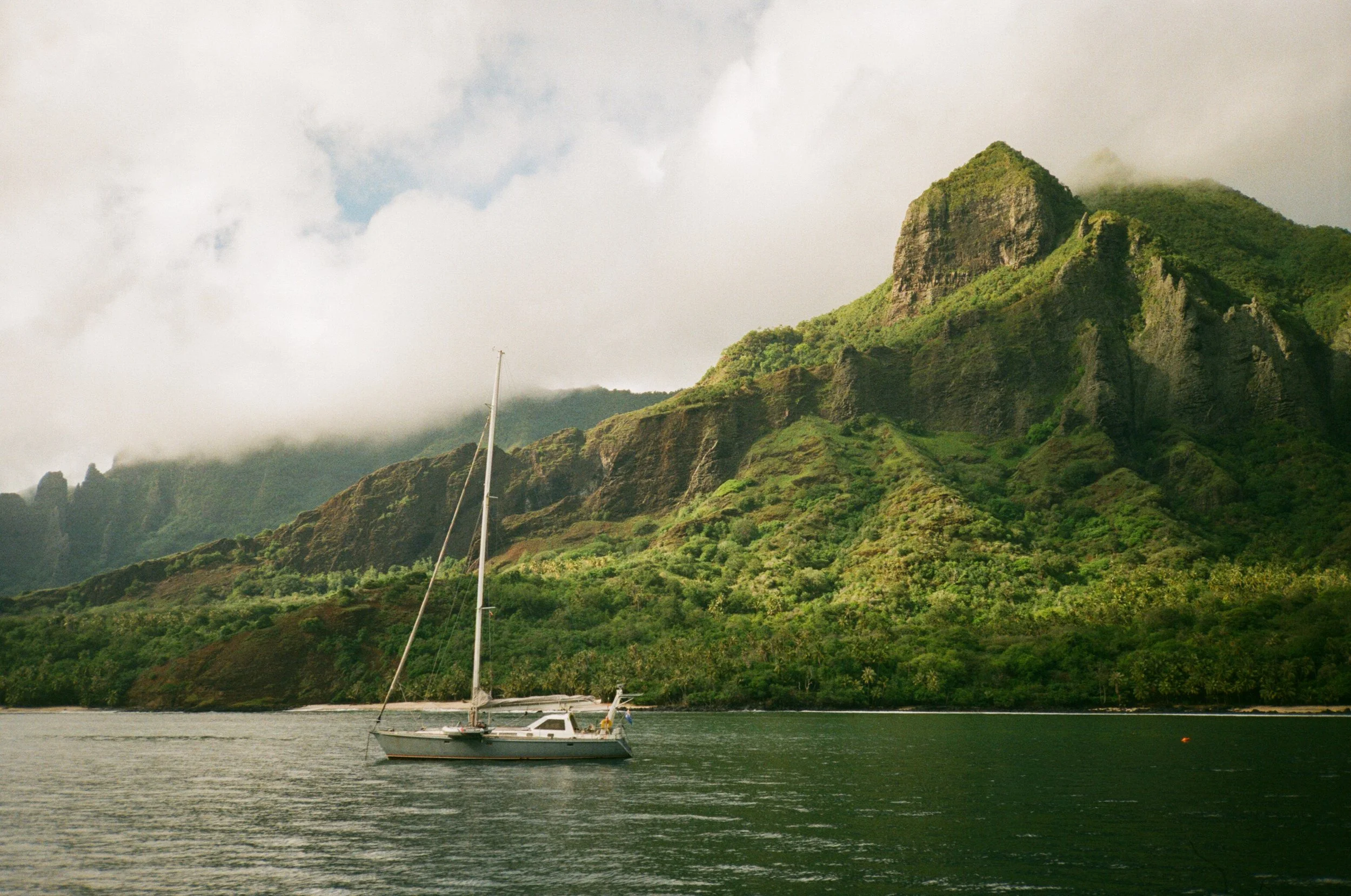
Nuku Hiva
Nuku Hiva
Nuku Hiva
Nuku Hiva
Nuku Hiva
When we returned to the beach, we approached one of the nearby homeowners to ask whether they might be willing to prepare dinner for us that evening. In many of these smaller villages there were few, if any, conventional restaurants, but locals sometimes hosted travelers for meals in their homes. They seemed hesitant at first to arrange something so last-minute, but because we planned to leave the following morning, they agreed. There was no restaurant in the way we might typically imagine one, only the intimacy of being welcomed into someone’s home and served a meal prepared in their own kitchen. Experiences like this were becoming one of our favorite ways to encounter the Marquesas: not through organized attractions or polished tourism, but through small, personal interactions that made each village feel distinct.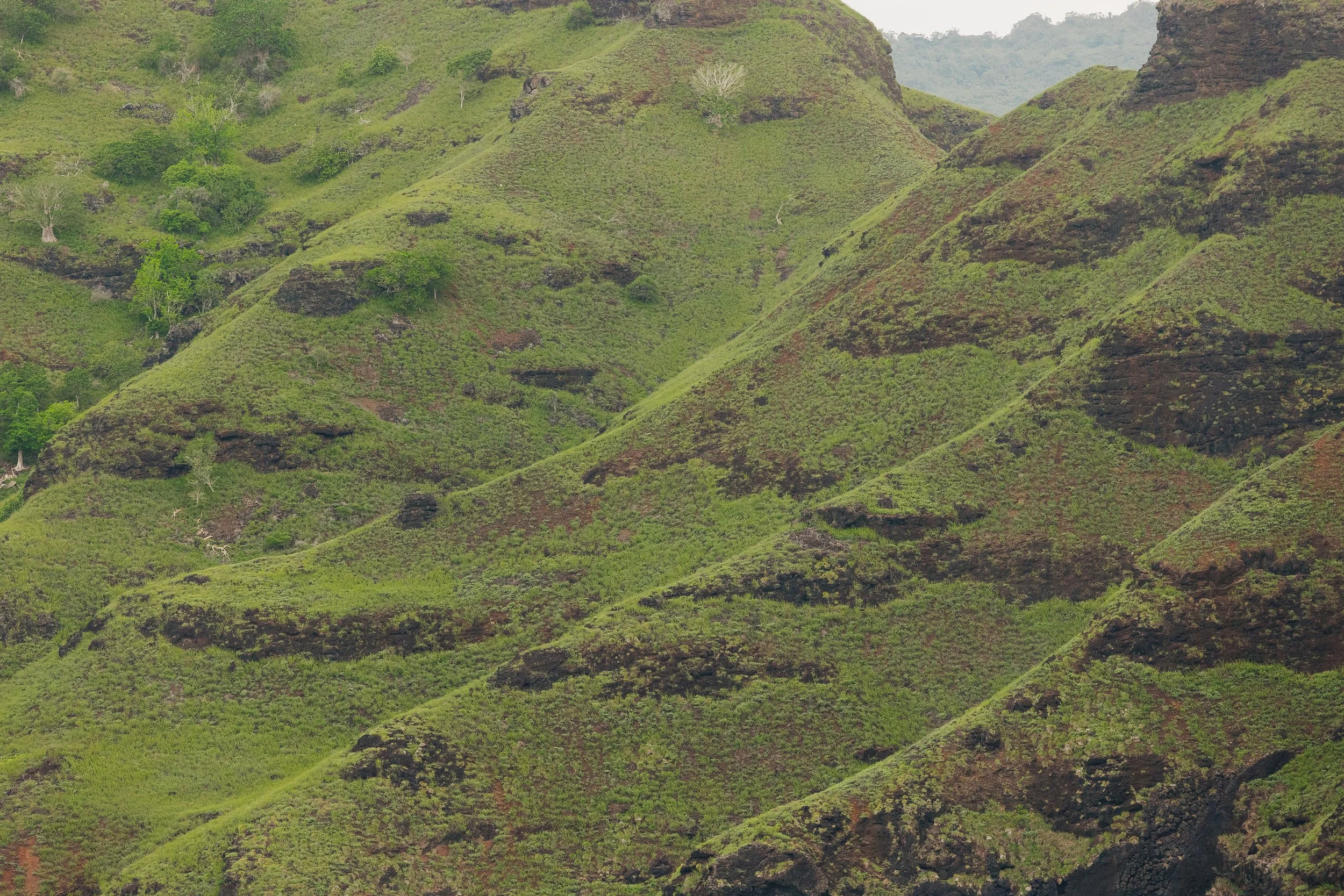
Nuku Hiva
Nuku Hiva
Nuku Hiva
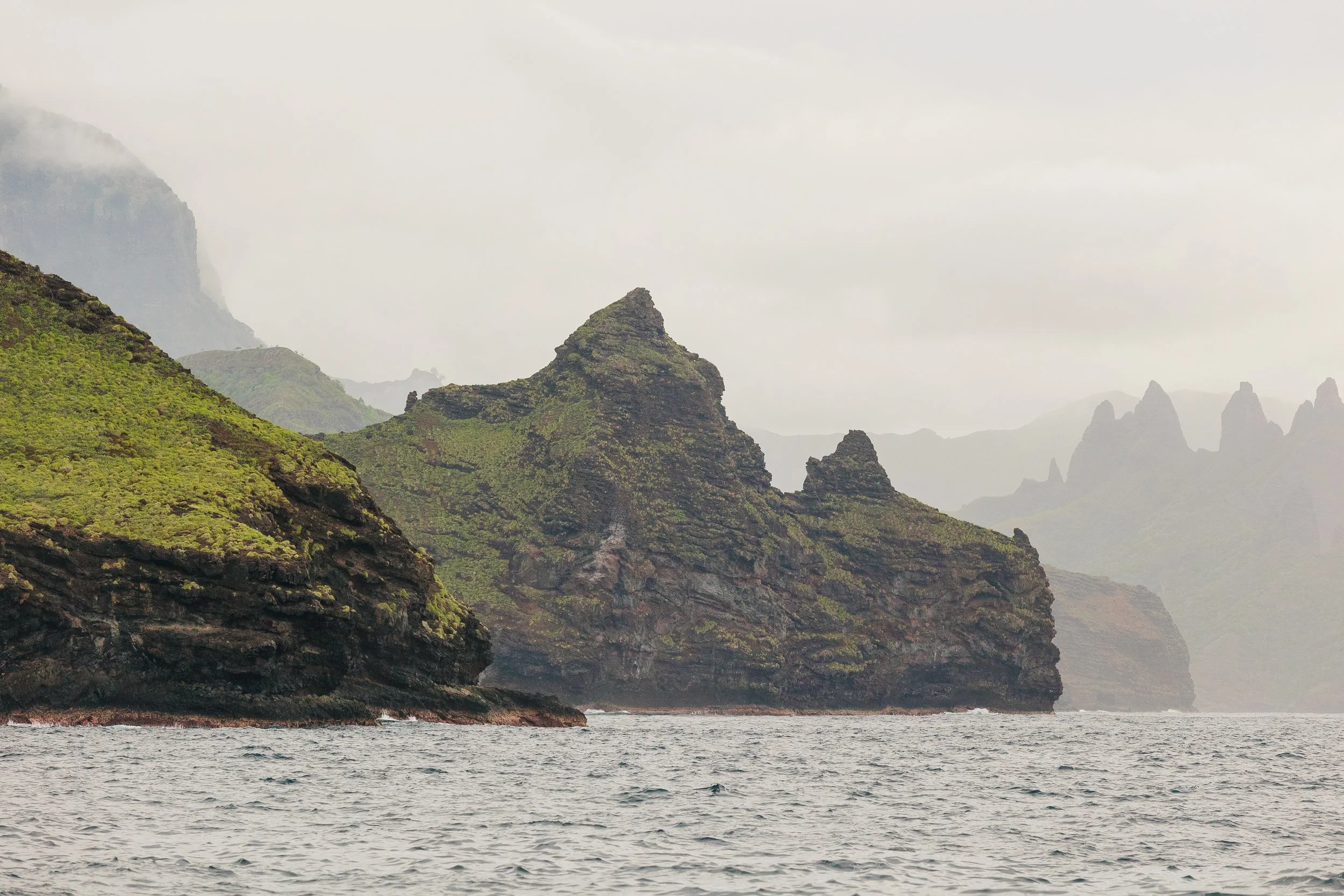
Nuku Hiva
Hiva Oa: The Cultural Heart
From Anaho, we turned south. The sail from Nuku Hiva to Hiva Oa took nearly a full day, from sunrise until sunset. The islands are close enough that we never entirely lost sight of land; silhouettes remained suspended along the horizon as one island slowly faded and another rose ahead. Yet the charts beneath our keel told a far more dramatic story. Between the islands, the seabed plunged thousands of feet into the Pacific, often reaching depths between 10,000 and 13,000 feet.The Marquesas rise from enormous submarine volcanoes, their visible peaks only the uppermost portions of geological structures extending far beneath the surface. Sailing among them felt almost like passing from one mountaintop to another across an invisible, submerged mountain range. Hiva Oa, home to just over two thousand residents, is often regarded as the cultural heart of the Marquesas. It holds some of the archipelago’s most significant archaeological sites and is closely associated with both Paul Gauguin and Jacques Brel, each of whom spent the final years of his life near Atuona.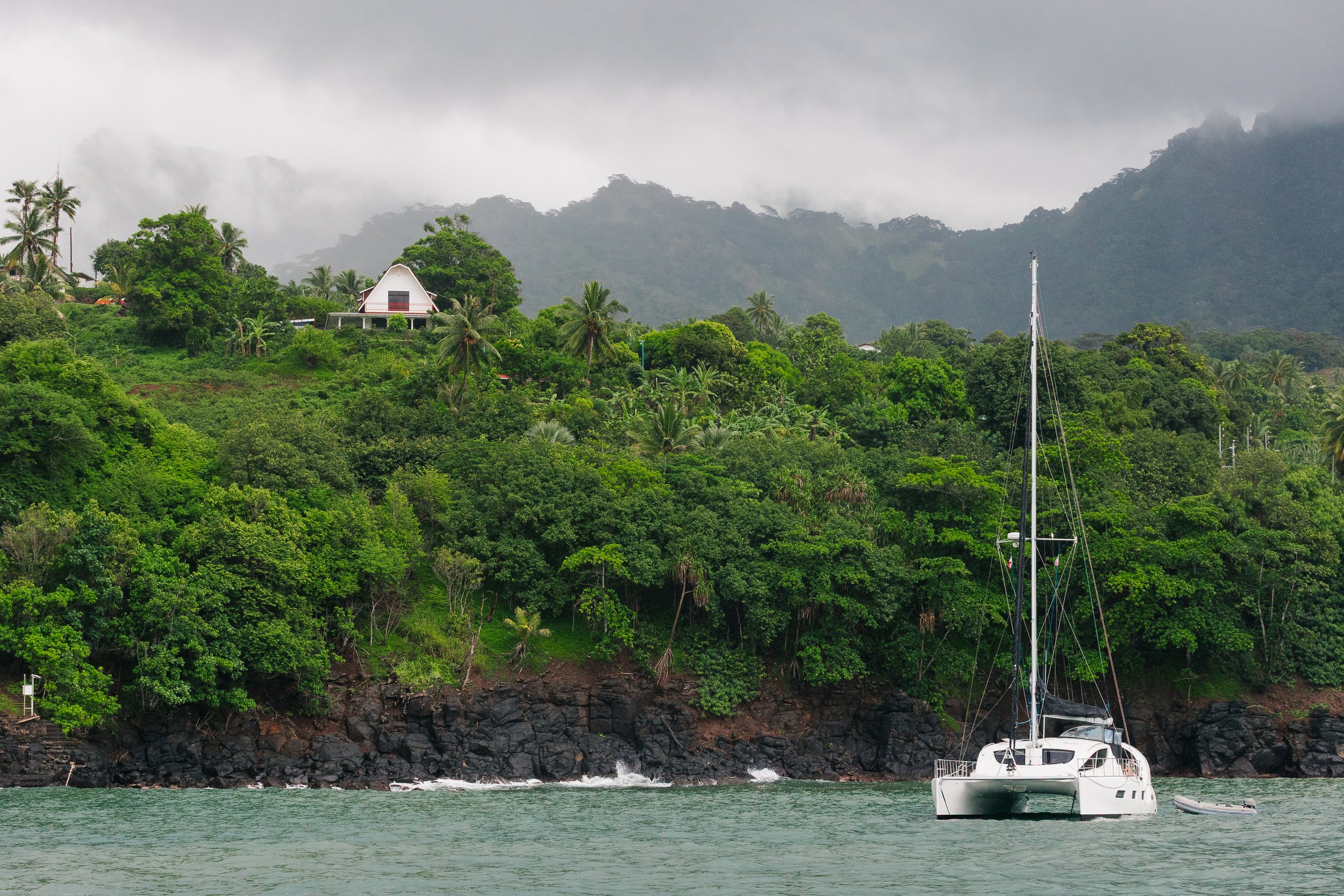
Hiva Oa
Atuona
When we arrived, we joined a collection of sailboats anchored remarkably close together within the shallow basin near town. It was one of the more protected harbors we had encountered in the Marquesas and, predictably, one of the most crowded. After so many anchorages exposed to open Pacific swell, the relative shelter came as a relief.Once ashore, we discovered a gas station selling baguettes, a small luxury that had become an almost essential part of daily life in French Polynesia. Nearby was the boatyard where friends who had sailed into the country before us had hauled out their own vessel, another reminder of how interconnected the cruising community could feel despite the enormous distances involved. We hitchhiked into the center of Atuona to see what we might find. By Marquesan standards, it felt substantial, similar in scale to Taiohae on Nuku Hiva, with several magasins, a bank, a post office, and a central gathering space decorated with tiki. Beneath one of the pavilions, local women practiced music together, their voices and instruments carrying softly through the humid afternoon.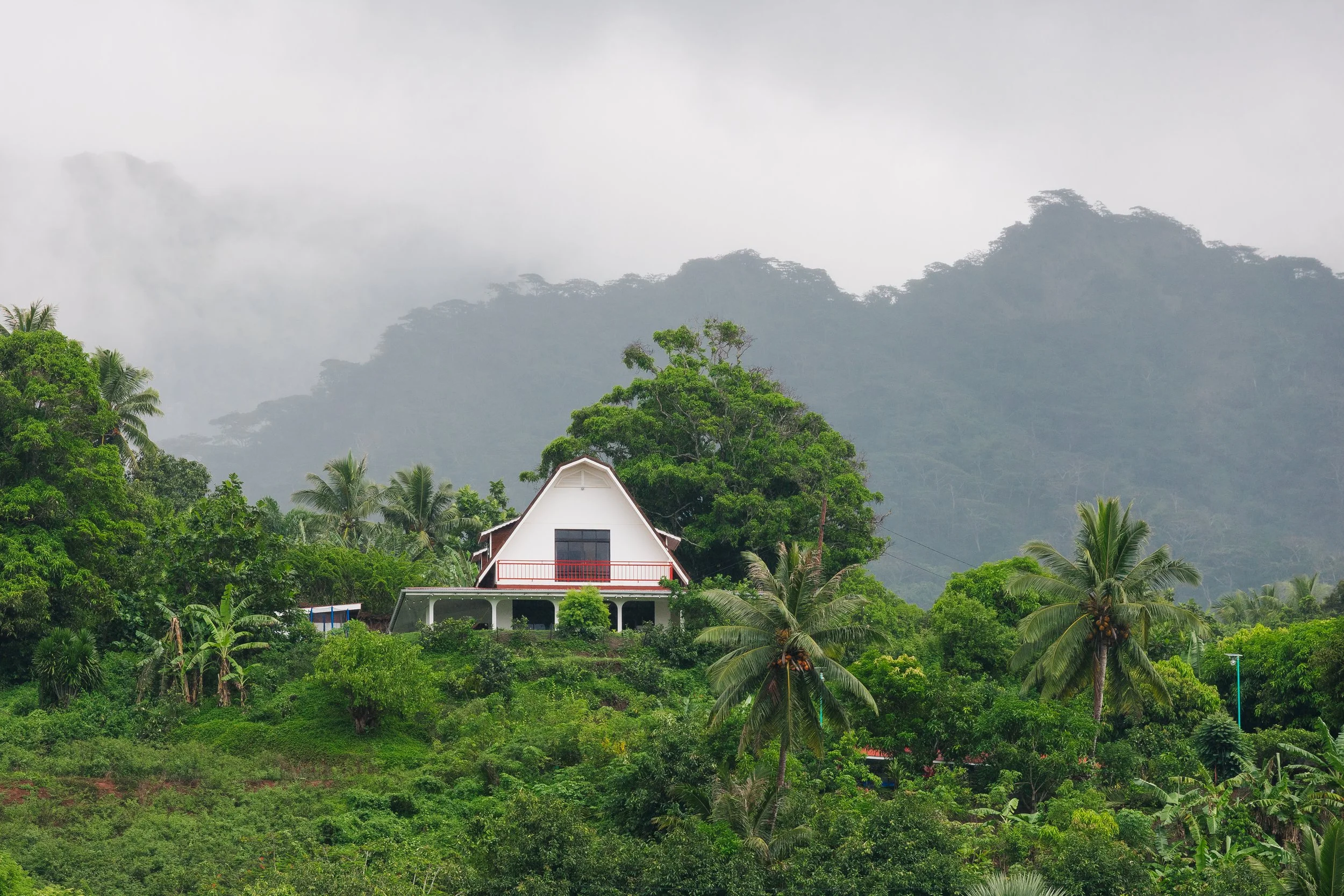
Hiva Oa
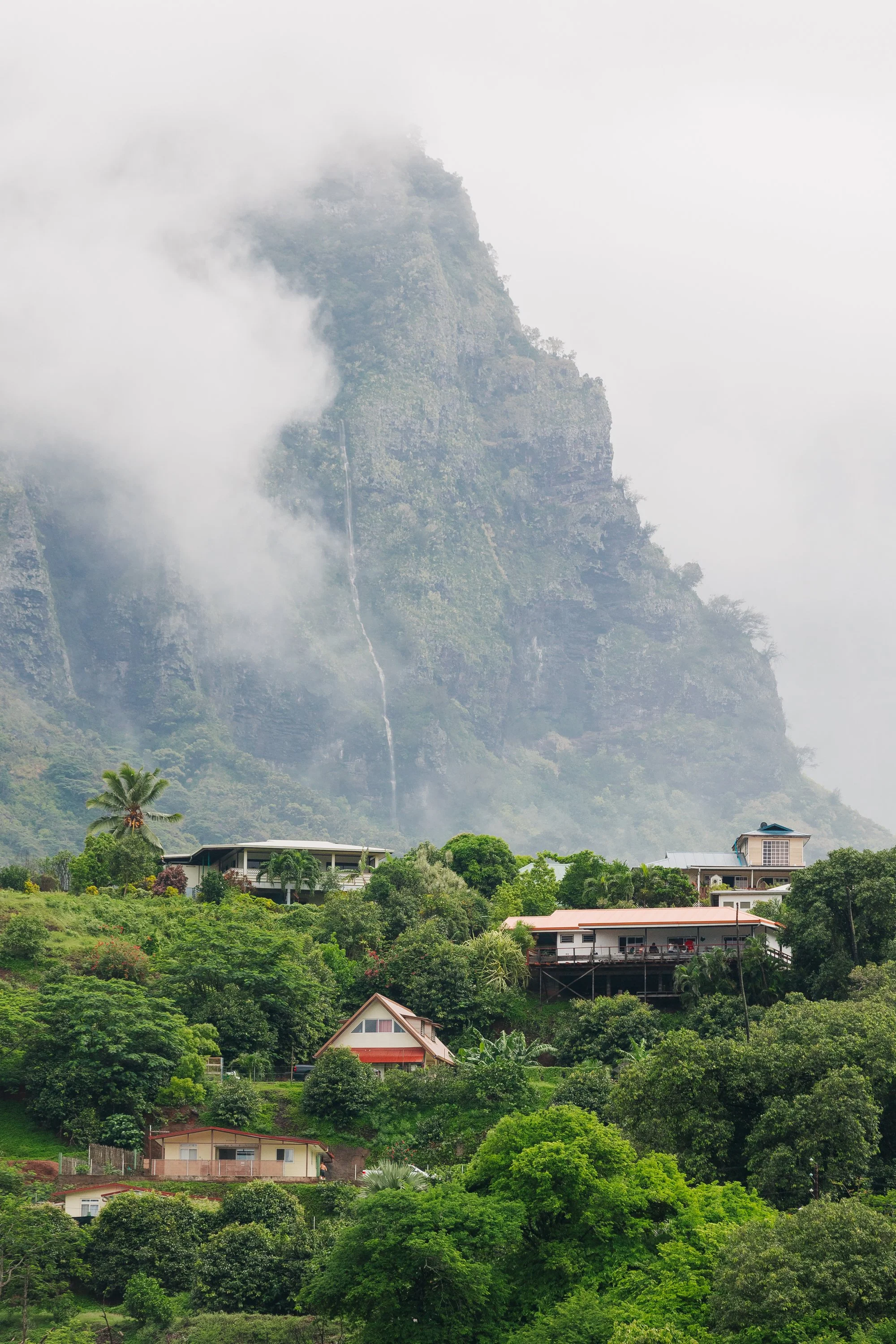
Hiva Oa
Hiva Oa
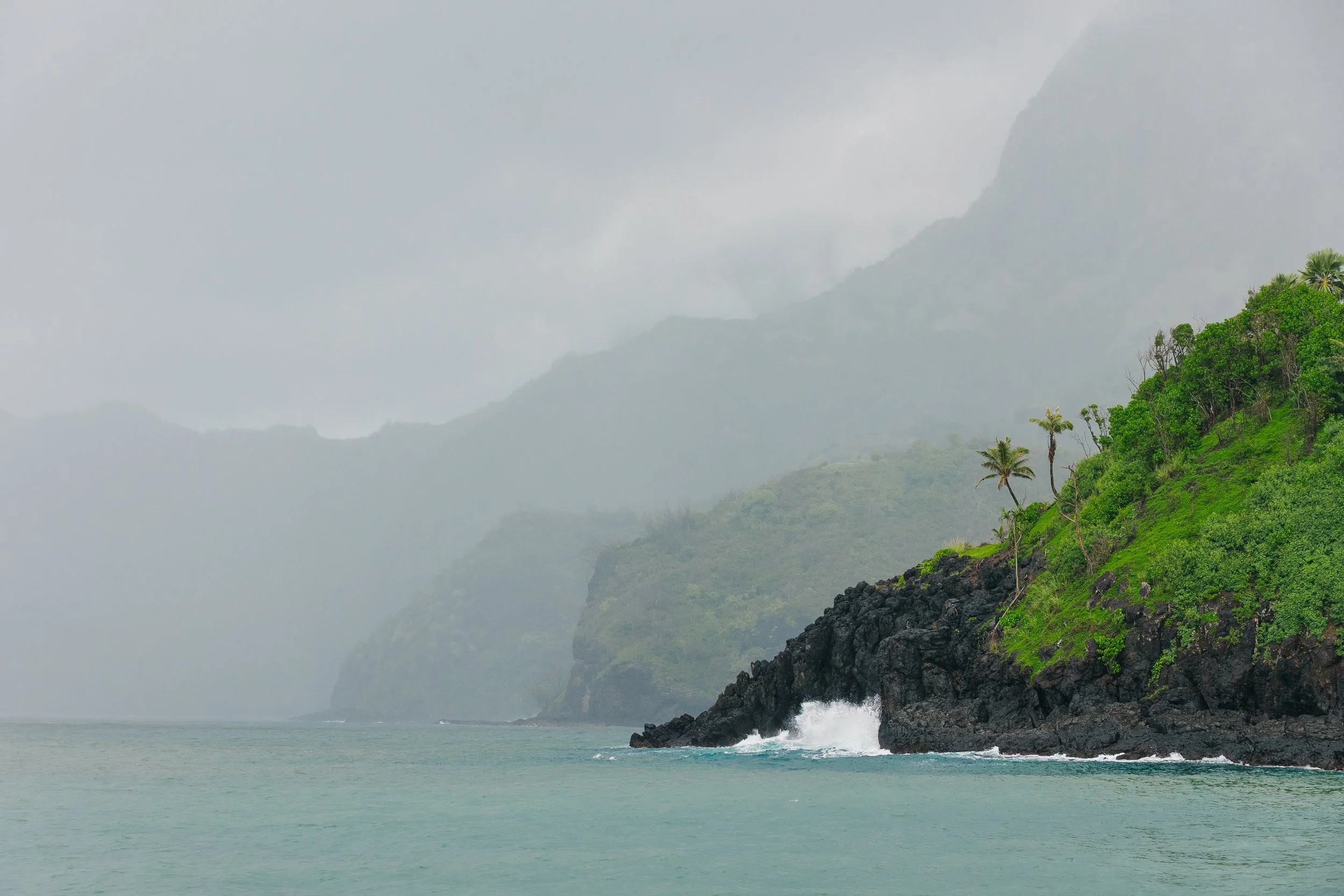
Our first days in Atuona were rainy, and from the anchorage we watched waterfalls appear high in the mountains behind town, spilling down slopes that were normally hidden beneath vegetation. The weather made the island feel even more lush and dramatic, though it also left us wishing we had more time to linger and explore the interior. There always seemed to be another valley, another trail, another archaeological site just beyond what we could reach by boat.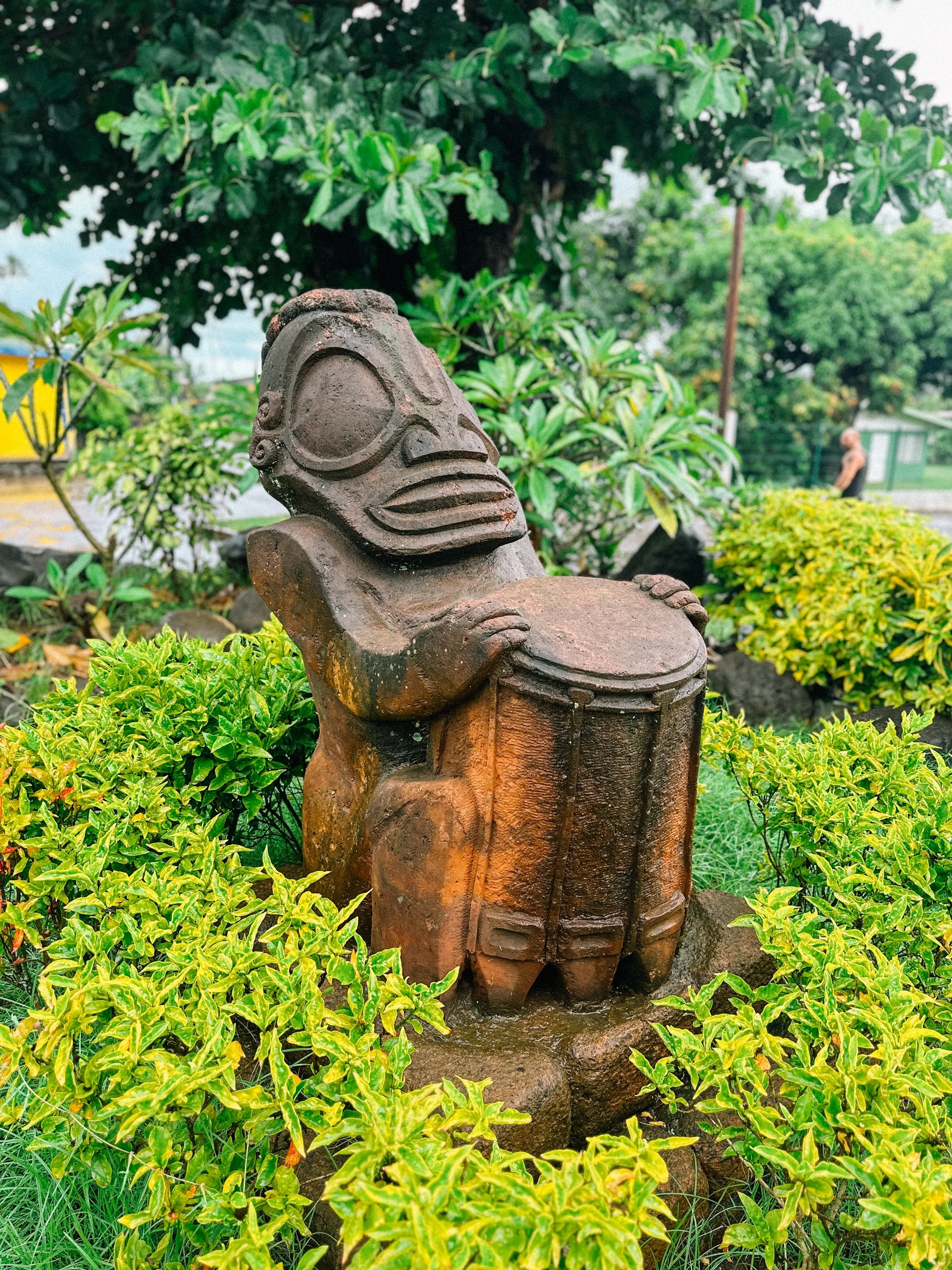
Hiva Oa
Tahuata: Beaches, Mantas, and Evening Light
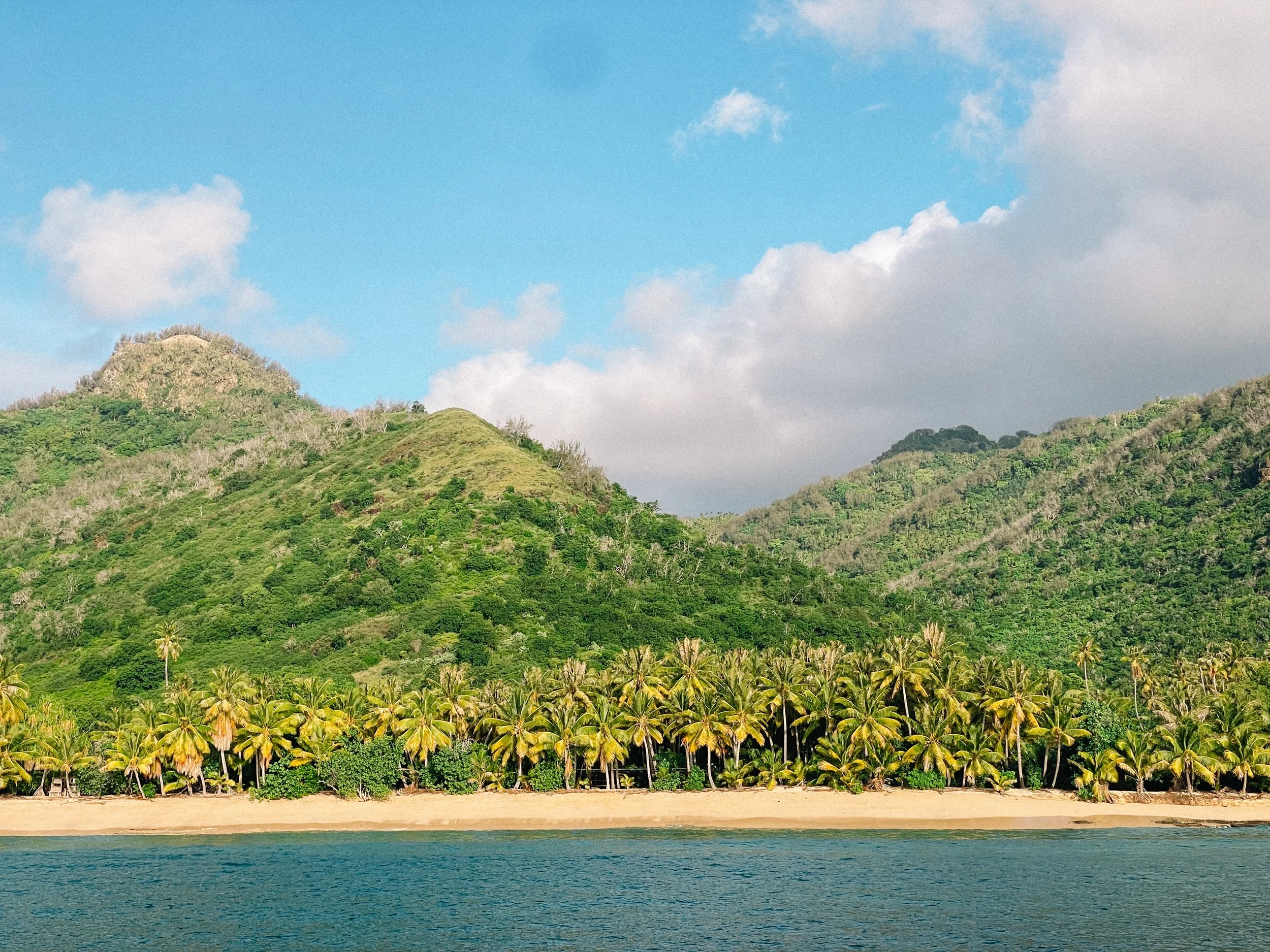
Only a narrow channel separates Hiva Oa from Tahuata, yet the smaller island possessed an atmosphere entirely its own. Much of the Marquesas is defined by rocky shores, dark volcanic beaches, and steep coastal cliffs, but Tahuata offered several stretches of pale sand: rare interruptions in an archipelago more often shaped by stone than coral. The island is sometimes known as the Fragrant Island, a name associated with its flowers, scented oils, and abundant vegetation. Its forests also provide one of the last refuges for the critically endangered Marquesan monarch, or pahi, making the island especially important for bird conservation.Baie Hanamoenoa
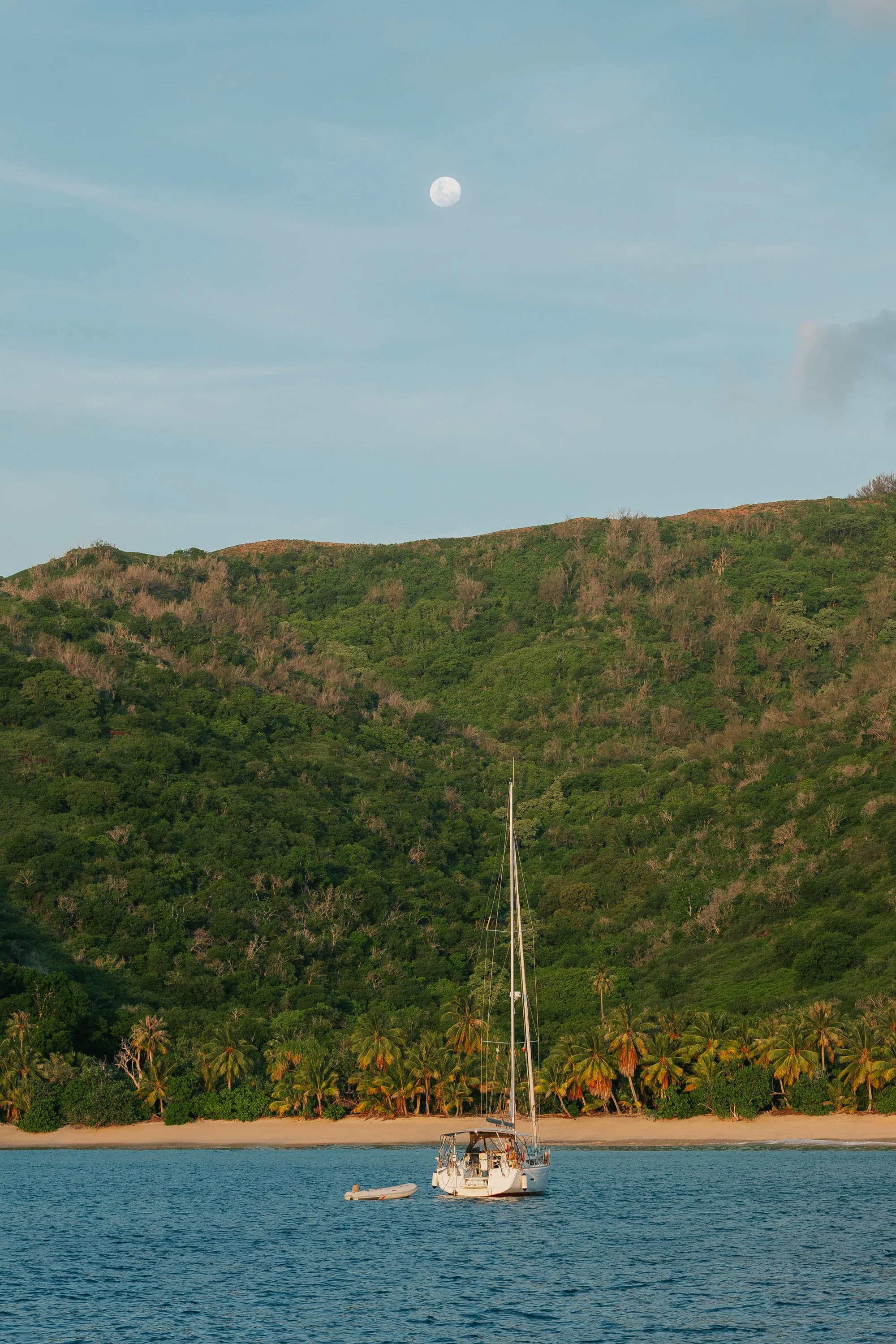
We approached Baie Hanamoenoa, often called Manta Bay, an hour or two before sunset. The entire anchorage seemed to glow. The beach caught the late-afternoon light while green mountains rose behind it, and the water settled into shades of amber and gold. After everything we had already seen, I found myself wondering how French Polynesia could possibly become any more beautiful.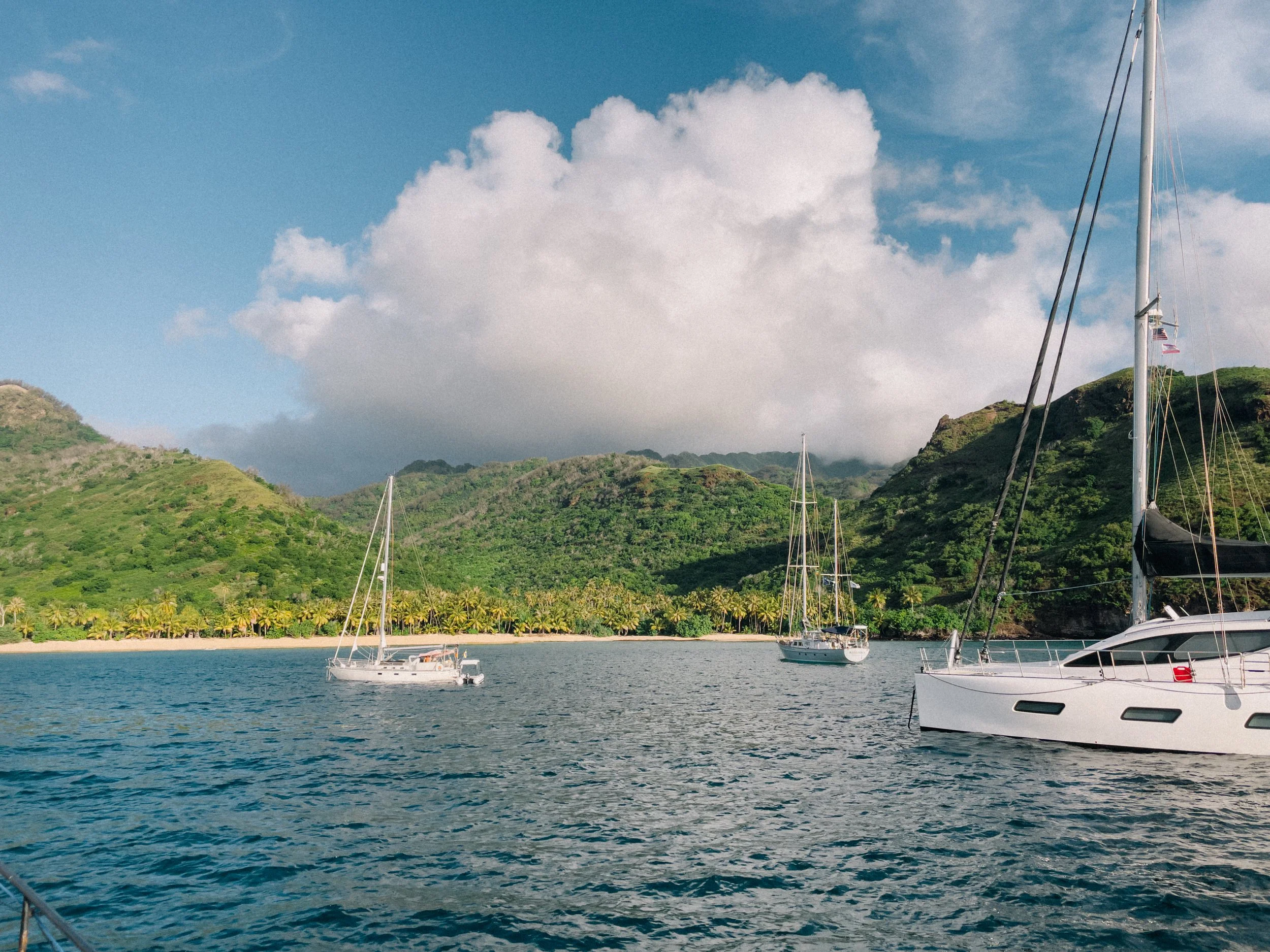
Tahuata
Tahuata
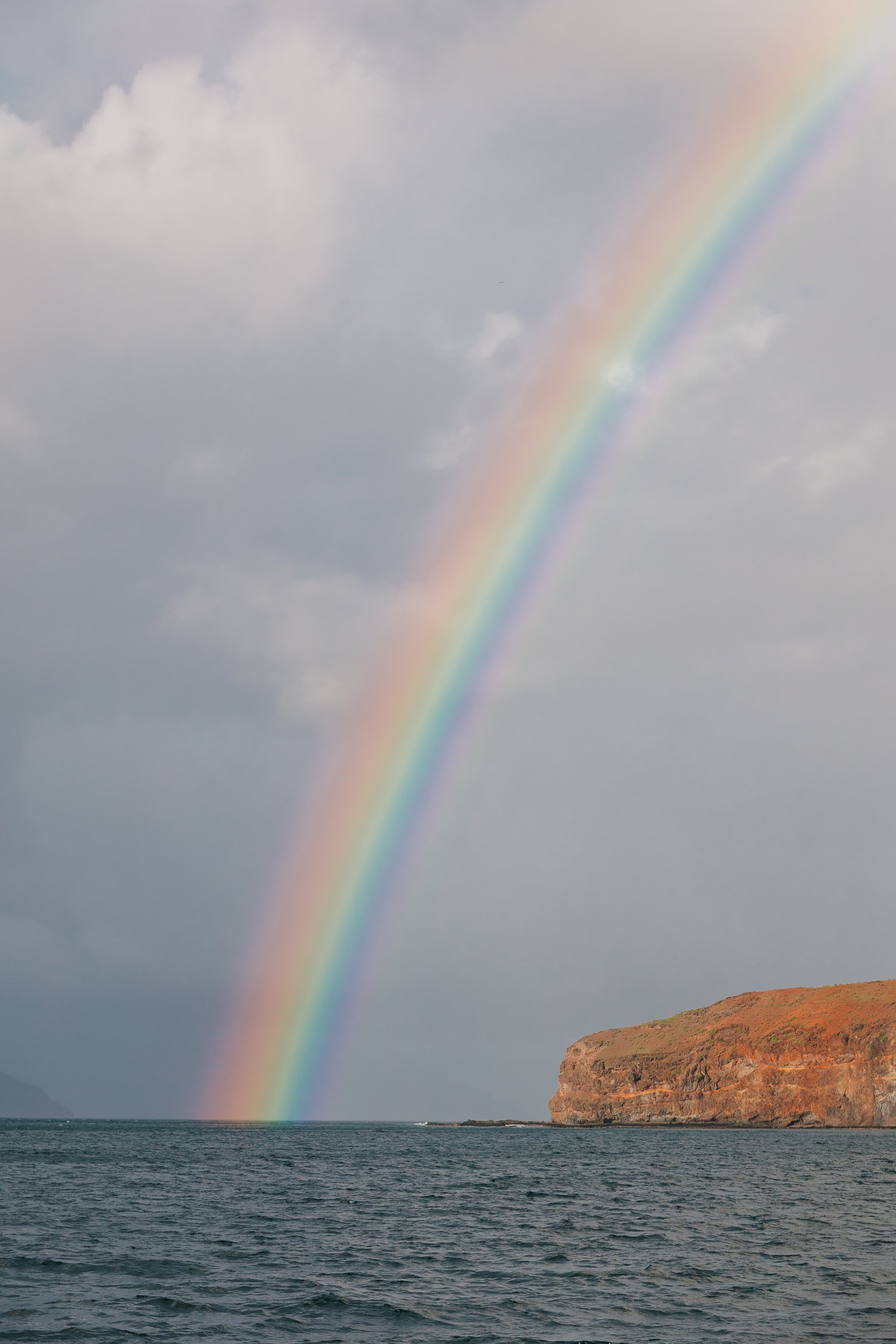
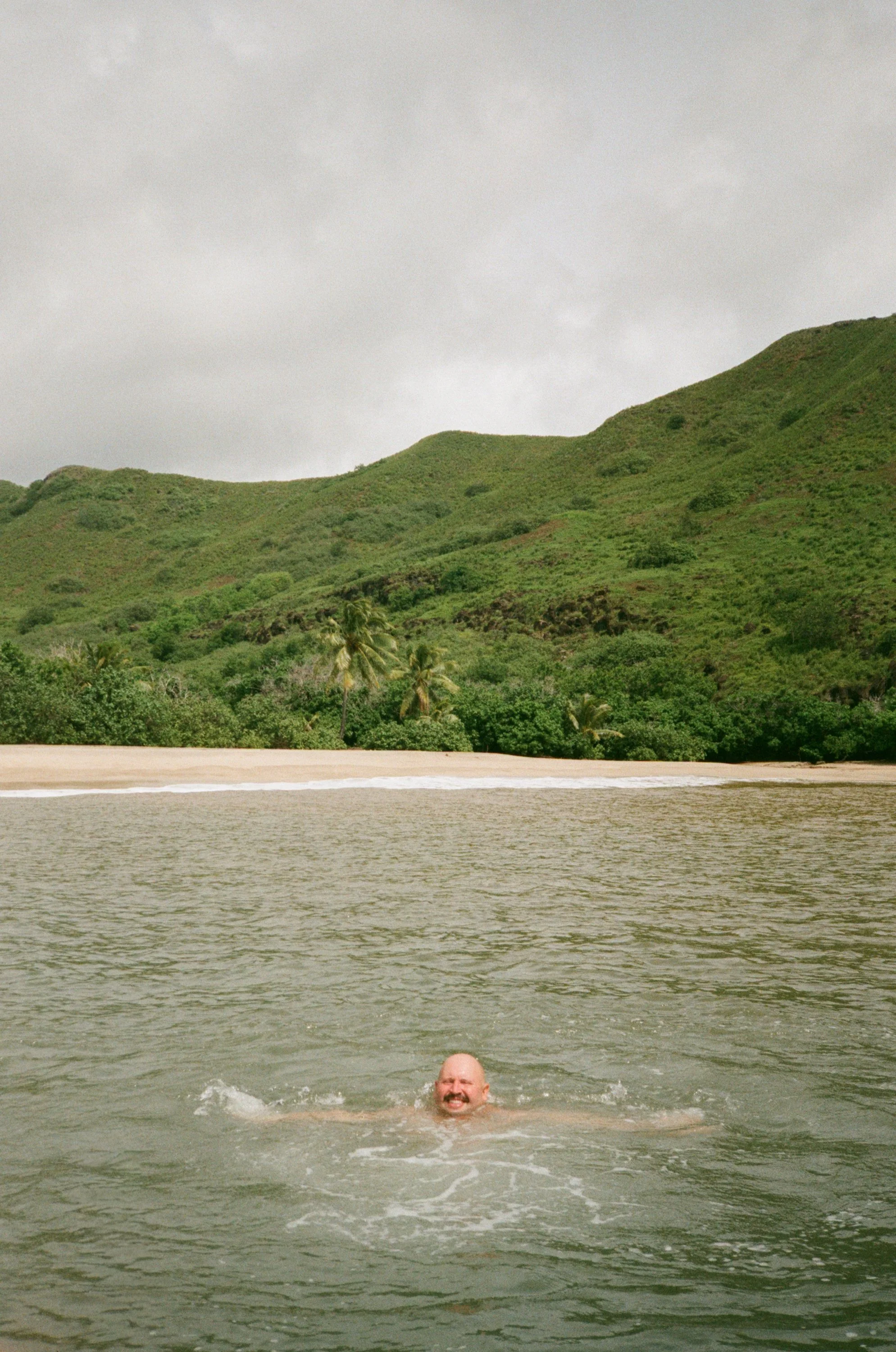
As the sun lowered behind us, it illuminated the entire bay. Palm-lined beaches and white sand reflected the warm evening light, looking almost too idyllic to be real. We anchored with the feeling that this was exactly the kind of place we would want to wake up and spend an entire day doing very little. The following morning, we awoke to manta rays gliding around the boat. There was something surreal about leaning over the rail and watching their dark wings move silently beneath the surface, circling through the same water in which we had just anchored. Later that afternoon, we took the raft toward shore, anchored it just offshore, swam the rest of the way in, and spent the afternoon body-surfing in the waves. It was one of those days that asked very little of us beyond simply being there.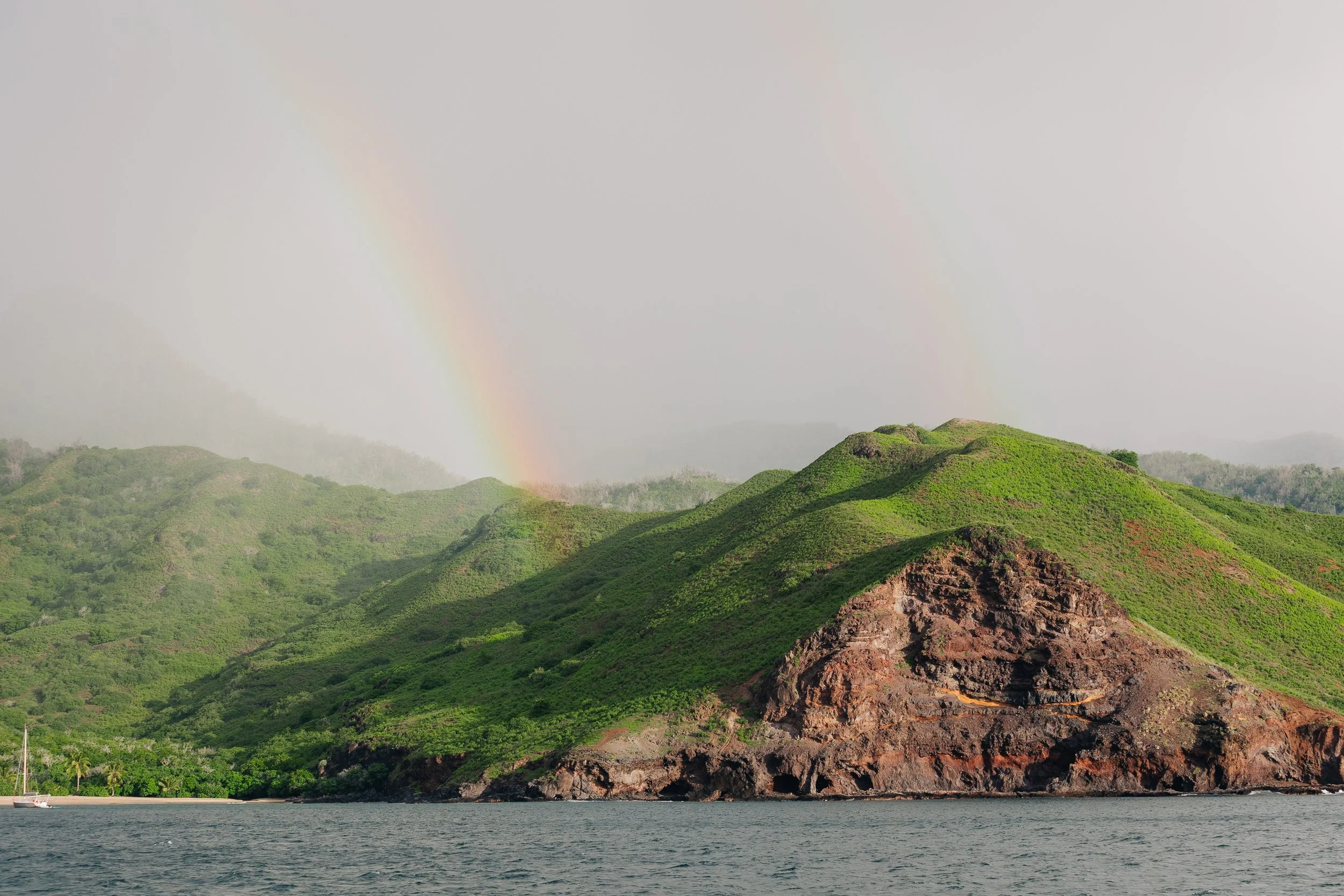
Tahuata
Tahuata
Tahuata
Tahuata
Vaitahu
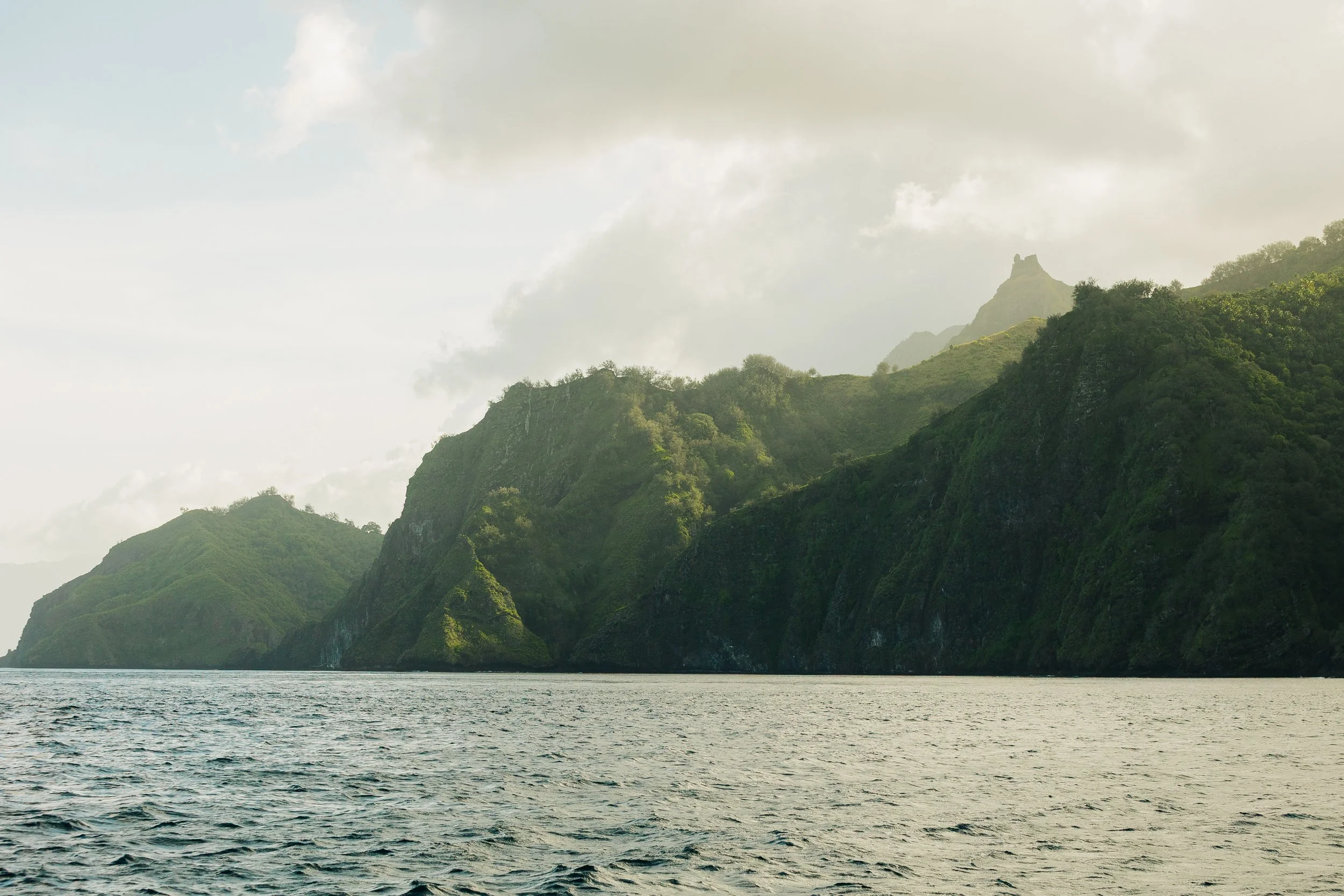
In Vaitahu, the next anchorage south of Baie Hanamoenoa, we once again encountered the generosity that had come to define so much of our experience in the Marquesas. As we walked along the waterfront road, locals offered us fresh fruit simply because we were visitors. It was a gesture that might seem small from land but felt almost extravagant from the perspective of life aboard a sailboat. Fresh produce was precious. Every pamplemousse, bunch of bananas, mango, breadfruit, or bundle of greens connected us to the islands in a way that packaged provisions never could.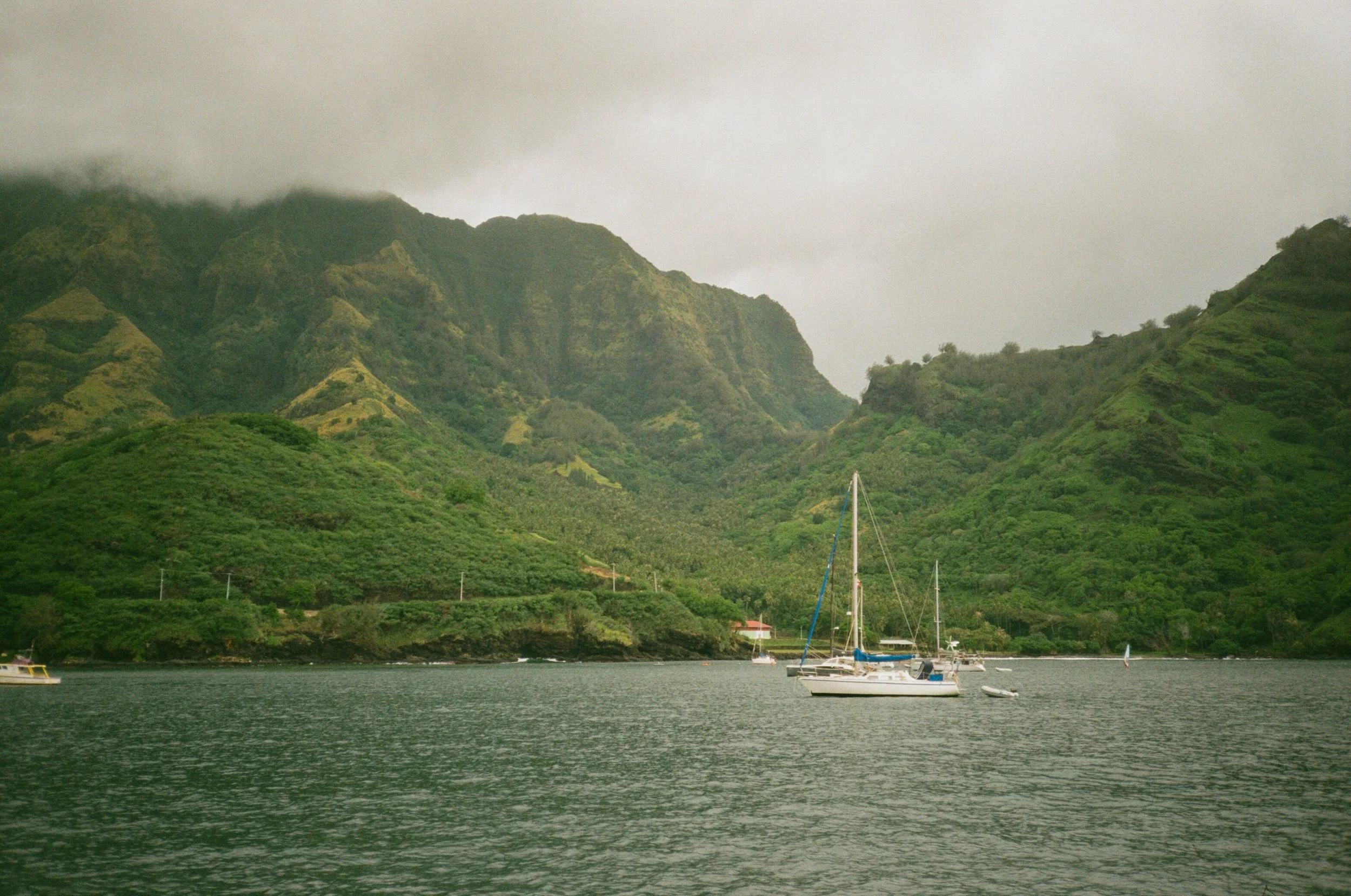
Tahuata
Tahuata
Tahuata
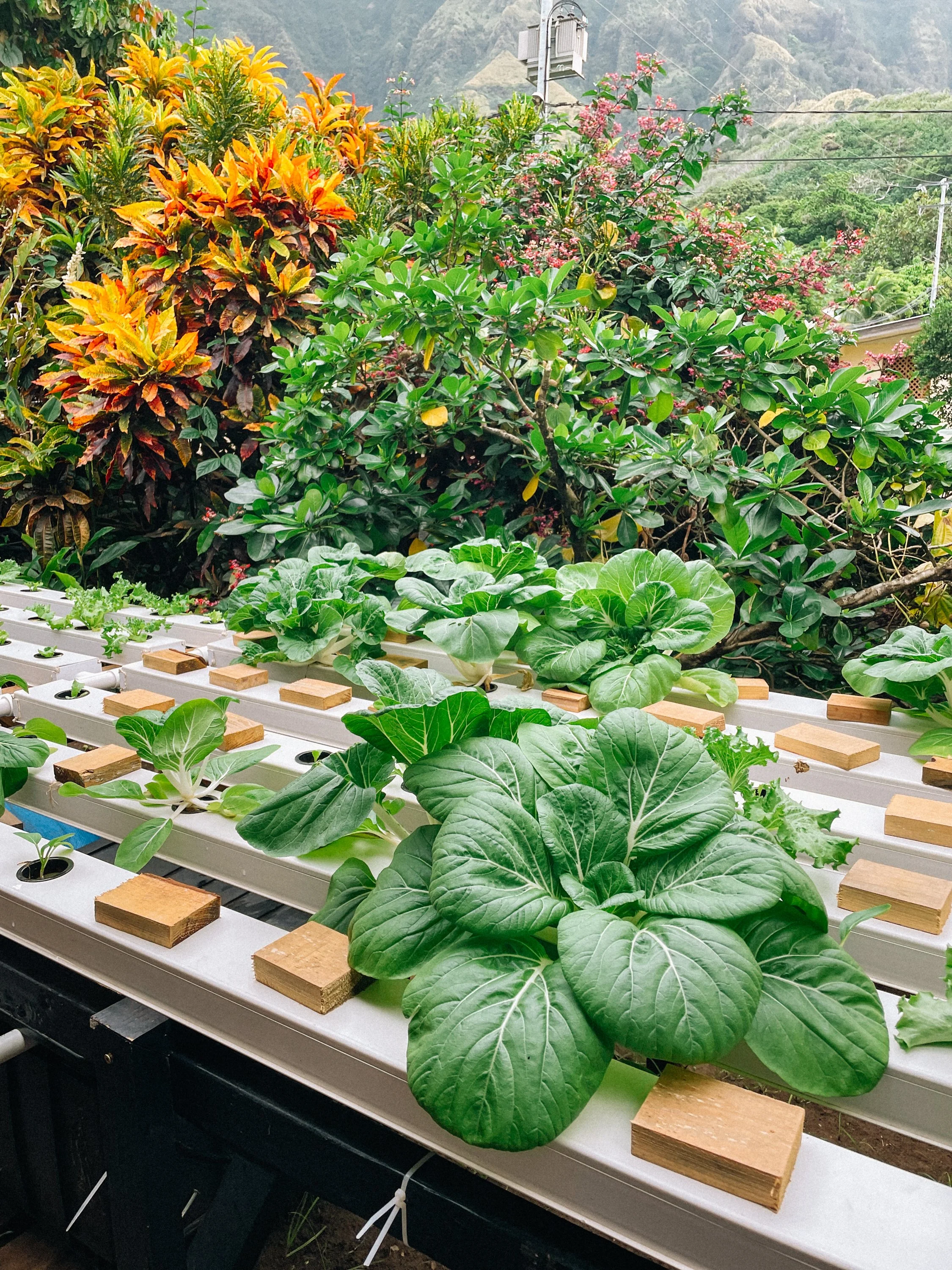
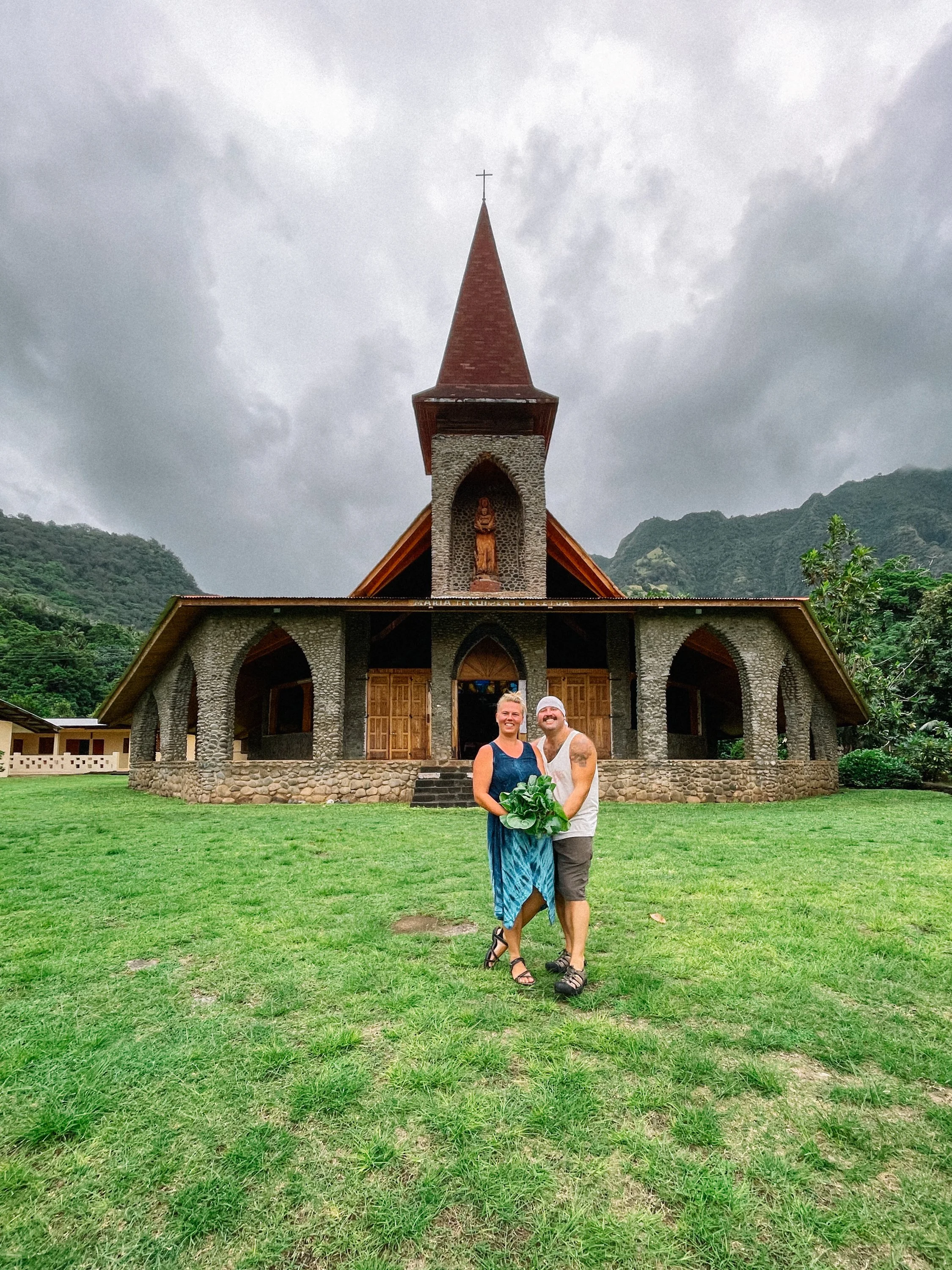
We eventually met a farmer growing hydroponic bok choy and other greens and asked if he might be willing to sell us some. He seemed delighted by our interest and invited us to choose exactly which plants we wanted. When we told him any of them would be perfectly fine, he gently disagreed. It was important, he explained, that we choose intentionally which ones we wanted because we would be the ones eating them. The act of choosing mattered. It was a small interaction, but one that stayed with us. Throughout the Marquesas, food was rarely treated as something anonymous. Fruit came from someone’s tree. Breadfruit was cut from someone’s yard. Fish had been caught that morning. A goat belonged to someone’s herd. Even a head of bok choy had a story and a person behind it. From Tahuata, we set our sights on the southernmost inhabited island of the Marquesas.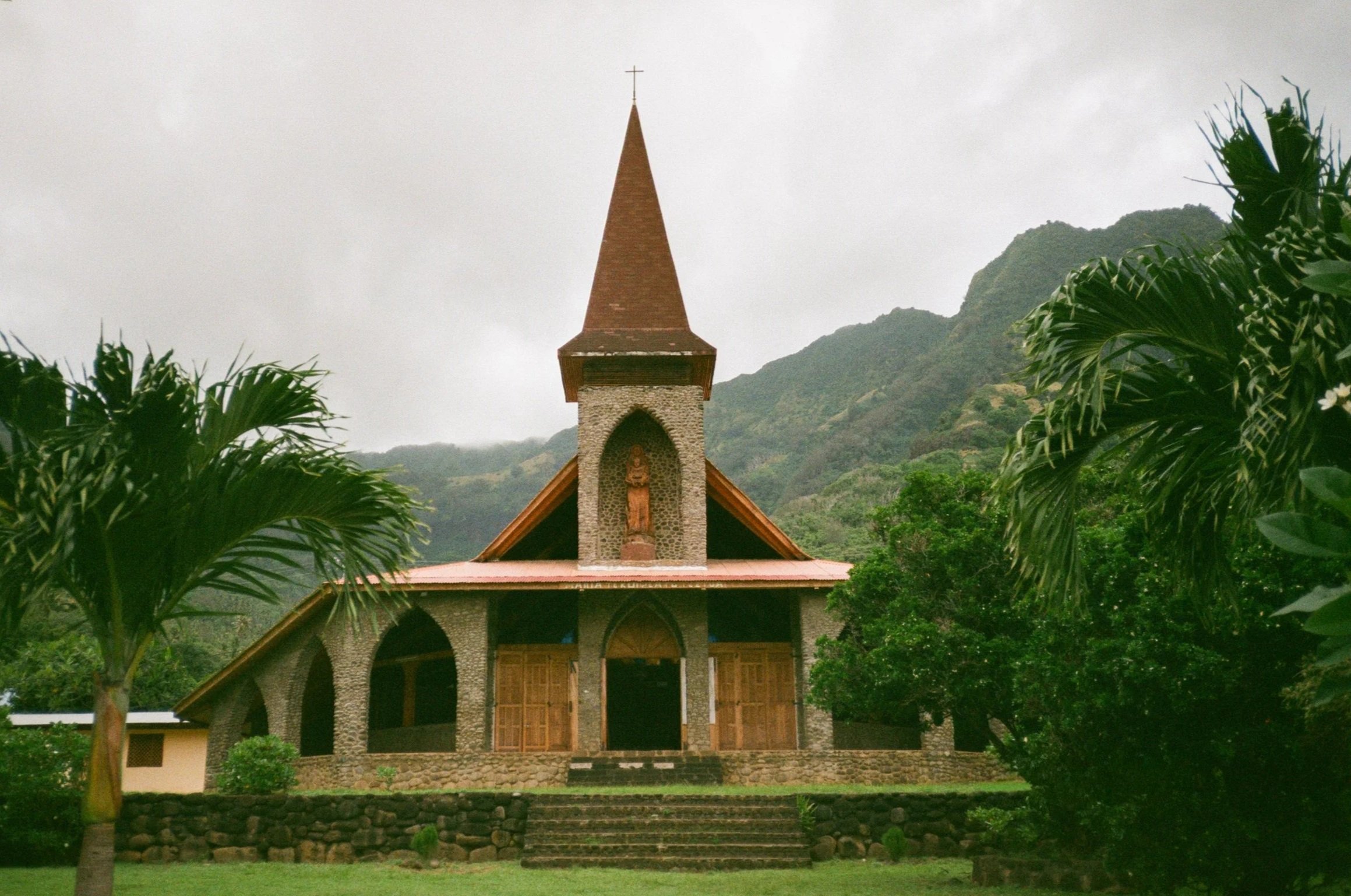
Tahuata
Tahuata
Fatu Hiva: The Garden Island
Fatu Hiva rose from the sea like the setting of an old maritime legend. Often called the Garden Island, it is widely considered one of the most beautiful islands in the Marquesas. Rainfall feeds dense forests and waterfalls, while deep valleys are enclosed by some of the archipelago’s most dramatic cliffs.For many sailors crossing westward from the Americas, Fatu Hiva is their first glimpse of land in French Polynesia. The prevailing trade winds and the island’s position at the southeastern edge of the archipelago make it a natural landfall when approaching from the east. It was only upon arriving there that we fully realized we had explored the Marquesas in nearly the opposite direction from many westbound cruising boats. For them, Fatu Hiva was often the beginning. For us, it would be the end.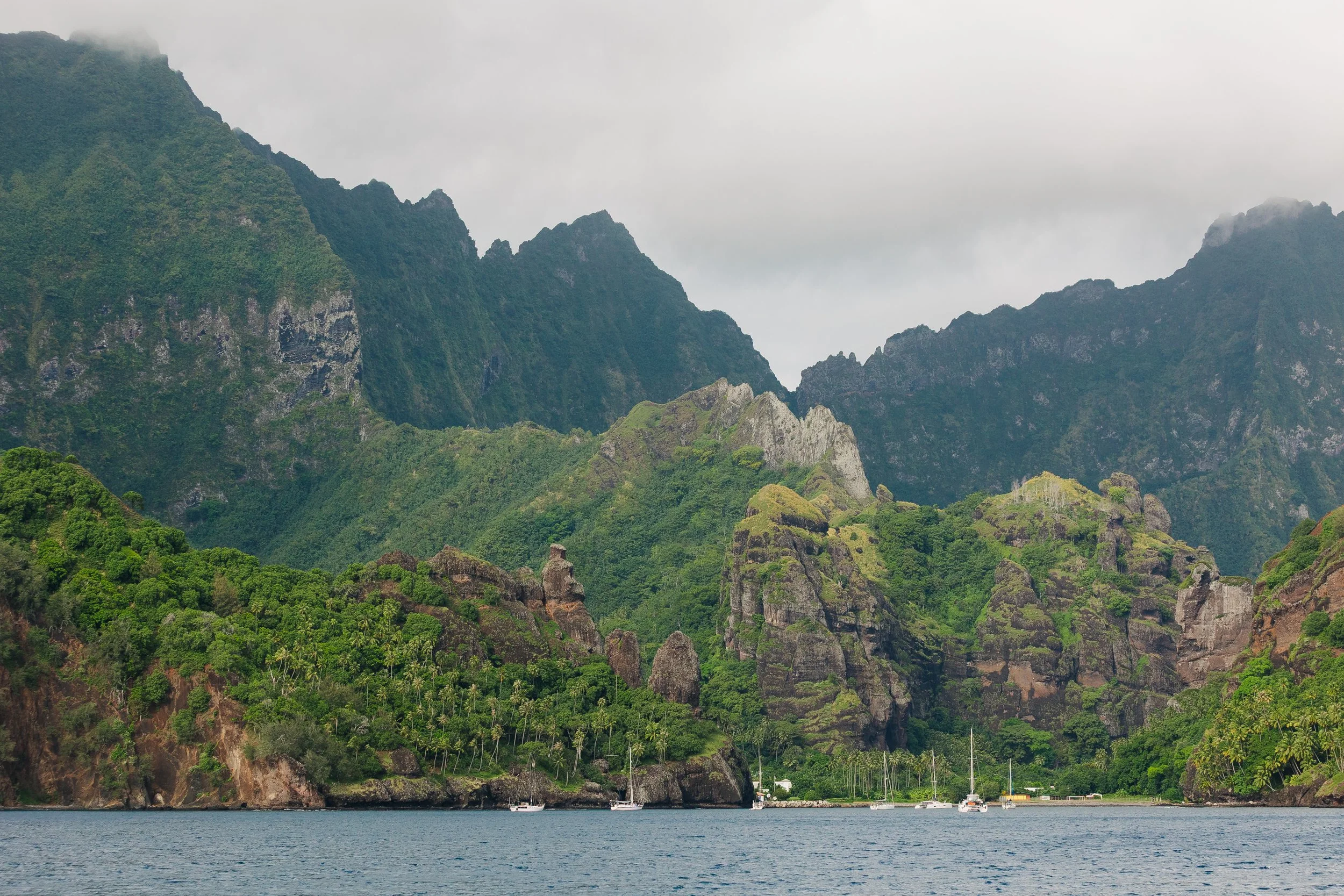
Fatu Hiva
Hanavave and the Bay of Virgins
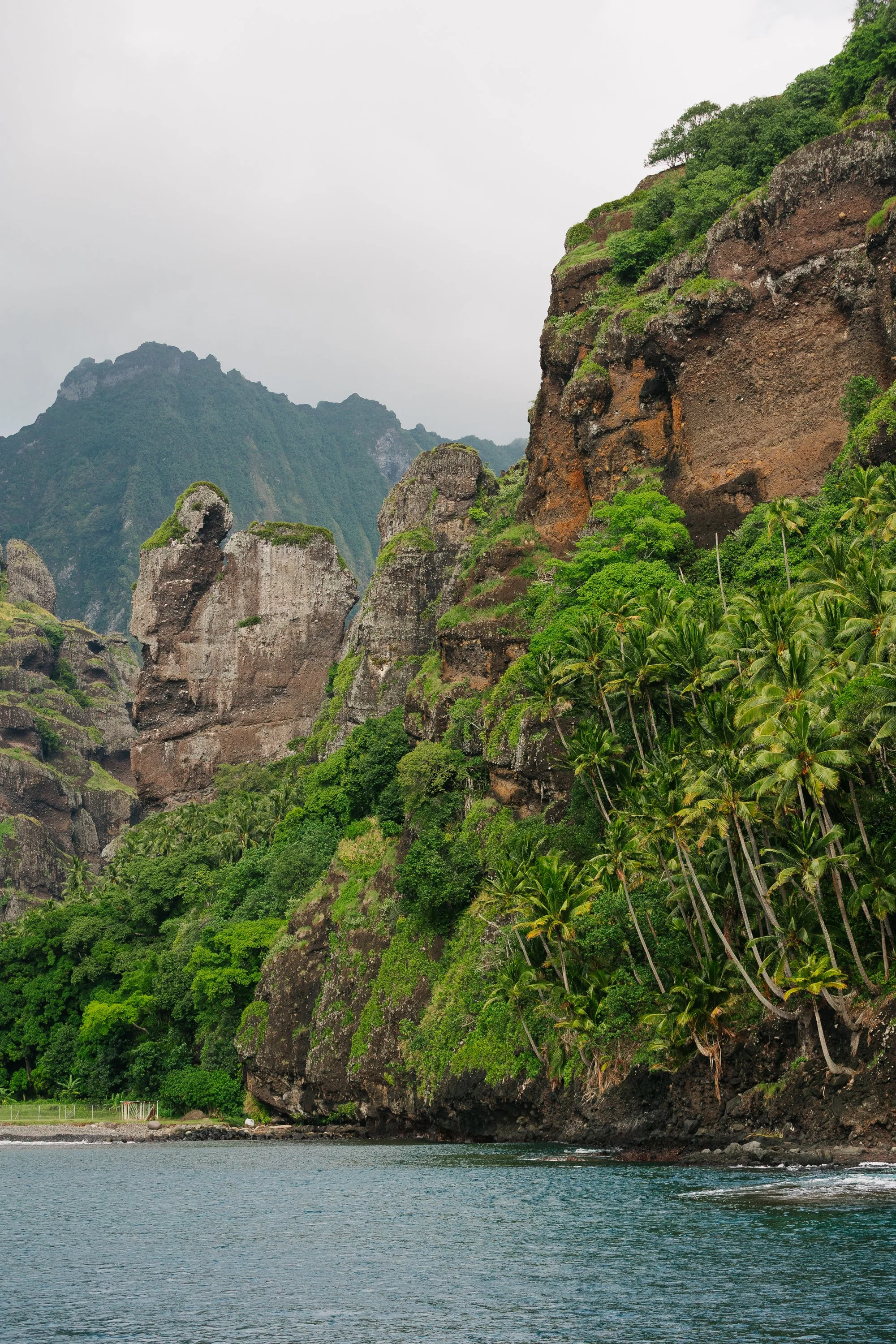
The anchorage at Hanavave, commonly known as the Bay of Virgins, is one of the most photographed in the South Pacific, and it is easy to understand why. Volcanic spires rise almost vertically around the bay, softened by dense vegetation yet still impossibly steep. The mountains form a natural amphitheater around the anchorage, changing color throughout the day as clouds move across the valley and shifting light catches the faces of the cliffs.The Marquesas contain some of the highest sea cliffs in French Polynesia, with portions rising more than 3,000 feet above the Pacific. In Hanavave, the vertical nature of the archipelago seemed to reach its most theatrical expression. Everywhere we looked, the landscape climbed upward.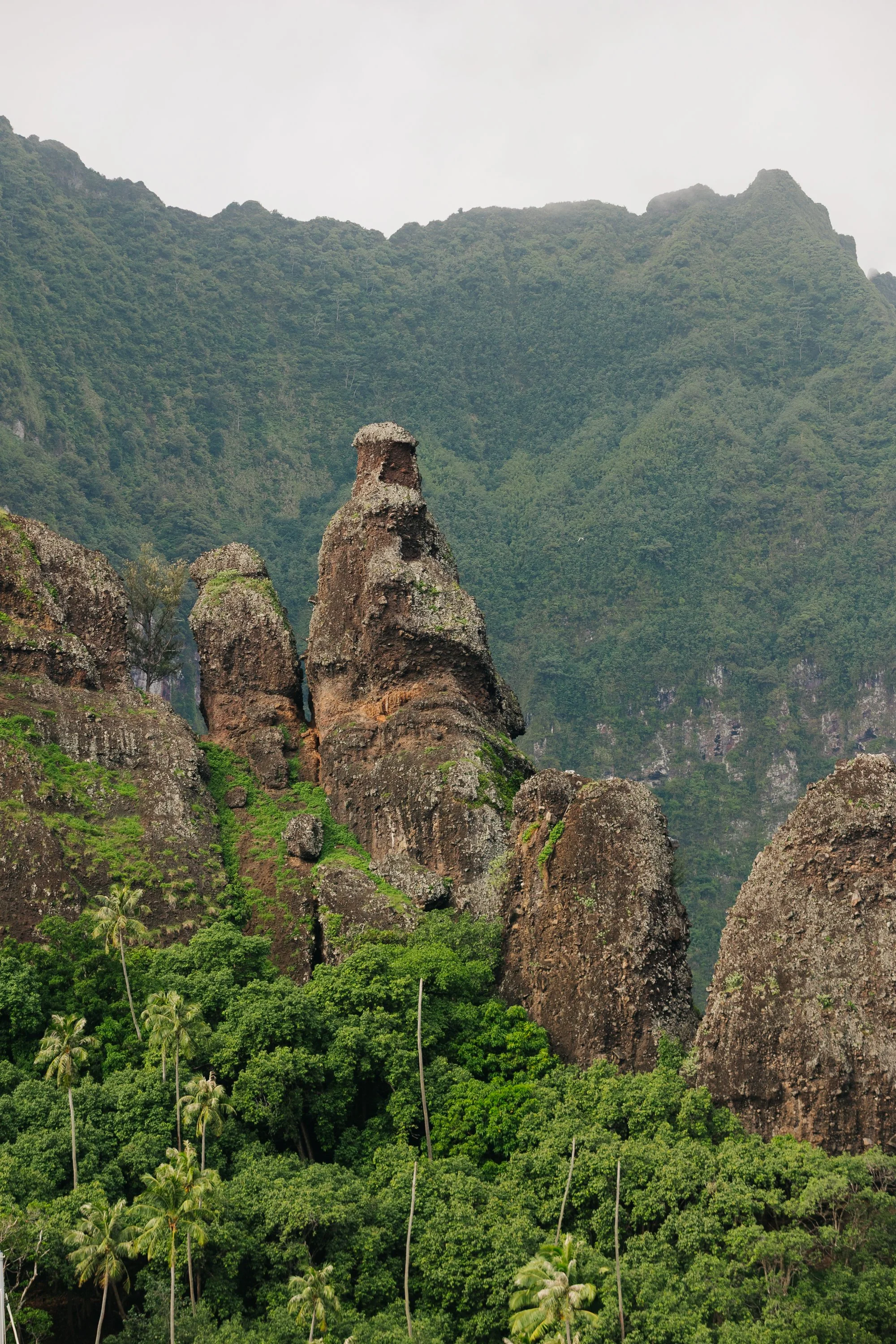
Fatu Hiva
Fatu Hiva
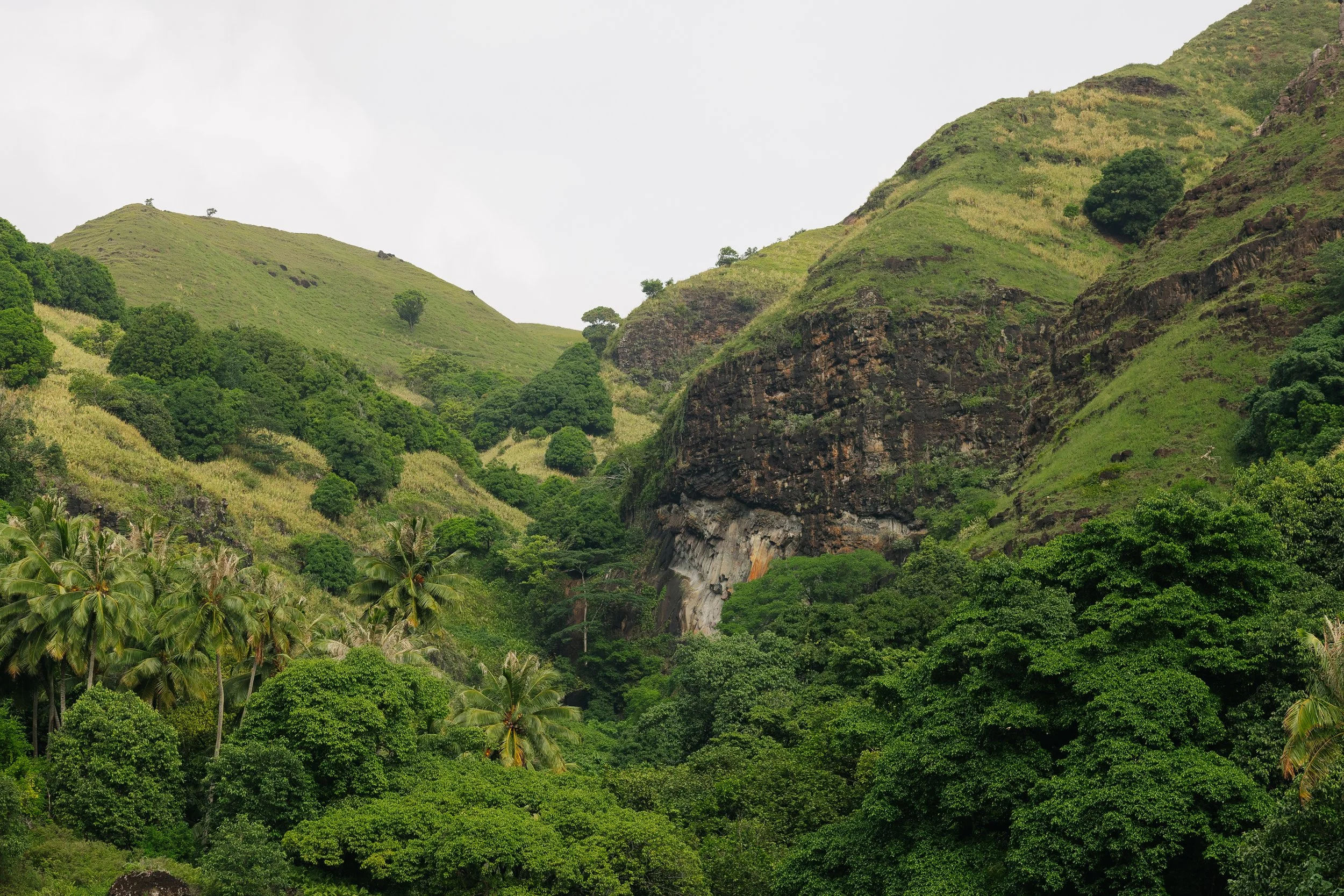
Fatu Hiva
Fatu Hiva also felt culturally different from the other islands we had visited. Because so many trans-Pacific sailboats make their first landfall there, residents were accustomed to meeting crews who had just spent weeks at sea: tired, euphoric, undersupplied, and very willing to pay for fresh fruit, dinner, carvings, or nearly anything that had not come from a boat locker. That long relationship with newly arrived sailors seemed reflected in the nature of our interactions.Fruit, handicrafts, and meals were offered readily, though often at prices that recognized exactly how valuable something fresh could feel after an ocean crossing. After several weeks of remarkable generosity throughout smaller Marquesan villages, the exchanges in Fatu Hiva felt more commercial than many of our previous experiences. Still, that too seemed connected to the island’s unique place along one of the great sailing routes of the Pacific.When we greeted locals with Ka oha, they often responded with Ka oha nui, which we understood as a sort of “big hello.” One of the questions we heard repeatedly was, “Combien de bateaux?” meaning “how many boats?” The village itself sat tucked deeply enough into the valley that residents could not easily see how many vessels were anchored in the bay. We began to suspect that the question was partly practical: the number of boats likely offered some indication of how many visitors, customers, and opportunities for trade might arrive ashore that day.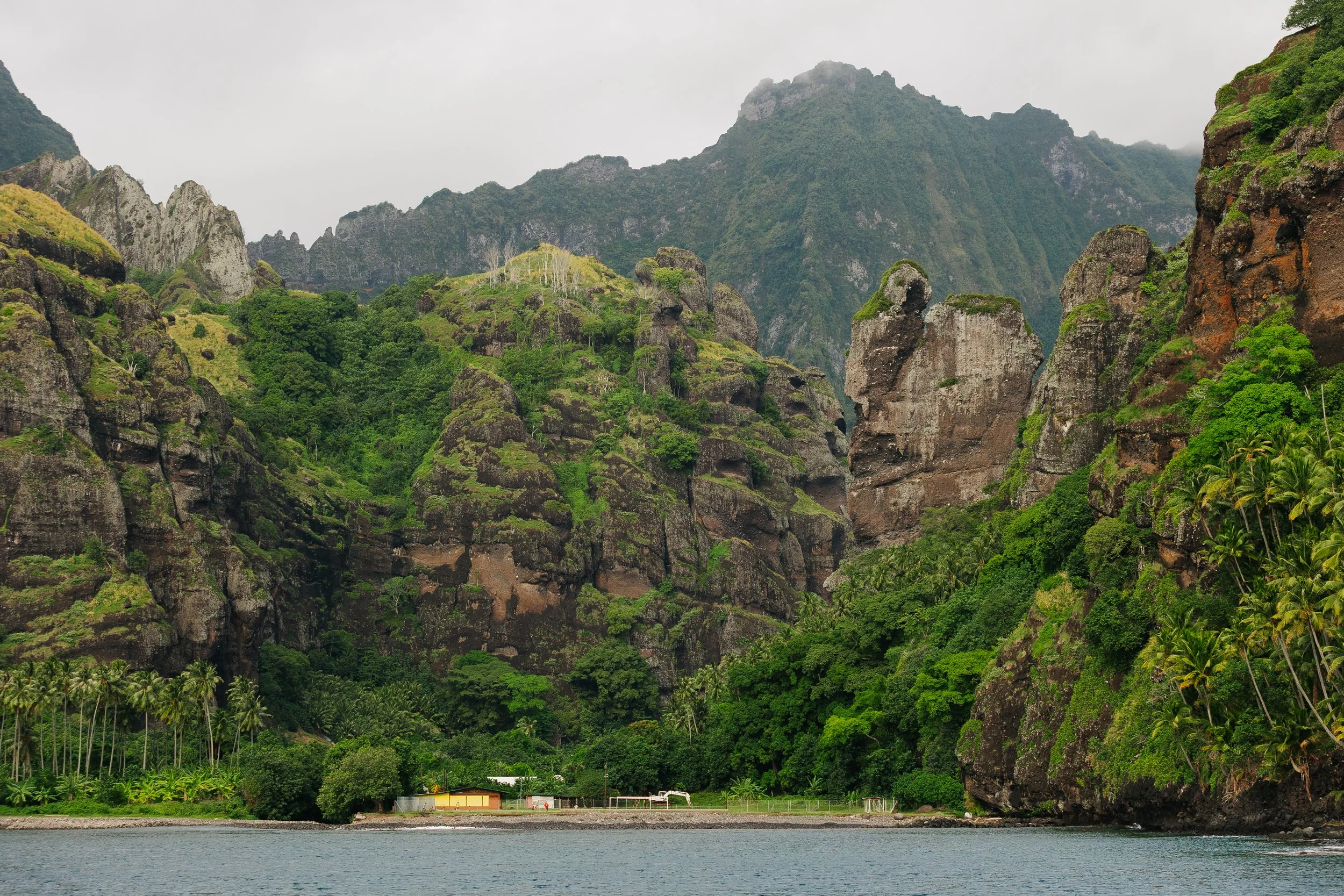
Fatu Hiva
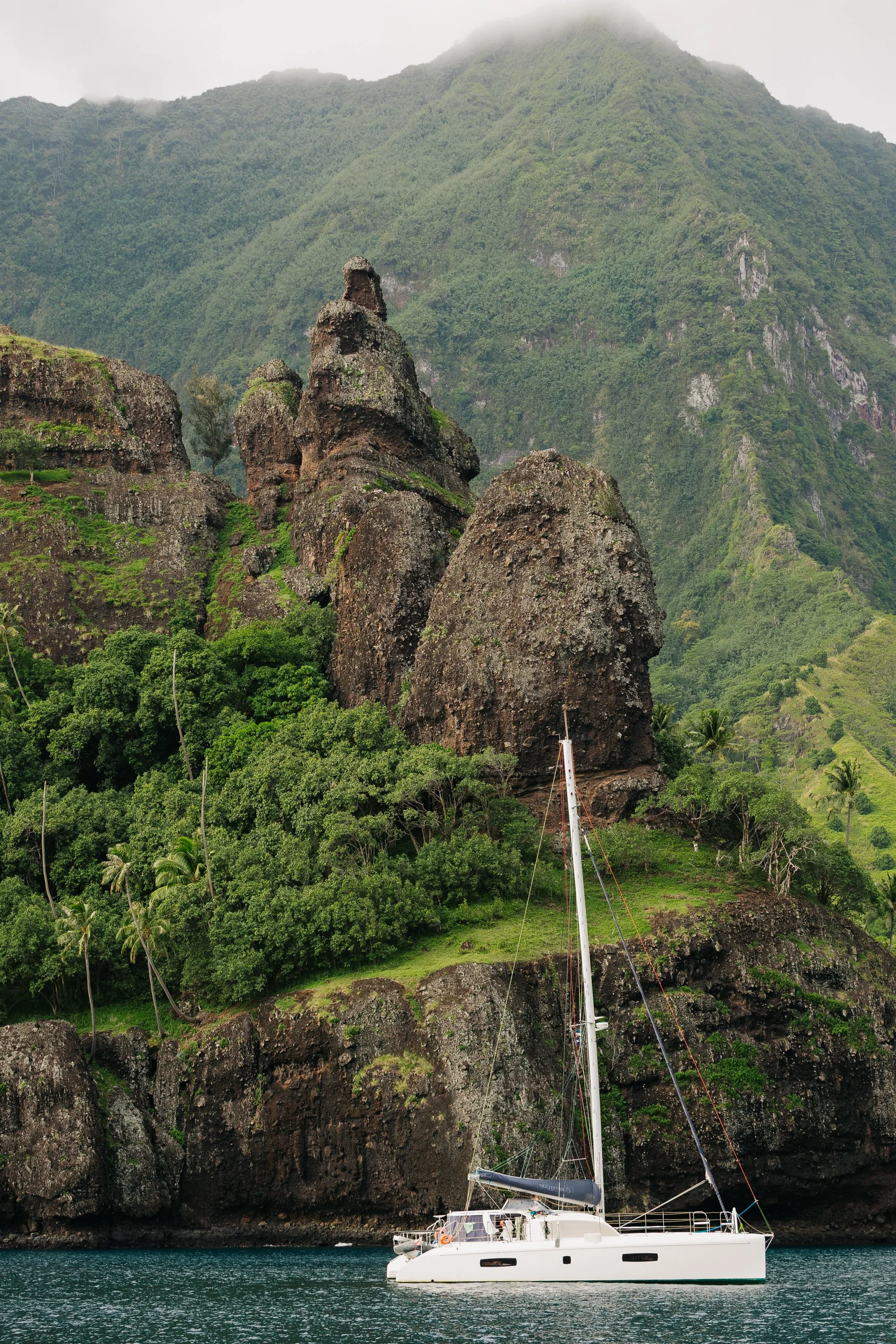
Fatu Hiva
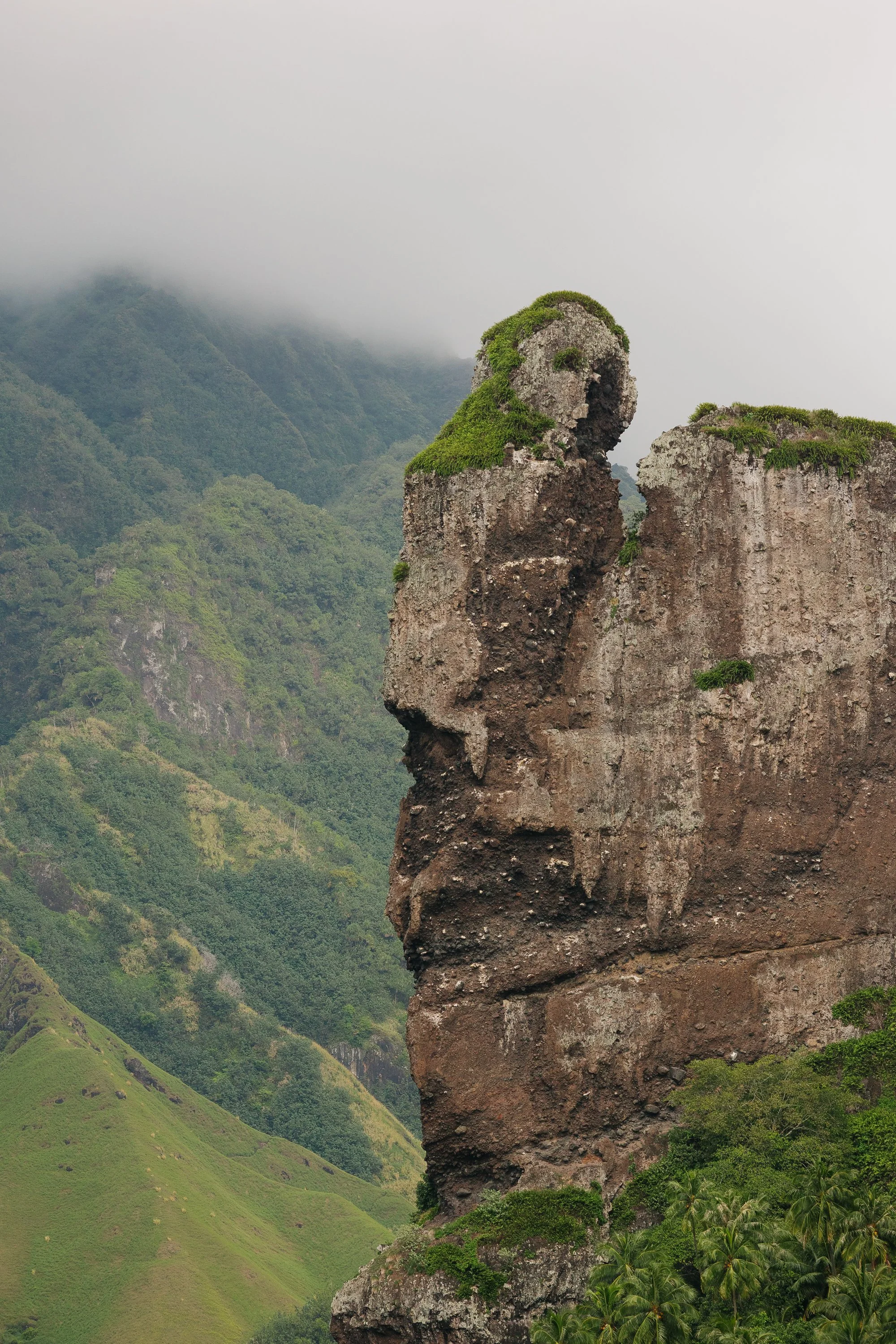
Fatu Hiva
The Marquesian Goat
Somewhere amid one of the most spectacular anchorages on Earth, we decided to buy a goat. Throughout our time in the Marquesas, goats had been an almost constant part of the scenery. We saw them scattered across steep hillsides, heard them calling from the brush above anchorages, and encountered goats on menus during several of the meals we ate ashore. Eventually, Louie began wondering whether we could buy one ourselves. Fresh meat aboard a cruising sailboat was always valuable, and after seeing goats everywhere for weeks, the idea no longer seemed quite as strange as it might have before we arrived.We spent much of one day asking our friend, who was the only fluent French speaker in our group, to inquire with locals about whether anyone might be willing to sell us one. Eventually, we were directed toward someone with a herd. Naturally, the first question was what exactly we wanted the goat for. Food, we explained. They told us that if they were going to sell us the animal, we would need to be the ones to kill it because we would be the ones eating it.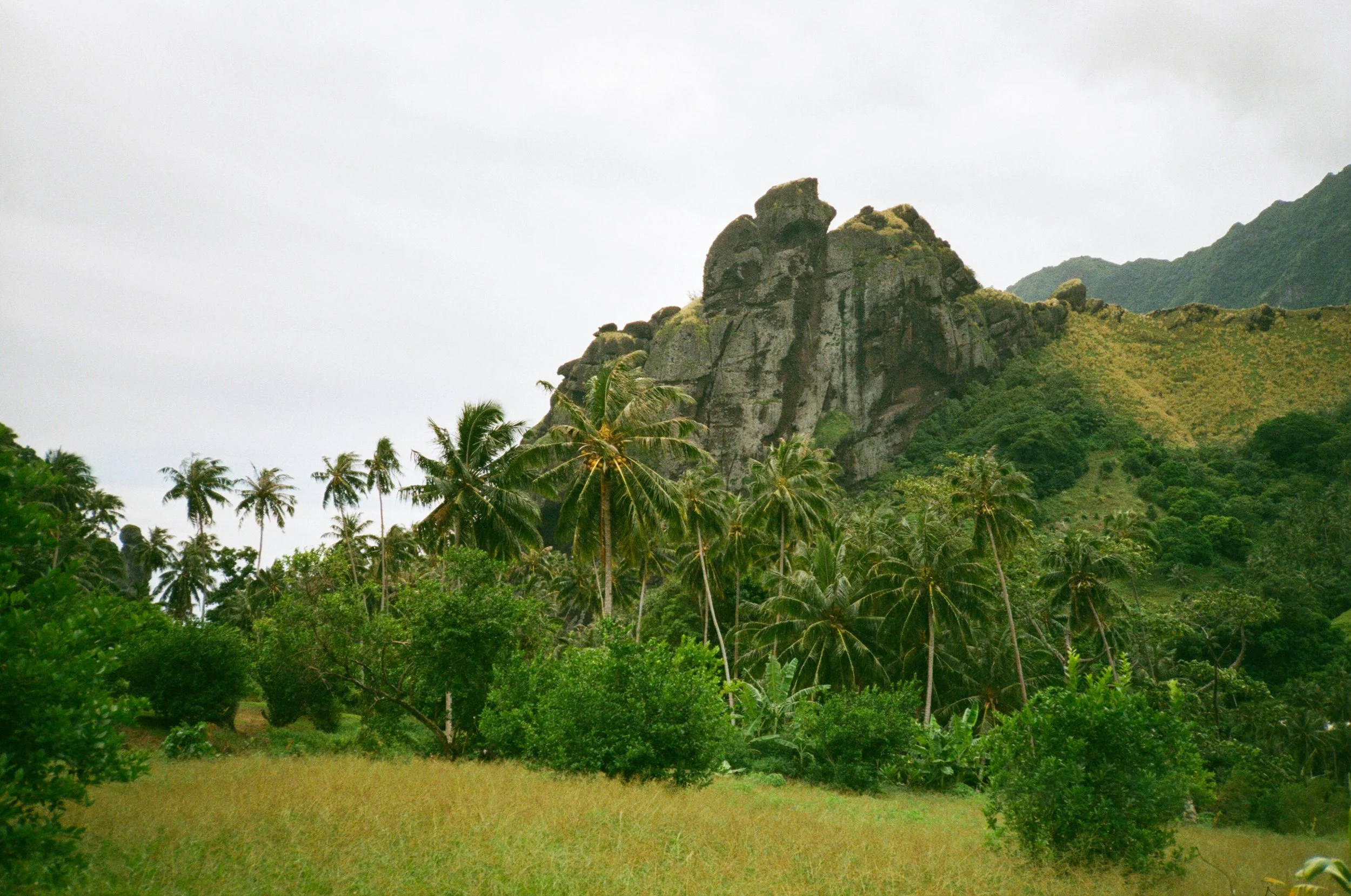
Fatu Hiva
Fatu Hiva
Fatu Hiva
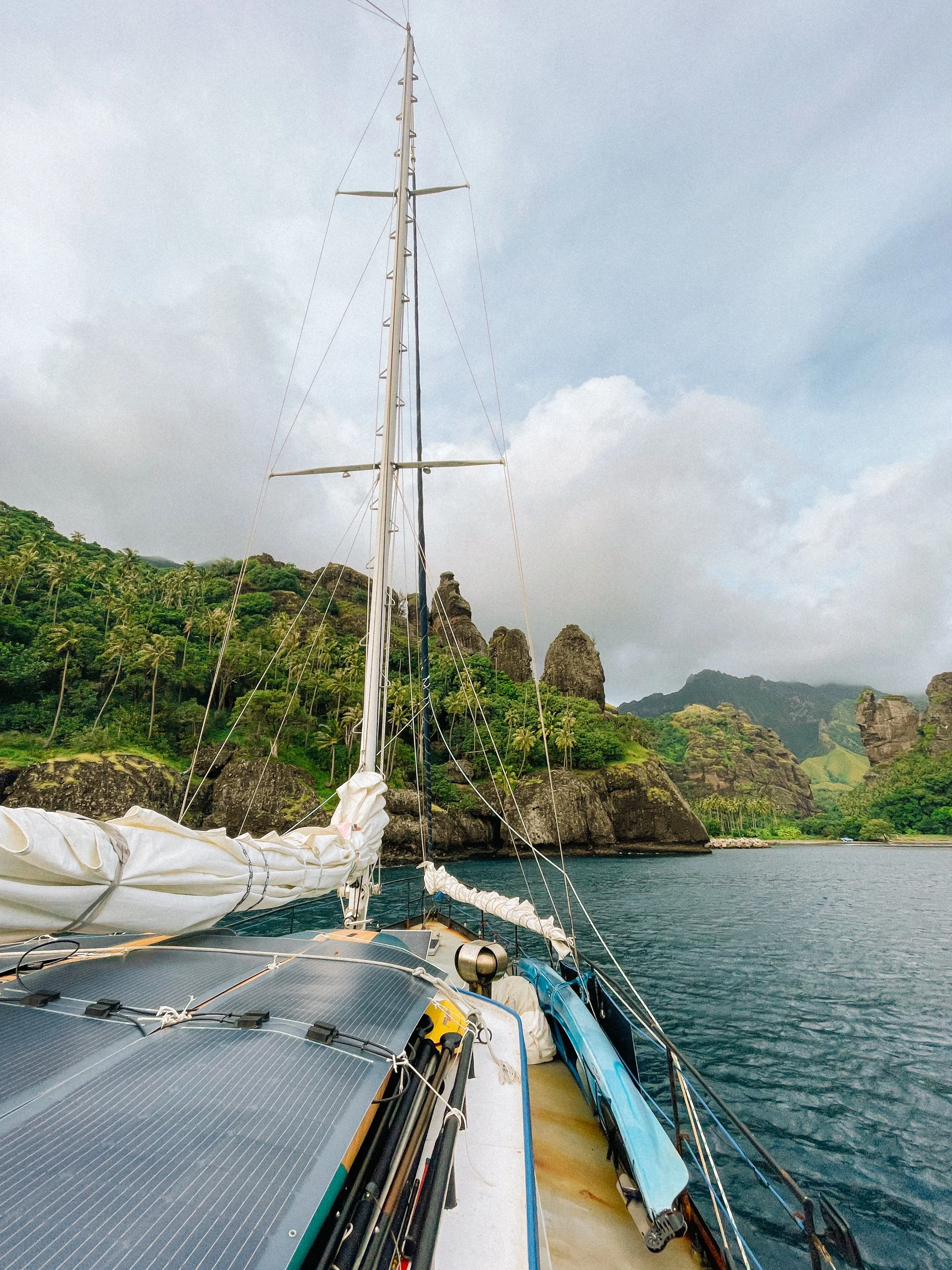
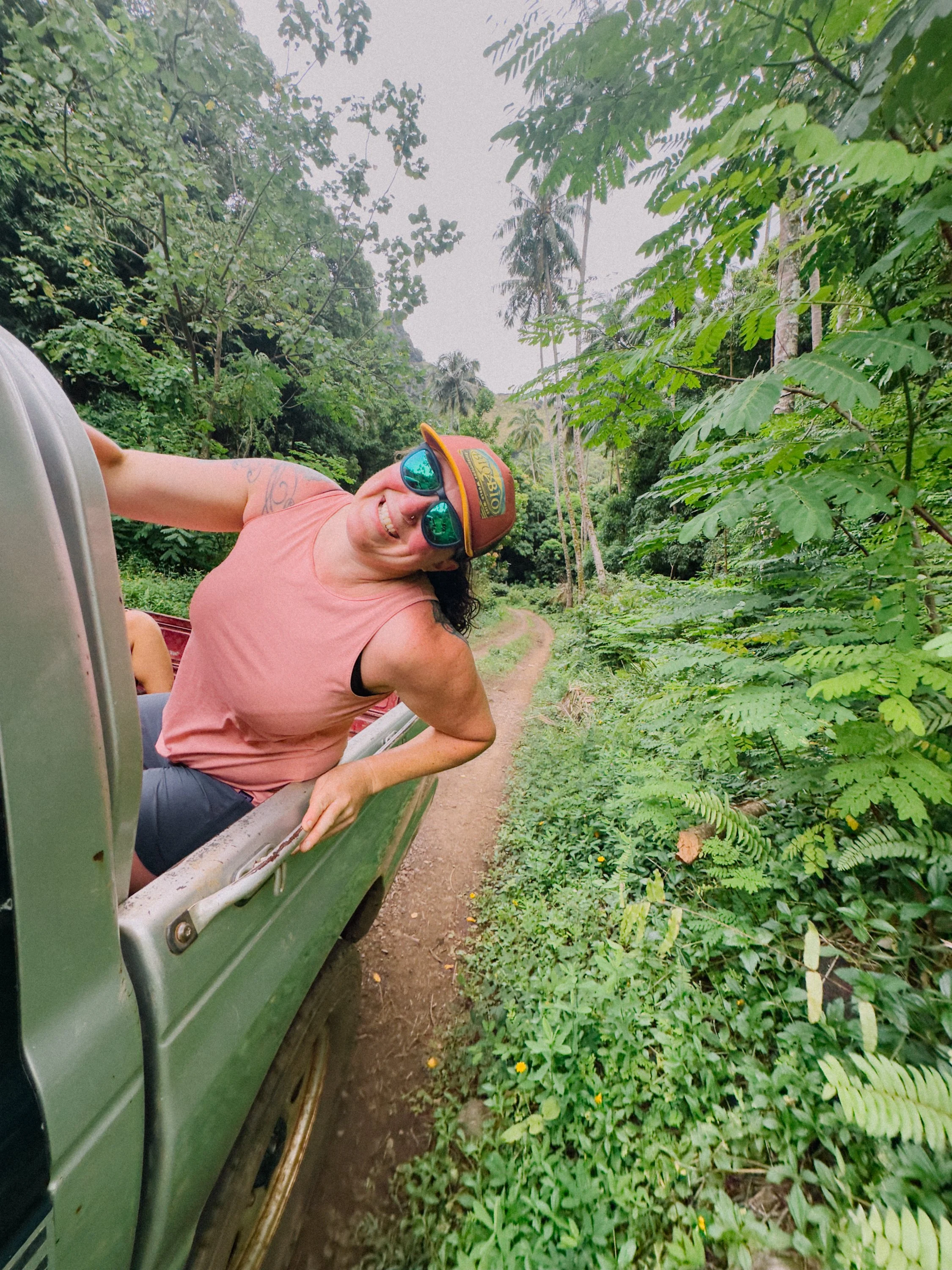
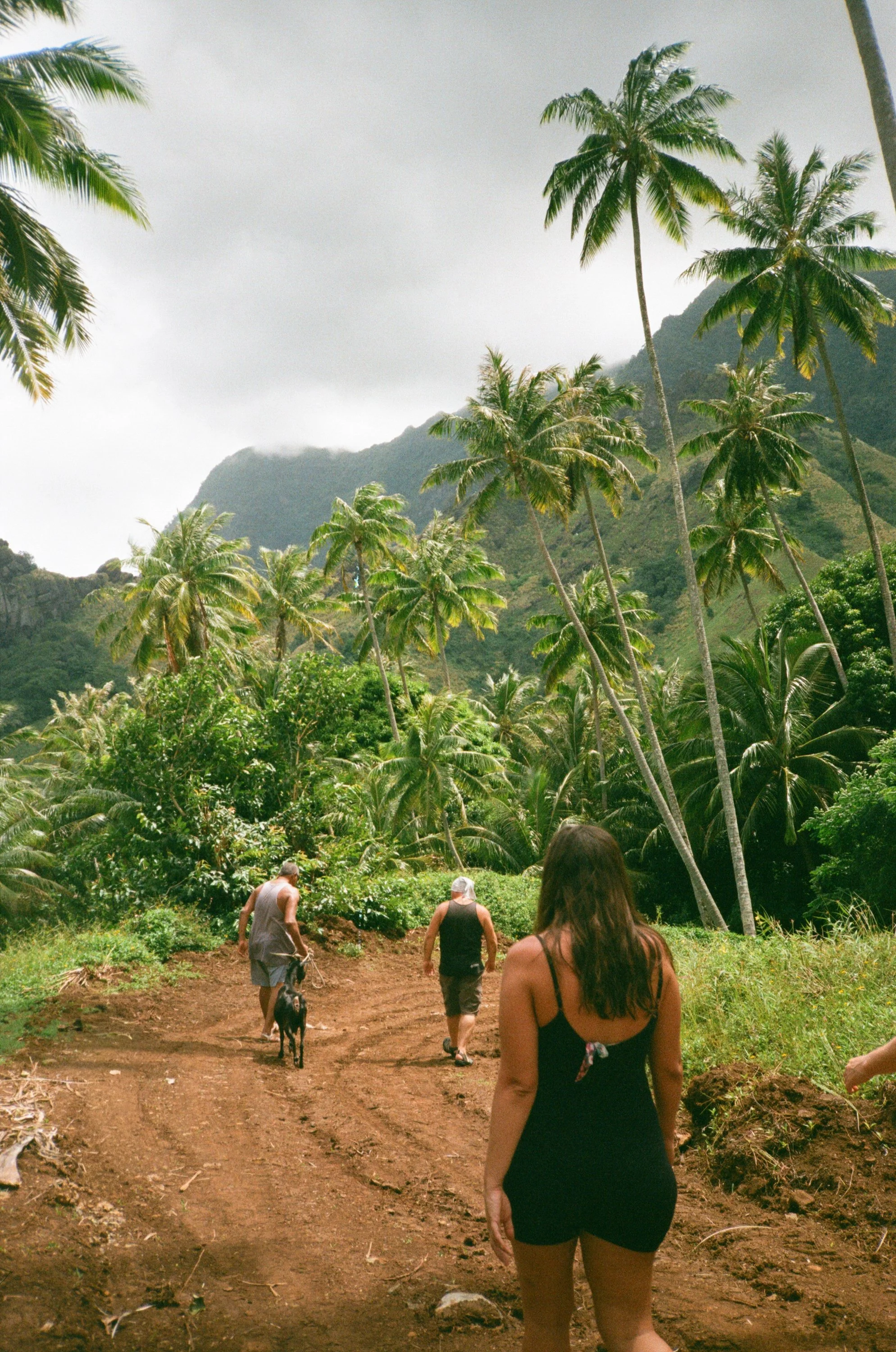
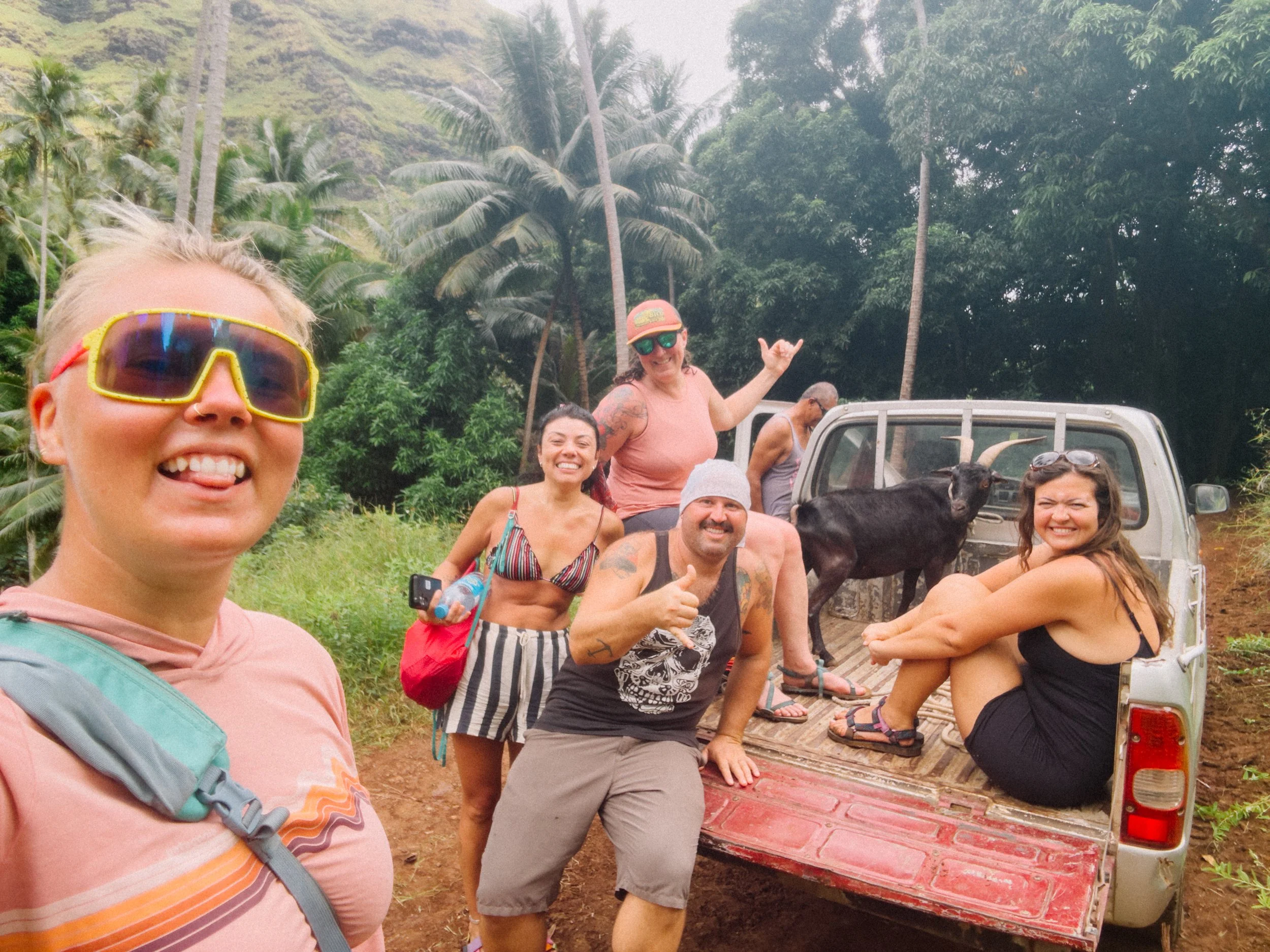
The logic felt familiar. It reminded us of the farmer in Tahuata insisting that we personally choose the vegetables we intended to consume. There was a directness to the relationship between food and responsibility here that felt increasingly rare in the world we came from. Louie, an experienced hunter, readily agreed. The goat’s owner then asked how exactly we intended to kill it, a question that momentarily caught us off guard. Louie explained that he would do whatever they considered most humane and respectful to their customs.Once everything was agreed upon, one of the men drove us up a mountain road toward the farm where his herd grazed. Together, we selected the goat that would become ours, and Louie prepared to butcher it there. The owner stopped him. Not here, he explained. While the goat was alive and able to walk, it would walk.So we walked it back down the hill. The goat came with us to the truck, was loaded into the bed of the pickup, and rode back into town. Once there, Louie butchered it with the help of several locals while the rest of us assisted where we could. Eventually, we carried the meat back down to the waterfront and loaded it aboard Arcturus. It was one of those experiences that felt entirely improbable and yet perfectly suited to life aboard: part practical provisioning, part cultural exchange, part lesson in where food actually comes from, and part complete chaos.Before long, the weather began to dictate our next move. A favorable window was opening for the passage toward the Tuamotu Archipelago, and in sailing, plans are always written lightly. A beautiful anchorage, an unfinished project, or even a freshly butchered goat can suddenly become secondary when the wind offers a safe opportunity to move onward. As we prepared to leave, one of our crew members had to climb the mast to repair a pulley before we could properly fly the sails. It was perhaps not the most elegant departure from the Marquesas, but it felt fitting.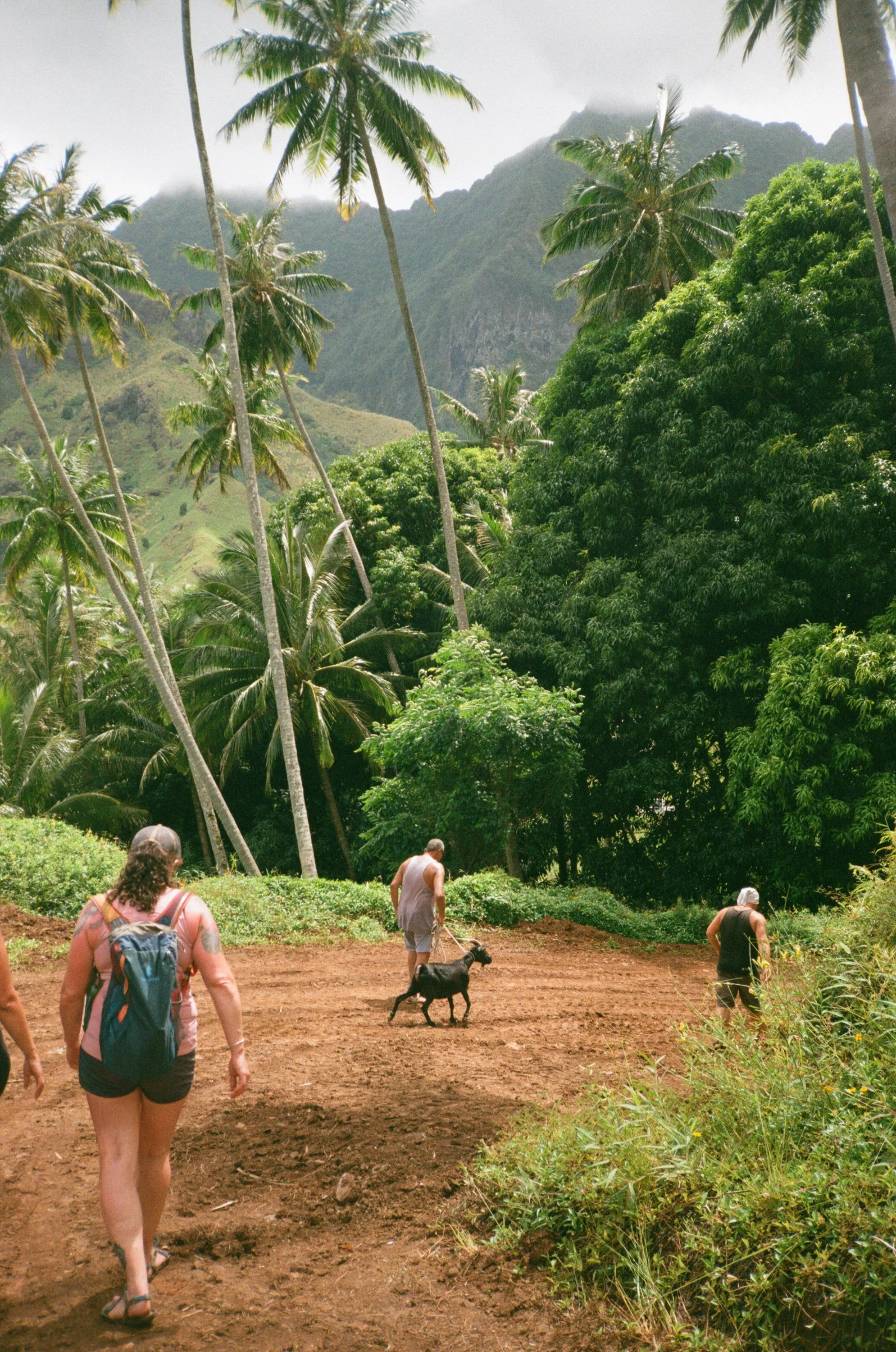
Fatu Hiva
Fatu Hiva
Fatu Hiva
Fatu Hiva
That evening, once we were underway, we decided the goat should become birria. This proved ambitious. Birria is hardly a one-pot passage meal. It involved seasoning, searing, simmering, multiple stages of preparation, and far more dishes than anyone should reasonably generate aboard a pitching sailboat. Still, we committed. As Arcturus rolled through the swell, pots shifted across the stove and the scent of chiles, spices, and goat slowly filled the cabin. We worked around one another in the galley, trying to keep ingredients, knives, bowls, and ourselves from sliding across the boat.Behind us were volcanic cathedrals, ancient valleys, tattooed histories, waterfalls, banyan-covered ruins, generous meals, humid nights, and anchorages that breathed with the open Pacific. Ahead were the atolls of the Tuamotus, a world almost opposite in form and one we were immensely curious to understand. The Marquesas had been defined by height: mountains thrust upward from deep water, cliffs disappeared into clouds, and waterfalls fell from hidden valleys toward the sea. The Tuamotus would be defined by the horizon, low rings of coral barely rising above vast lagoons.We set sail once more, carrying with us fresh memories, holds full of fruit, a stalk of bananas hanging off the stern rails, fresh meat slowly becoming goat birria, and the unmistakable feeling that we were leaving one world behind for an entirely different version of French Polynesia.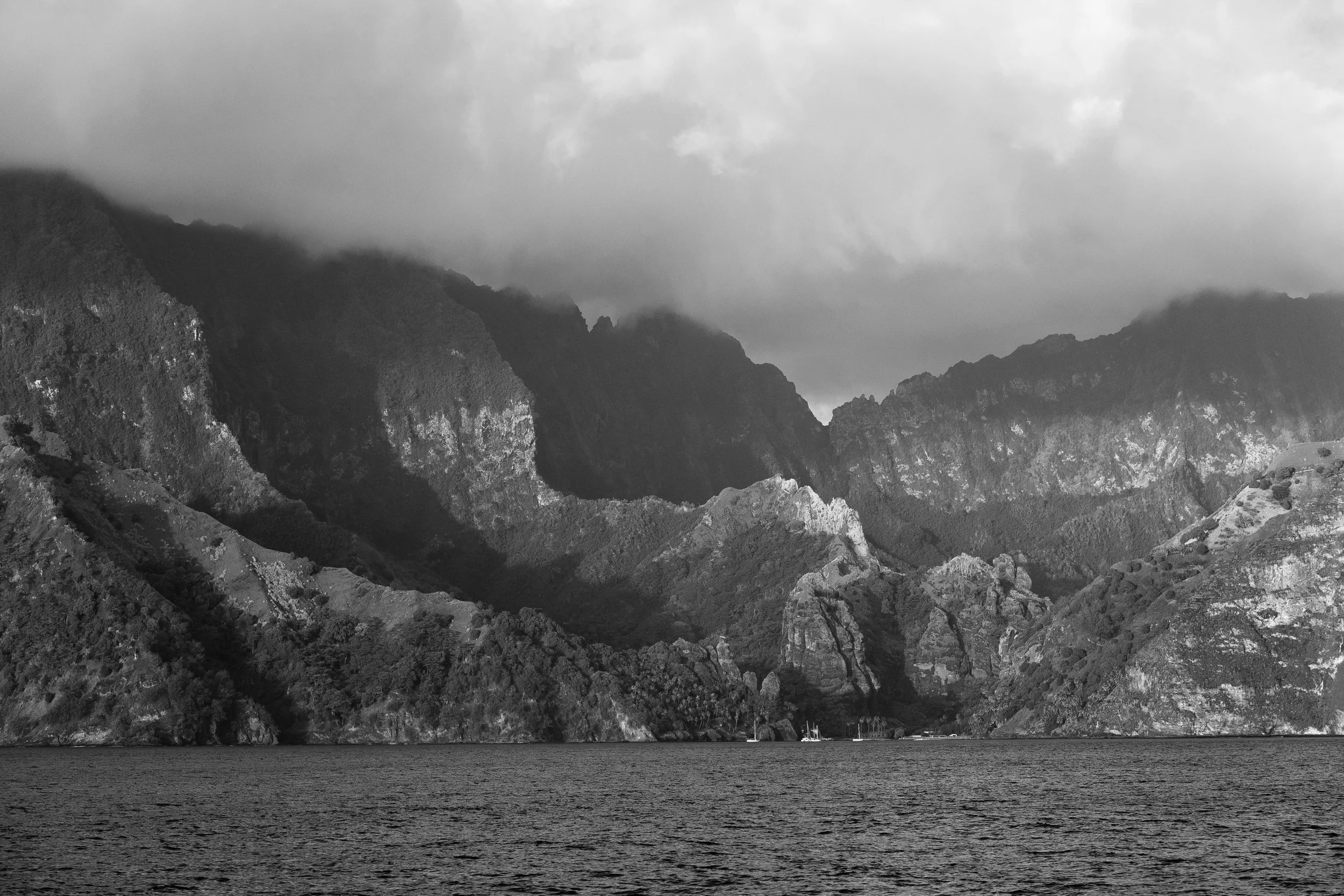
Fatu Hiva
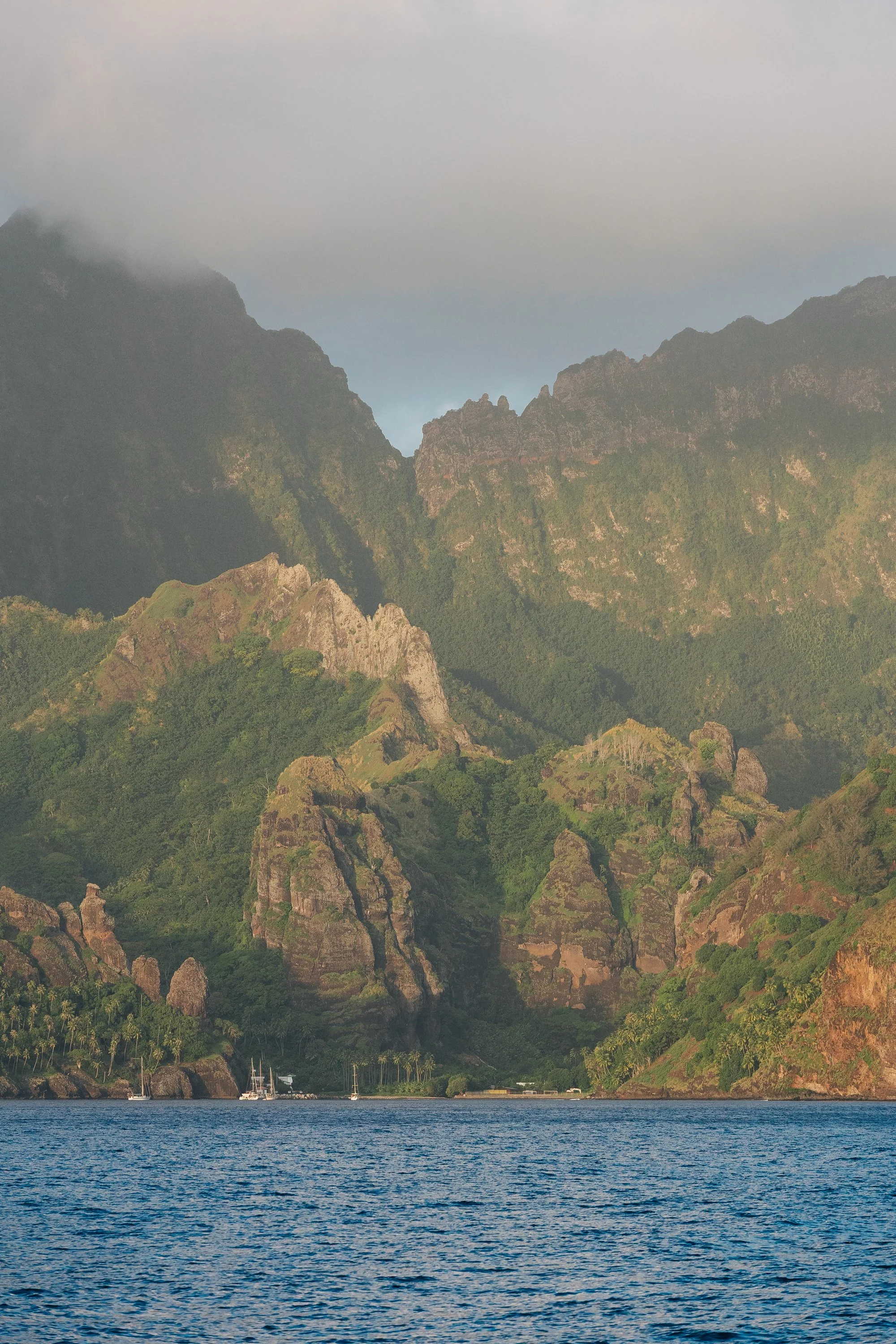
Fatu Hiva
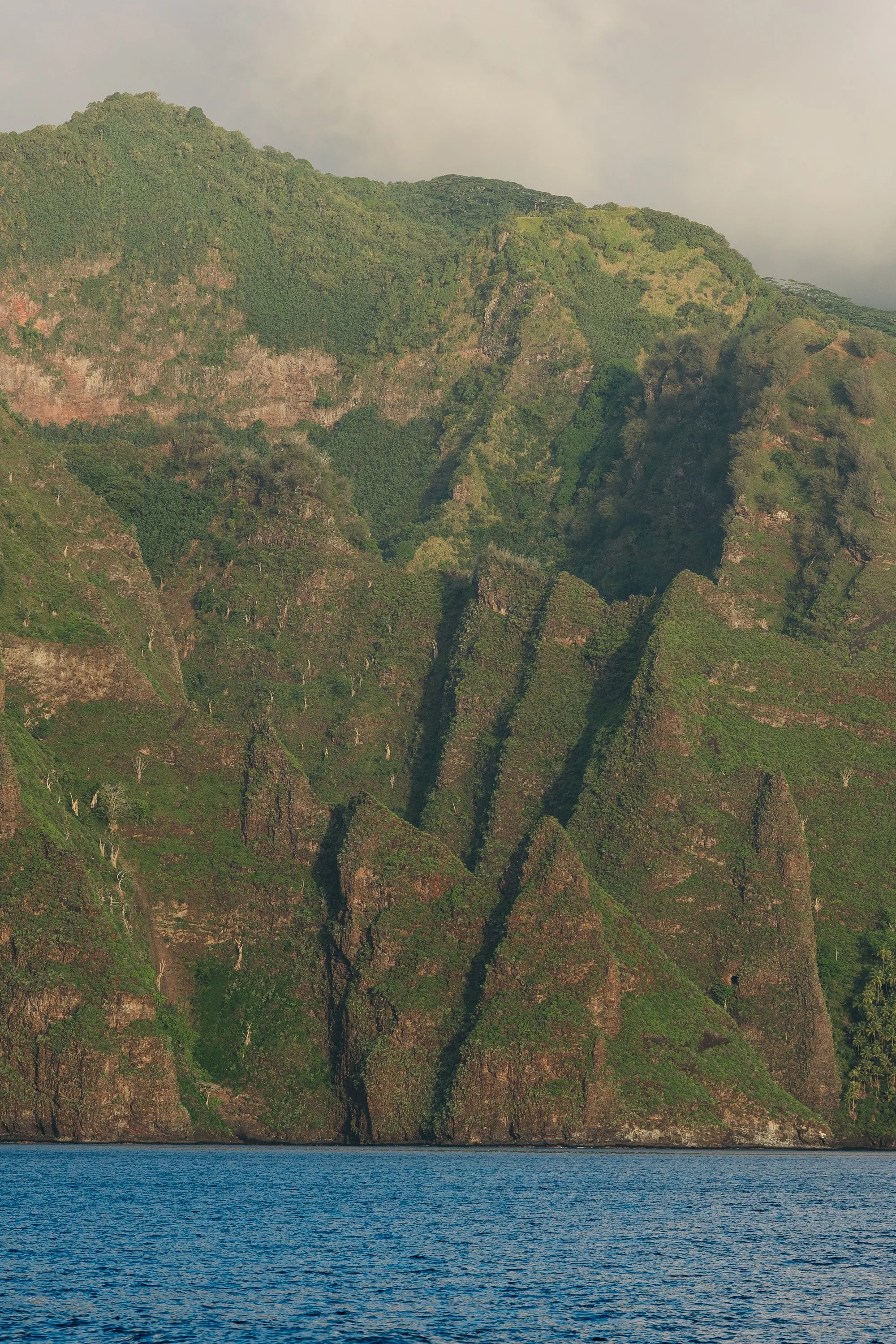
Fatu Hiva
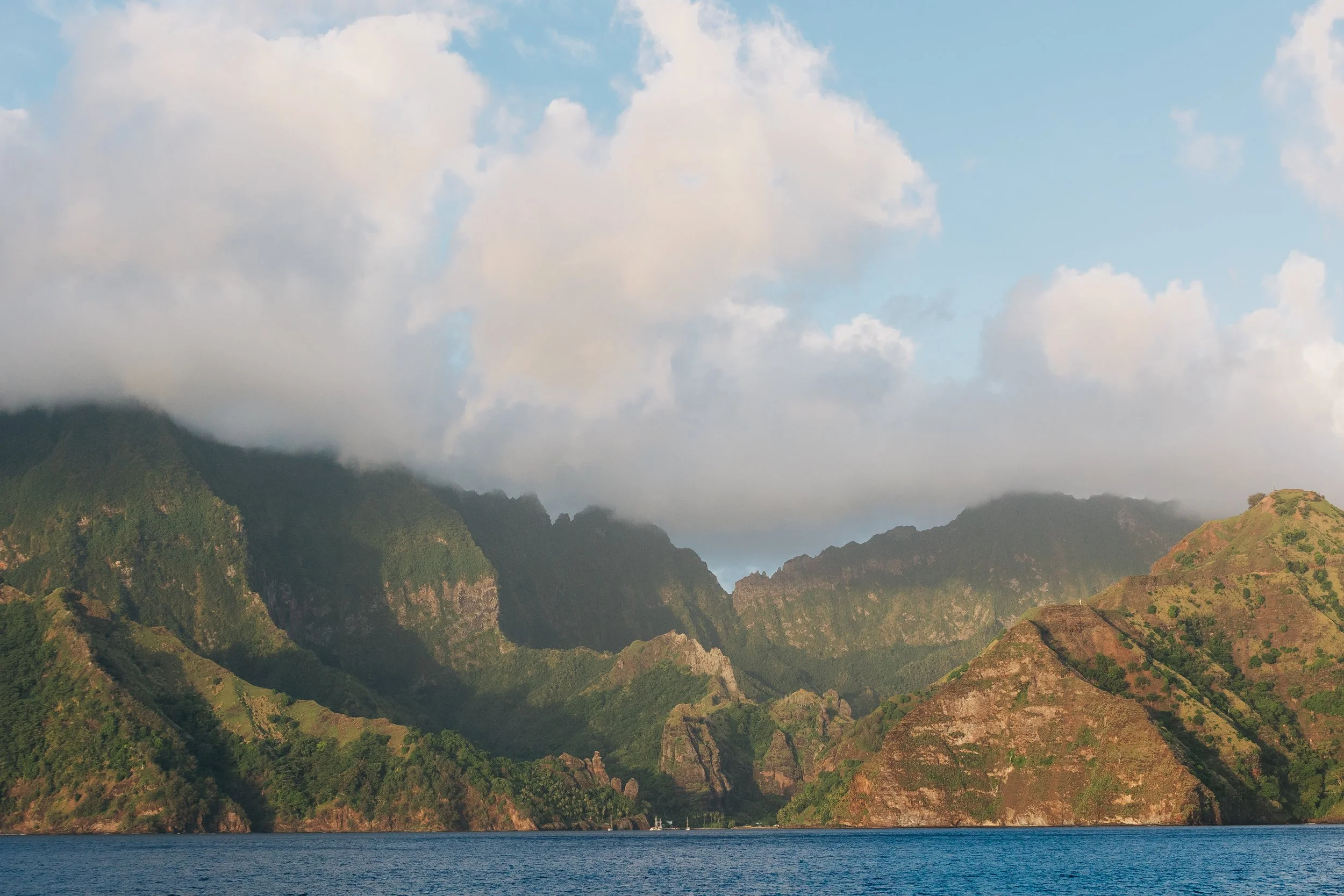
Fatu Hiva
Adventures, Words & Photos by Lerina Winter & Captain Louis Hoock
Originally Published: October 15th, 2026
See Where S/V Arcturus is now on No Foreign Land:


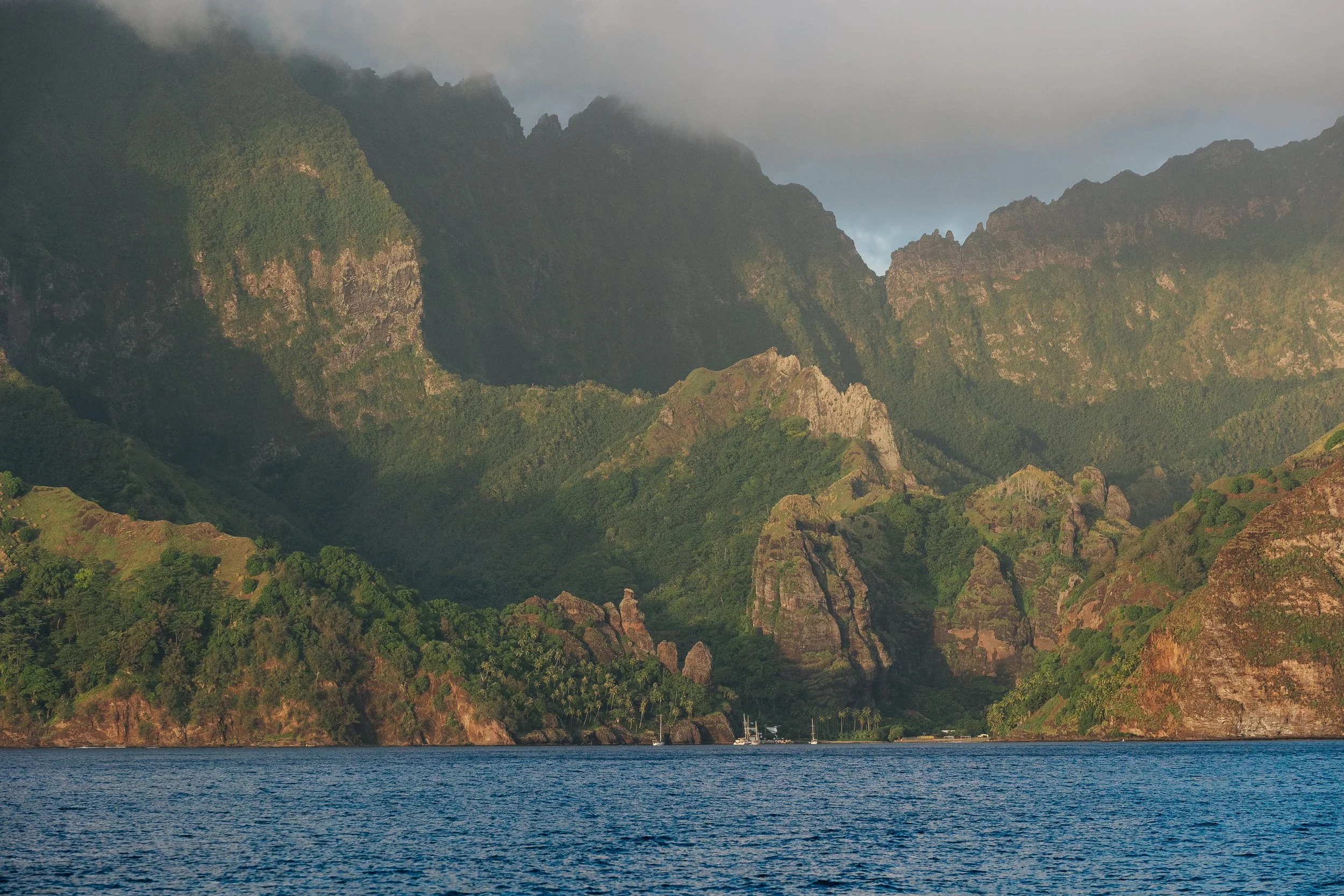
After months spent wandering through the warm reaches of the South Pacific, New Zealand (Aotearoa) felt like a threshold into an entirely different world. Gone were the coral-ringed atolls and palms leaning over turquoise lagoons. In their place rose green hills, forested headlands, cooler blue-grey seas, and sheltered coves tucked beneath mountains. The weather seemed to carry a temperament of its own, changing from sunlight to rain and back again before we had time to put away our jackets.