
Crossing the Pacific Ocean: 21 Days at Sea from Mexico to the Marquesas
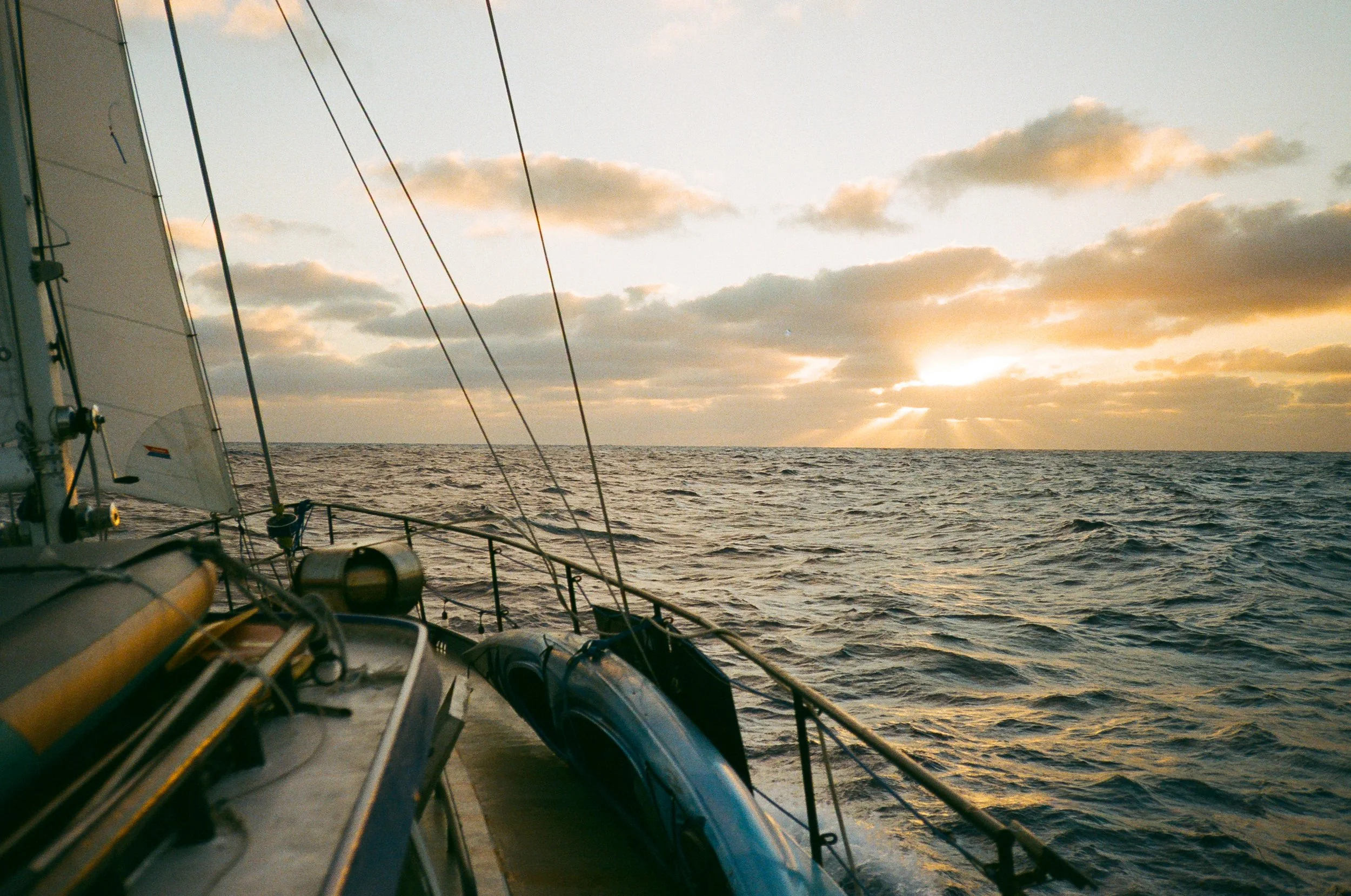
Provisioning, passage-making, and finding rhythm somewhere between continents
There is a peculiar point in preparing to cross an ocean when something that has existed for months as an idea suddenly becomes very, very real. For us, the Pacific had lingered on the horizon throughout our voyage south from Alaska from September to December 2024: first as a line on a chart, then as a distant milestone, then as the next chapter waiting beyond Mexico. By the time we reached Baja California Sur and then lingered on the islands that scattered the inland Sea of Cortez, the Marquesas Islands of French Polynesia sat nearly 3,000 nautical miles across an enormous expanse of open water. Depending on the wind, we expected to spend roughly three weeks getting there. For the entirety of the ocean crossing, there would be no land, no grocery stores, no marinas, and few alternatives if something aboard Arcturus stopped working. Everything we would need had to leave Mexico with us.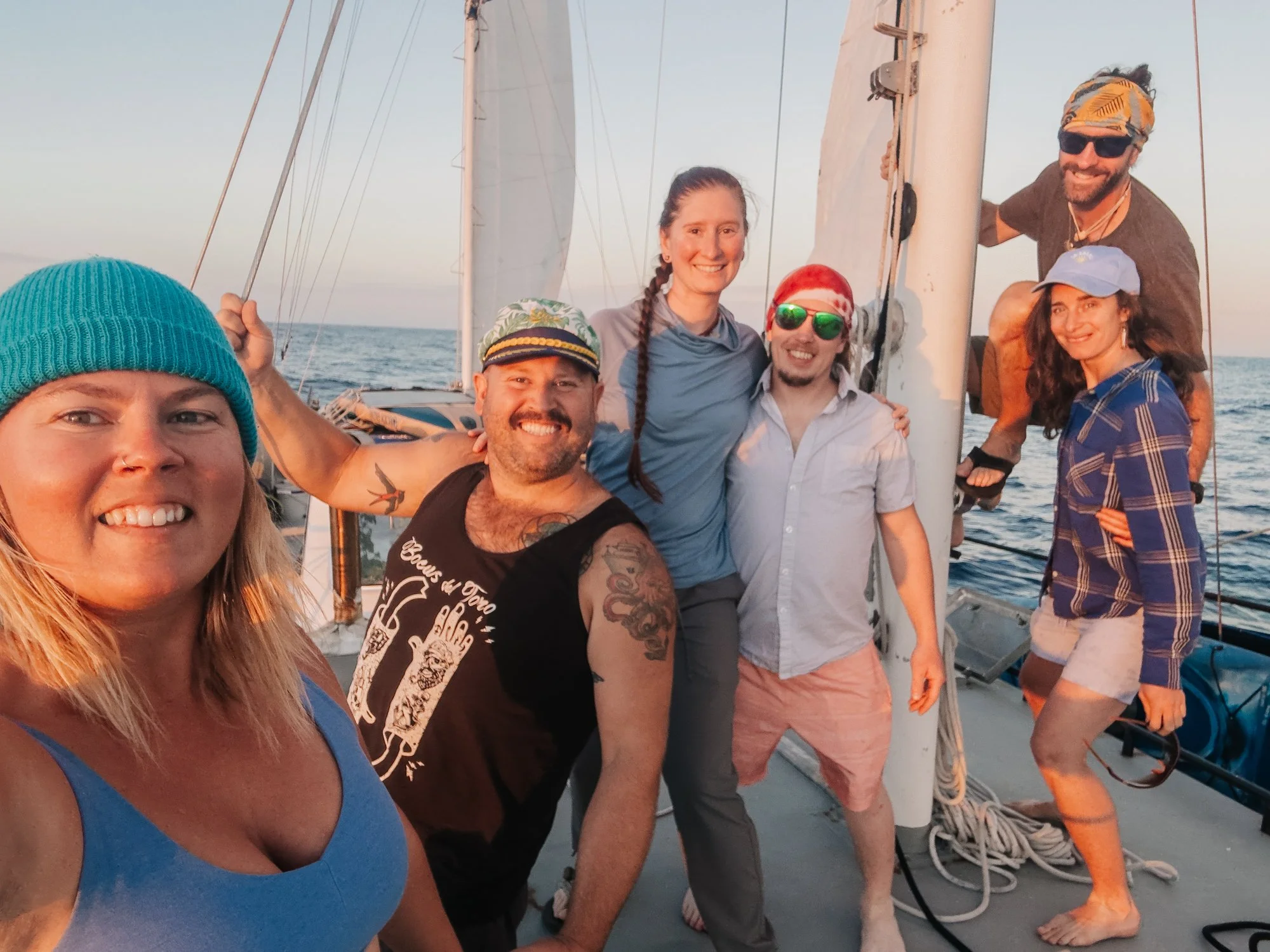
Arcturus crew for the pacific crossing
The preparation for our Pacific crossing began long before we actually sailed away from La Paz. The three months in early 2025 we spent in Mexico were filled with explorations of Baja and the Sea of Cortez, but behind the scenes they were also a continuation of the preparations we had been making since the beginning of our voyage. Systems that had been upgraded a year earlier finally began coming together. We finished hooking up our expanded solar array of 16 photovoltaic panels totaling 1680 watts, we installed and continued troubleshooting the watermaker we had installed for the passage, and worked through the remaining pieces of an electrical overhaul that had begun with the installation of a new auto pilot, a massive new batteries and 12 charge controllers before we ever left Alaska. Crossing an ocean has a way of making every boat system feel considerably more consequential. Power, water, sails, rigging, fuel, refrigeration and spare parts cease to be conveniences and become part of a small, interconnected world that has to sustain itself for weeks.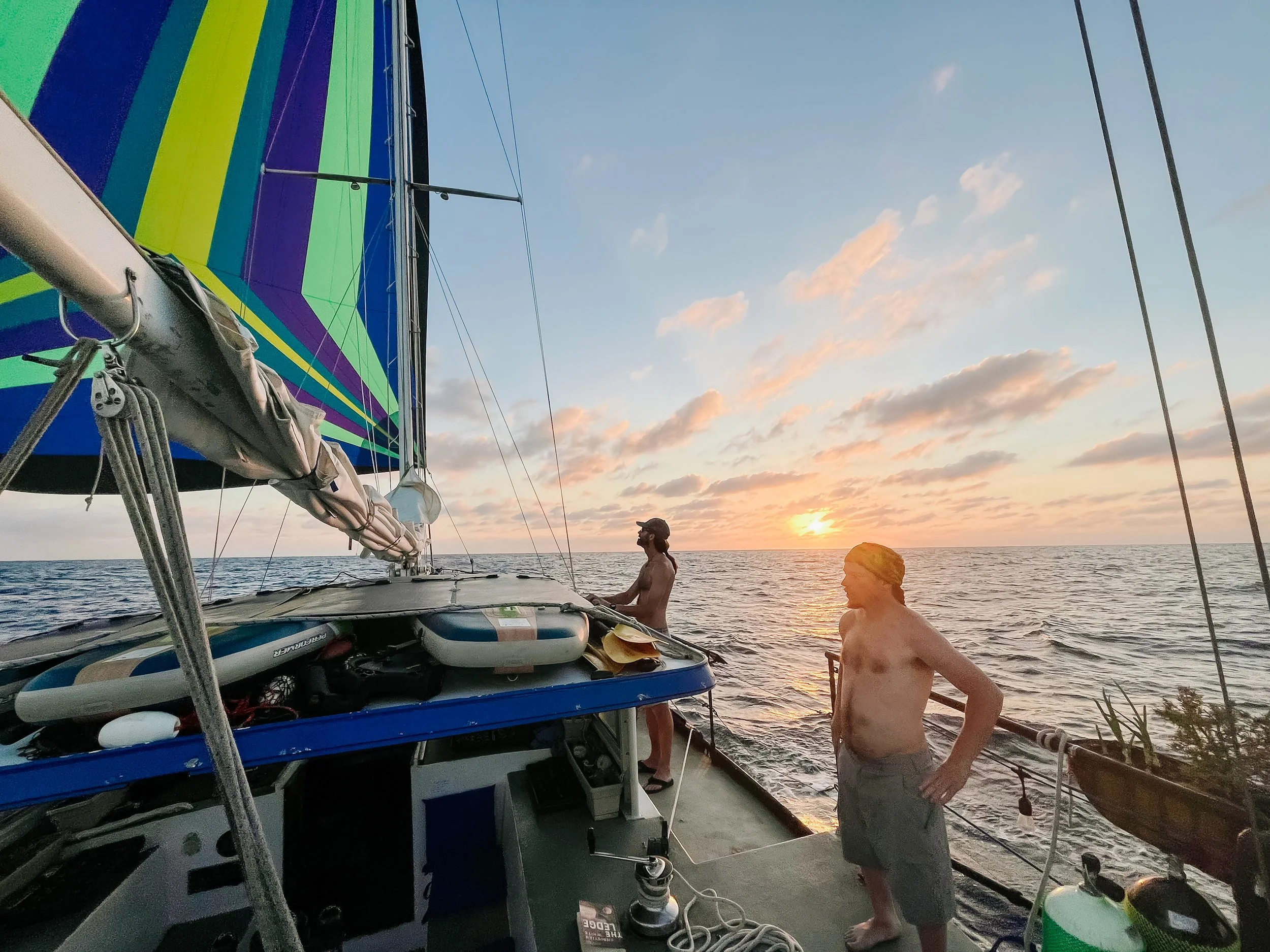
Underway Sailing Across the Pacific
Provisioning for an Ocean Crossing
Then there was the provisioning food for not only our crossing but also the time beyond. Friends from Alaska who had previously sailed a similar route from Mexico to French Polynesia had given us one particularly memorable piece of advice: “spend as much money as possible in Mexico”, meaning stock up on dry goods, fishing equipment, household supplies and anything else we thought we might want later. “Many of those same things will cost considerably more once you reach the islands of the South Pacific,” they told us. At the time, their advice seemed almost comically enthusiastic. Once we eventually arrived in French Polynesia and wandered through our first grocery stores, we understood exactly what they meant.Fortunately, after spending much of the previous two months based around La Paz, we knew the city well enough to have a reasonable idea of how to provision. Four friends from Juneau were joining us for the passage, who were fellow liveaboards and savvy sailors. With six people aboard, we had roughly a week after everyone arrived to turn Arcturus from our everyday floating home into something resembling a very compact, ocean-going grocery warehouse.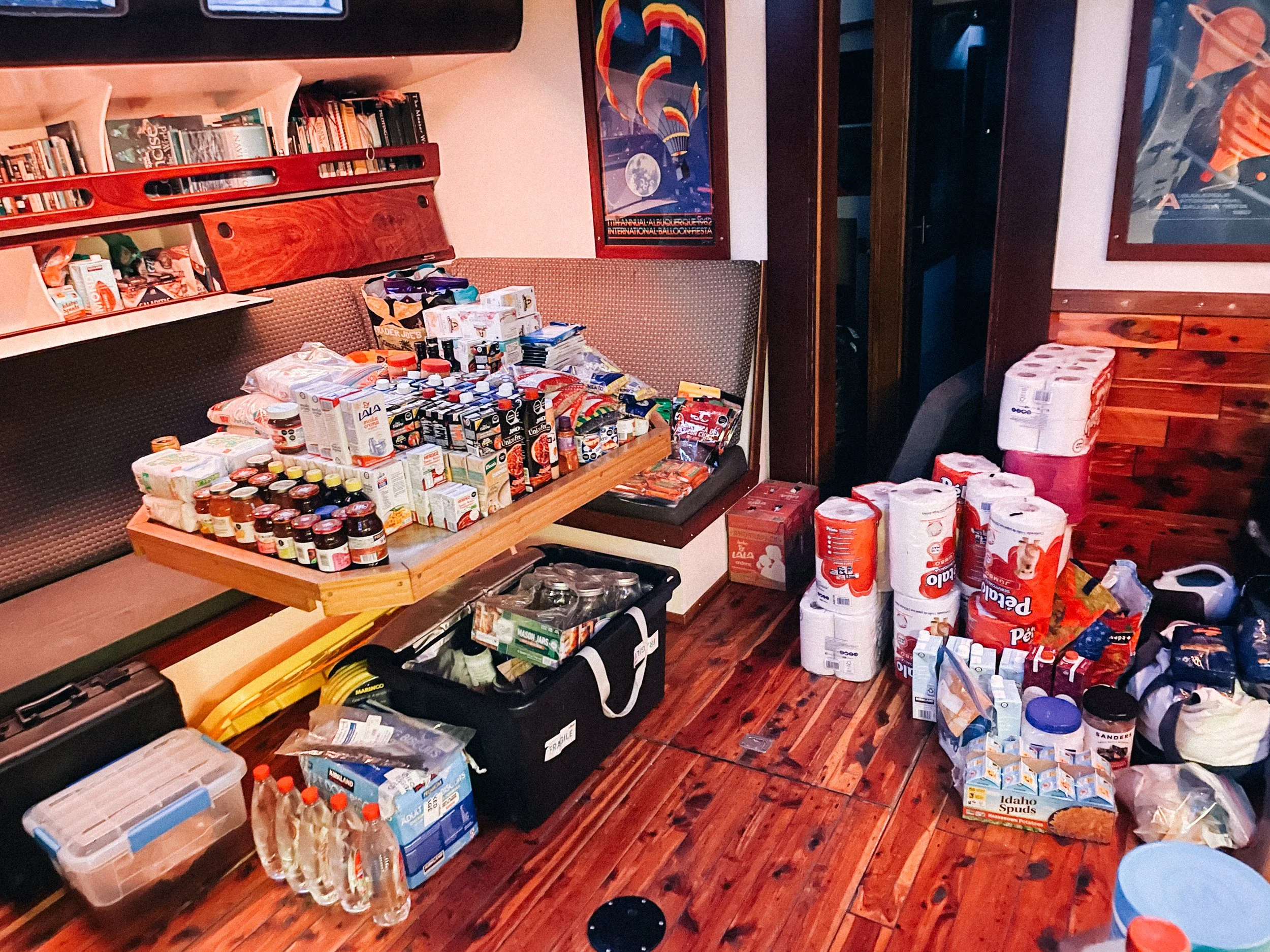
Provisioning in La Paz
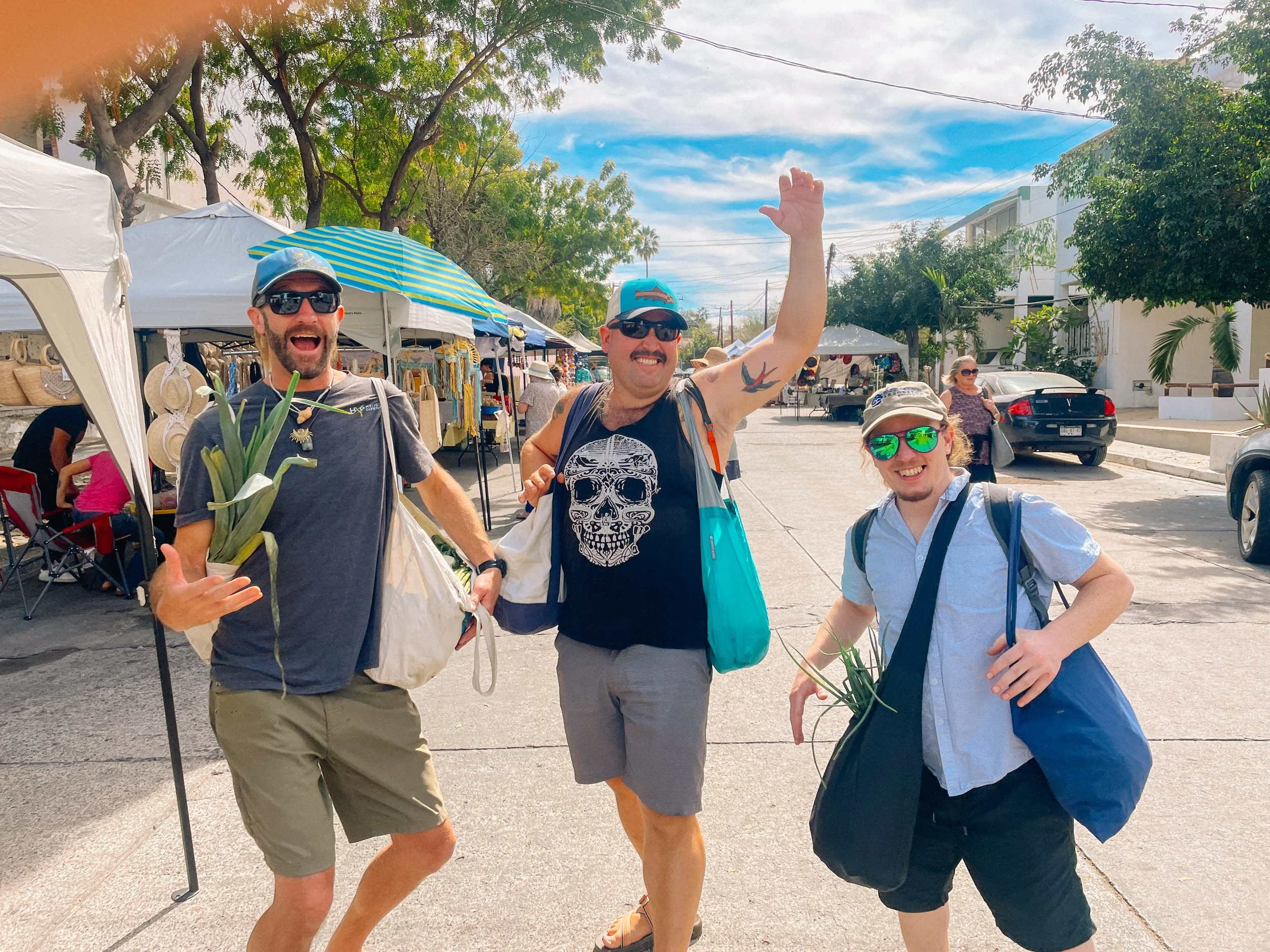
Provisioning in La Paz
Louie, as both the head chef of our boat-household and its undisputed master grocery shopper, assumed command of the provisioning operation. One of our friends joined him, eager to learn how one goes about buying food for six people who are about to disappear offshore for several weeks. They made trip after trip into the city, routinely filling two entire grocery carts each, every time and then needing separate rides back to the harbor to transport everything. Those of us remaining at the marina formed the dockside crew, meeting the cars with marina carts, wheeling the groceries down the docks, and creating a small fire line to pass bags and boxes aboard. Likely around 14 full grocery carts literally costing several thousands dollars.Then came the disappearing act. Once everything had been carried onto the boat, most of the crew would head off to tackle another project while Lerina would stay behind with one or two people (maximum) to sort the mountains of food into our ship stores, meaning cabinets, floor compartments, and my personal favorite, “Couch Costco” – the compartment under our couch that serves as our dry goods shopping area. Pasta disappeared beneath floorboards. Cans vanished into deep holds. Rice, flour, coffee, spices and sauces were distributed through cupboards and corners until surfaces that had moments earlier been buried beneath groceries were somehow clear again. We repeated this four or five times. Each time the rest of the crew returned, there was the same incredulous question: “Where did all of it go?” It really is astonishing how much a sailboat can swallow when every unused cavity has become storage.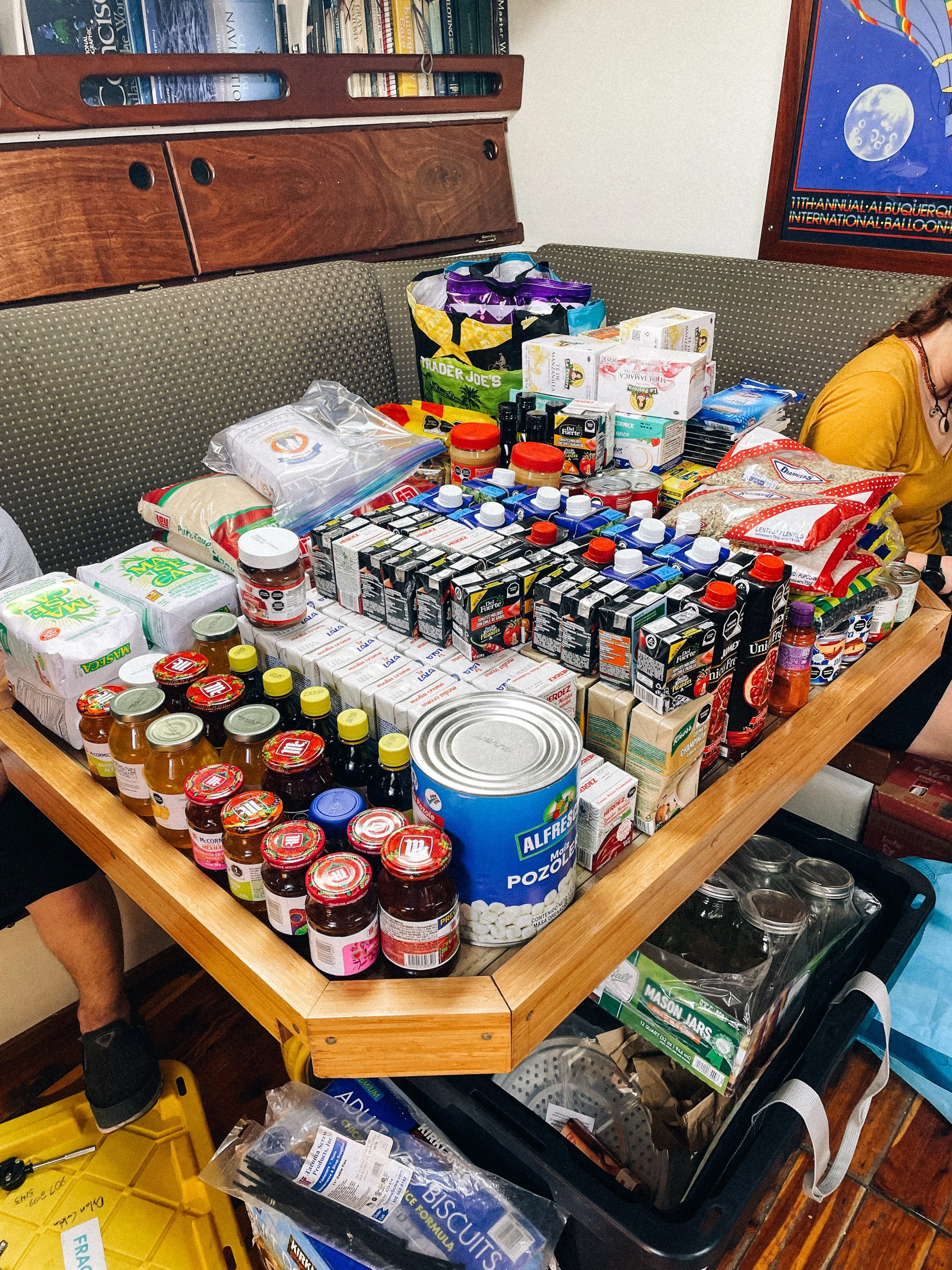
Provisioning in La Paz
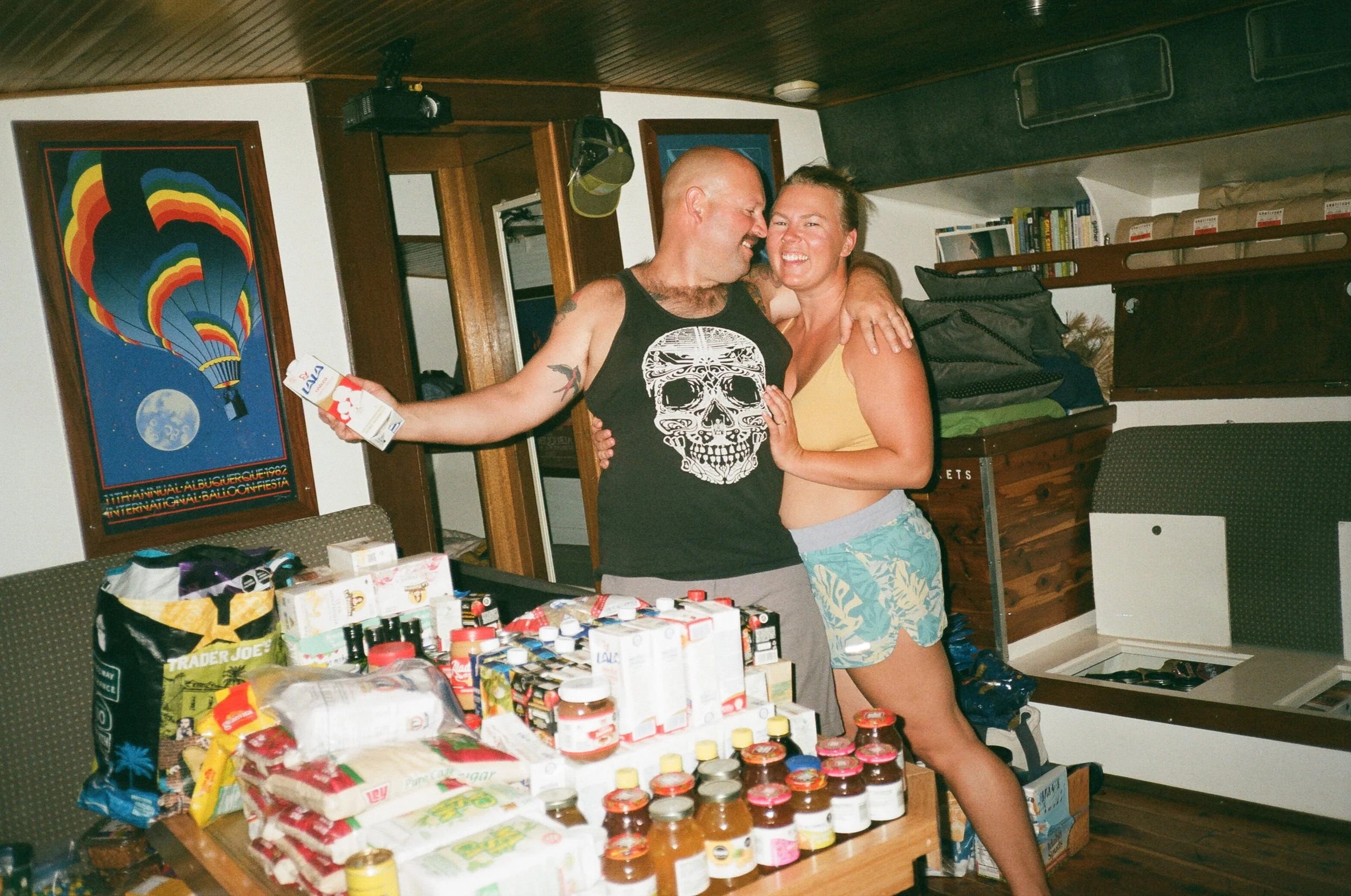
Provisioning in La Paz
Fresh produce required a little more imagination. We knew delicate greens would disappear quickly in the tropical heat, so we made one last pilgrimage to the local farmers market we had grown fond of in La Paz and brought home vegetables to preserve. Soon the galley became a pickling station, with jars of beets, radishes, spicy mixes of carrots, onions, jalapenos, etc. We also looked forward to getting our sprouting station to full working capacity; made from twelve mason jars, it had been a staple that allowed us to continually grow mung beans, lentils and other sprouts.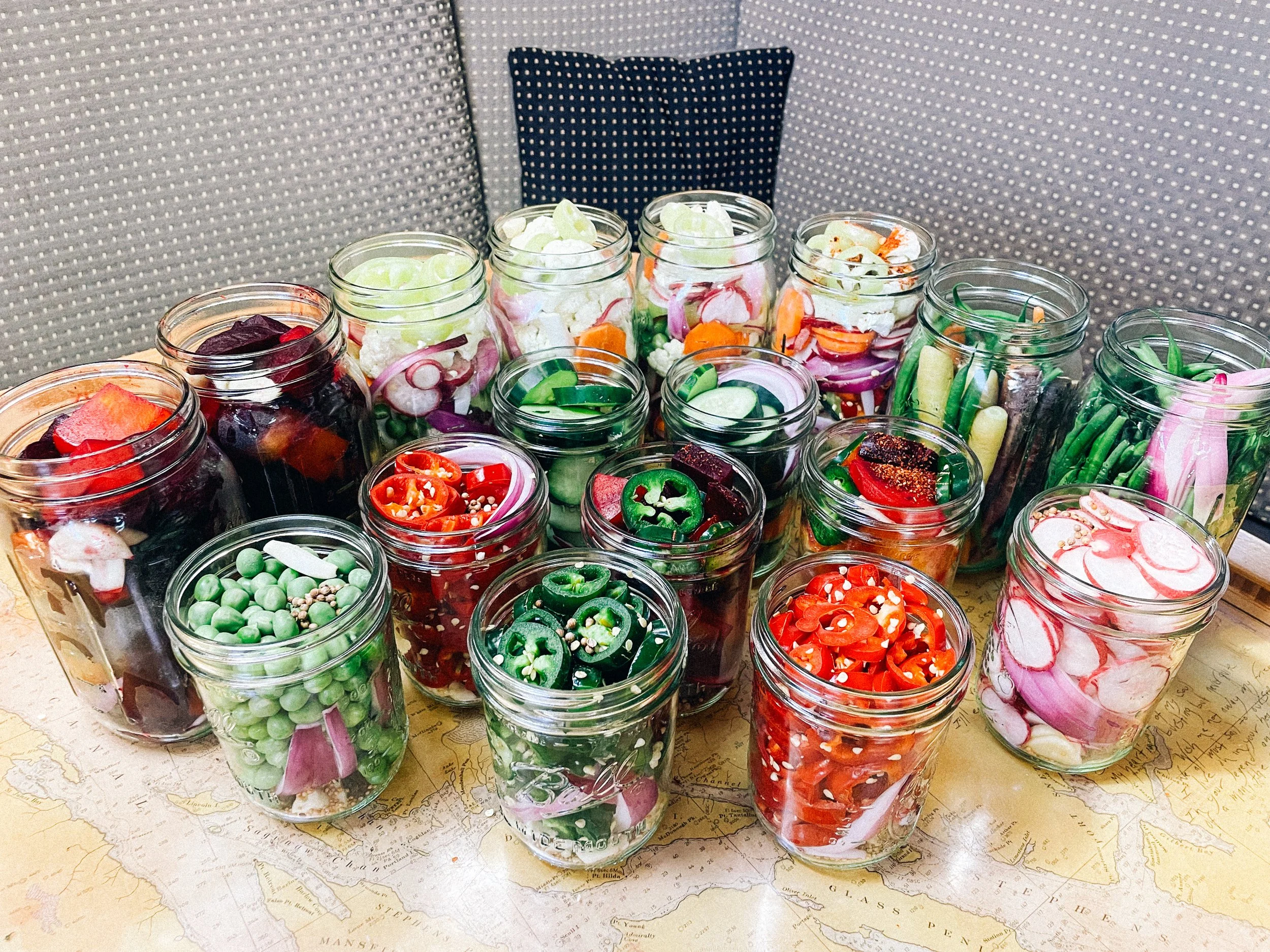
Provisioning in La Paz
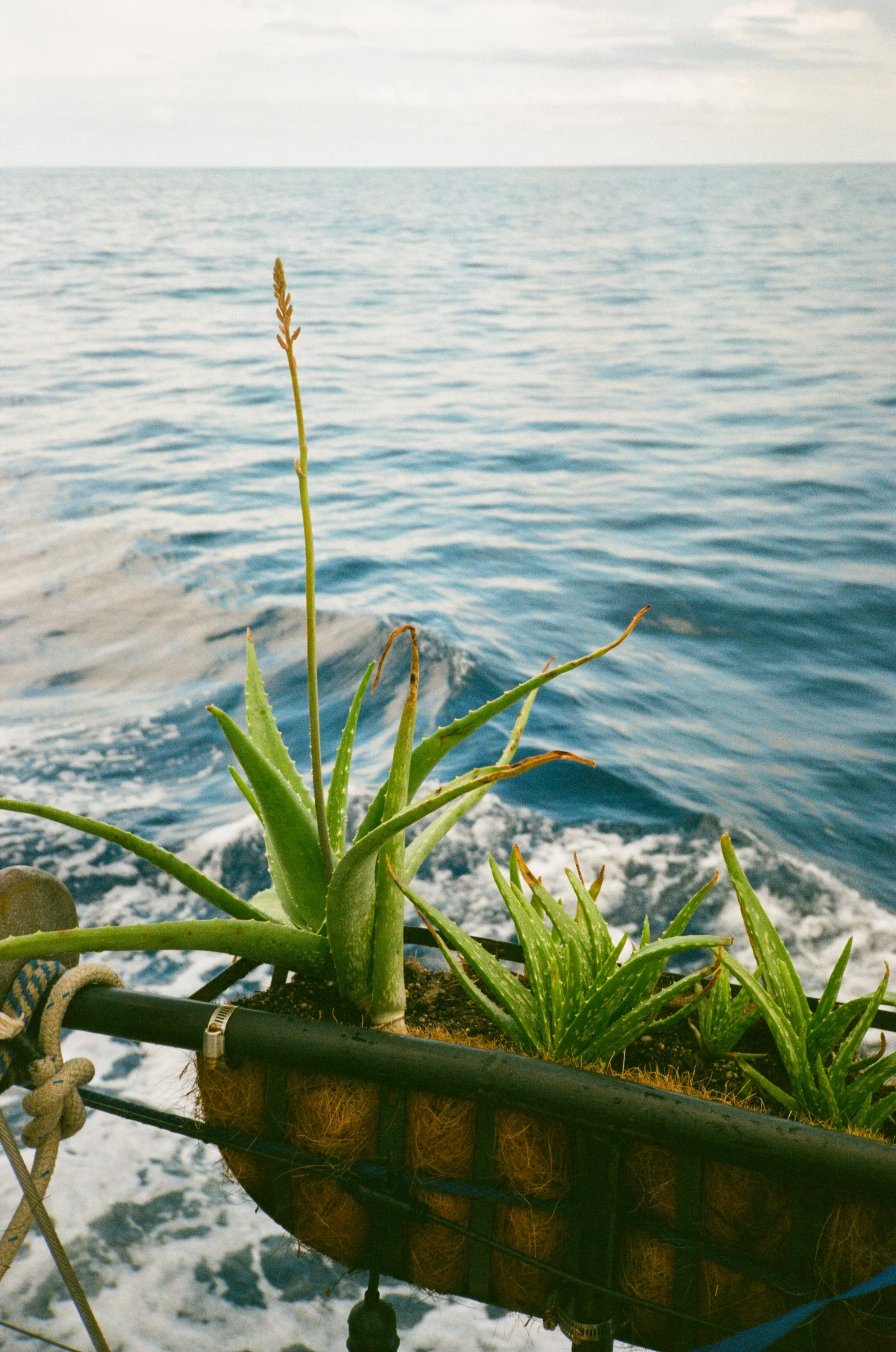
Then there was the Arcturus garden. Plants have lived aboard the boat for years, and the warm climate of Mexico had encouraged them into a particularly exuberant phase. We carried jalapeños, herbs and tomatoes with us, including a cherry tomato plant that we had aggressively pruned months earlier only to have it return with many dozens of tiny yellow-orange tomatoes beginning to ripen. In a life where almost everything has to be stored, canned, dried or preserved, there was something particularly satisfying about plucking a tomato from a living plant in the middle of the Pacific.We also assembled a separate cache of emergency supplies in the unlikely event that we ever had to abandon ship. We had purchased an offshore liferaft before leaving Alaska, but for a crossing of this scale we wanted to make sure we also had dedicated food and water that could be grabbed quickly if the worst happened. We packed as many three-gallon jugs of water as we could fit into the large cooler on deck, then filled a smaller cooler with canned food and other shelf-stable essentials. We even included a few cans of pet food. Why? Because in an emergency, the good canned food that tastes good would probably disappear first. But if you found yourself stranded in a liferaft for days and genuinely running out of options, chances are you would wait until you were truly desperate before cracking open a can of cat food. It was not the most glamorous part of provisioning, but crossing an ocean has a way of encouraging you to prepare for scenarios you sincerely hope will remain hypothetical.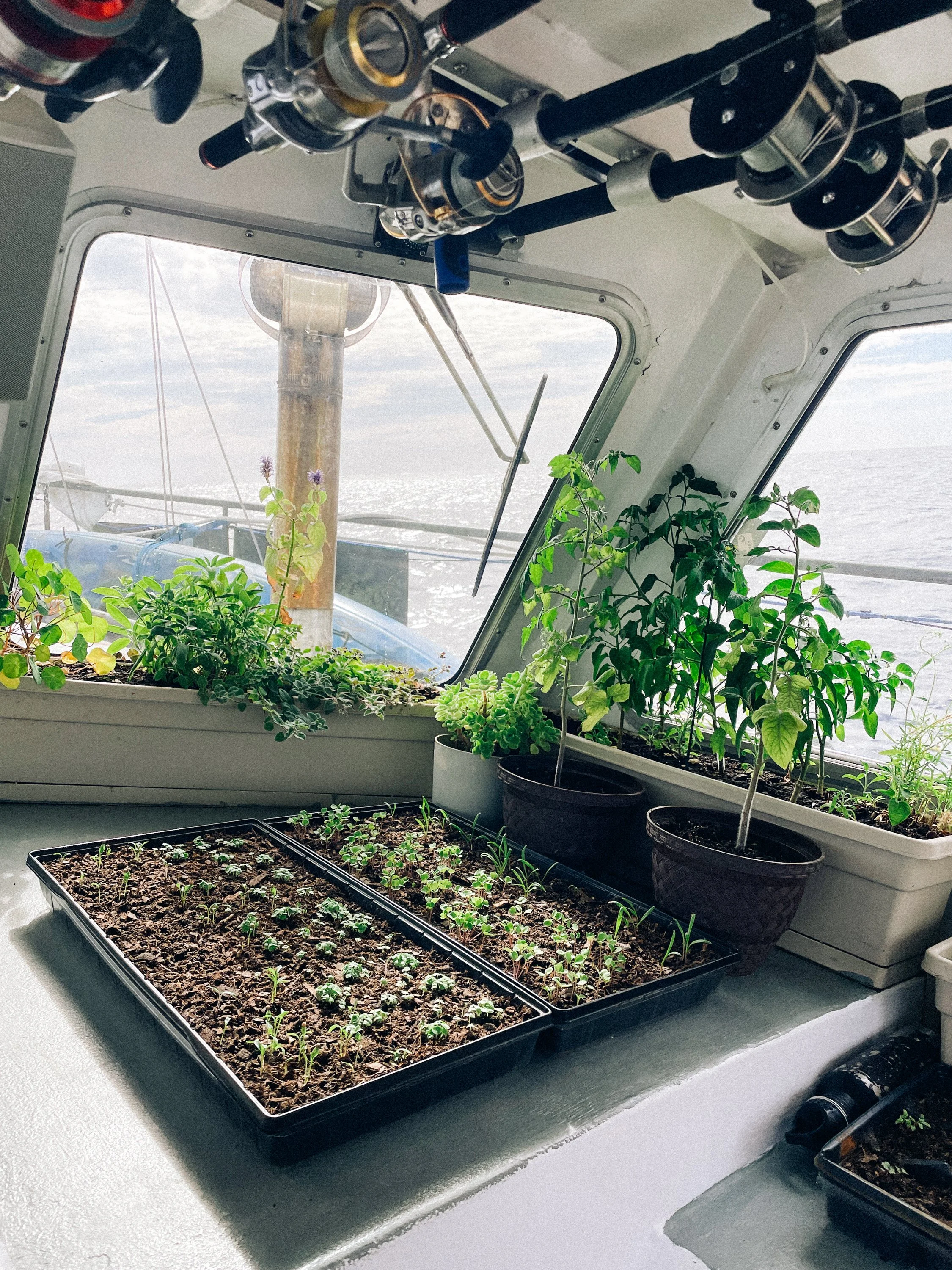
Arcturus Boat Garden
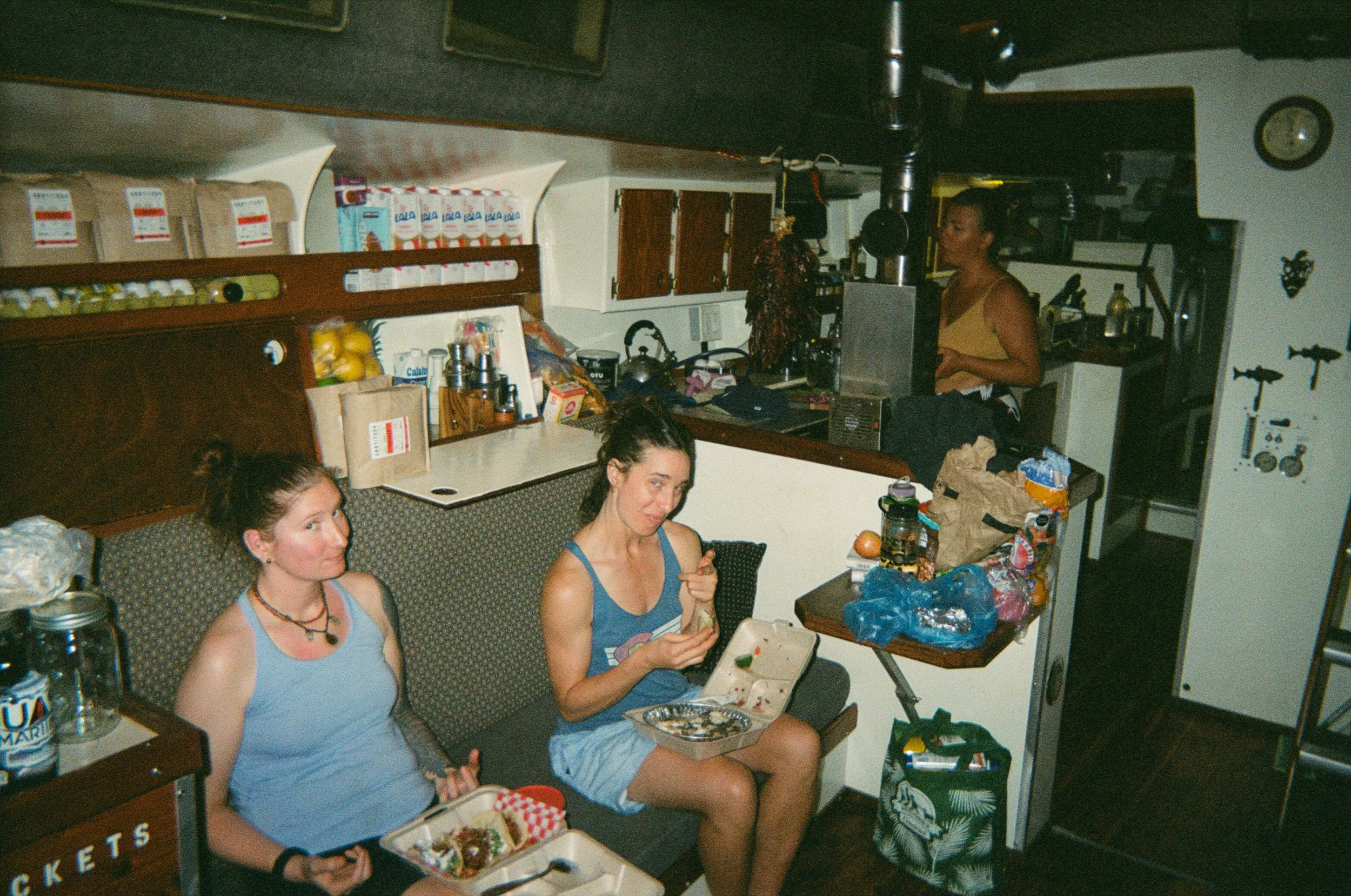
Taco takeout in La Paz amidst provisioning
Provisioning was only one piece of the departure puzzle. We took our spinnaker to a local seamstress for repair while two of our most experienced sailing crew inspected the sails and rigging, making repairs on sail hardwear. Fuel tanks were topped off, we changed engine oil and transmission fluids, checked equipment, washed down the decks while we still had unlimited access to a hose and made certain the dinghy and other gear were clean before being stowed away. Everywhere aboard the boat there seemed to be one final task that suddenly felt essential.We had also joined the Pacific Puddle Jump, the wonderfully named informal rally that helps connect boats crossing from the Americas into the South Pacific. Somewhere along the coasts of Mexico, Central America and beyond, dozens of other crews were doing some version of exactly what we were doing: downloading weather forecasts, checking rigging, stuffing impossible quantities of food into tiny lockers and wondering whether they had forgotten something important.Boat projects feel never ending, and eventually as we neared our departure date we starting putting projects on the list that could just be done when the boat was underway, and transitioned to focusing on what we absolutely had to do and get done before we pushed off the docks.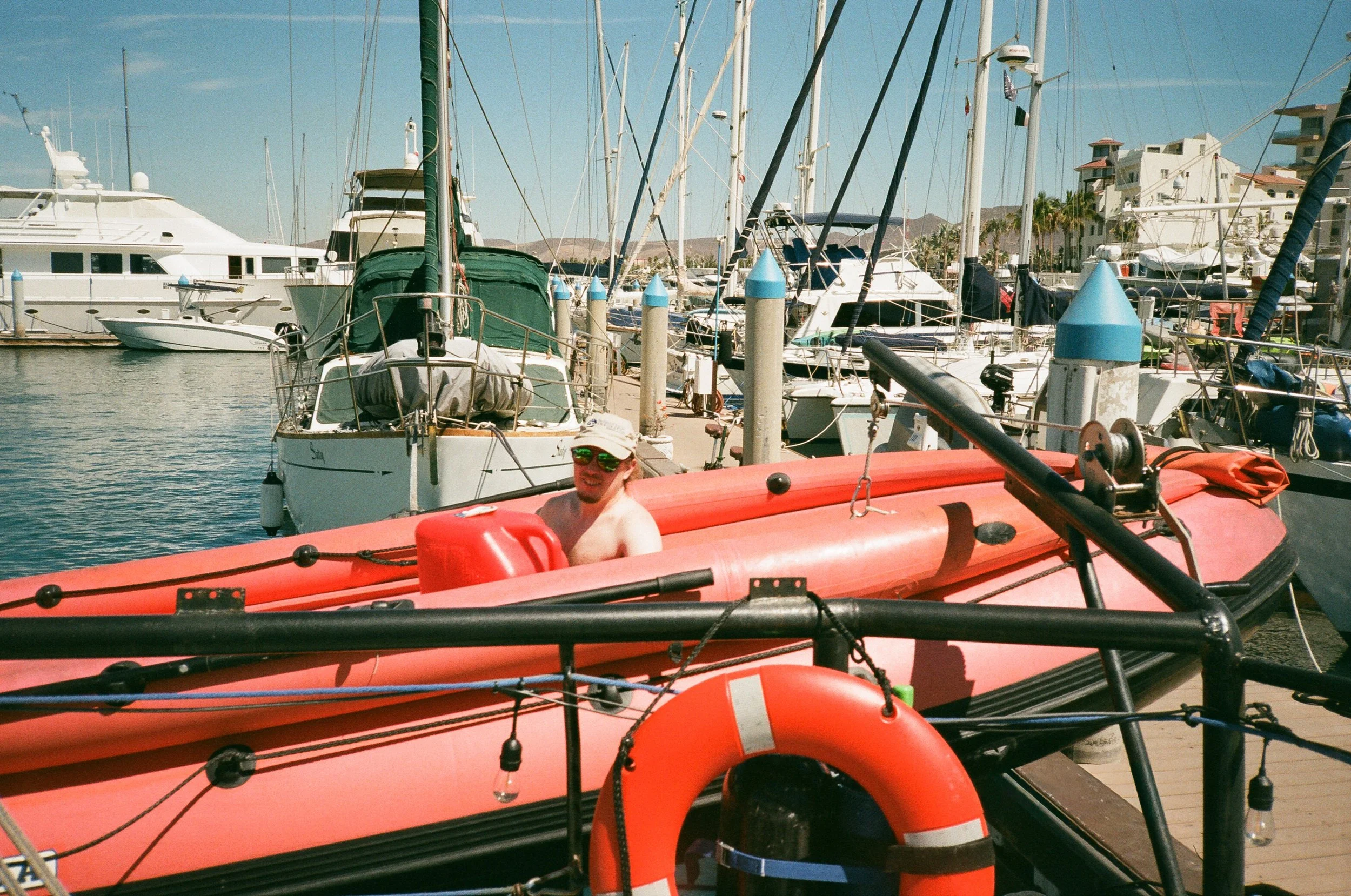
Boat Prep
The Last Day in Mexico
We remembered all too clearly that checking into Mexico had consumed nearly an entire day, so we approached the process of checking out with the assumption that tedious bureaucracy might once again become part of the adventure. The day before our intended departure, Louie and I dinghied ashore and began walking the Malecón toward the port authorities. At the dinghy dock we had noticed another sailor tying up nearby, dressed in a classic Hawaiian shirt. A little while later he came pedaling up behind us on a bicycle and, in a New Zealand accent, called out, “Hello, are you on sailing vessel Arcturus? Louie and Lerina?”We confirmed that we were. “Well, nice to meet you. I’m Bruce. Bruce on Bob.” There are few communities where introducing yourself as Bruce on Bob feels completely normal, but sailing is one of them. He was also on his way to begin his customs checkout process, and we stayed in touch throughout the upcoming gauntlet that was Mexican bureaucracy.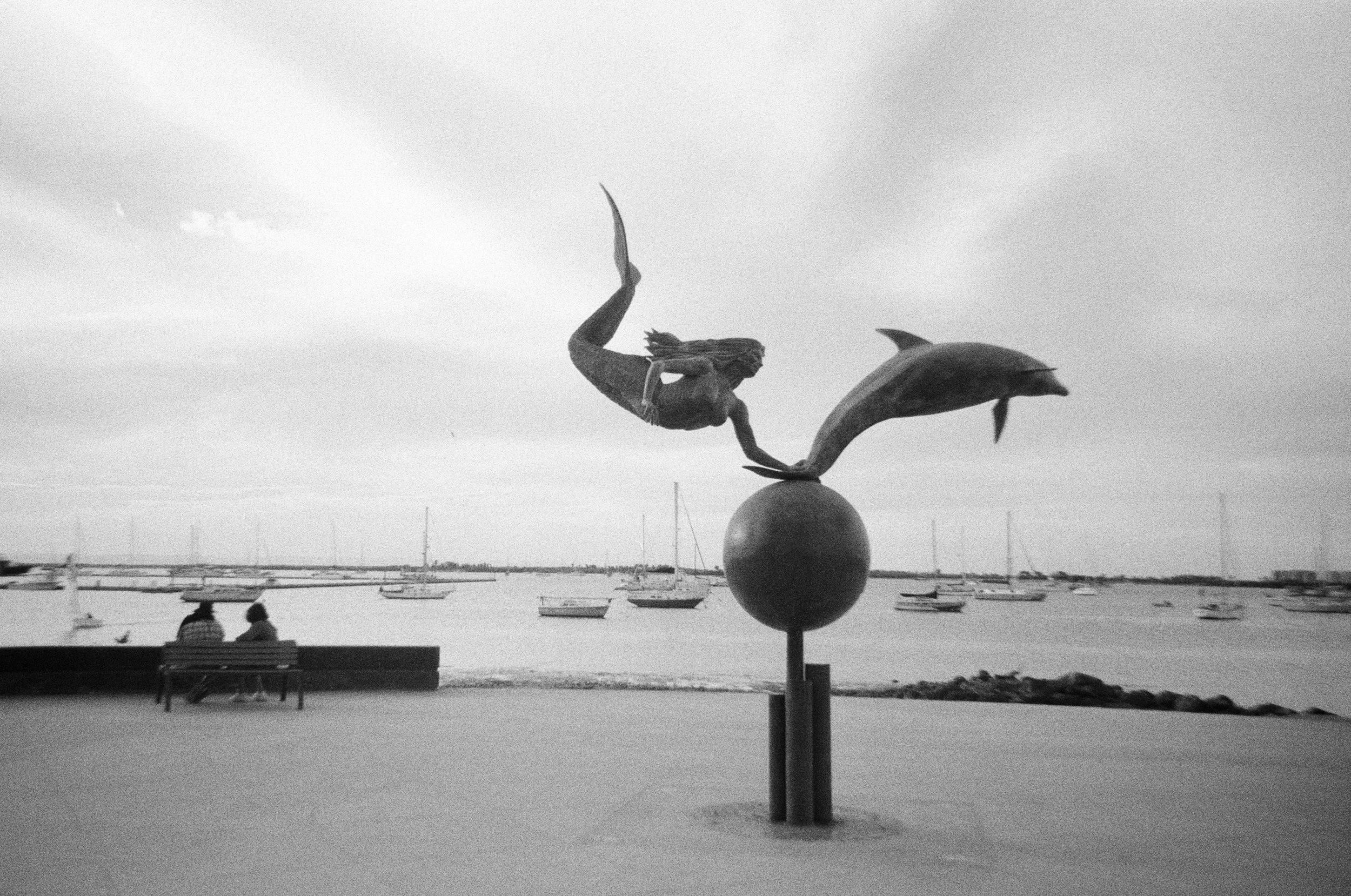
La Paz, Baja del Sur, Mexico
The next 24 hours became a familiar runaround between offices while Louie worked through the paperwork and the rest of us tackled the final preparations aboard. Toward the end of the day, all six of us hurriedly summoned two cars and raced to immigration so everyone’s passport could be officially stamped out of Mexico before the office closed. We barely made it in time, only to spend another hour sitting outside while the paperwork finished working its way through the system.We pushed off the docks that evening to move to an anchorage slightly out of town. The following morning we woke at 7:00 on March 3rd, 2025, made one more visit to a government office that was on our way out of town, before making one final stop at the fuel dock, checked the rigging again and prepared to cast off. We had hoped to visit Espíritu Santo one last time before leaving the Sea of Cortez, but the forecast was offering us favorable wind southward, and good weather windows are not something sailors casually waste. We pointed Arcturus away from La Paz instead.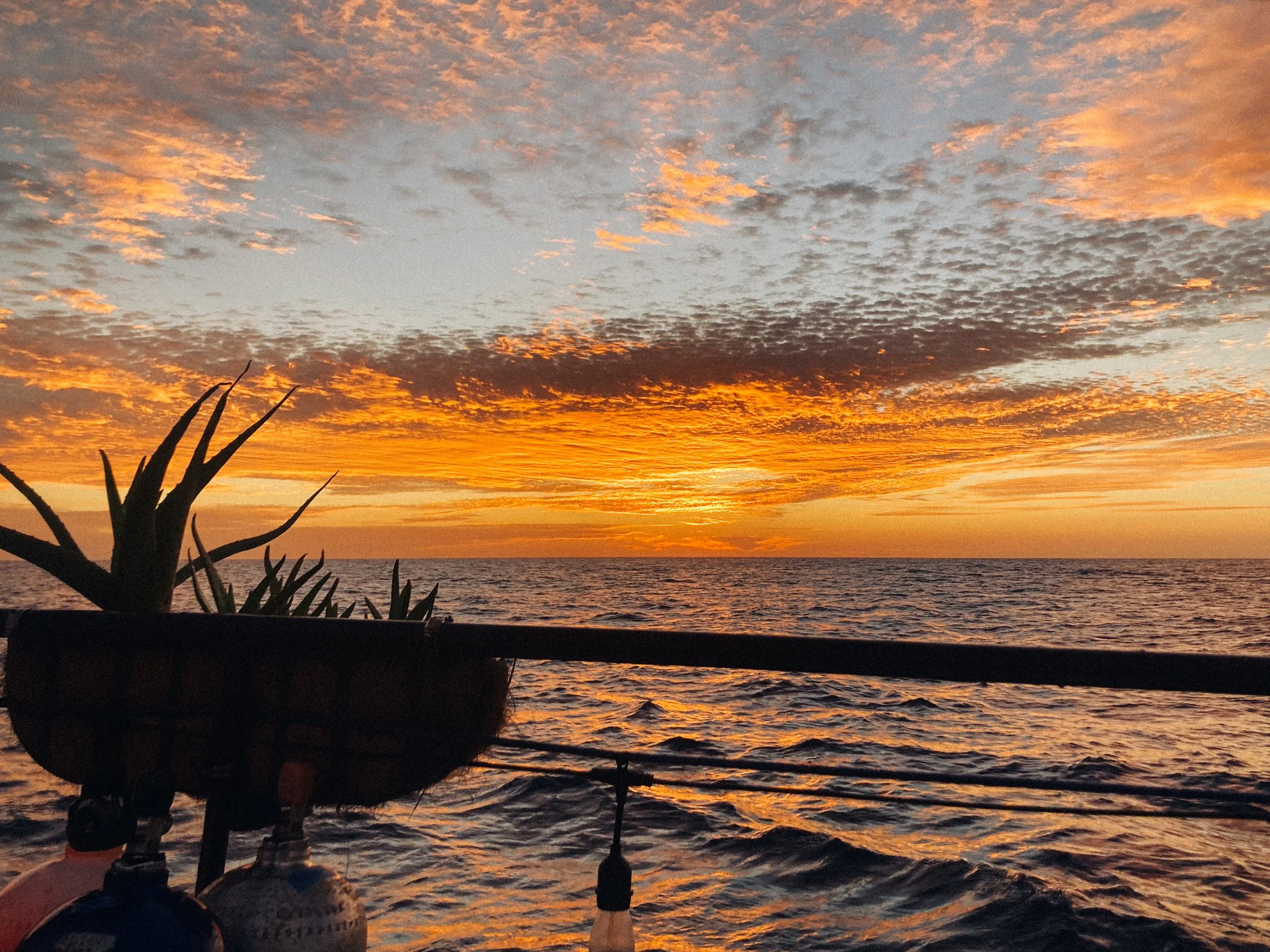
Sunset underway
Almost immediately, the ocean reminded us what we were getting ourselves into. As we entered the open fetch of the Sea of Cortez, strong winds piled the water into steep, wind-driven waves perhaps eight to twelve feet high. Arcturus surfed down their faces, occasionally getting knocked sideways before settling herself and continuing onward. Somewhere in those first rough hours, the actual scale of what we were doing finally landed. There were approximately 3,000 nautical miles of open Pacific ahead of us and potentially three weeks before we saw land again.“And sailors do this all the time?” I remember thinking. Sailors really are a slightly crazy bunch.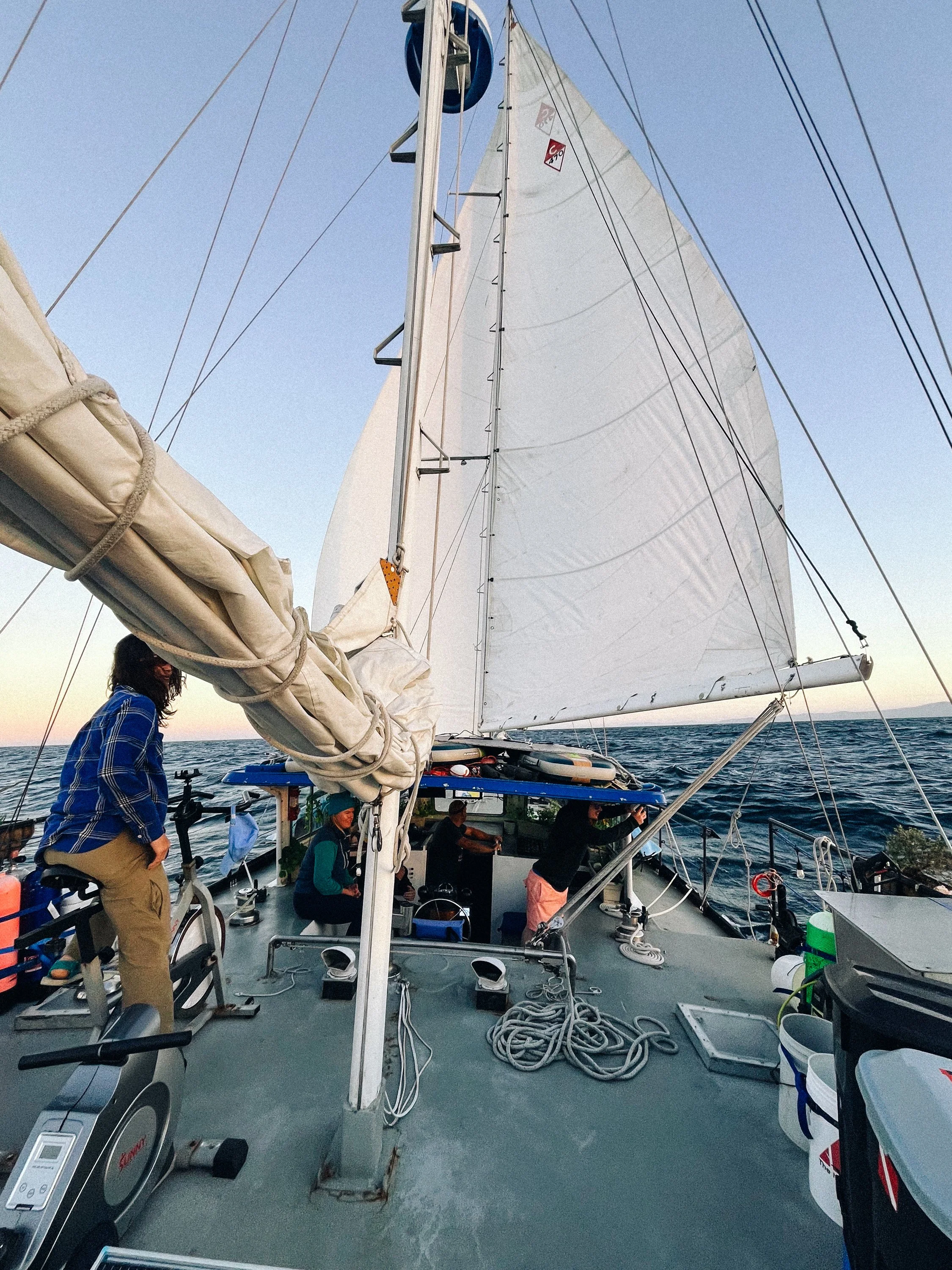
Arcturus under sail
That evening we watched the sun descend behind the Baja Peninsula, our final sunset over continental land. While we still had cell service, we made last-minute calls to family and friends, knowing our satellite connection for the coming weeks would be reserved primarily for weather forecasts, navigation and position updates. As Louie entered our departure on NoForeignLand, he looked up with a familiar expression.

“You won’t believe who else left Mexico today?” There was enough amusement in his voice that I somehow already knew. “Amaryllis?” I said, and he nodded. Of course it was.
We had crossed paths with the same sailboat repeatedly throughout our journey south: arriving at the same customs dock in Canada, leaving San Diego at nearly the same time, appearing at the same customs dock in Ensenada and now, after nearly three months scattered across Mexico, departing for French Polynesia on the exact same day. Sailing has repeatedly shown us how an enormous planet can somehow feel very small. Serendipity and sailing, I have decided, often go hand in hand.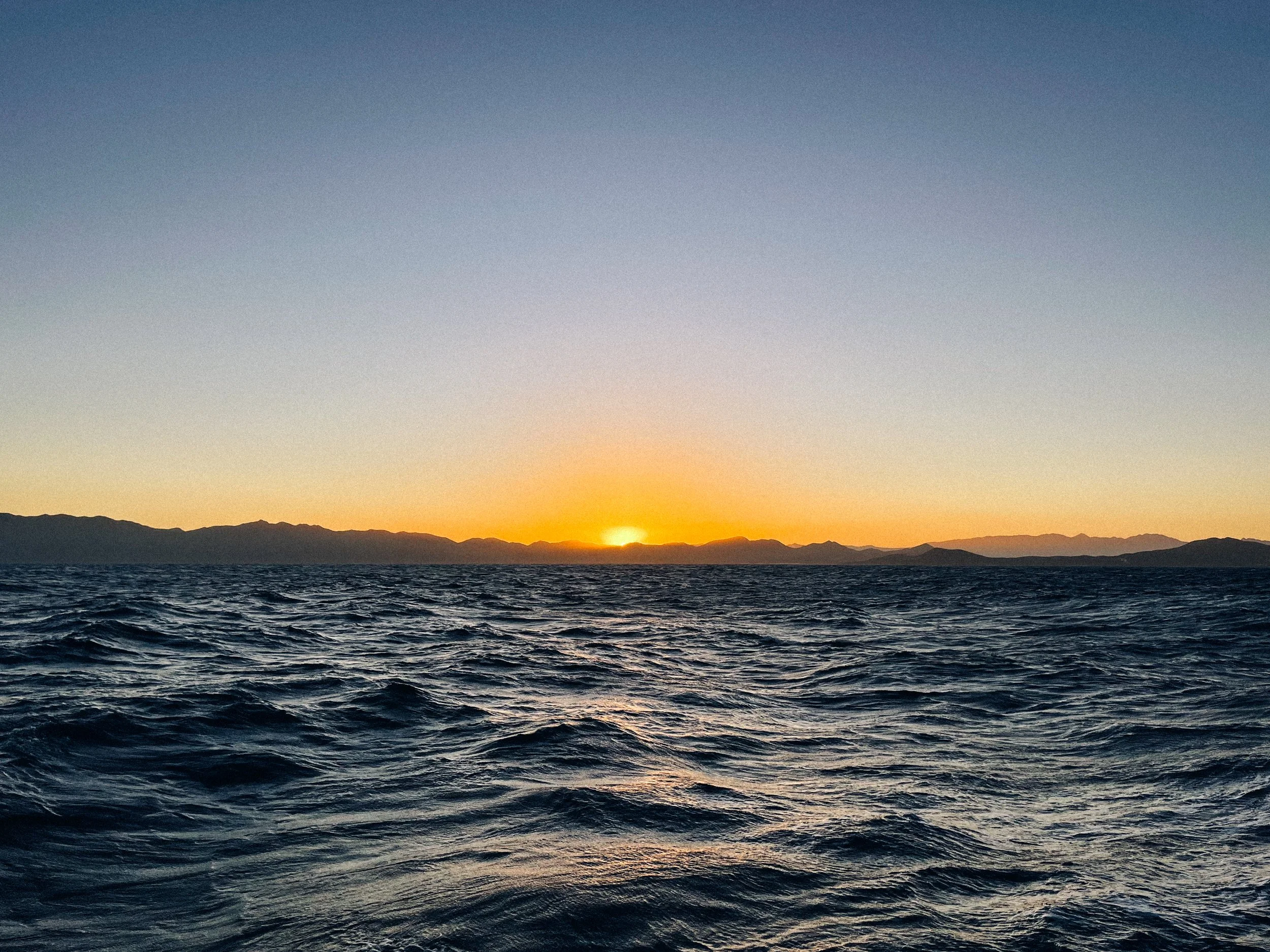
Sunset underway
Learning How to Live Offshore
The first few days were an adjustment. Sleeping was difficult while our bodies tried to learn how to relax inside a world that never stopped moving. There is no truly stationary surface on a sailboat offshore. Your bunk rises, dips and rolls beneath you; objects creak and shift around the cabin; waves strike the hull with noises that seem unnervingly dramatic until you learn which ones are normal. In those early days, even sleeping became a skill that had to be relearned.With six experienced sailors aboard, our daytime watches could remain fairly fluid, while nights followed a more structured rotation, doing staggered watches with two people on at all times for 3 to 4 hour long shifts, which meant we each spent the first half of our shift with one crew mate, and the second half with a different crewmate. We adjusted the schedule every few days as everyone discovered which hours suited them. Some preferred quiet solo watches; others liked having company. I gradually became particularly fond of the 9:00 p.m. to midnight shift, when the heat of the day disappeared, most of the crew went to bed and the ocean became a private dark universe around the boat.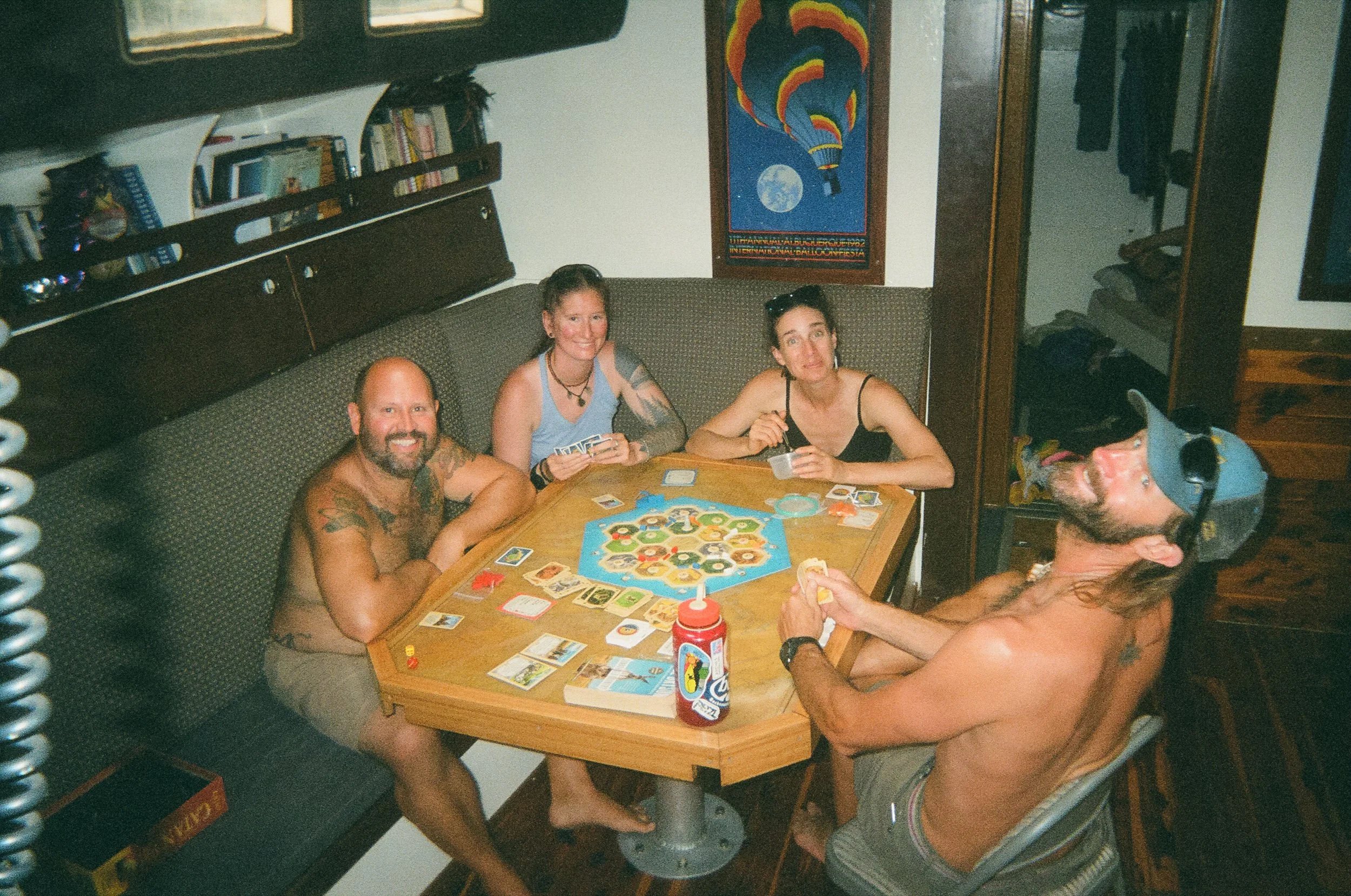
Arcturus Crew playing games
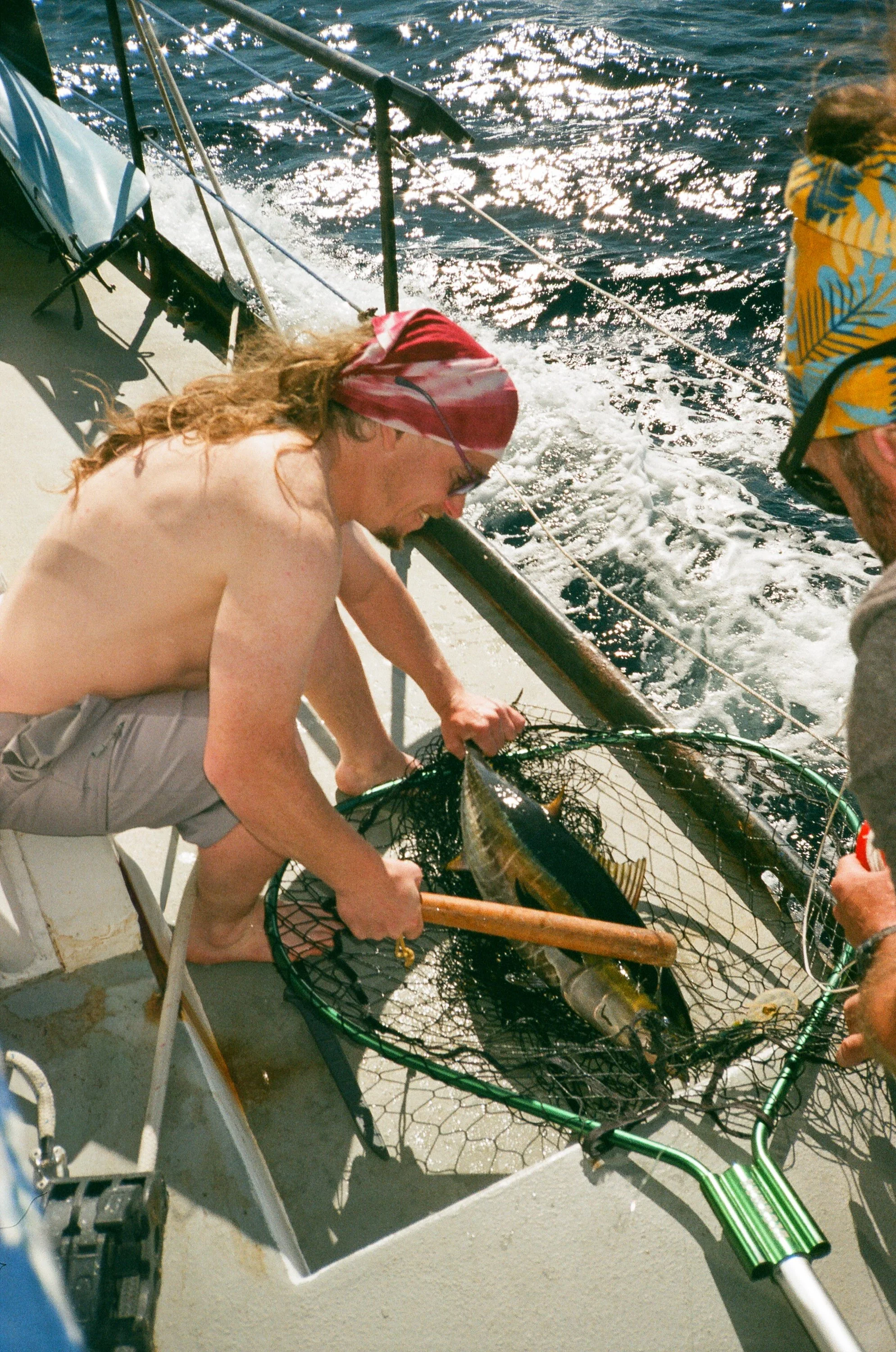
Fishing in the middle of the pacific
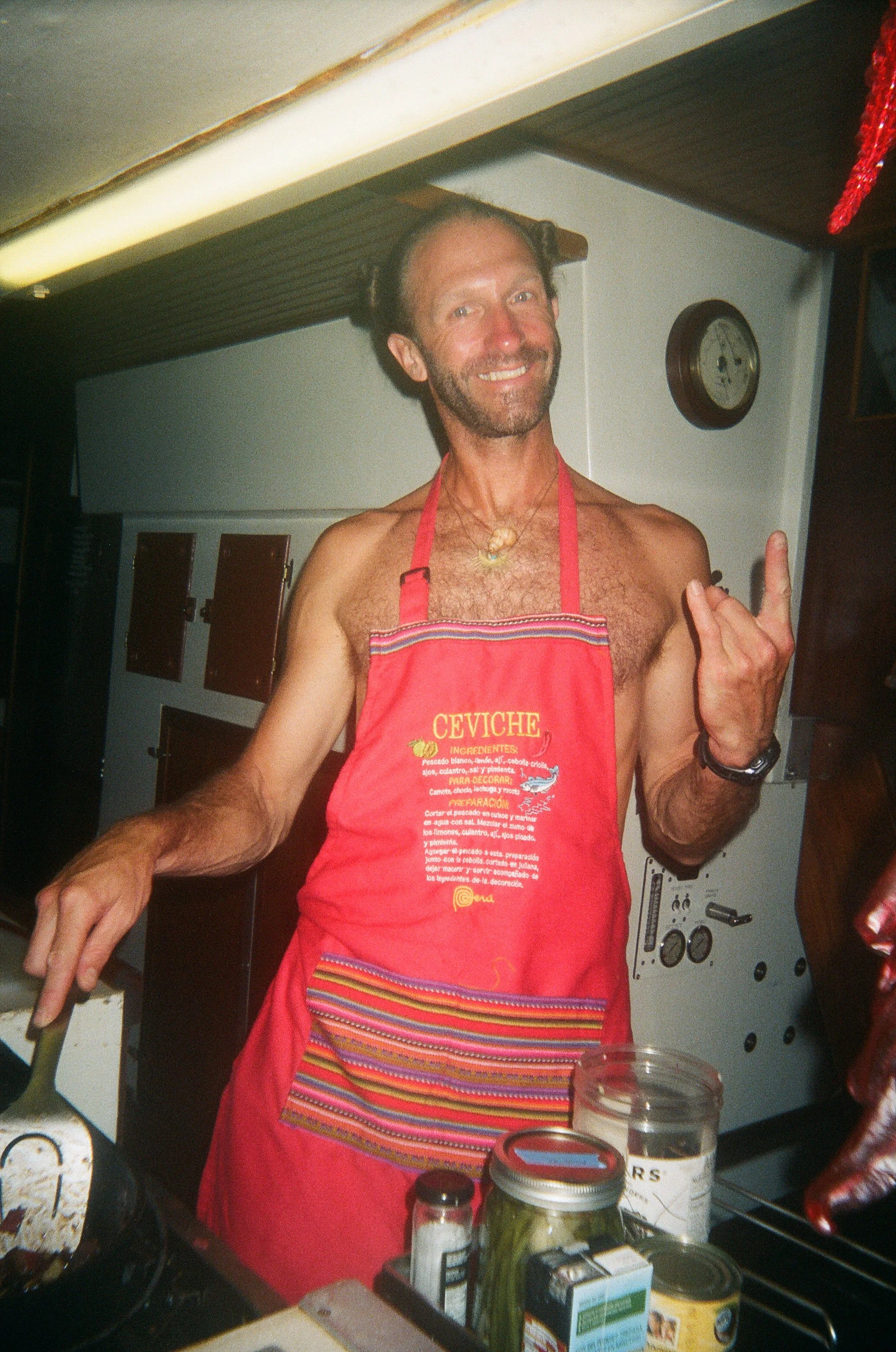
Meal Prep Underway
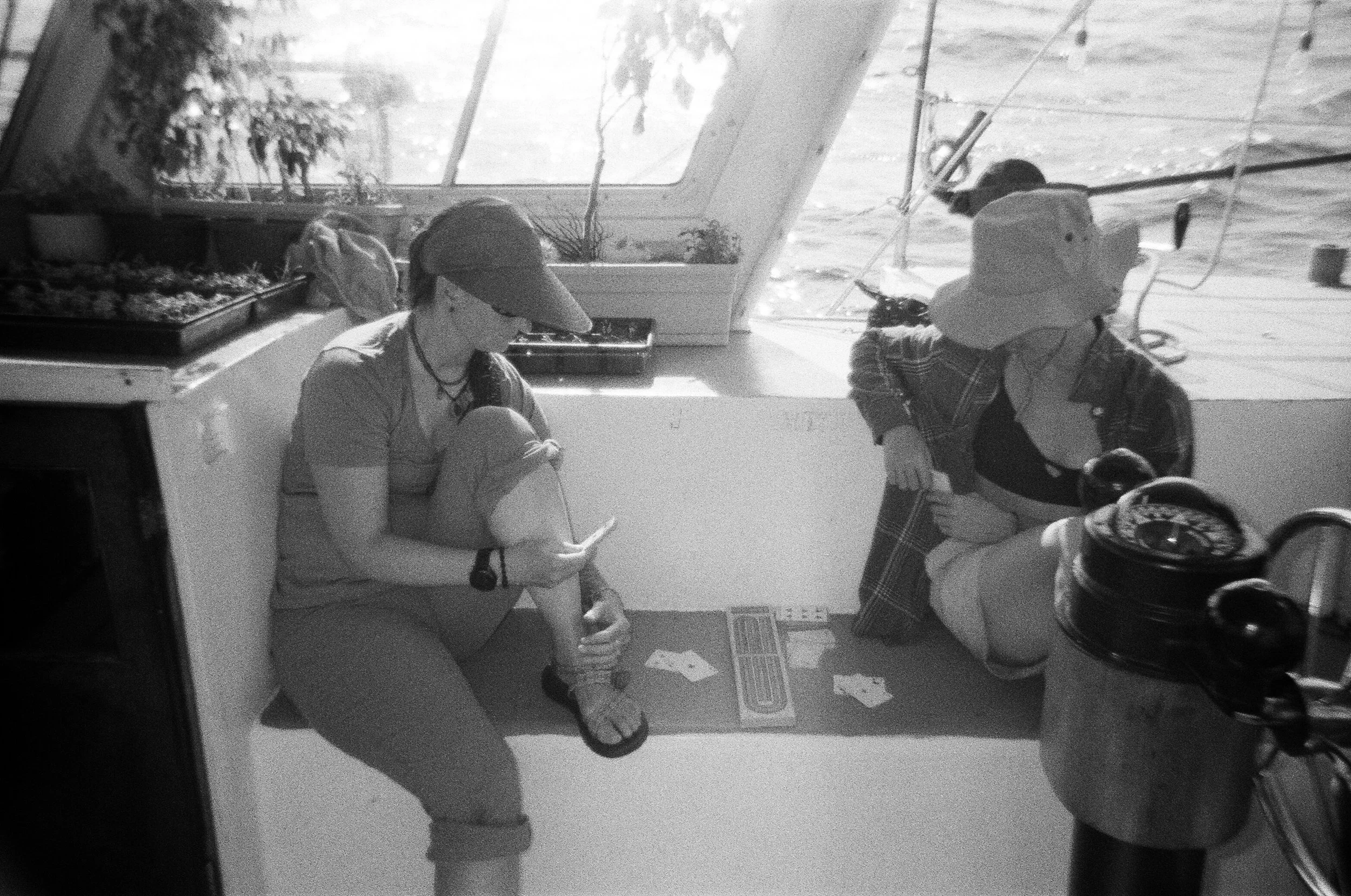
Arcturus Crew playing games
We had brought along a large paper chart of the Equatorial Pacific and decided to mark our position twice each day. At noon and midnight we recorded the coordinates from our GPS, measured them and transferred our location by hand onto the chart. It was completely unnecessary from a modern navigational standpoint, yet deeply satisfying to watch a small trail of pencil marks slowly stretch westward across an otherwise blank blue expanse.Routines began to develop. At sunset we gathered for happy hour, though we had collectively decided that the crossing would be alcohol-free. Things can change quickly offshore, and there was always the possibility that a peaceful evening could become an all-hands situation within seconds. Instead, our sunset ritual centered around homemade kombucha, glasses clinking while the sky changed colors around us.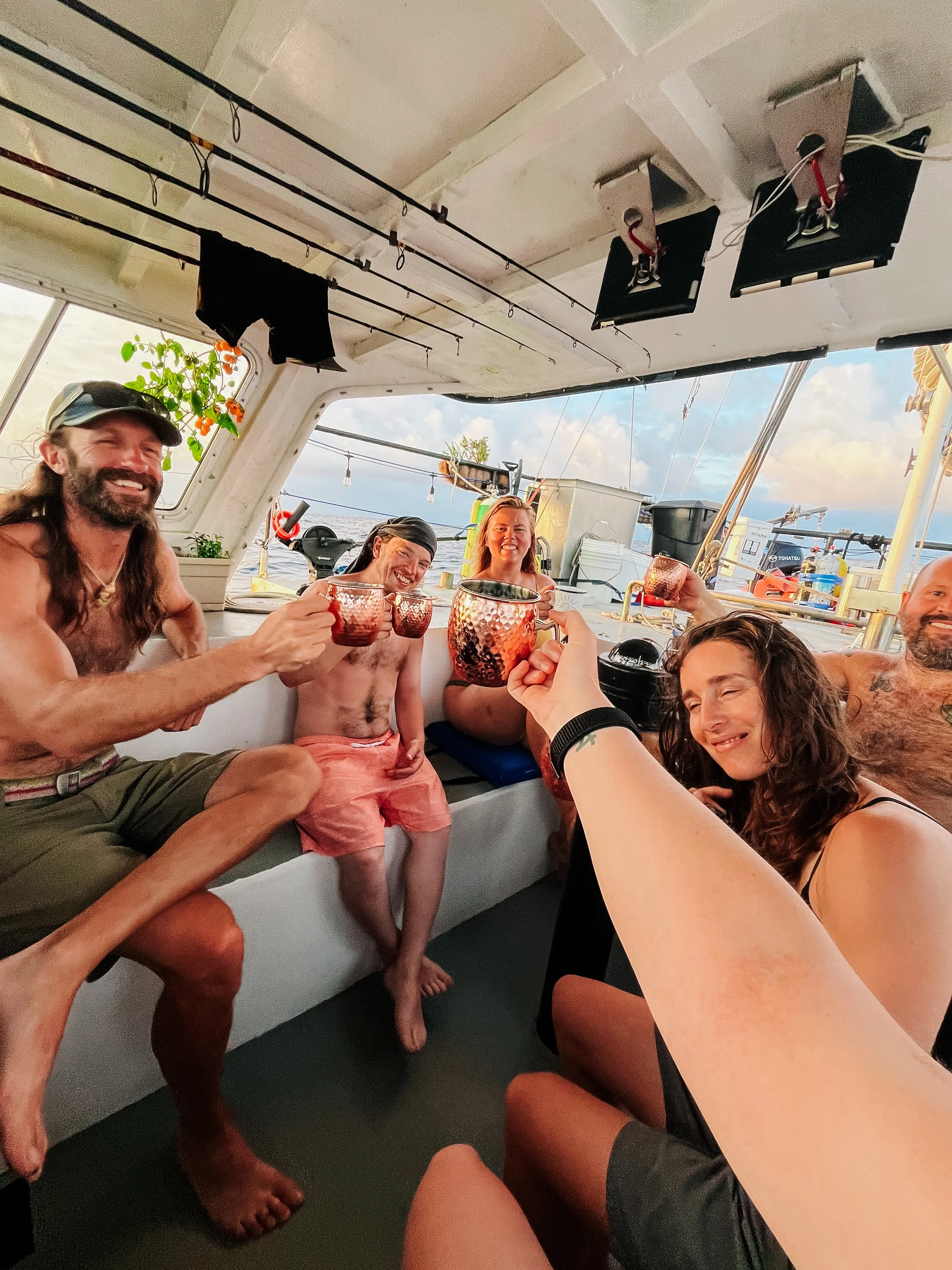
Sunset Happy hour
A surprising amount of ordinary life continues while crossing an ocean: laundry still needs washing, plants need watering, meals must be cooked. Boat projects continued: we repaired door latches, braided a protective cover for electrical wiring exposed during the solar installation, replaced a hatch fan and even welded a broken rail underway. Before we left Alaska we had also brought a stationary bicycle and rowing machine that we bolted onto the back deck, an addition that initially seemed borderline ridiculous and quickly became invaluable. Most days I tried to ride the bike for an hour while the others rotated between rowing, weights, yoga and stretching. When your entire physical world has been reduced to 56 feet of boat, simply being able to move your body becomes a genuine luxury.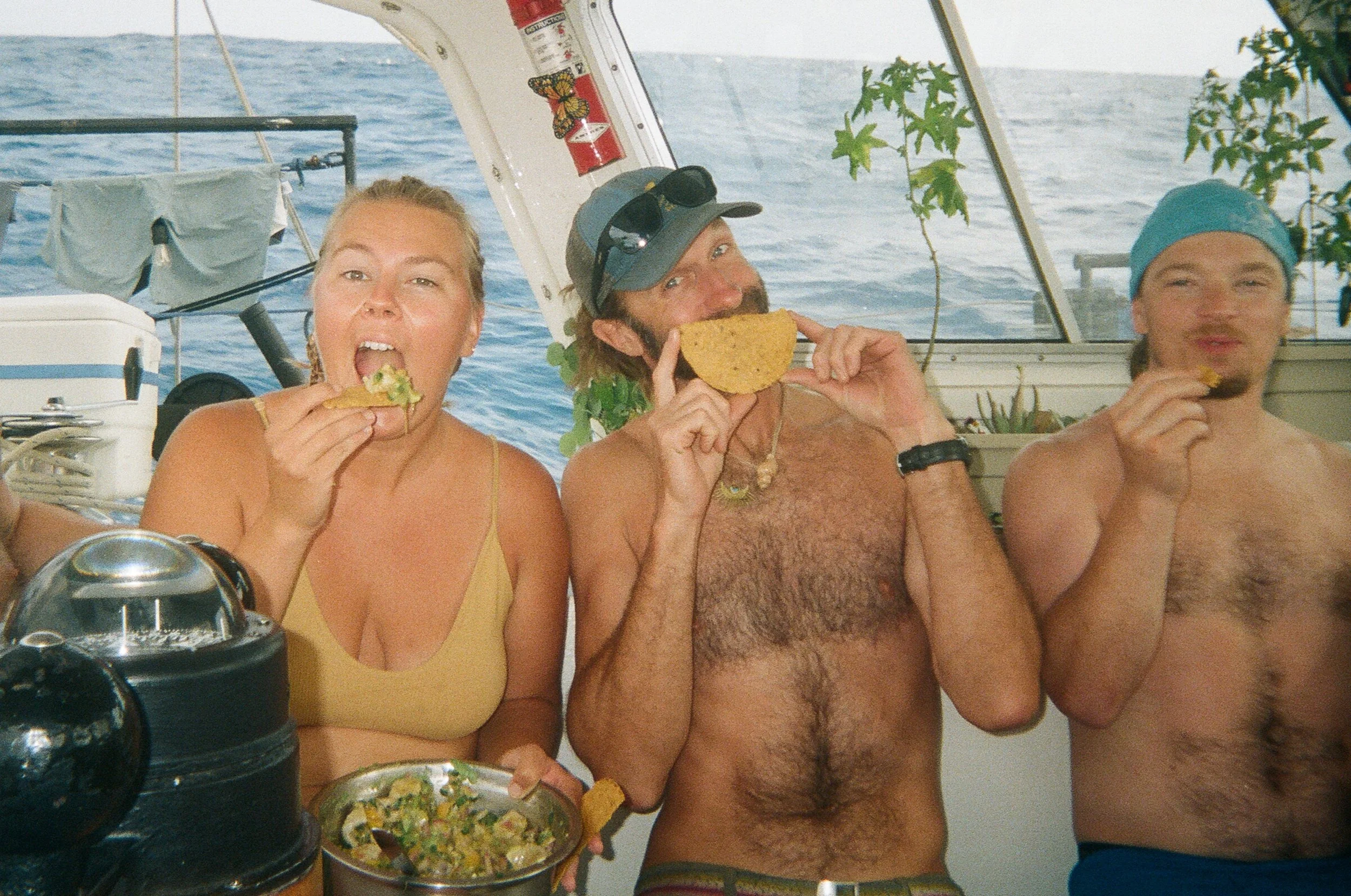
Lunchtime aboard Arcturus
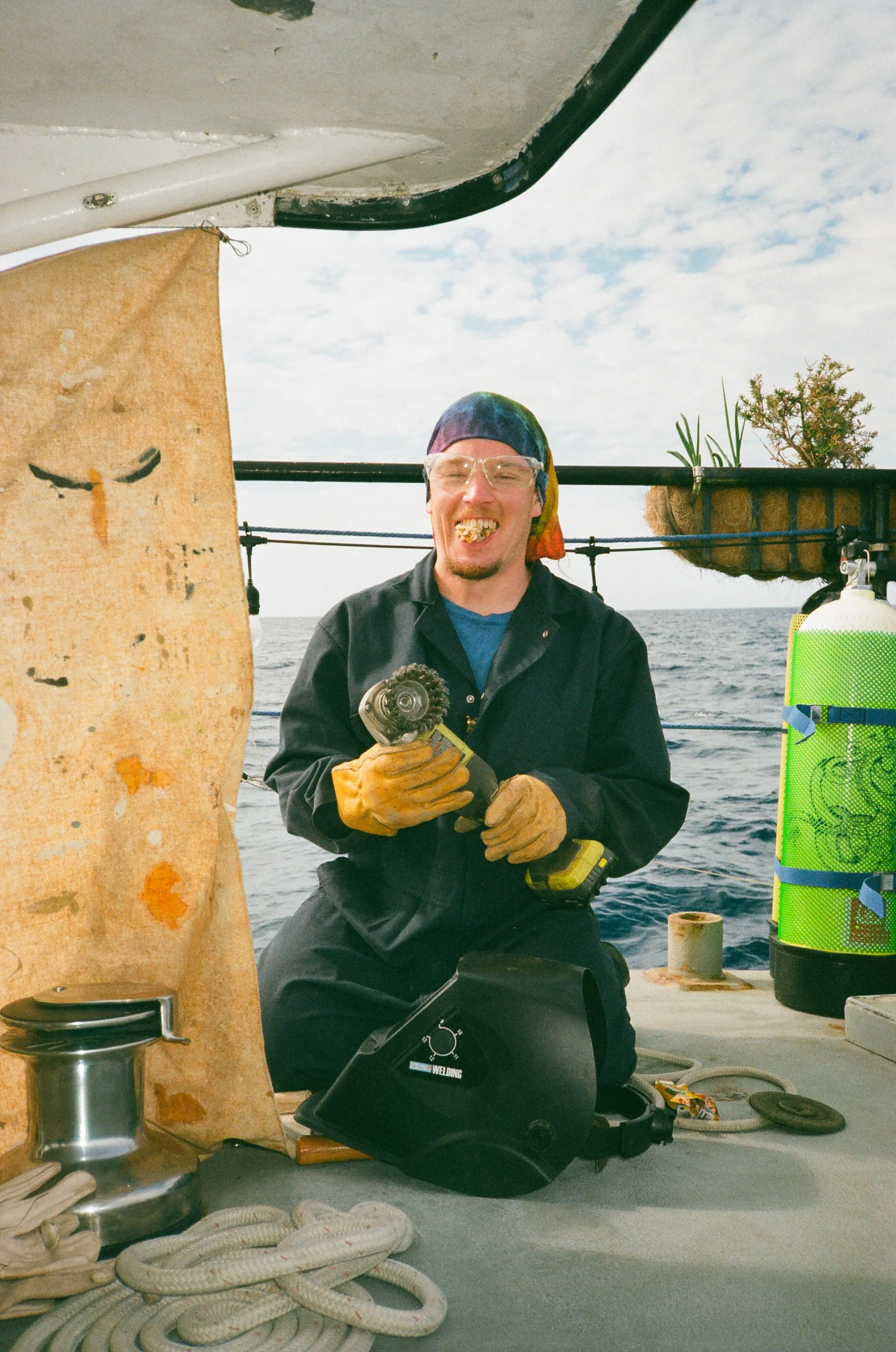
Boat Repairs underway
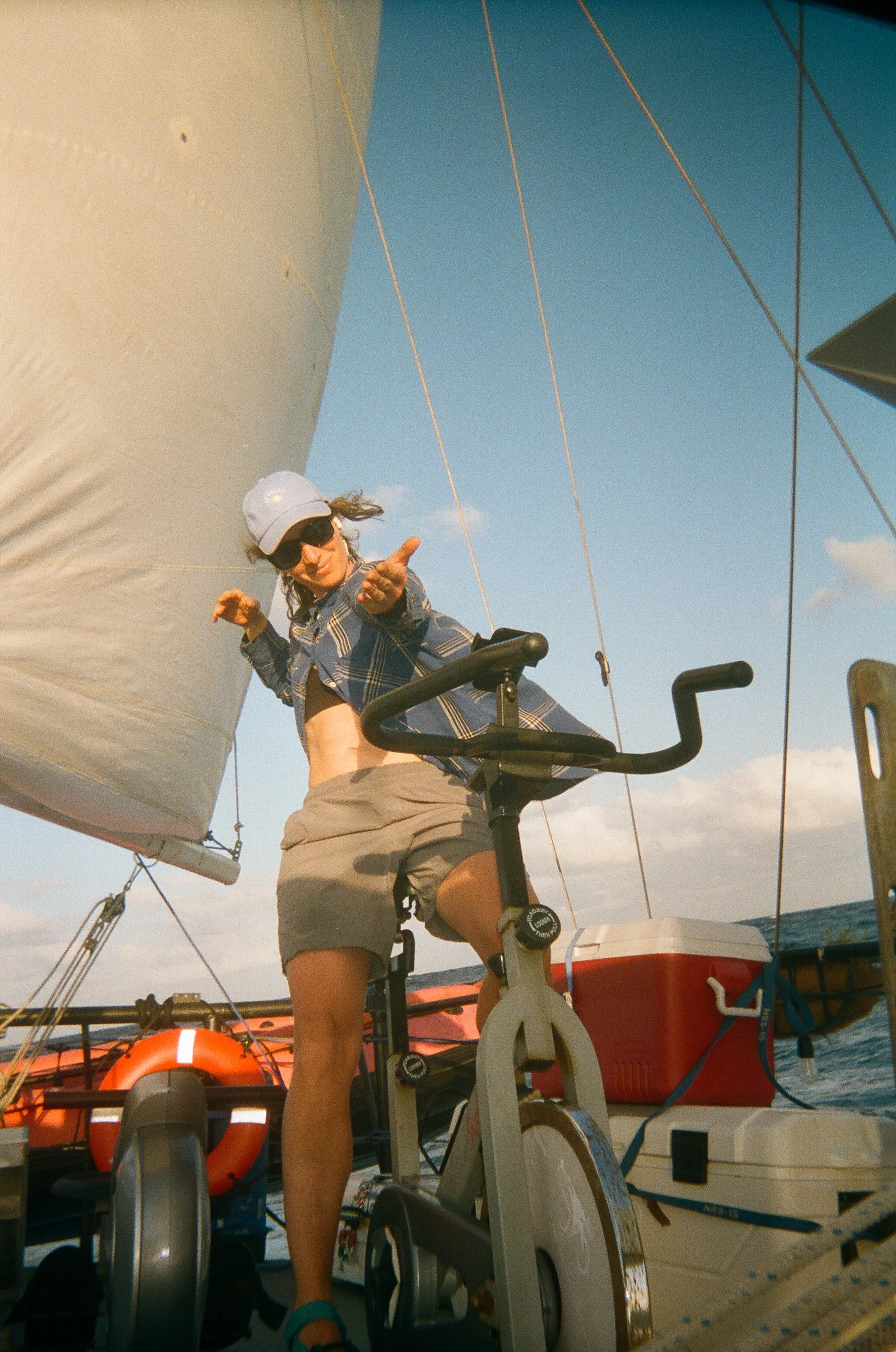
On Deck exercise bike
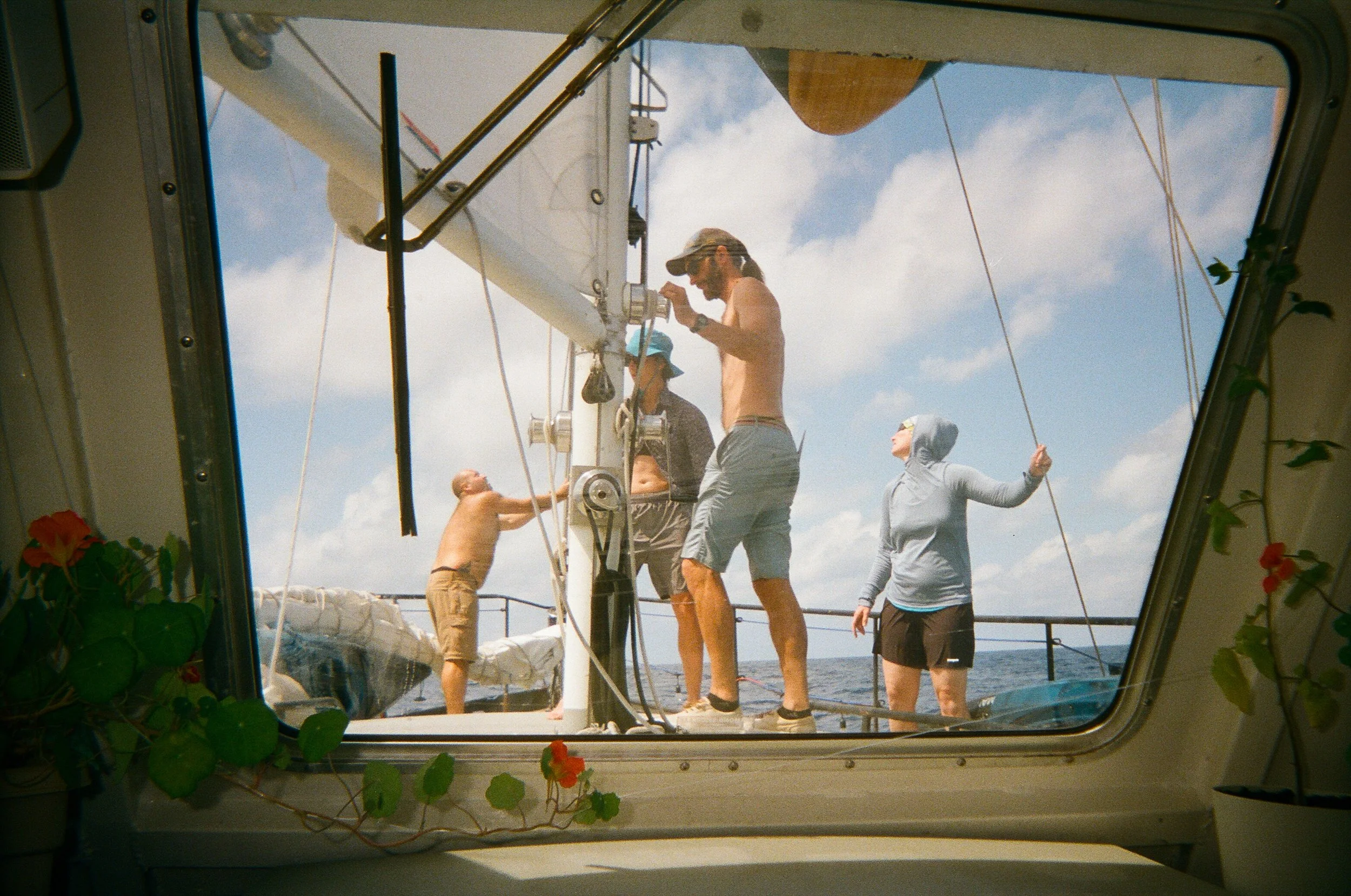
Arcturus crew making sail changes
Of course, trying to accomplish anything below deck while sailing can become its own form of slapstick comedy. One morning I attempted to make fried rice while the crew experimented with different sail combinations above. Every change of course tilted the galley at a different angle. Rice water boiled over, vegetables slid around the cutting board. When I cracked eggs into the skillet, at least three egg whites escaped across the counter instead. We kept shouting up to ask what exactly they were doing to the boat, while the crew assured us they were trying to improve the ride. They were not. Somehow the fried rice still turned out delicious.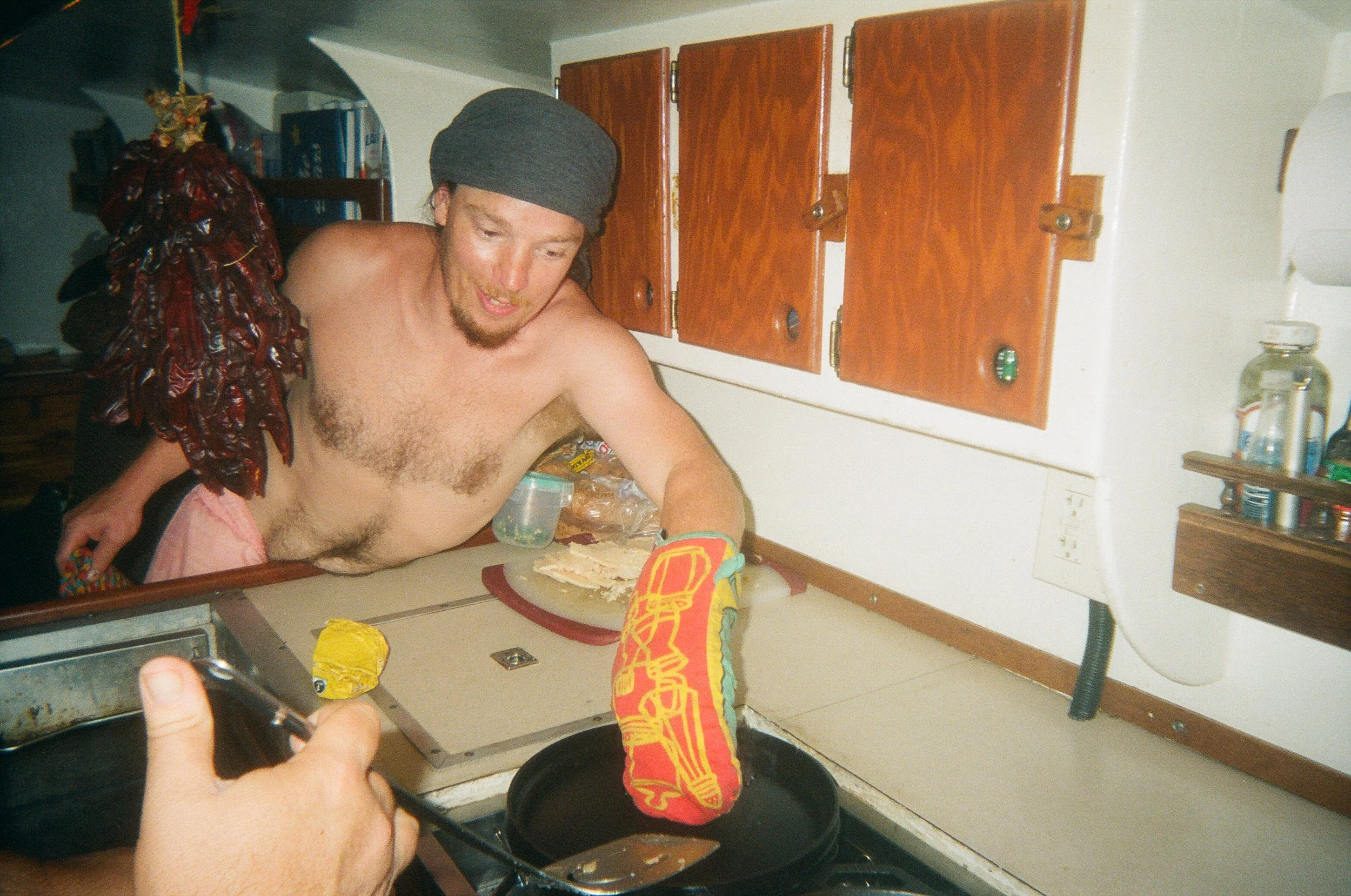
Meal Prep aboard arcturus
The Last Land for Thousands of Miles
Four days after leaving La Paz, we approached the only land we would encounter before French Polynesia: the Revillagigedo Archipelago, far off Mexico’s Pacific coast. Before departure we had visited the appropriate office in La Paz to investigate obtaining permission to anchor there, but the expense and restrictions made it difficult to justify for six people. Regardless of permits or not, landing ashore was strictly prohibited, and our visit would have been limited to water-based activities, so we ultimately decided simply to sail past.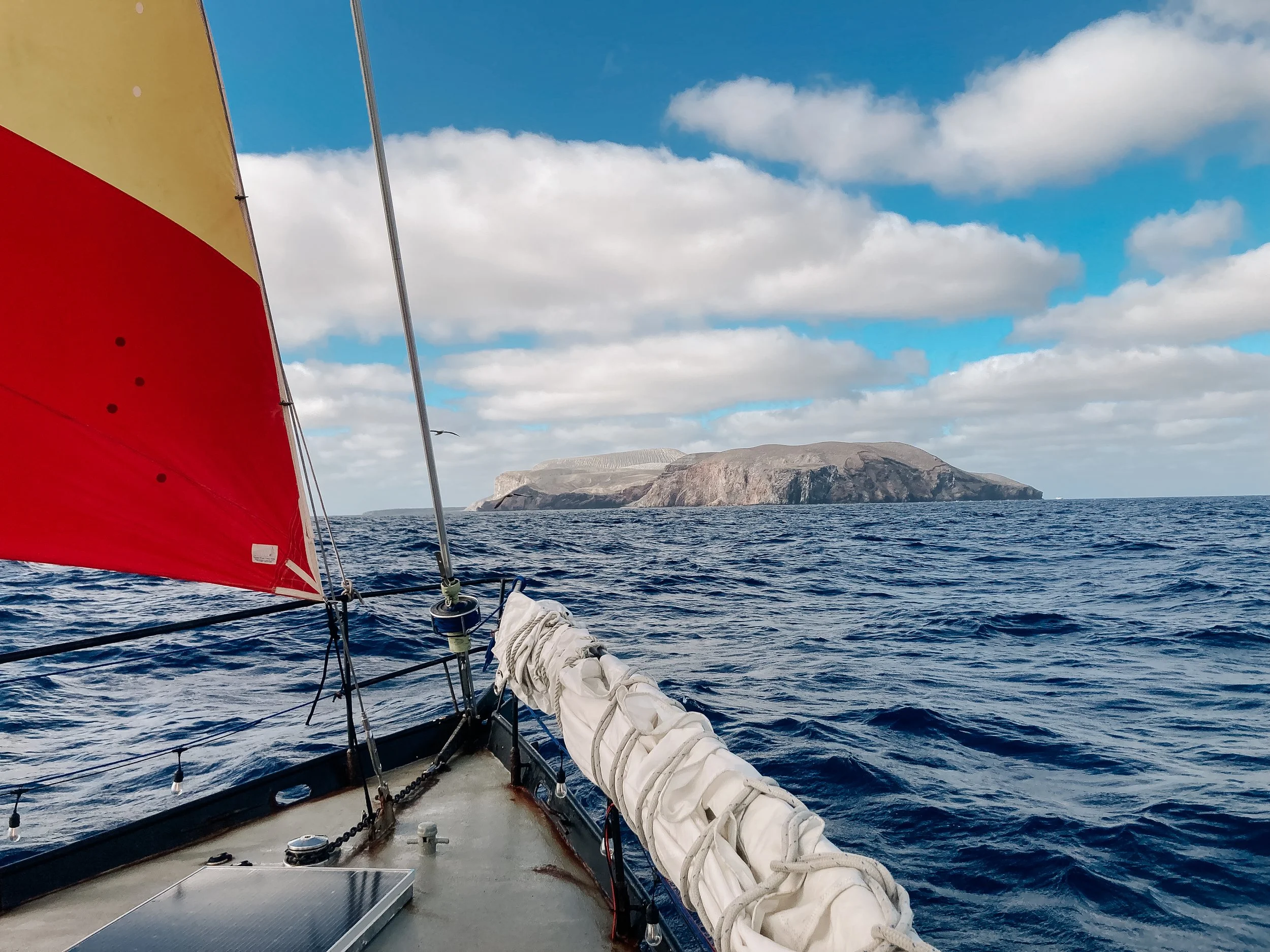
San Benedicto, Revillagigedo Archipelago
San Benedicto, Revillagigedo Archipelago
San Benedicto, Revillagigedo Archipelago
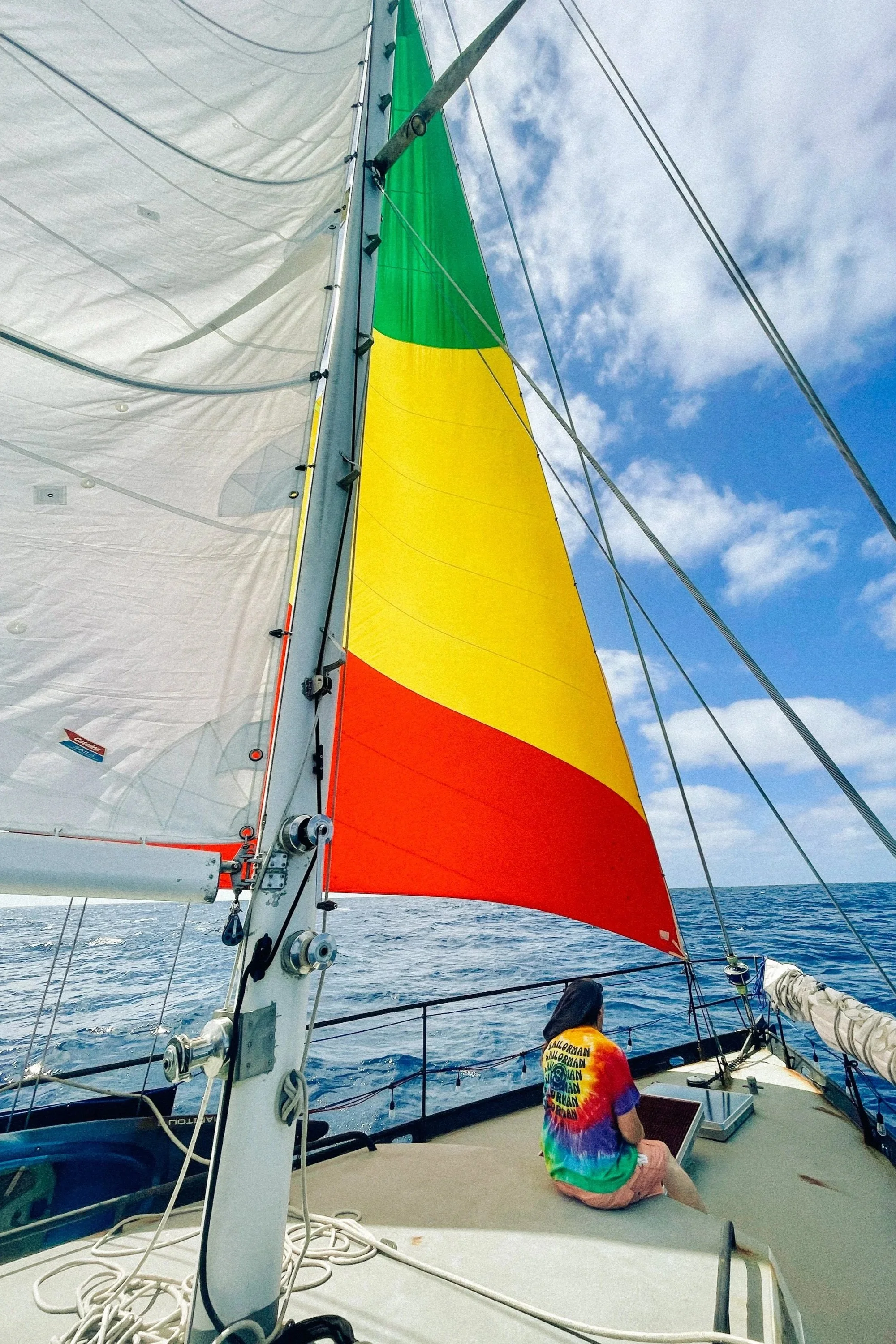
Sailing with the drifter
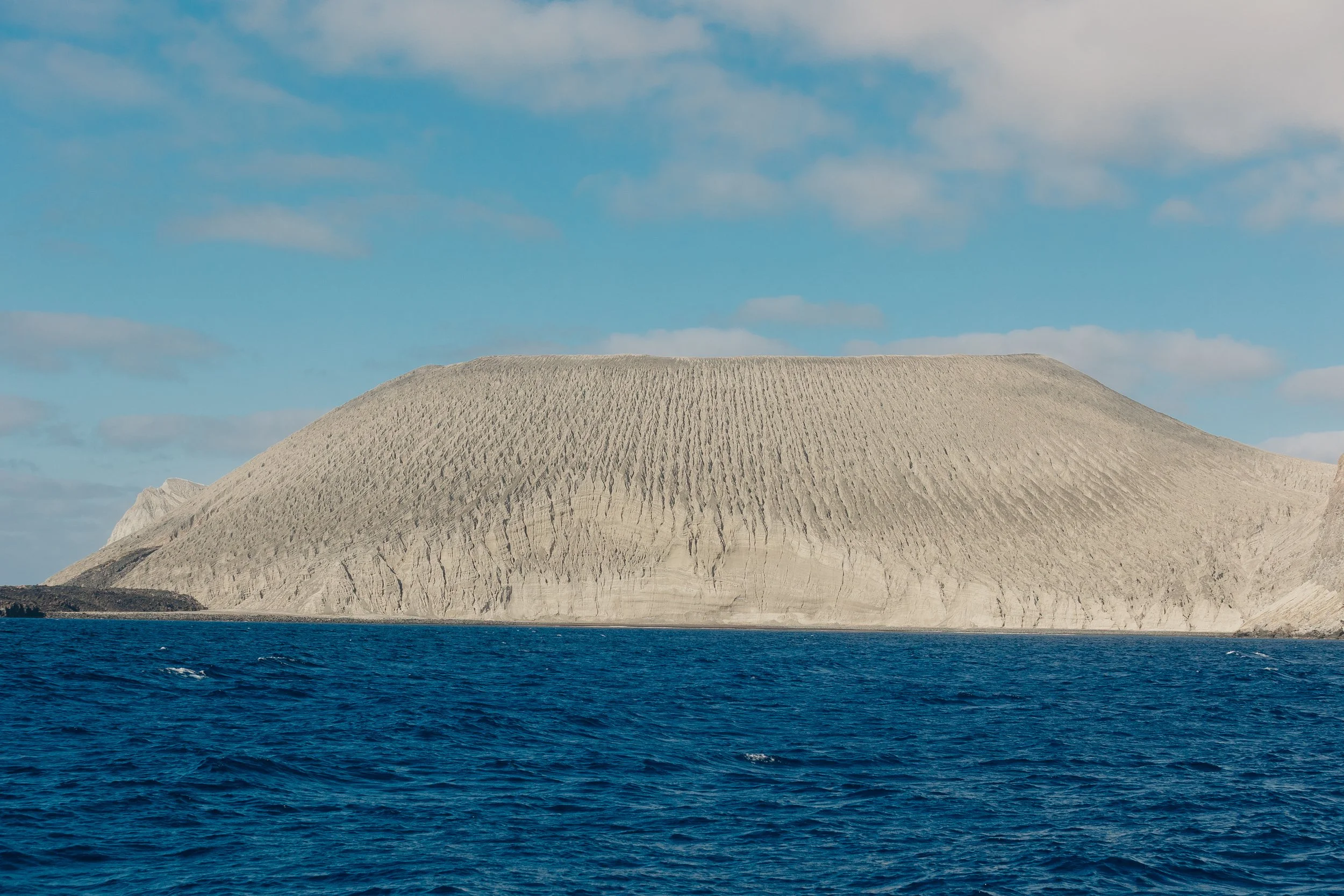
San Benedicto, Revillagigedo Archipelago
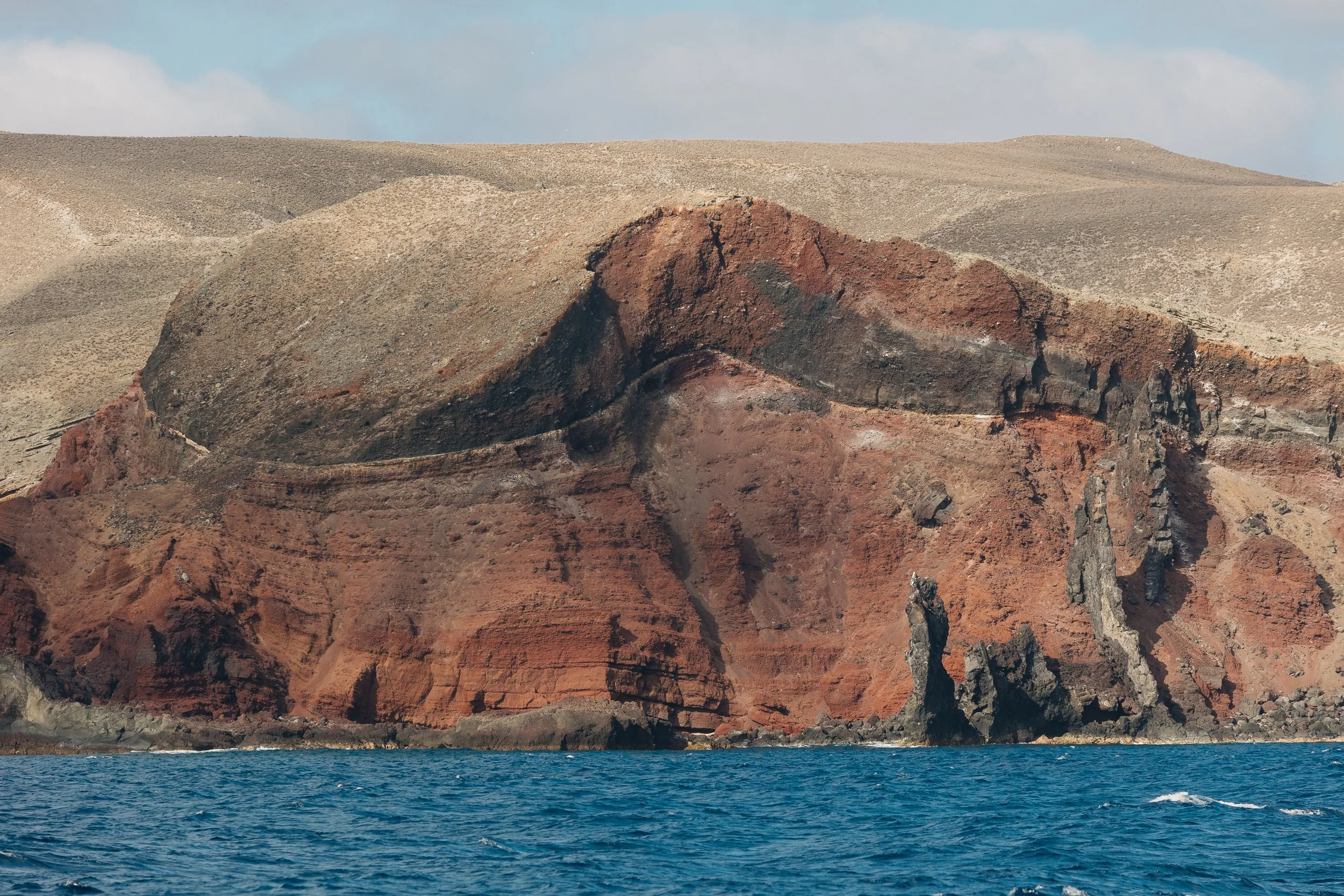
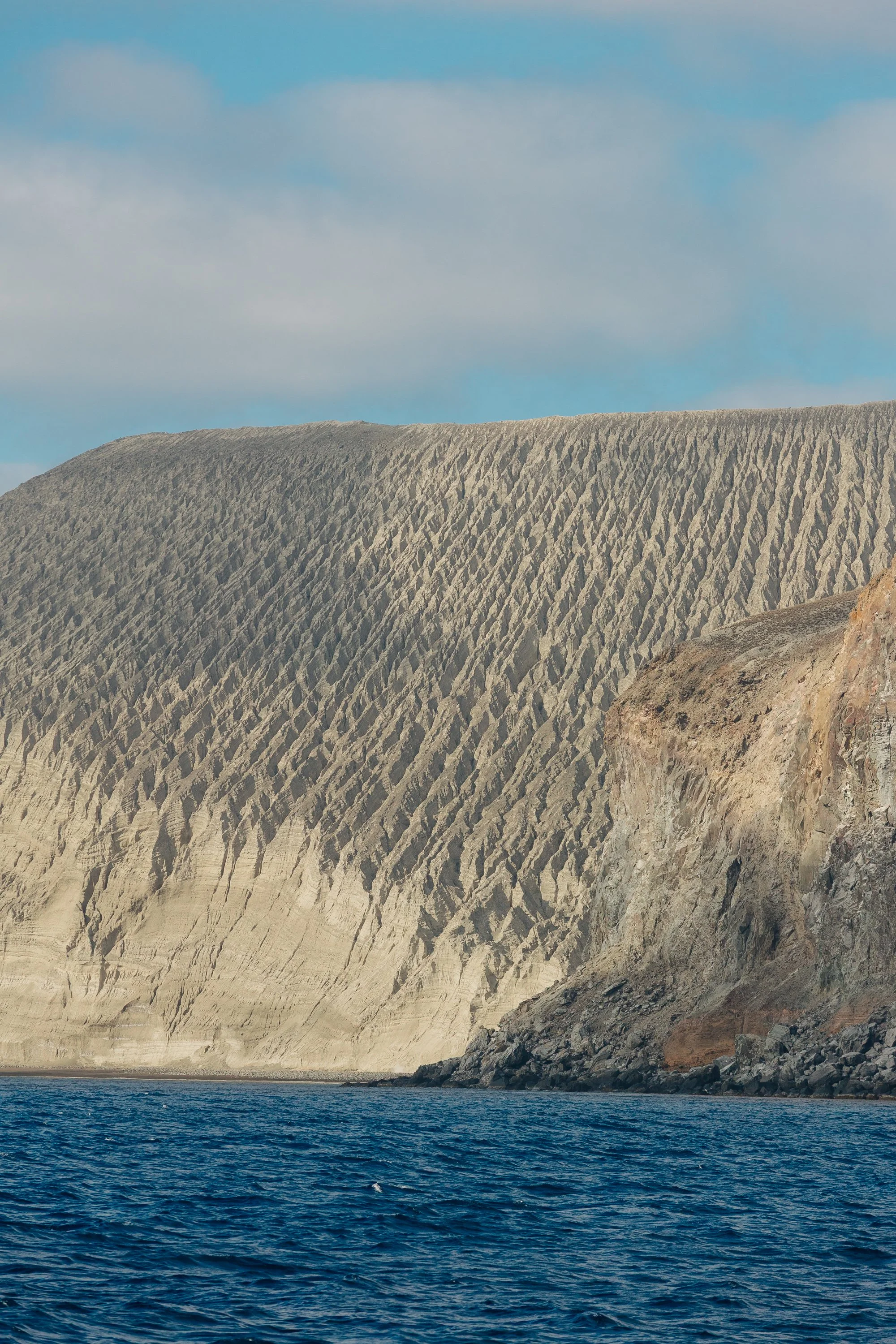
San Benedicto emerged from the ocean as a stark volcanic mass, its slopes etched with bands of red and black rock. Layers and channels ran down the island from the crater, creating a landscape that looked almost sculpted from accumulated eruptions. The entire Revillagigedo Archipelago is volcanic in origin, its four islands forming the exposed summits of volcanoes rising from a largely submerged mountain range. San Benedicto’s landscape is especially young and visibly restless: in 1952, an eruption on the island’s southern end rapidly built the Bárcena volcanic cone, followed by lava flows that eventually reached the sea. Even from the deck of Arcturus, the island seemed to wear that history openly, its raw slopes a reminder that this isolated stretch of Pacific is still being shaped from below. Pacific boobies circled overhead as we passed beneath the island’s cliffs.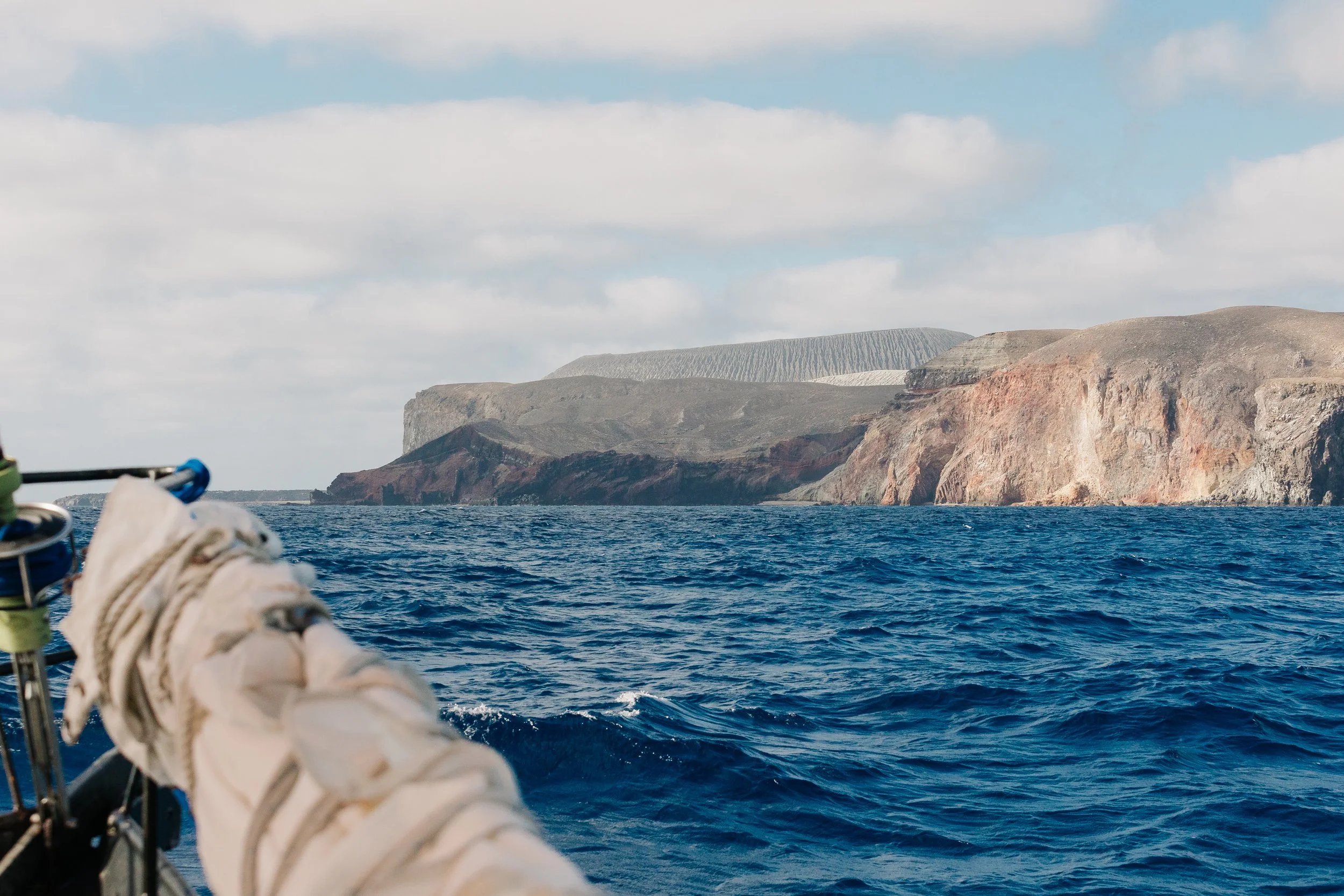
San Benedicto, Revillagigedo Archipelago
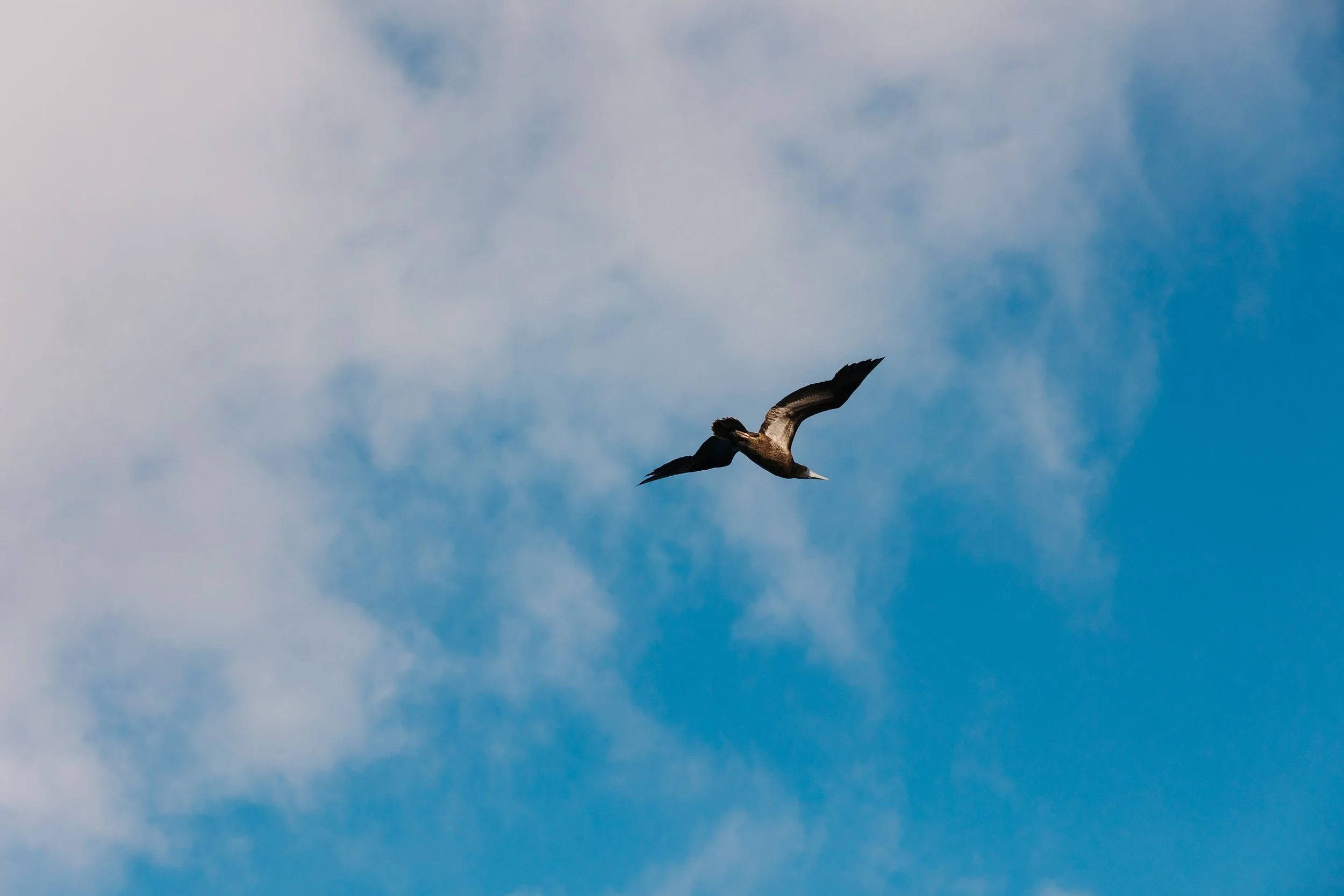
San Benedicto, Revillagigedo Archipelago
Nearby, we spotted a catamaran raising a bright blue spinnaker. A little while later our VHF radio crackled. “Blue sailing vessel, this is Viddora, one-six.”Louie answered, and everyone awake immediately migrated toward the doghouse at the novelty of talking to another sailboat on the radio. After several days offshore, hearing an unfamiliar human voice over the radio was already exciting.They asked where we were headed. “French Polynesia” Louie said enthusiastically. “Us too! Maybe we’ll see you there,” issued the voice from the radio. Louie laughed. “Well, you’re a catamaran. You’re probably going to get there a lot faster than us. We’re a heavy steel monohull.”There was a pause before the reply. “Eh, we’re more of a… condo-maran. We’re pretty well loaded.” Everyone on our side of the radio erupted in laughter. It is known that typically catamaran sailors are proud of how lightweight their vessels are. We enjoyed that they made light of this not being the case for them; we wondered if maybe they were a family traveling across the pacific together with kids in tow. It turned out, they were. We wished each other travels as we continued on our respective courses.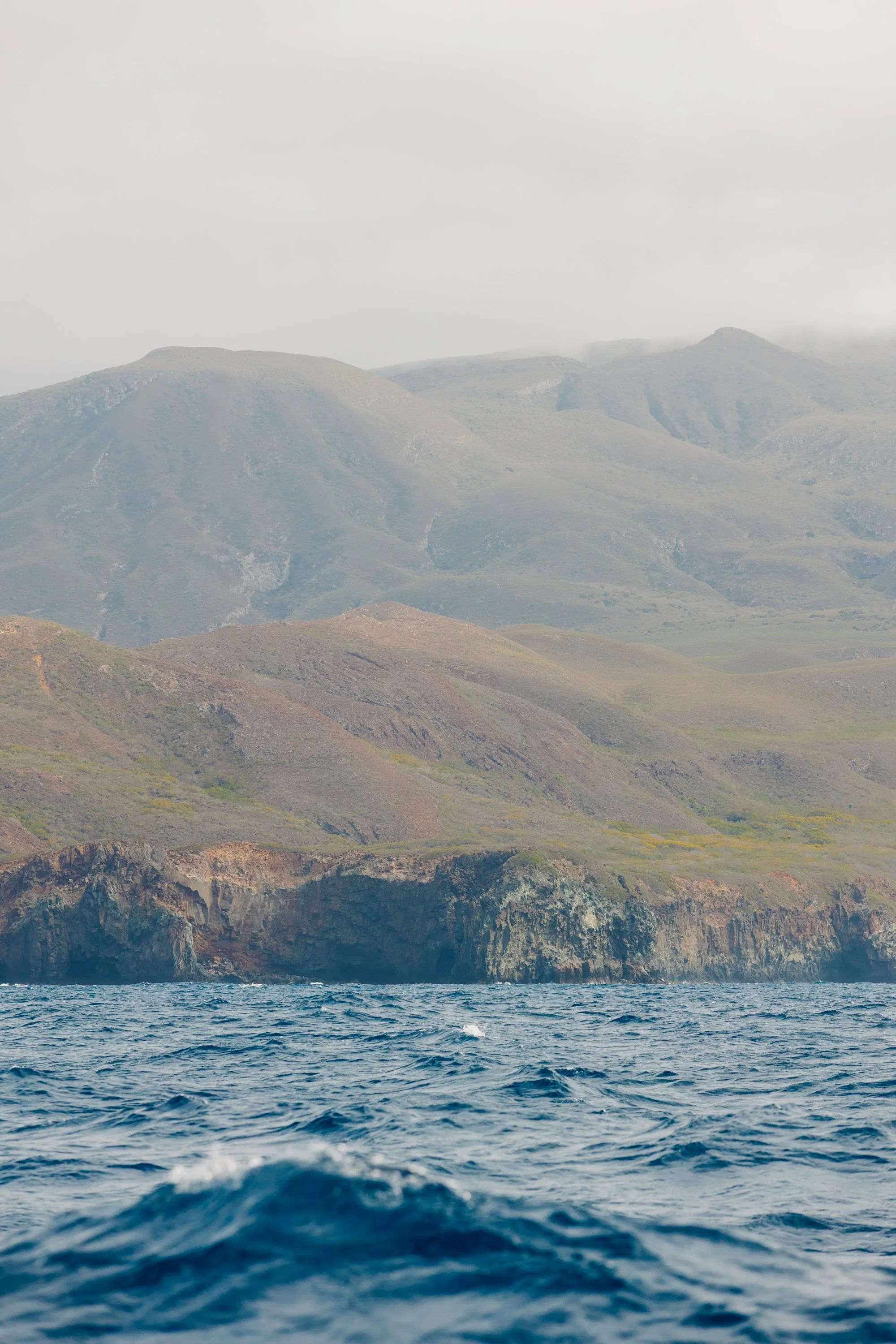
Isla Clarion, Revillagigedo Archipelago
Later that day we passed another island, Isla Clarion, before the sun disappeared, and with it went our last view of land. The wind steadied and Arcturus began making six or seven knots, occasionally touching eight. By the following noon we calculated that we had covered roughly 140 nautical miles in 24 hours.The farther offshore we traveled, the more extraordinary the Pacific became. The clouds seemed to grow larger and softer, and the water transformed into a shade of blue that felt almost impossible to describe. It appeared multidimensional, as though panes of blue glass had been layered endlessly beneath one another, every surface reflecting the same color into some immeasurable depth. We were now truly in the open ocean.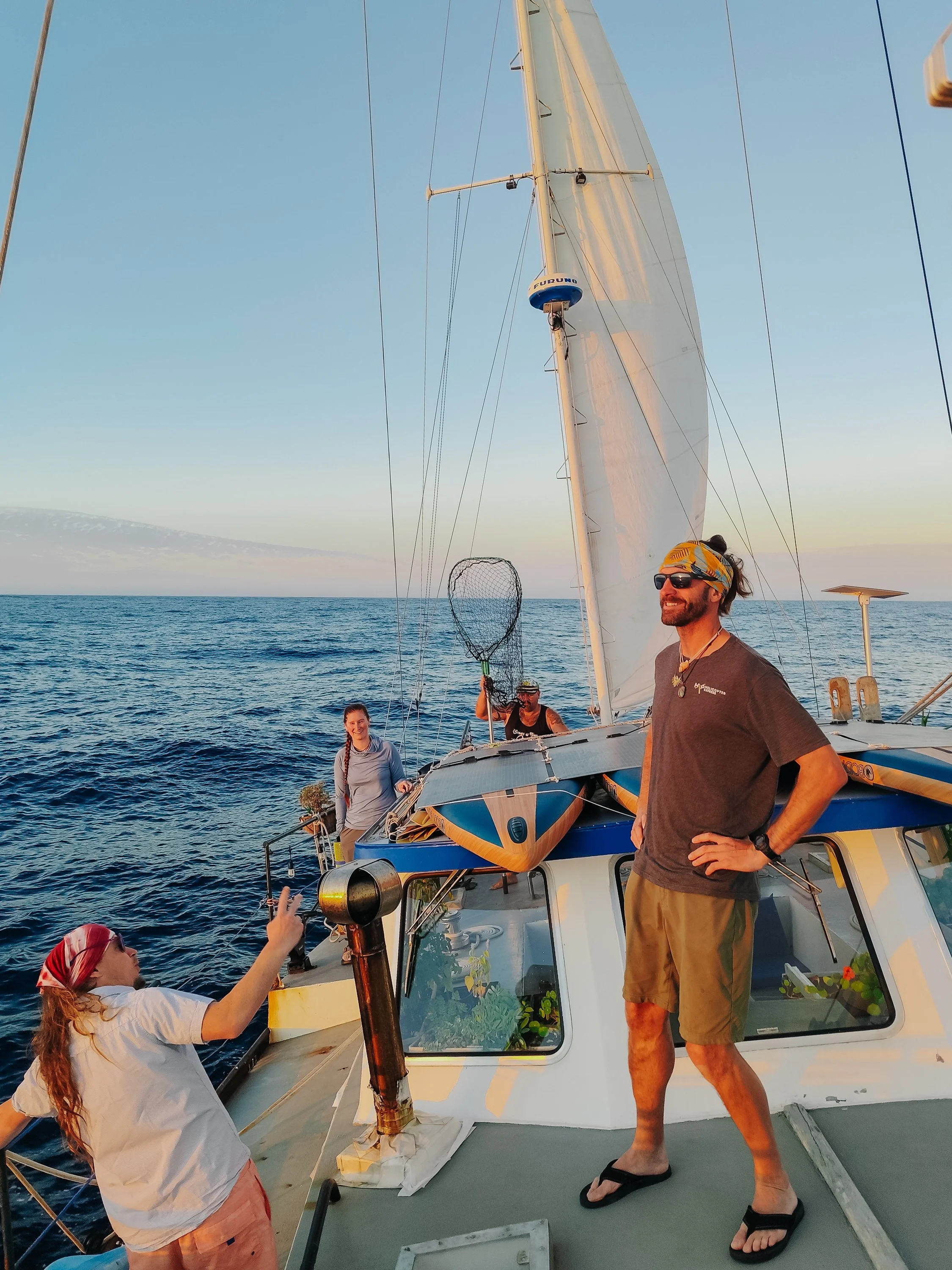
Sunset underway with the arcturus crew
When Light Wind Becomes the Enemy
Before the passage, I imagined that storms would be the most difficult part of crossing the Pacific. Instead, one of the greatest challenges came from something far less dramatic: not enough wind. Before we reached the Revillegigedo Archipelago, light wind combined with a rolling sea caused the sails to flog violently back and forth. It was loud, exhausting and surprisingly destructive. On our third day, while the wind briefly died away, the genoa backed against the mast, snagged on one of the mast steps and tore badly before we could get it down. We had been at sea for three days. Three.There was something deeply demoralizing about looking at our damaged primary foresail and considering the thousands of miles still ahead of us. Fortunately, Arcturus carried alternatives. We rigged a smaller foresail, pulled out our colorful old drifter for light-air conditions and began making plans for how a replacement sail might eventually reach us in French Polynesia with friends who were flying out to meet us.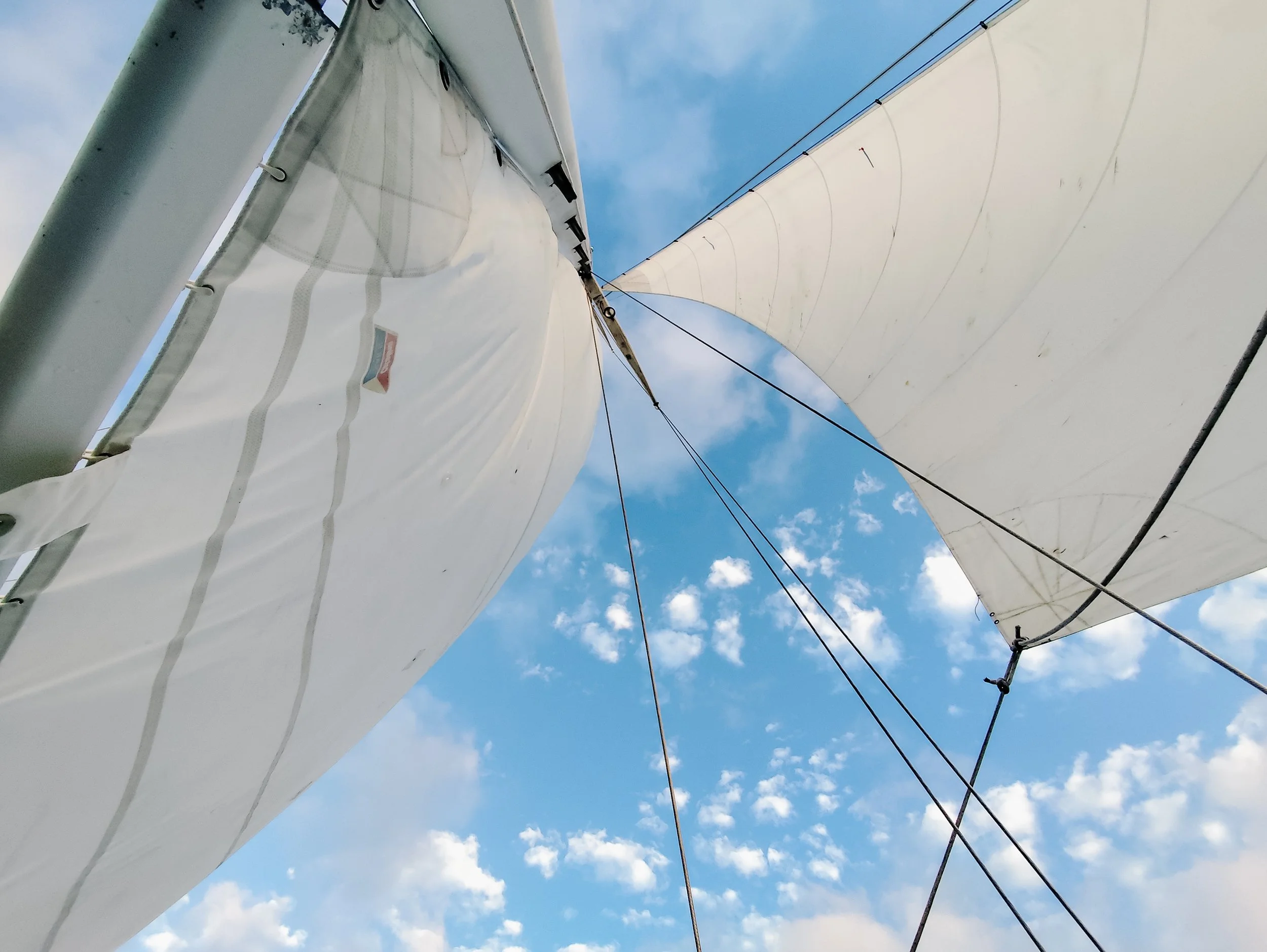
Arcturus under sail
A few days later, after saying goodbye to land (truly) for the last time for a few weeks, multiple sail slides on the mainsail broke overnight. It was enough accumulated damage that we began discussing the uncomfortable possibility of turning around. Louie and one of our friends calculated two hypothetical points on our route: the point at which we could still reasonably motor back toward Mexico if we somehow lost all sail power, and the point after which continuing west would make more sense.On paper, Arcturus theoretically holds considerably more diesel than we had ever actually filled the tanks with, never allowing the tanks to get below 550 gallons full even though she technically holds 900… so we based our calculations conservatively on the amount we knew we could rely upon. It was one of those strangely sobering exercises that makes an ocean feel even larger. Somewhere ahead lay a psychological threshold where the destination ceased to be somewhere we were heading and became simply the most logical land to continue toward.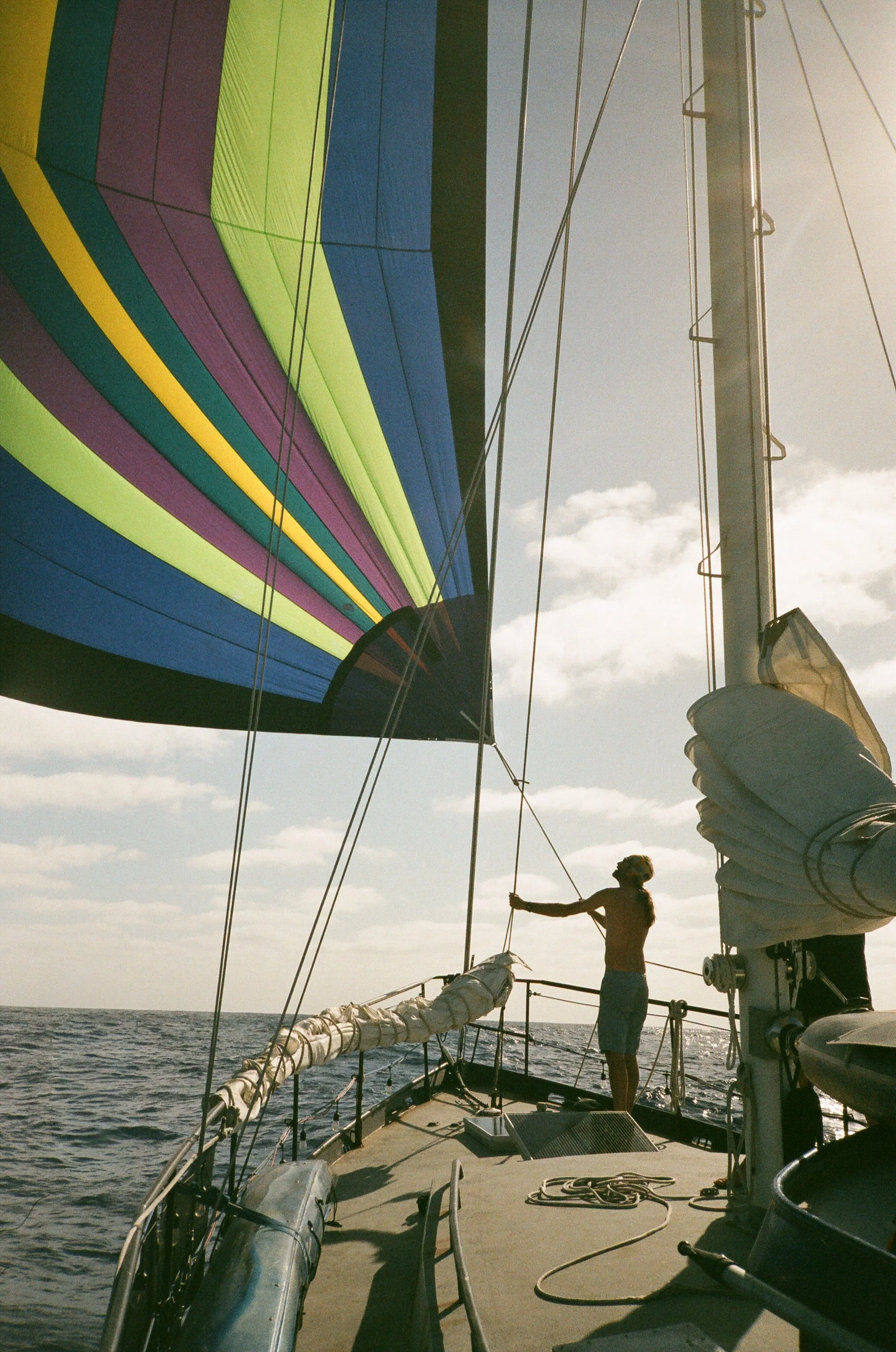
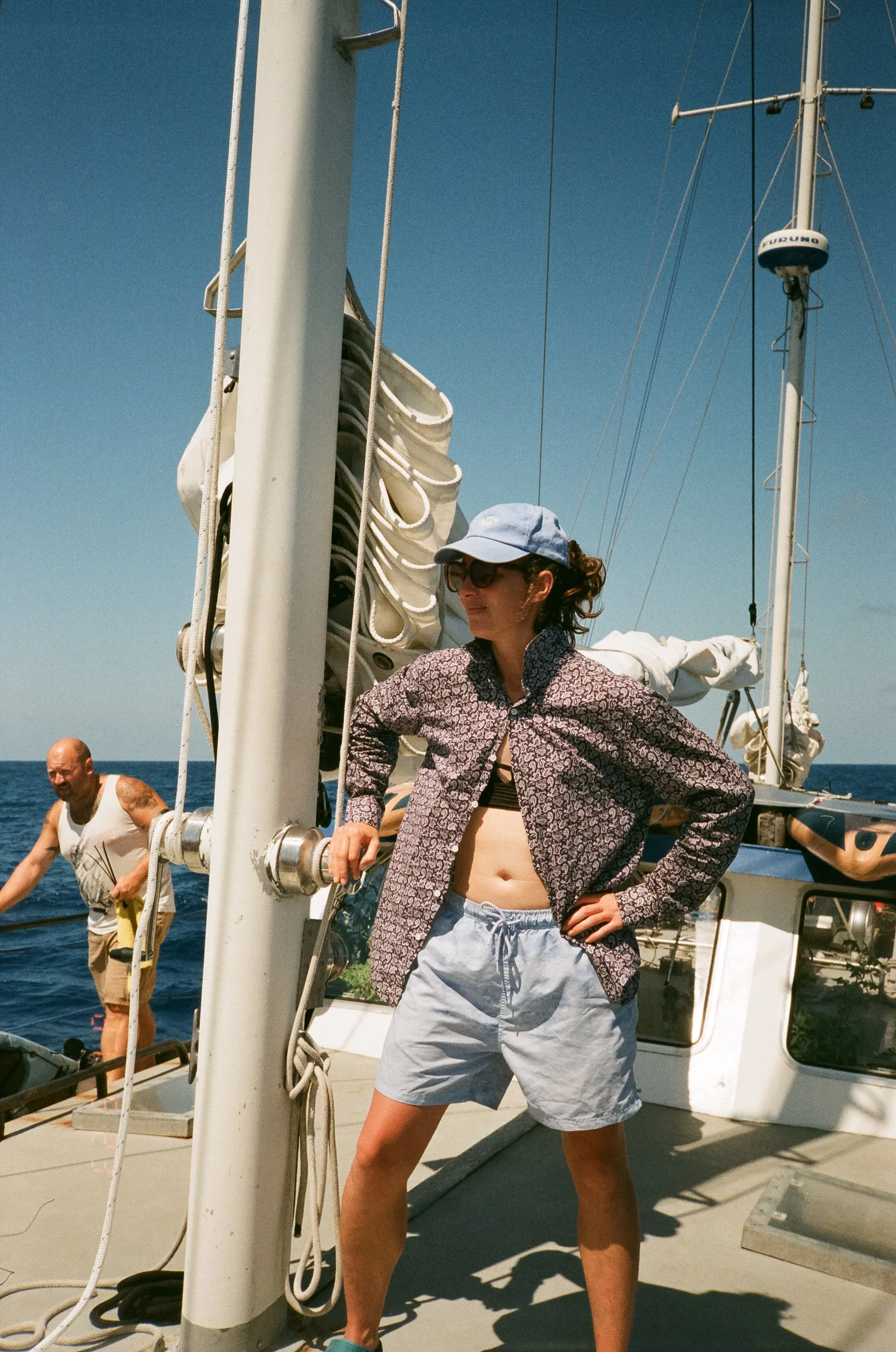
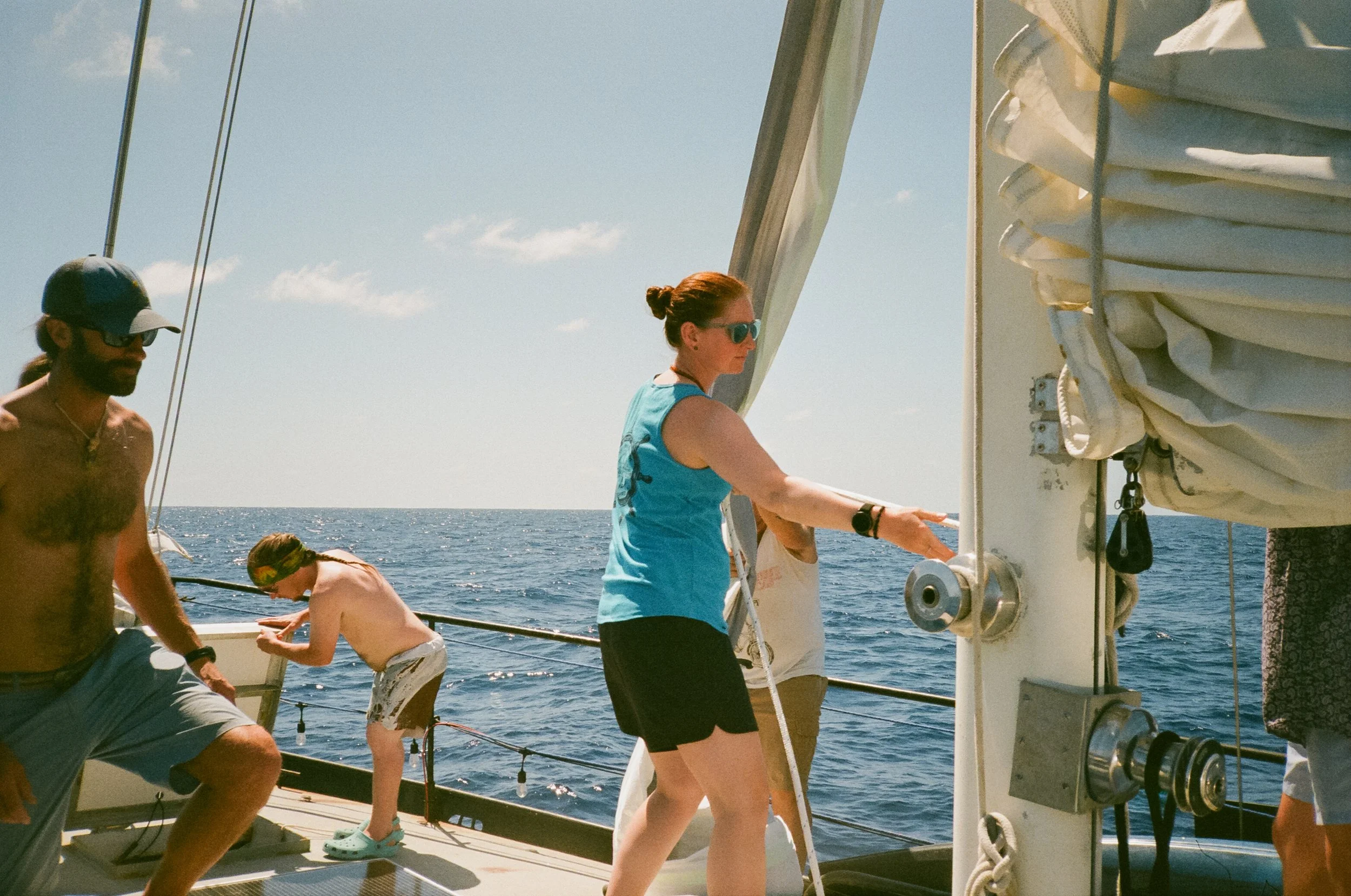
Arcturus crew making sail changes
Arcturus crew making sail changes
Arcturus crew making sail changes
Arcturus crew making sail changes
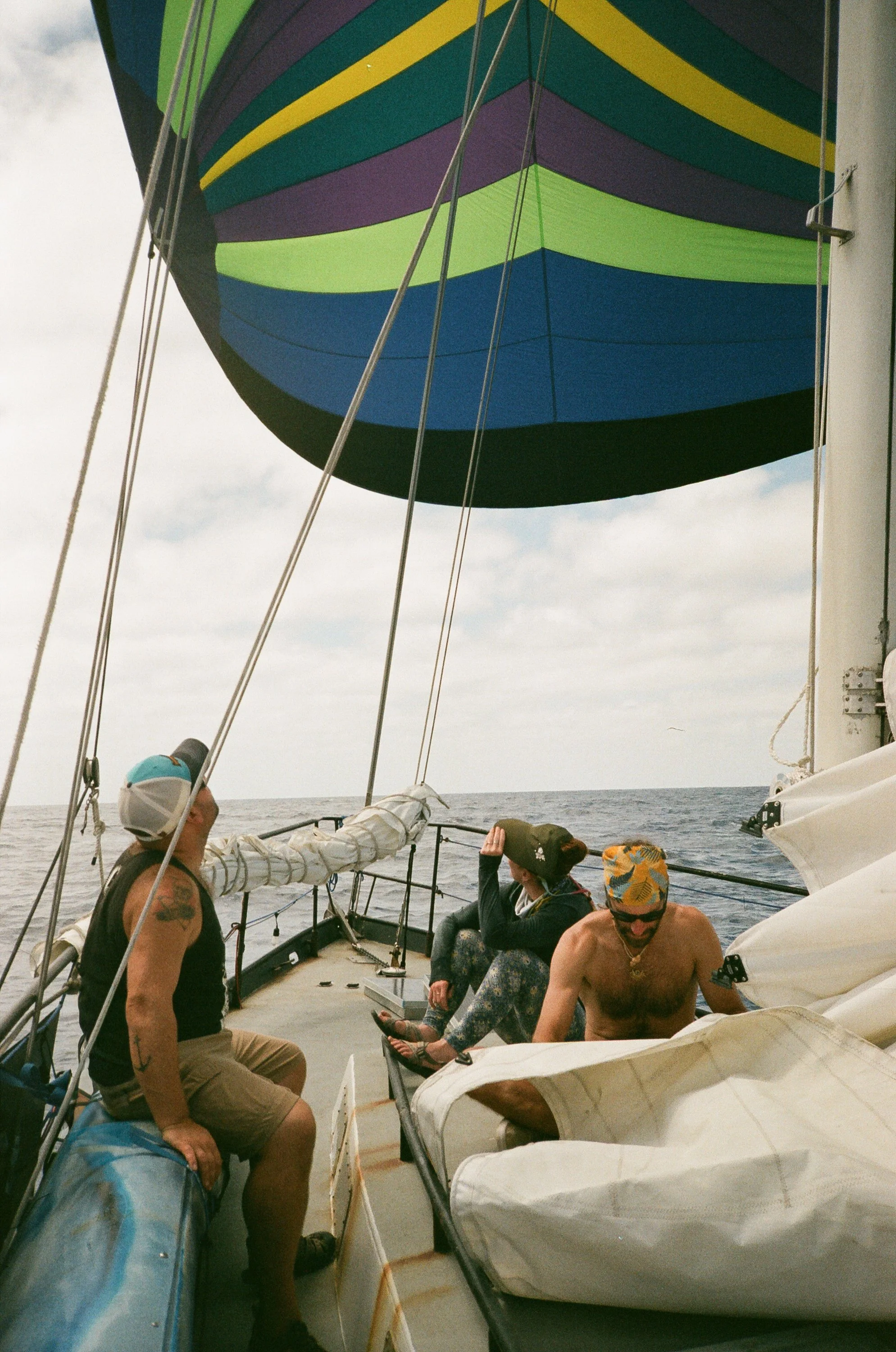
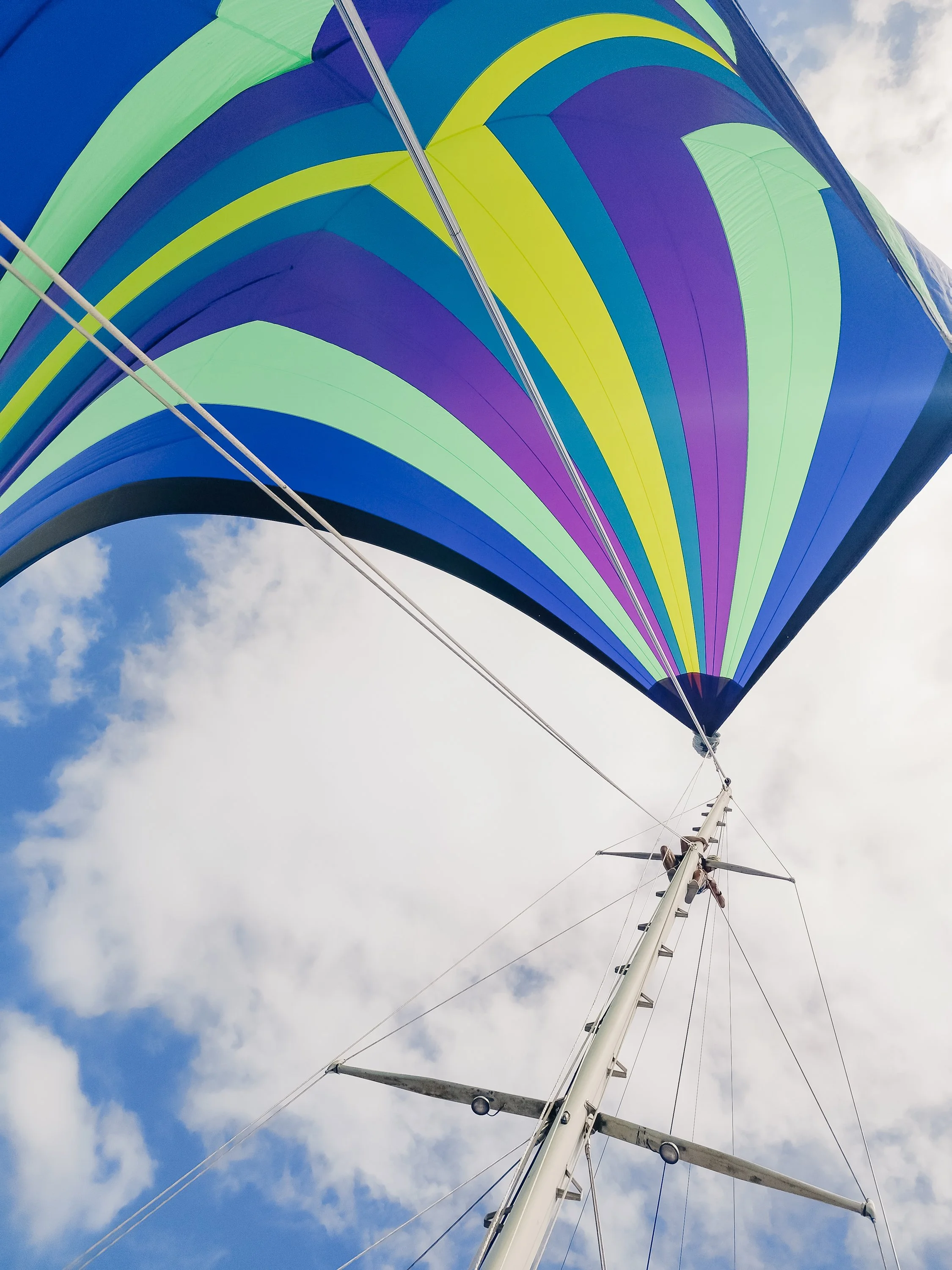
Fortunately, the problem proved solvable. We unearthed replacement sail slides from our inventory, repaired the main and continued west. Then we decided to try the spinnaker, a sail built for lightwind conditions. Our vintage spinnaker was gloriously colorful: deep blue, purple, turquoise, lime green and yellow, floating in front of Arcturus like an enormous festive kite. In light wind it was beautiful and remarkably effective. It was also delicate enough that everyone watched it with a slight sense of impending doom, constantly trimming and adjusting the sail while imagining the spectacular ways it might tear.At one point the spinnaker halyard snapped and sent the sail collapsing into the water, prompting a scramble to retrieve it and another trip up the mast in a harness to re-rig everything. A few days later Louie repaired a small tear in the foot of the sail while we were still sailing along at four knots. Every day seemed to teach us a new lesson, and there is perhaps no better environment for accelerated problem-solving than being hundreds of miles from anyone who can come fix something for you.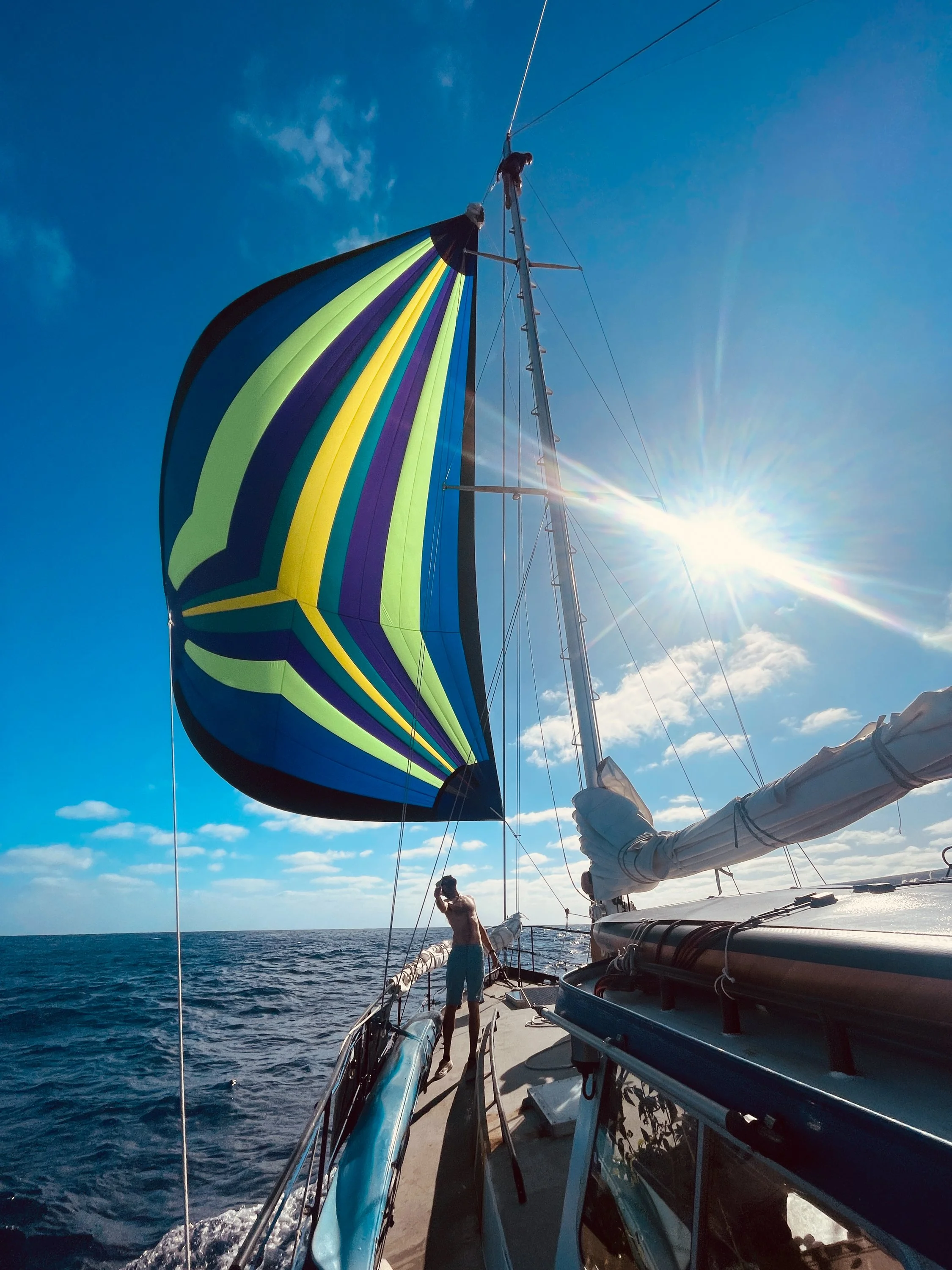
Arcturus crew making sail changes
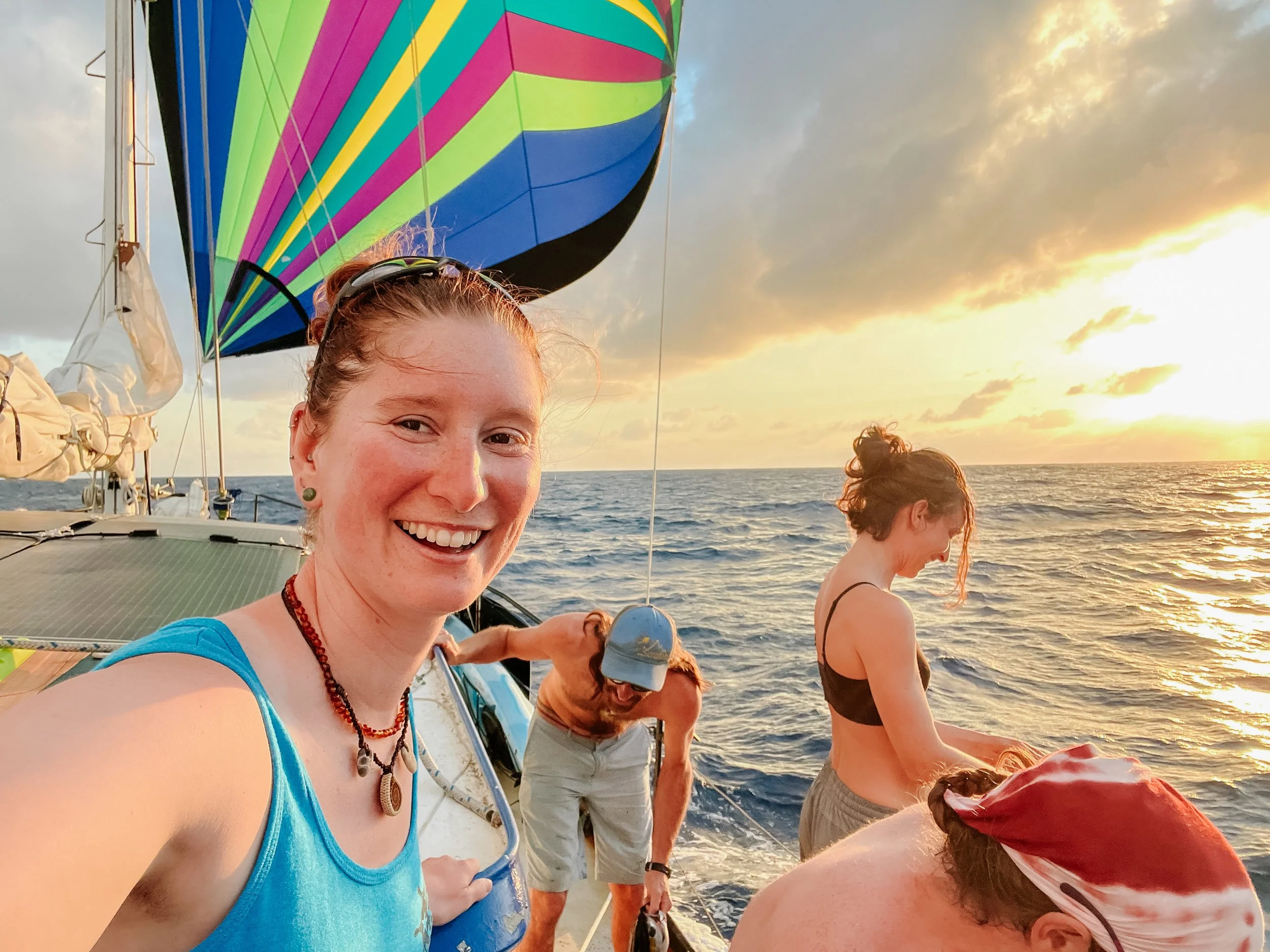
Sunset underway
A Small World within an Enormous One
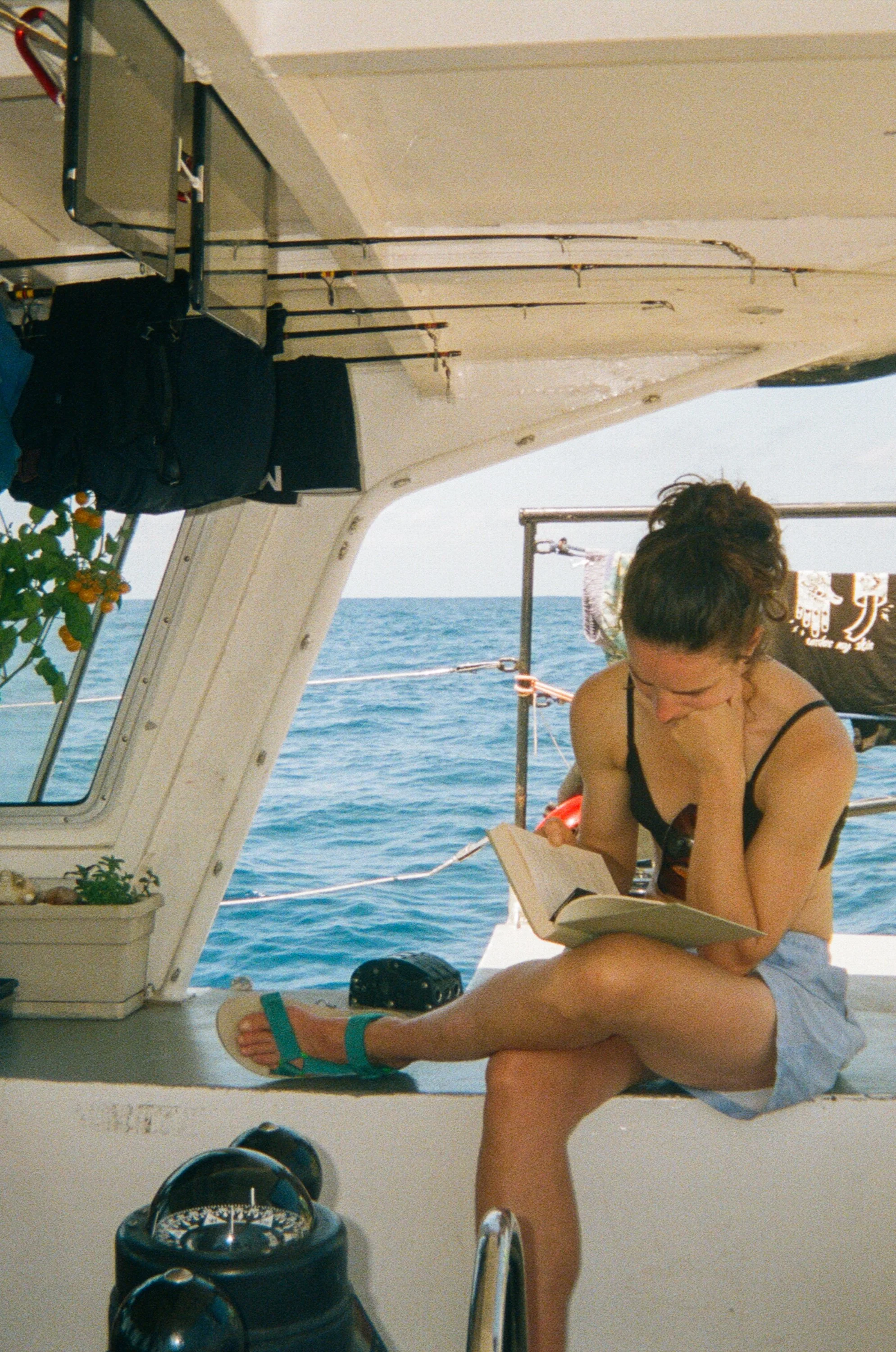
The heat intensified as we moved south. By the end of the first week, normal clothing had essentially disappeared and bathing suits became the unofficial uniform aboard. Productivity slowed dramatically in the middles of our days. Reading and naps became legitimate survival strategies, while exercise and projects increasingly shifted toward morning or evening.Yet for all the emptiness suggested by the vast horizon, the ocean was astonishingly alive. Flying fish began appearing on deck each morning, sometimes by the dozens. Boobies continued to circle the boat impossibly far from any visible land. Dolphins occasionally appeared at the bow. One morning a squid landed on deck, and later that same morning we discovered a small crab scurrying across the floor of the great room, leading to considerable debate about how a crab had materialized hundreds of miles offshore. Our best theory was that it had somehow been living inside one of the through-hulls and climbed up through the galley sink.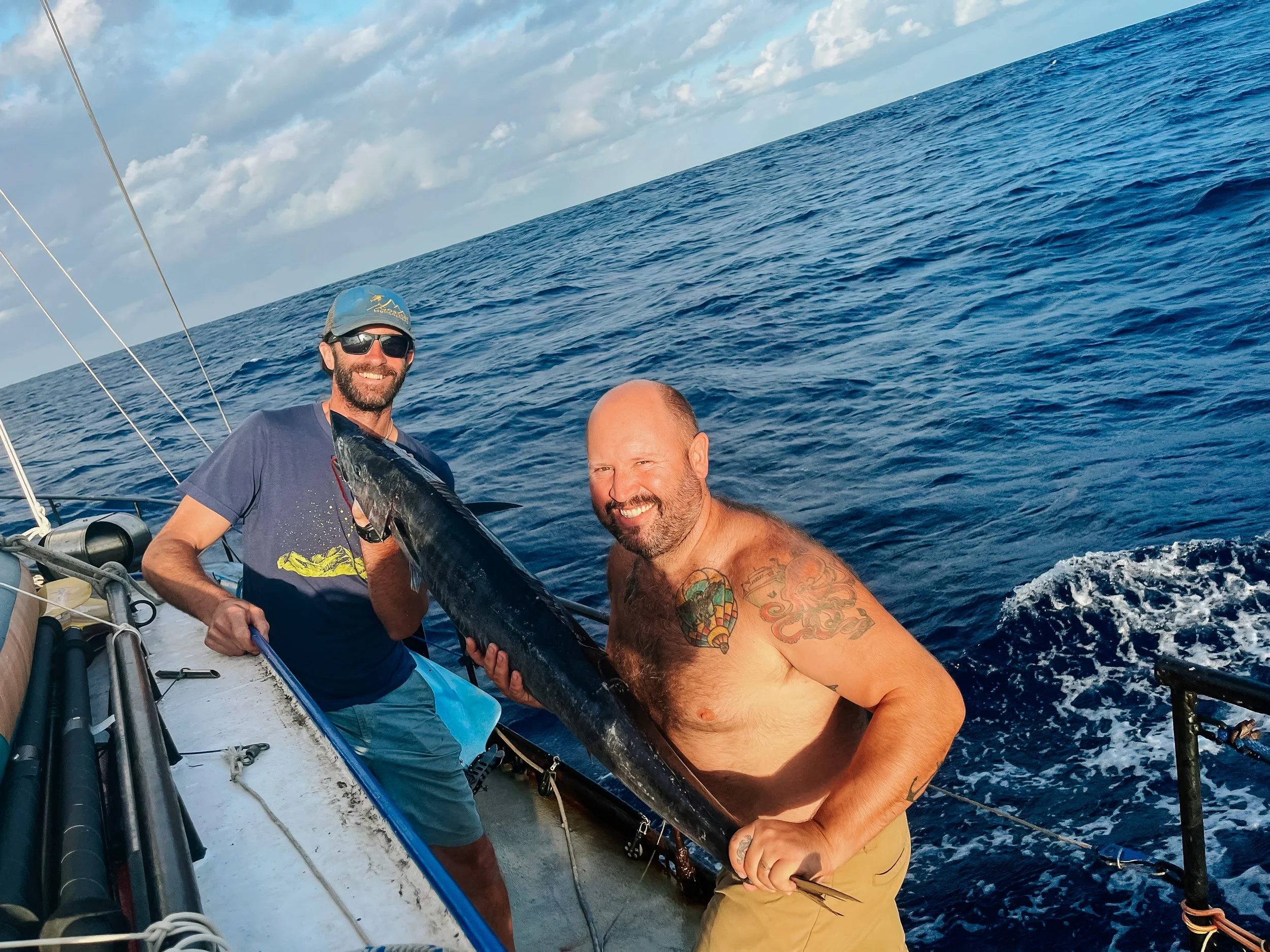
Arcturus crew fishing underway
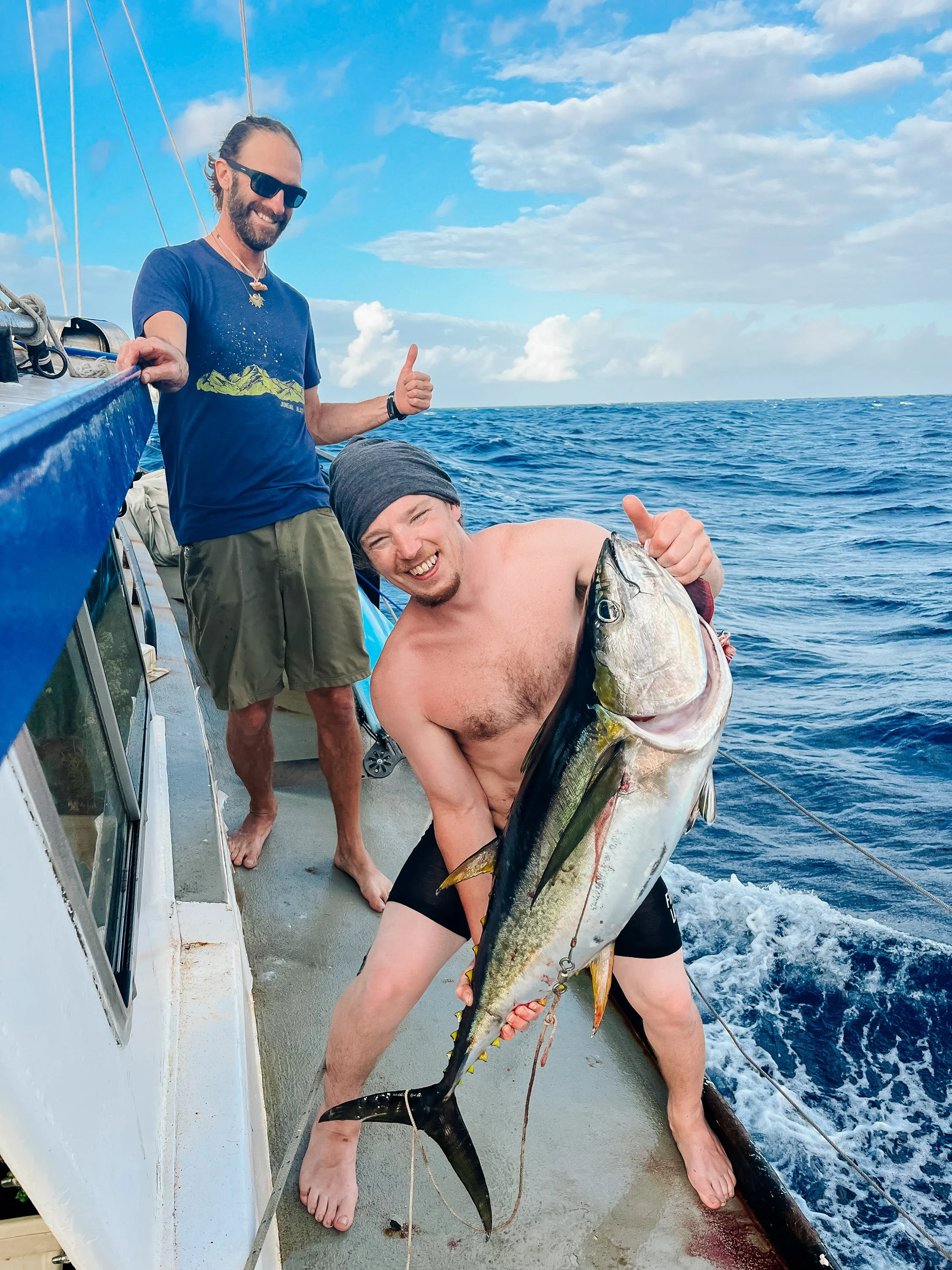
Arcturus crew fishing underway
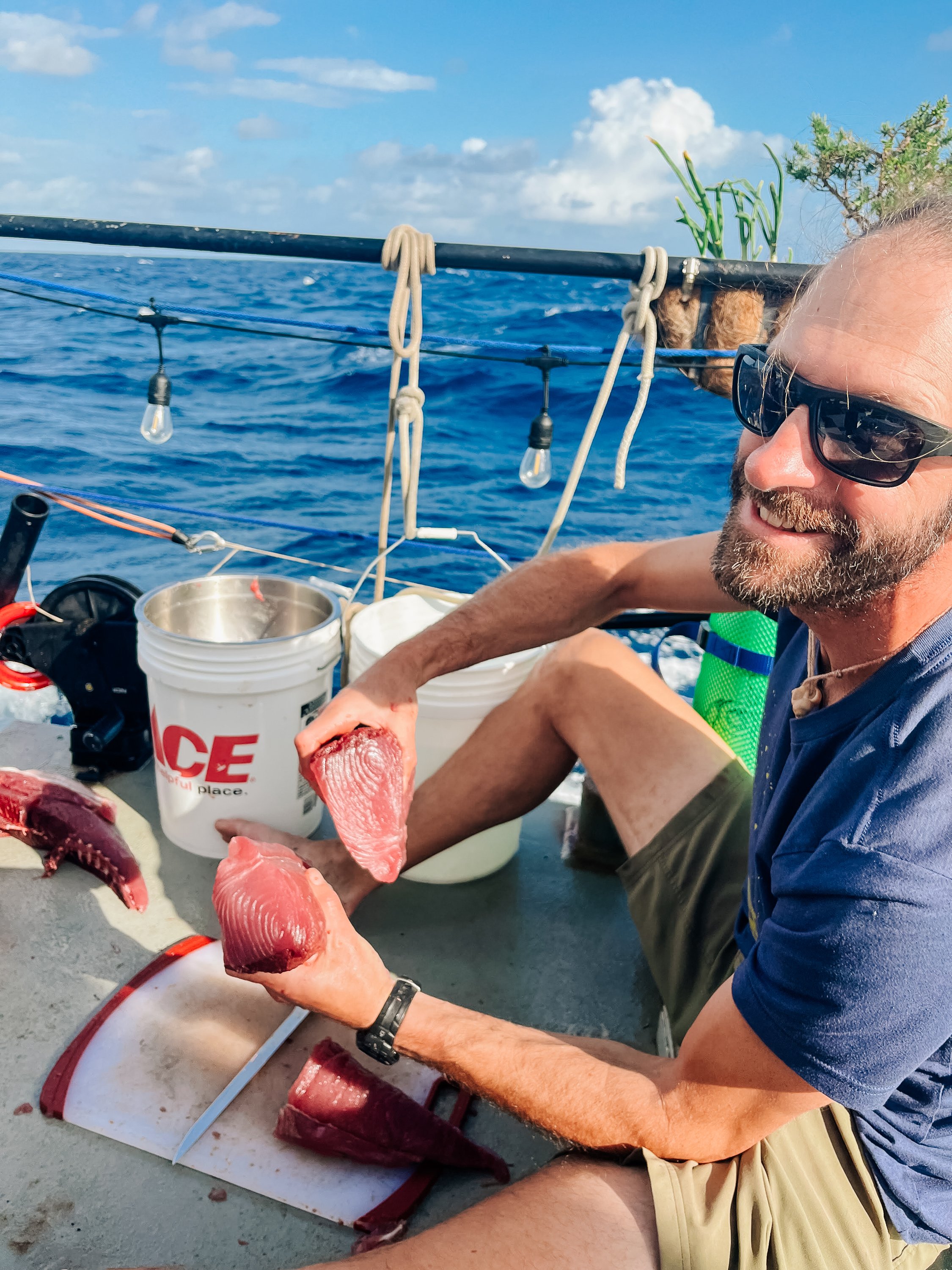
Arcturus crew fishing underway
Arcturus crew fishing underway
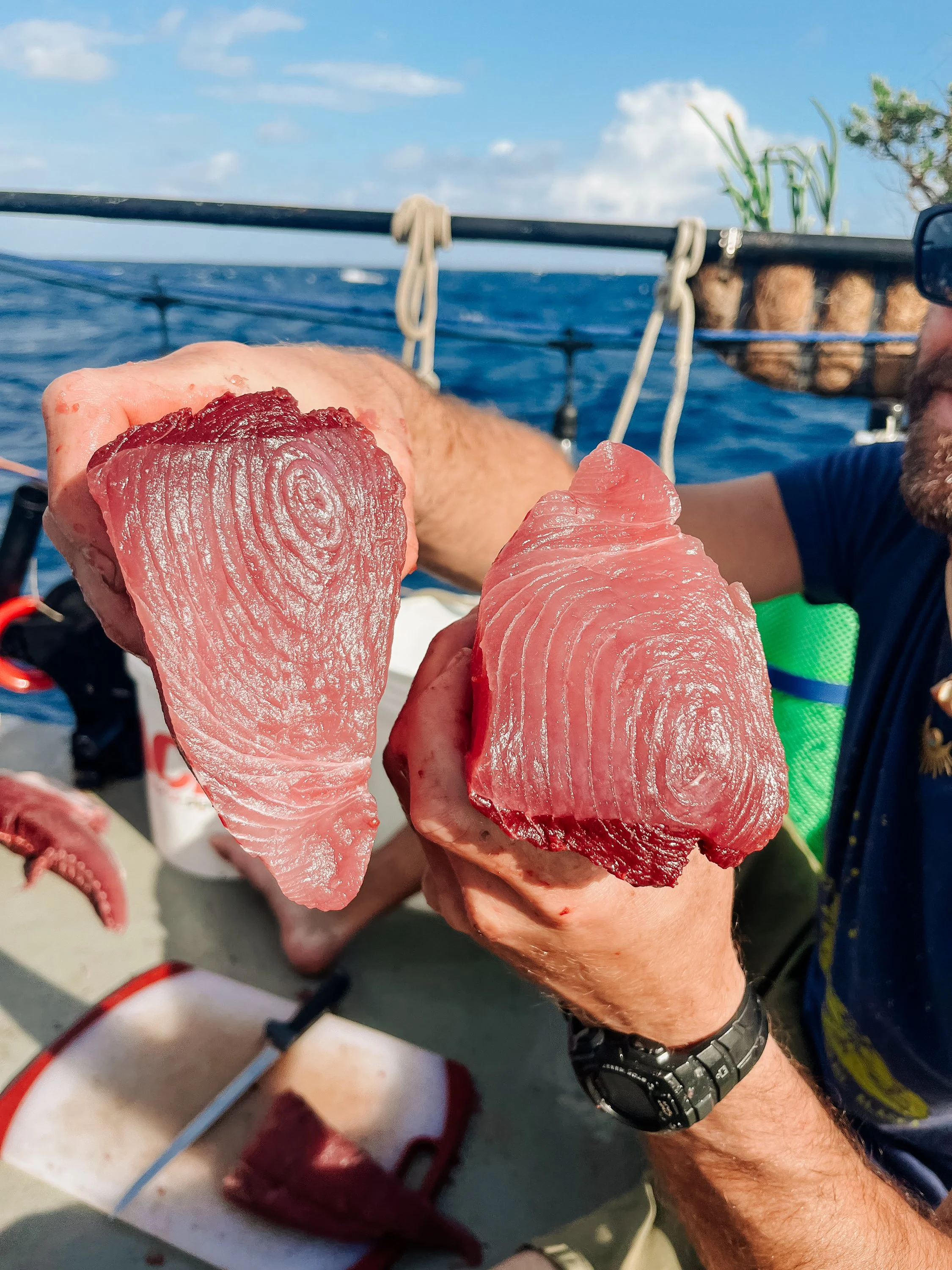
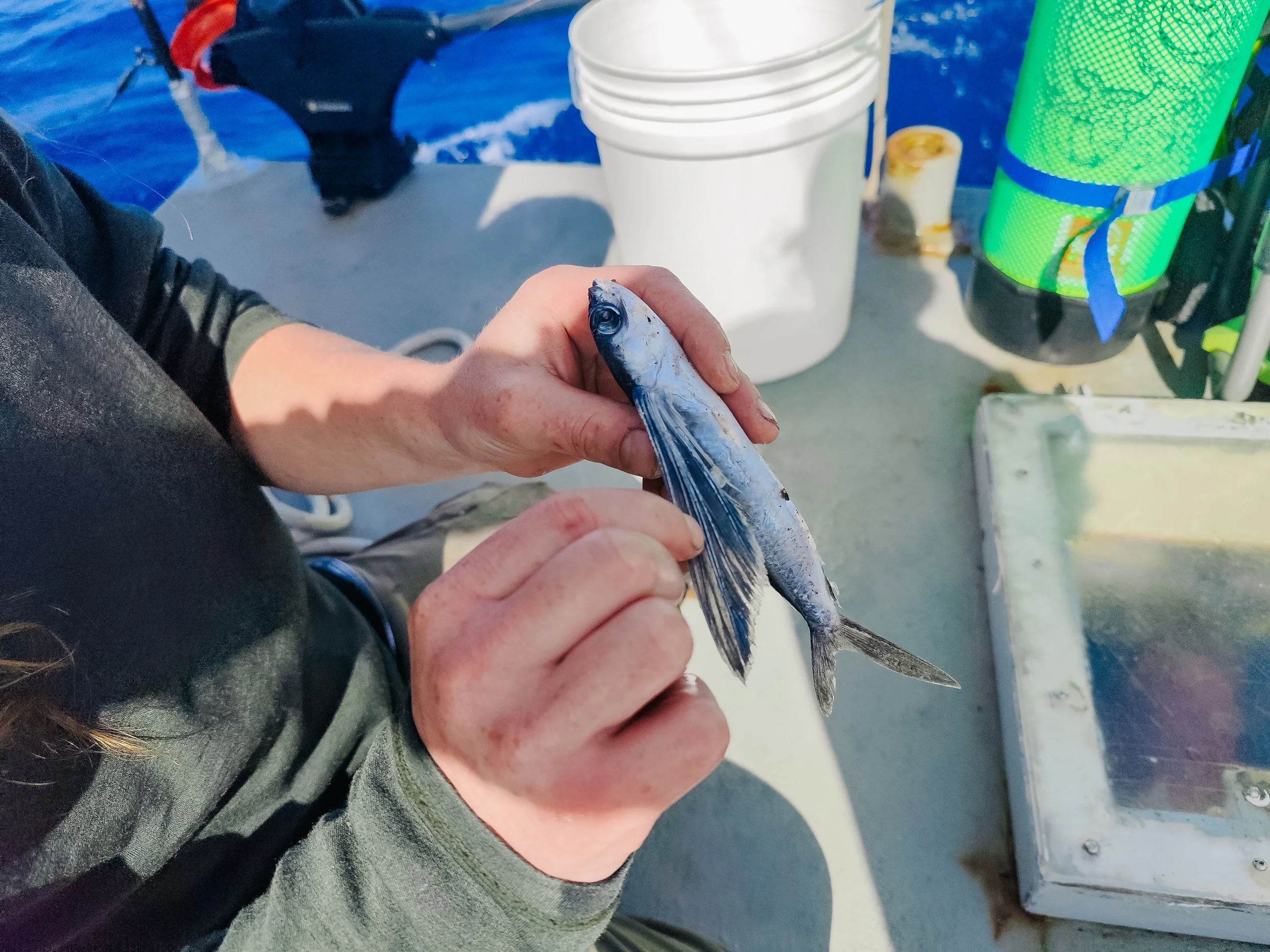
Food became a marker of time. On our first full day at sea we caught a yellowfin tuna and feasted on seared tuna steaks, poke and an Asian-style salad made from the last fresh greens from La Paz and sprouts grown aboard. Later there would be ceviche, tuna tacos, fresh fish with quinoa and an extraordinary amount of experimentation with whatever ingredients were available. When we eventually caught an enormous tuna that produced far more meat than six people could reasonably consume fresh, we seasoned portions and canned them in the pressure cooker, half with jalapeño and olive oil and the remainder with a sweet-and-spicy ginger mixture.Fishing supplied both meals and comedy. We caught several tuna, a large wahoo and dorado, releasing the smaller fish and keeping enough to provide some of the freshest seafood imaginable. One afternoon, while the crew below was preparing ceviche, a flying fish launched itself directly through an open hatch and landed squarely on the cutting board in front of someone chopping onions. From the deck I heard an eruption of yelling and laughter. Down below stood our crewmate, simultaneously stunned by the airborne fish and crying from the onions that she had just chopped up on the cutting board.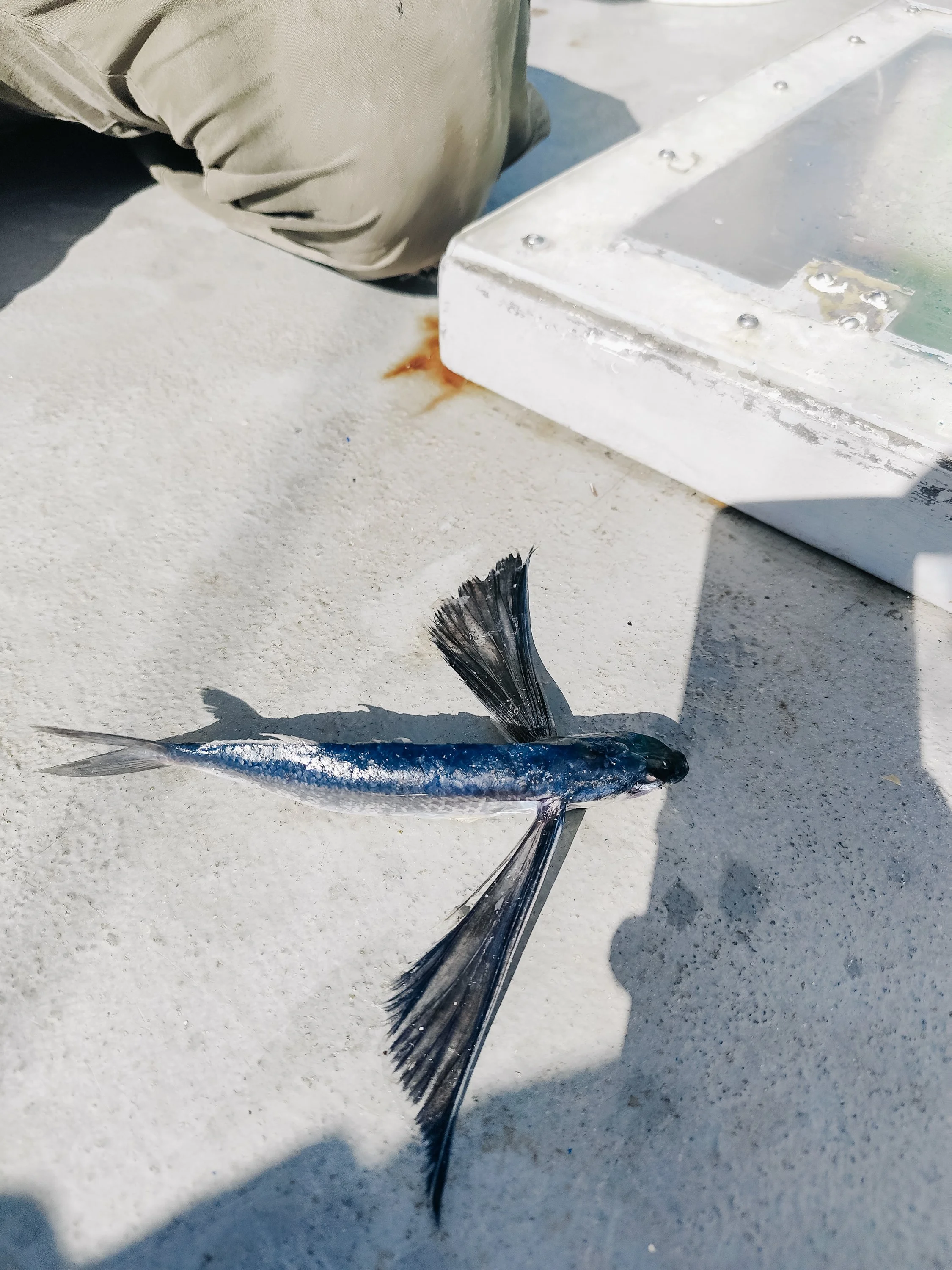
Flying Fish
Arcturus undersail
Flying Fish
By the two-week mark, one particularly productive night had deposited at least 27 flying fish across the deck. We developed a new and entirely reasonable fear that one might eventually enter through an open hatch and land in someone’s bunk. The stench of them is something we will not miss.The days began blending into one another. Books circulated around the boat. Robin Lee Graham’s Dove was passed from person to person until five of the six of us had read it by the end of the crossing. On St. Patrick’s Day, lacking any Irish music in our downloaded collection, we spent a rainy afternoon listening to sea shanties instead. We watered the plants, we grew sprouts, we plotted our position on the chart, we napped. We played various card games (cribbage was played almost on a daily basis, though I myself never learned to play it). Life became very small and, simultaneously, incomprehensibly vast.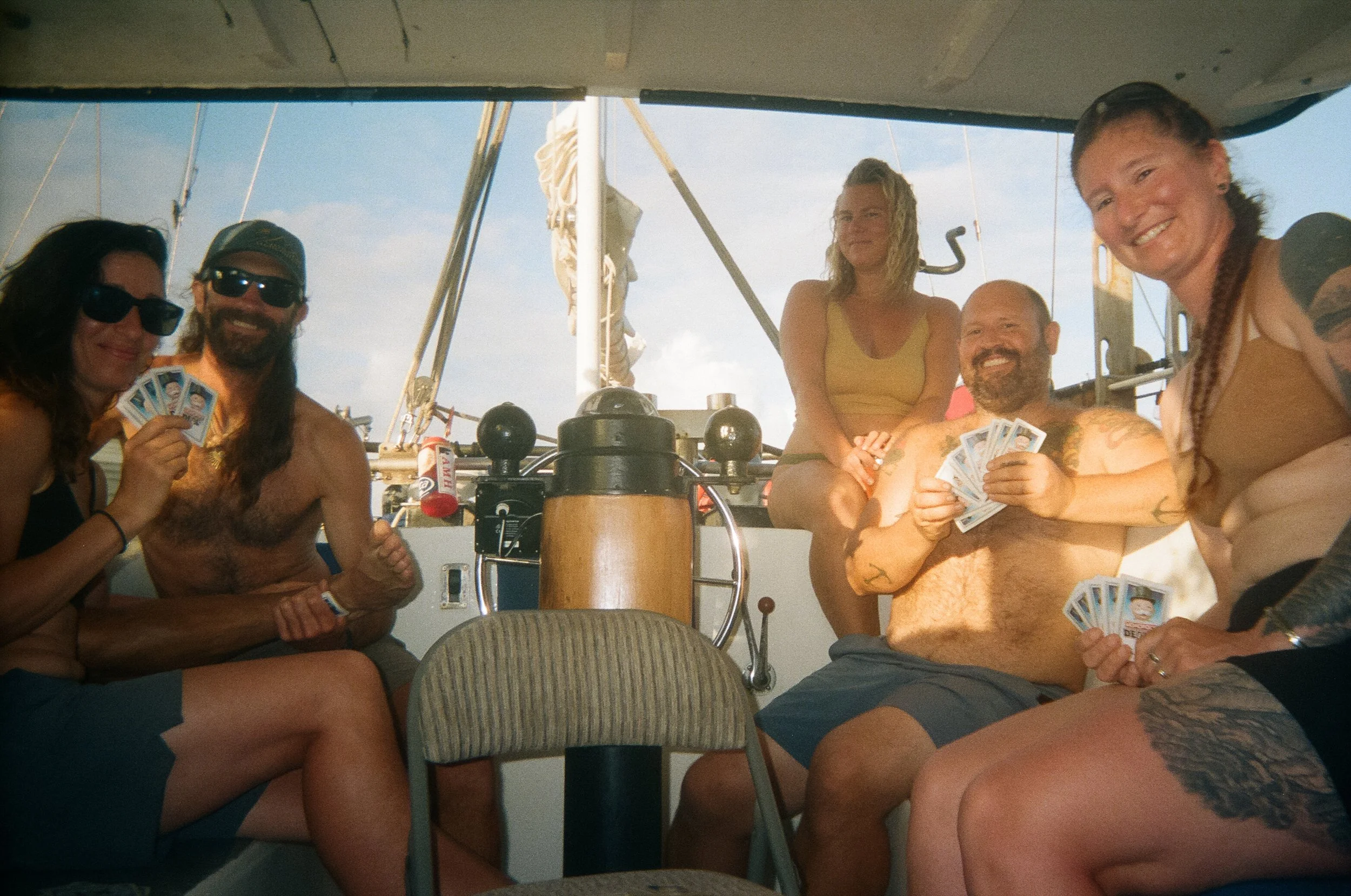
Arcturus Crew Playing Games
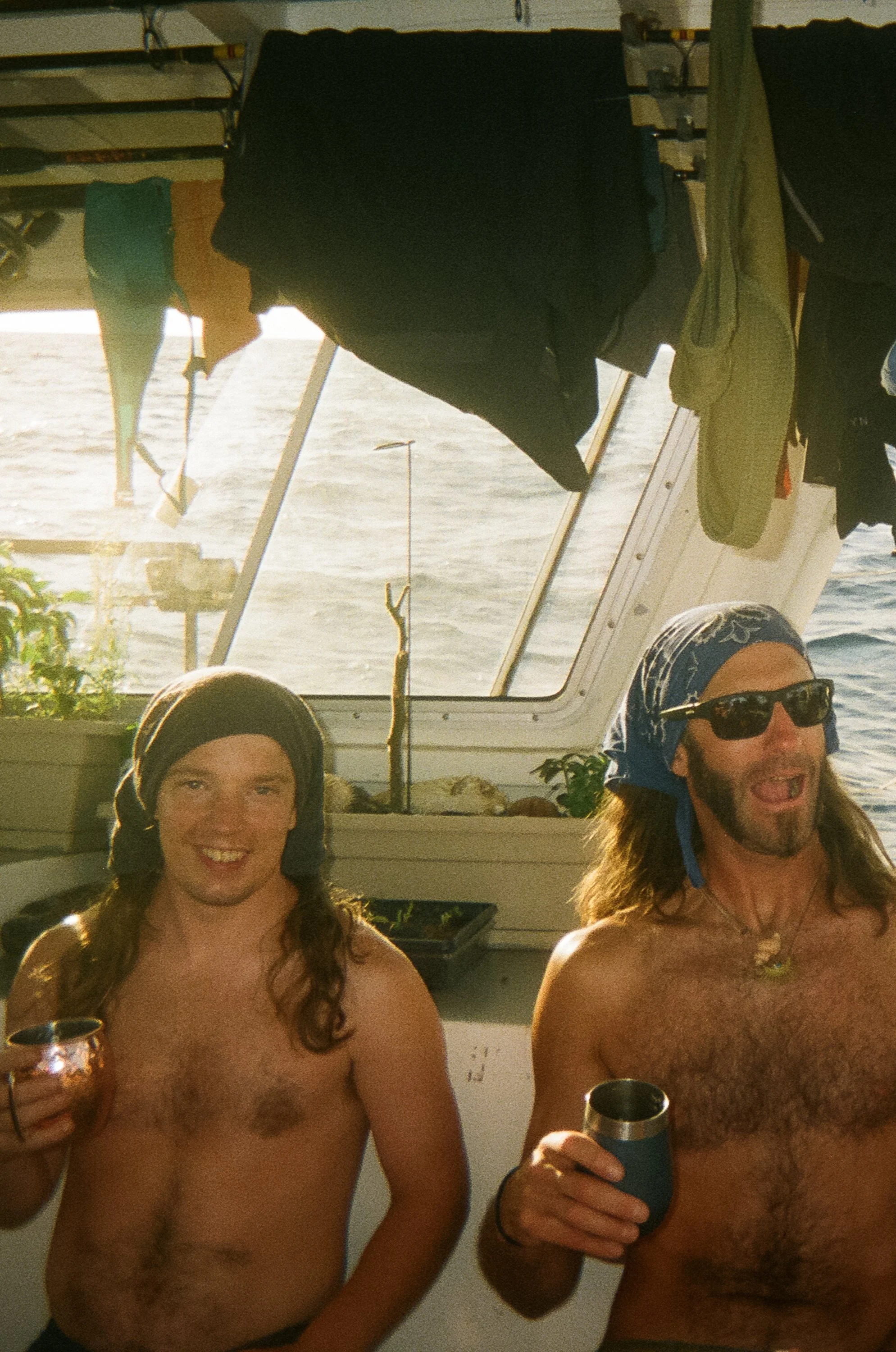
Sunset happy hour on laundry day
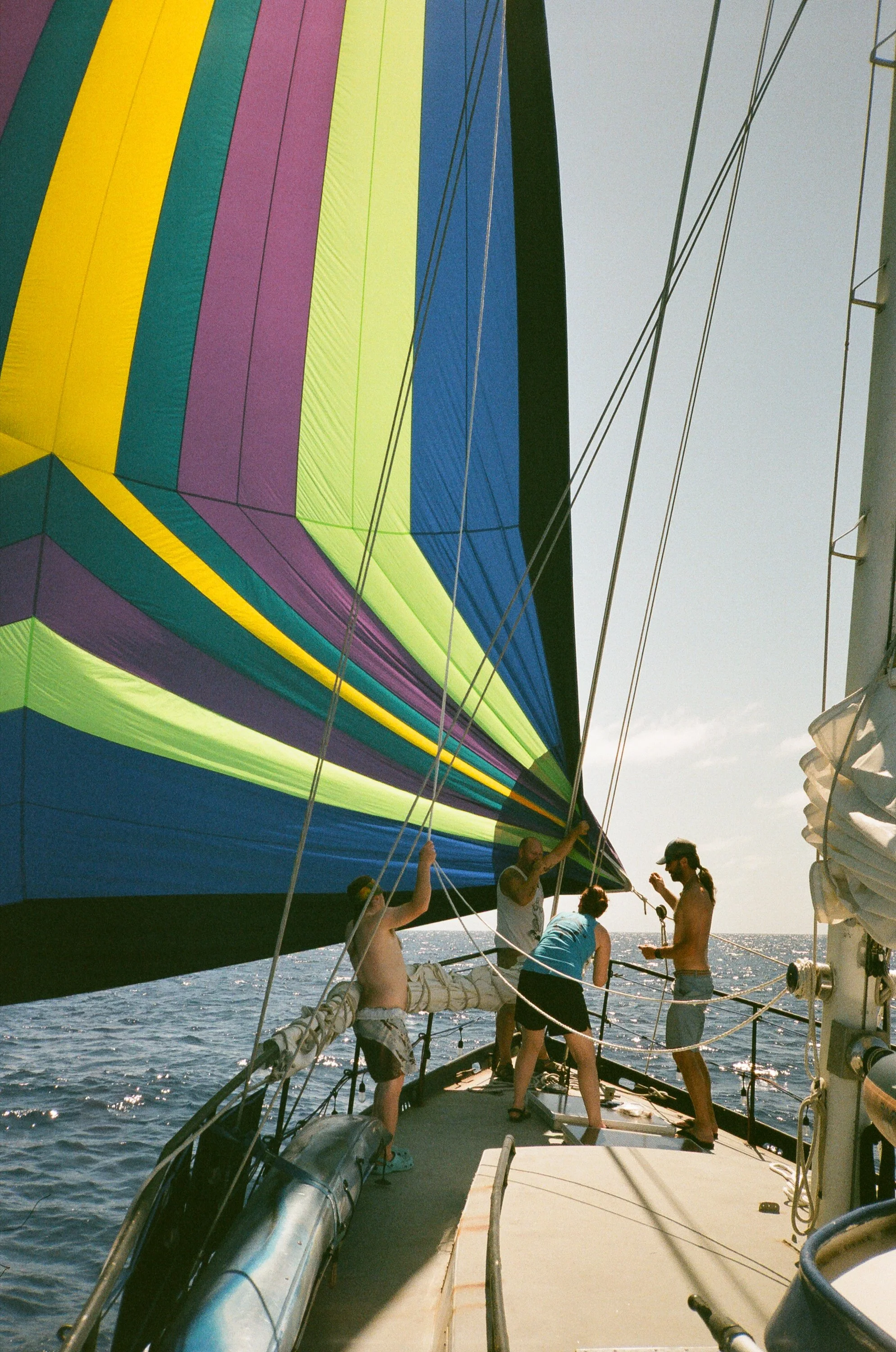
Arcturus crew making sail changes
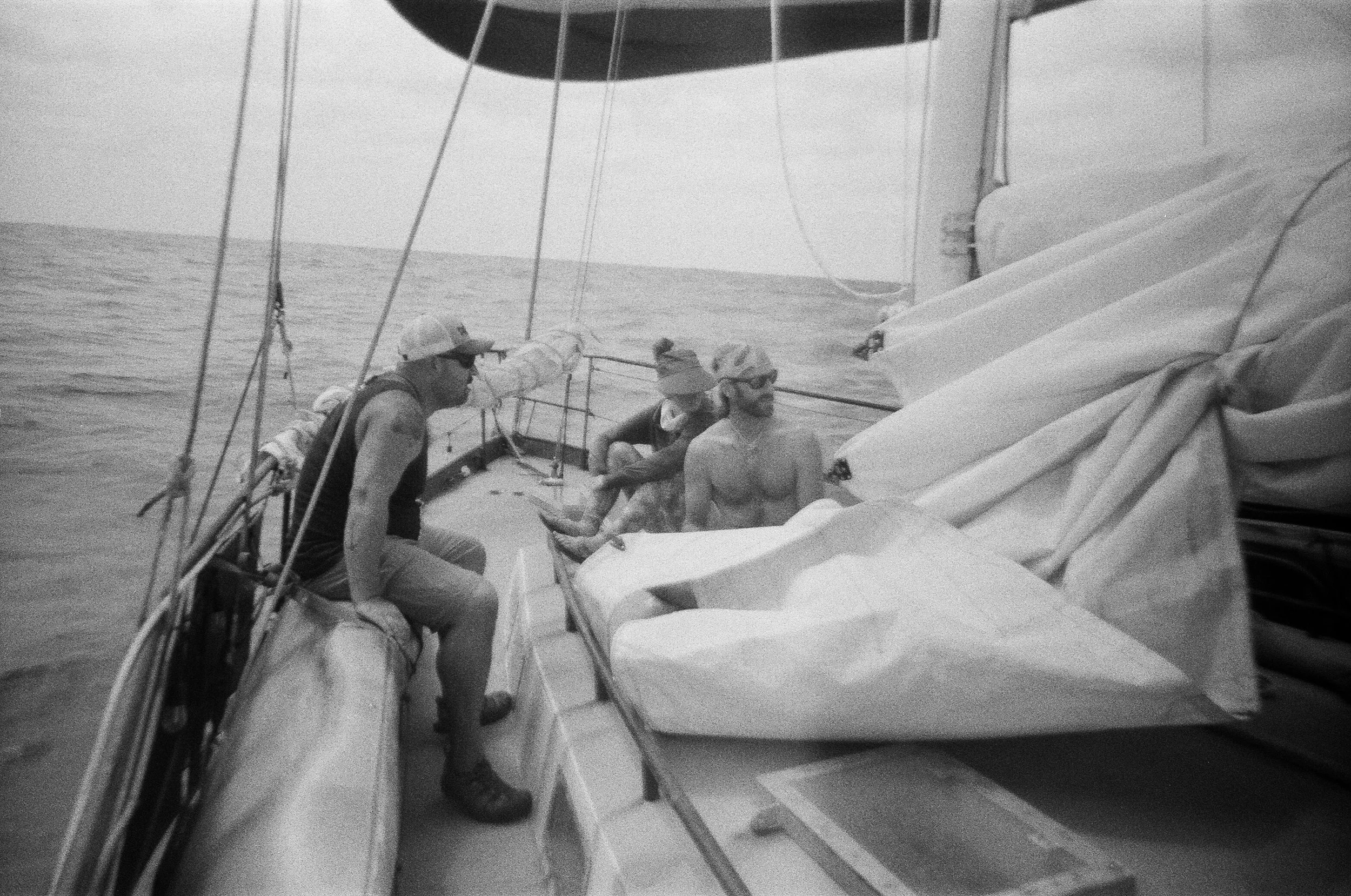
Arcturus crew making sail changes
A Blood Moon in the Middle of the Pacific
Ten days into the crossing, we were roughly 1,000 nautical miles offshore from Cabo San Lucas. It also happened to be the day I officially crossed another personal milestone: somewhere during the previous couple of years, I had now sailed more than 10,000 nautical miles. And that night, March 13, 2025, a total lunar eclipse unfolded above us.I had been waiting for it throughout the passage and deliberately slept during part of the day so I could stay awake for the entire event. At 10:09 p.m., the Earth’s shadow began slowly creeping across the moon. By 11:26, totality was approaching, and I woke the rest of the crew so everyone could come on deck to see it. One by one, they emerged from their bunks, watched for a while, and eventually disappeared back below.I stayed outside for my watch, which I had intentionally chosen so I could watch the duration of the eclipse. As the moon darkened into a deep rusty red, the sky around it seemed to deepen. Stars emerged where the moonlight had previously washed them away. Behind Arcturus, bioluminescence glimmered in the wake. I listened to music and watched the eclipse progress from beginning to end, suspended between an empty horizon and an enormous night sky.Out there, life aboard often felt strangely interstellar. With no land, buildings, vehicles or fixed points of reference anywhere around us, Arcturus felt less like a boat and more like a slow-moving spaceship. The ocean became our version of deep space. Constellations shifted above us, sunrise and sunset passed in opposite directions, and the horizon remained perfectly circular no matter how many miles we traveled. But seeing a total lunar eclipse in the middle of the ocean, thousands of miles from land? It was one of the most surreal nights of my life.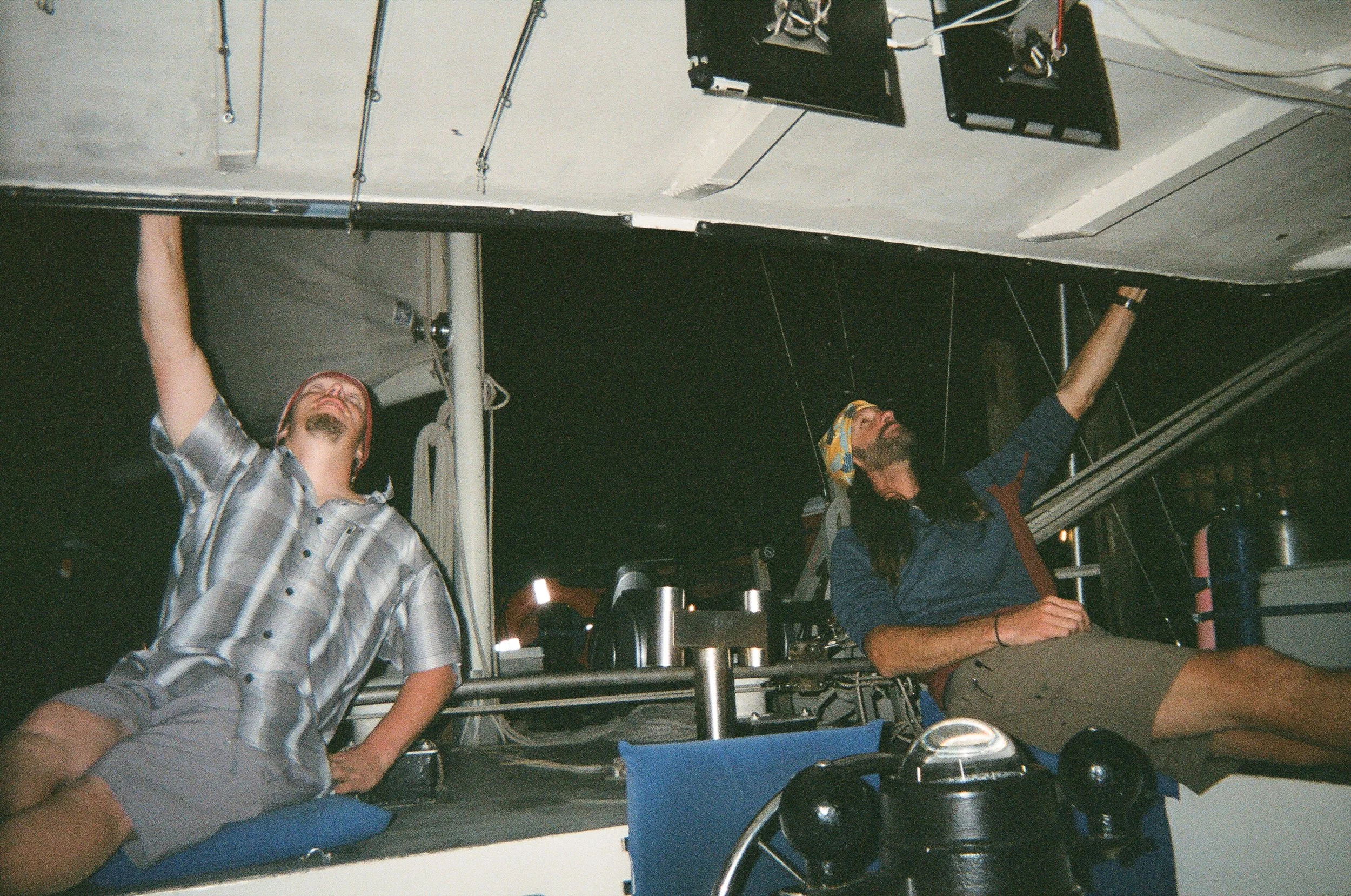
Arcturus Crew on night watch
Into the Doldrums
As we continued south toward the equator, the character of the weather began changing. Squalls became increasingly frequent. They provided brief relief from the oppressive heat, but also meant repeatedly racing around the boat to close hatches before rain poured inside. Once everything was sealed shut, the cabin rapidly transformed into something resembling a sauna.When particularly heavy tropical rain arrived, however, we embraced it. Louie began calling the downpours “bellywashers,” announcing them in a booming voice from above deck, and before long we were running onto the deck with soap and shampoo, taking full showers beneath the rain. Fresh water falling freely from the sky felt almost decadent after days of heat and salt.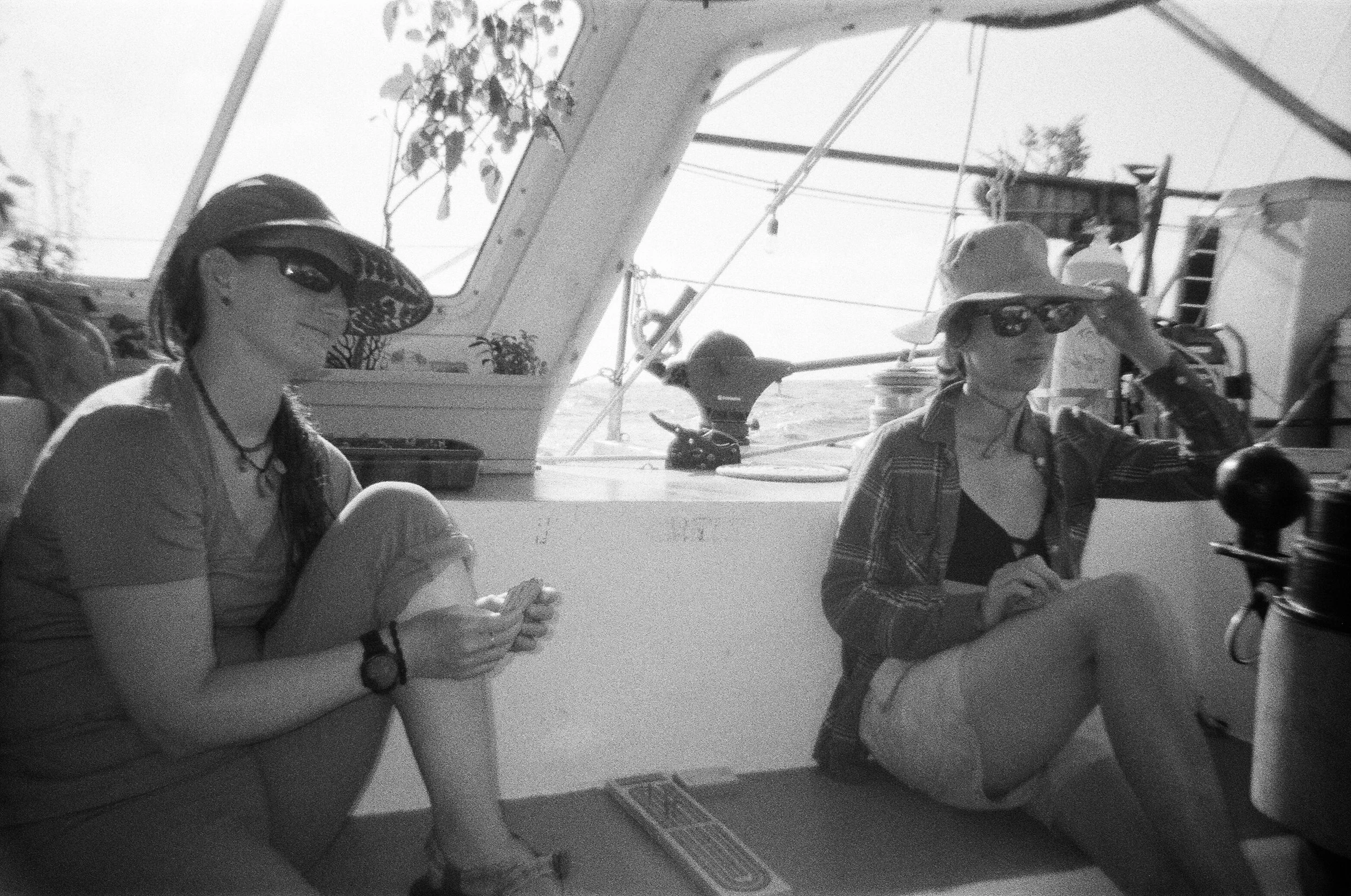
Arcturus Crew Playing Games
Motoring through the doldrums
Motoring through the doldrums
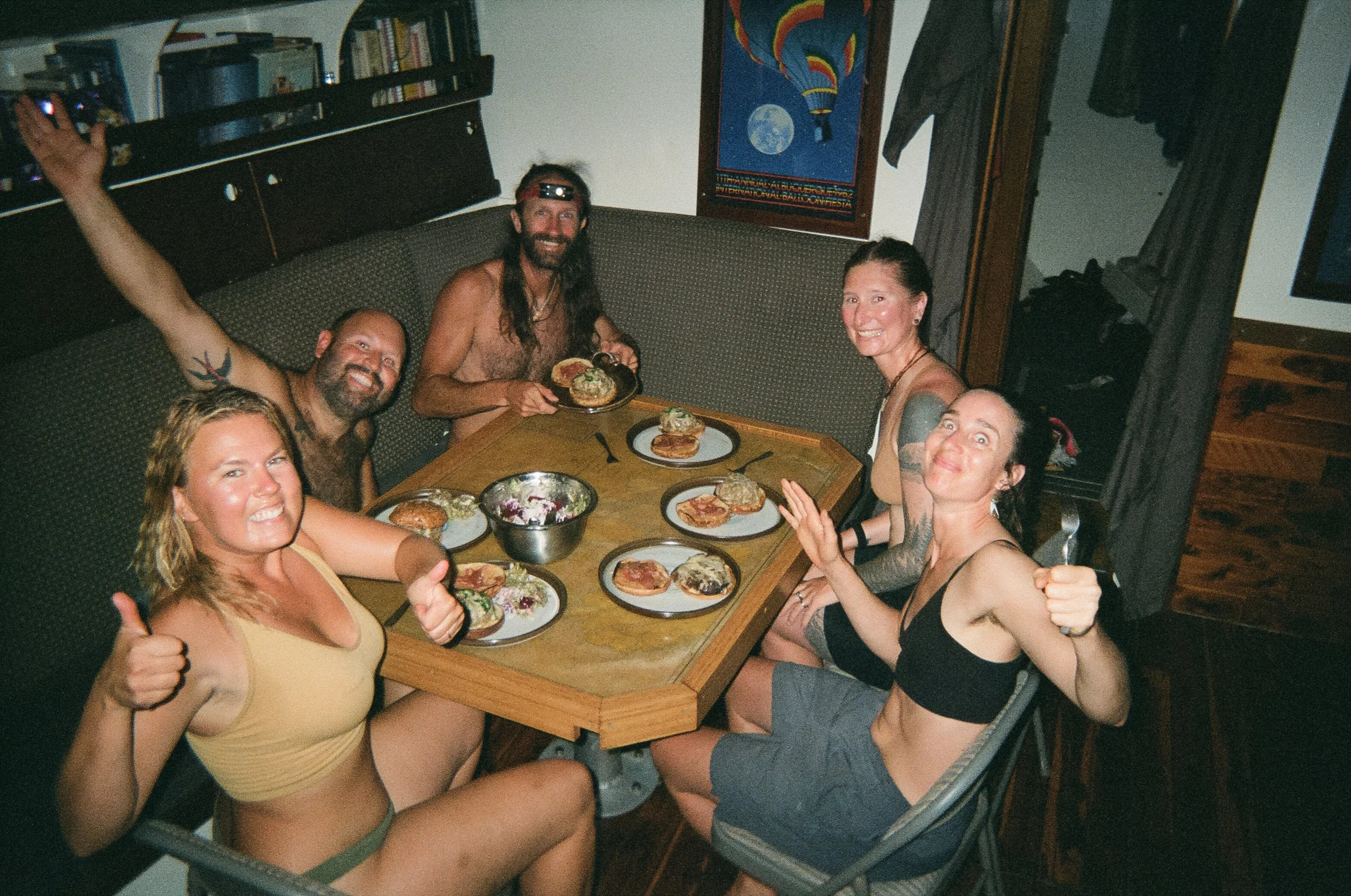
Dinner aboard Arcturus
Then the wind disappeared almost completely. We had entered the region of light, variable winds around the equator commonly associated with the doldrums. For several days, Arcturus motored south through a glassy tropical Pacific. The engine added even more heat to an already sweltering interior. At night the batteries grew hot enough that we opened their compartment doors for ventilation, and eventually we began abandoning our bunks and constructed a giant communal sleeping area from cushions out on the bow. Sleeping outside was considerably cooler until a squall appeared, at which point everyone scrambled below with bedding in tow.One night, while motoring through the darkness, we noticed something extraordinary beneath the surface. Orbs of light appeared throughout the water, pulsing on and off as far as we could see. We never conclusively identified them, though we suspected some form of bioluminescent jellyfish. As the boat passed over them they illuminated in our wake, transforming the ocean into what looked like an enormous underwater disco. It was one of those phenomena that felt almost too bizarre to be real.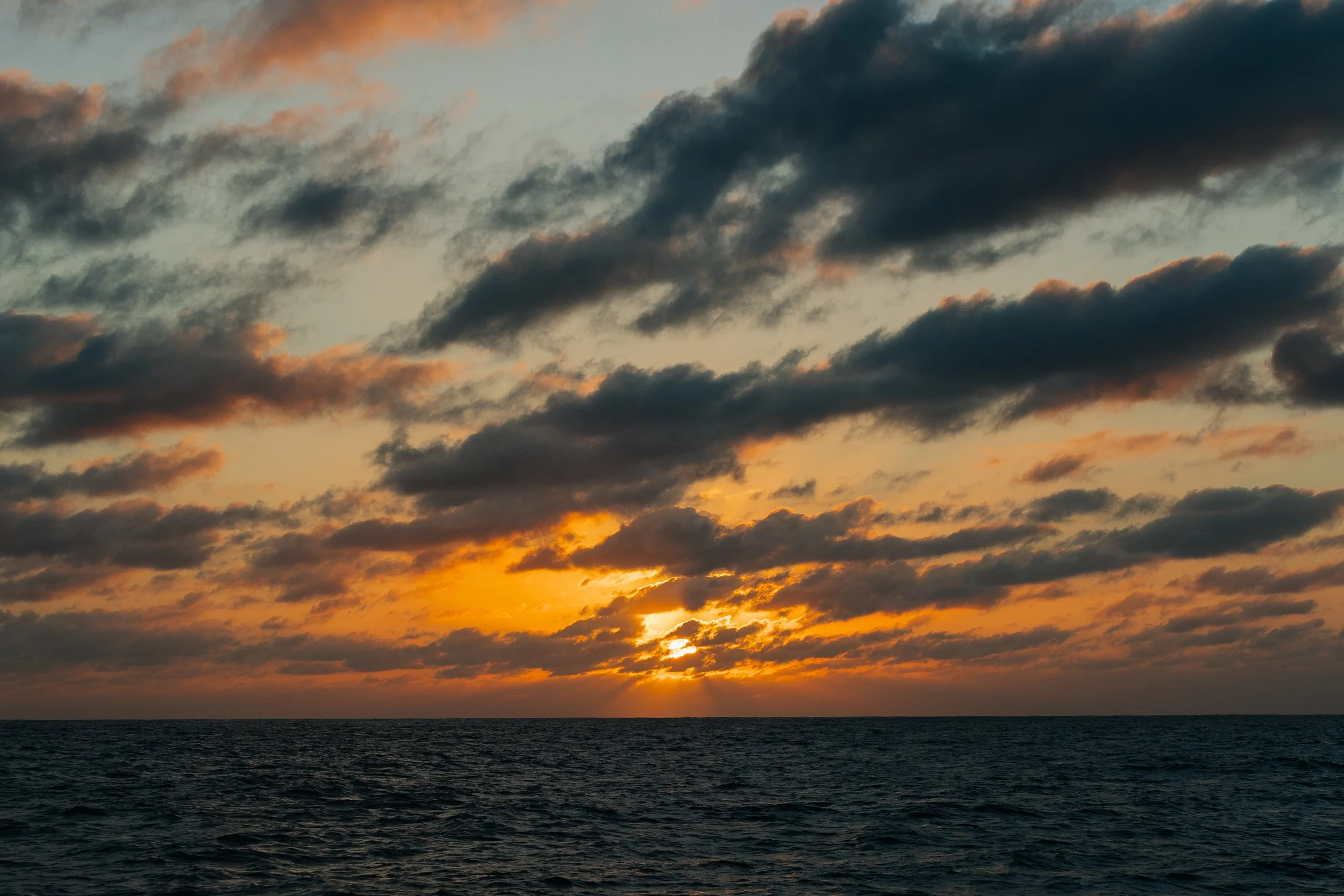
Sunset underway
Crossing the Equator
On March 20, coincidentally the equinox, we approached another invisible but deeply symbolic boundary: the equator. With no wind, the Pacific around us had become almost perfectly glassy, though long ocean swells still gently lifted and lowered Arcturus. We spent the morning preparing for the occasion with the seriousness it deserved, which in our case meant shaving strange designs into hair and beards, assembling ridiculous costumes and preparing equator certificates for everyone aboard.As the GPS counted down toward zero degrees latitude, we changed into bathing suits and prepared to do swim-call at the equator. We slowed the boat to neutral as we approached, doing something that felt quite a bit like a New Years Eve countdown. There was something unnerving and exhilarating about jumping from a boat into an ocean that was several miles deep, with no land anywhere near us. We hooted, hollered and swam around Arcturus in the warm, impossibly blue water before eventually climbing back aboard for our ceremony.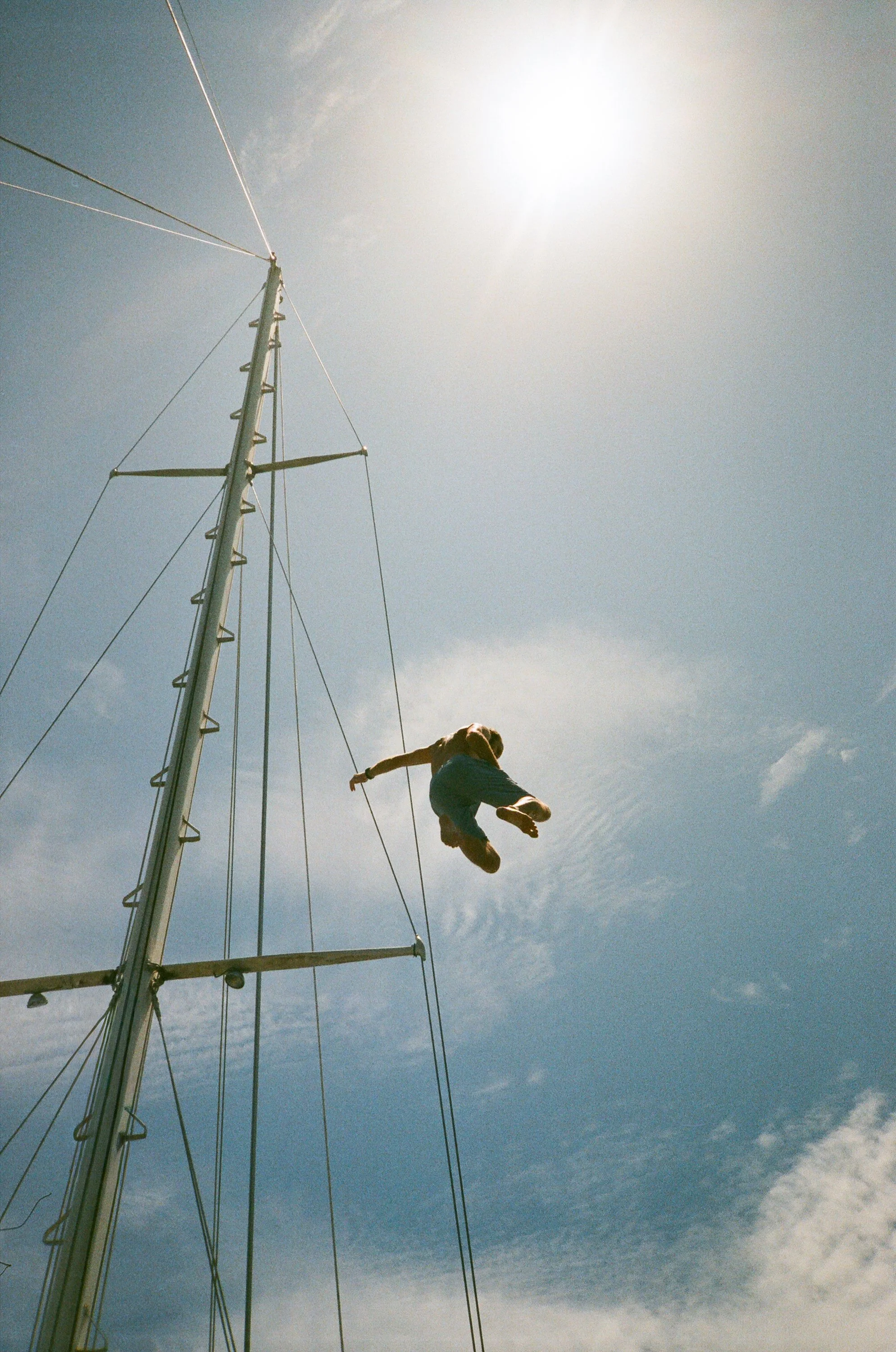
Swimming at the equator
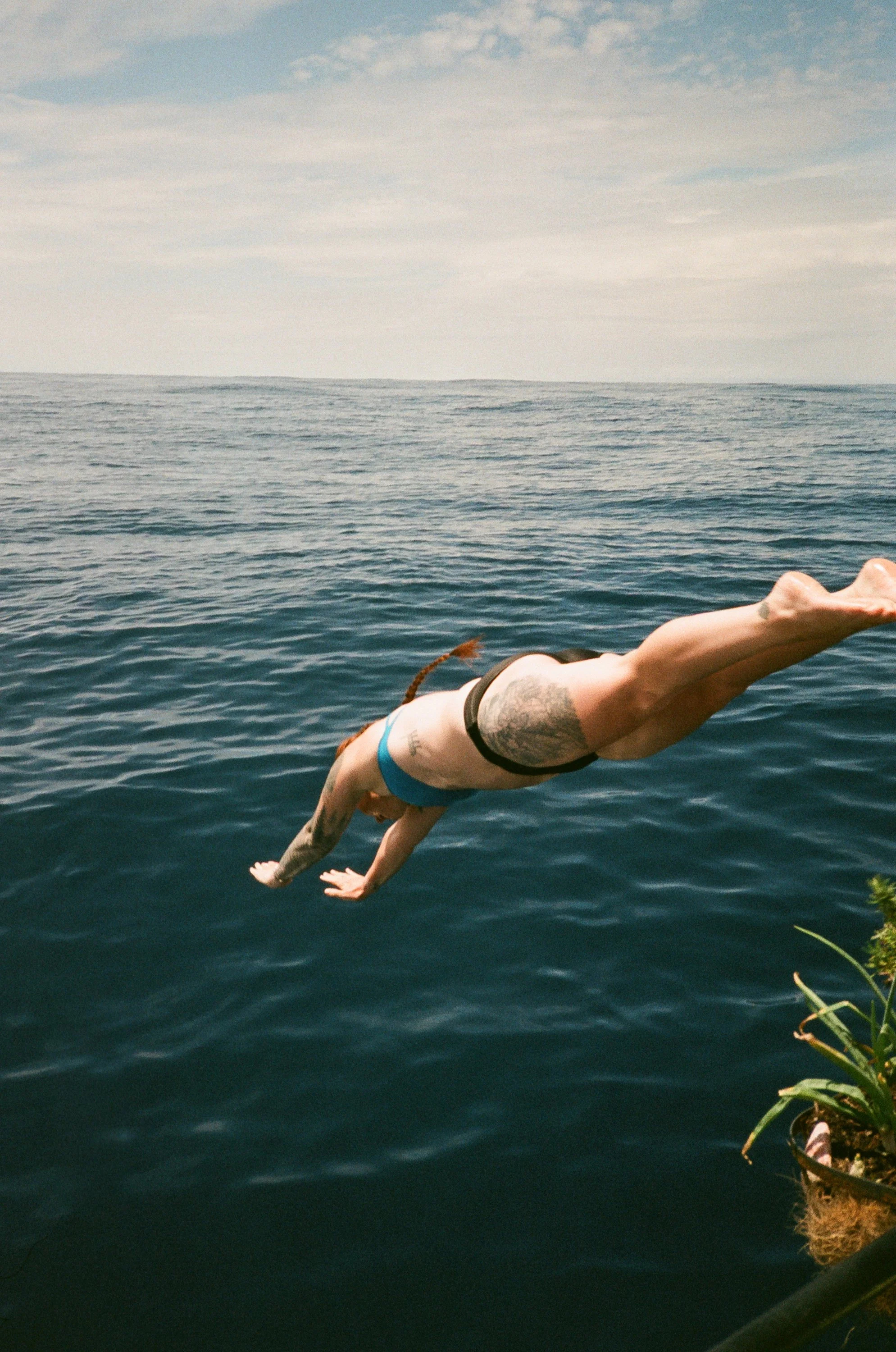
Swimming at the equator
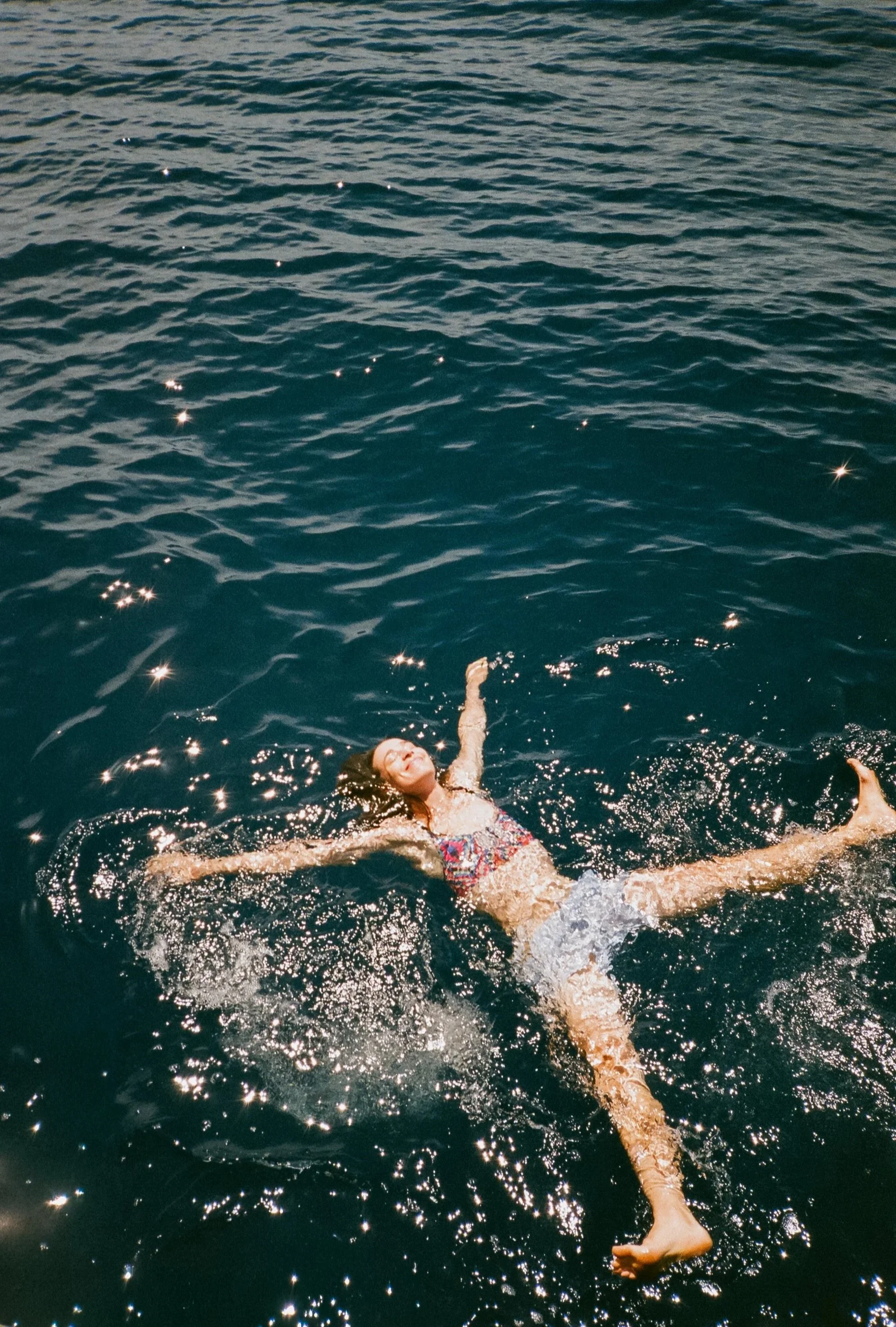
Swimming at the equator
Maritime tradition holds that sailors crossing the equator for the first time graduate from “pollywogs” into “shellbacks,” traditionally through some form of initiation into Neptune’s Court. Our interpretation involved wigs, costumes, handmade certificates, seashell wands and Louie reading the proceedings in an exaggerated pirate accent. After each of us had officially been dubbed a shellback, we concluded with three “hip hip hoorahs” and cast our seashell wands into the Pacific.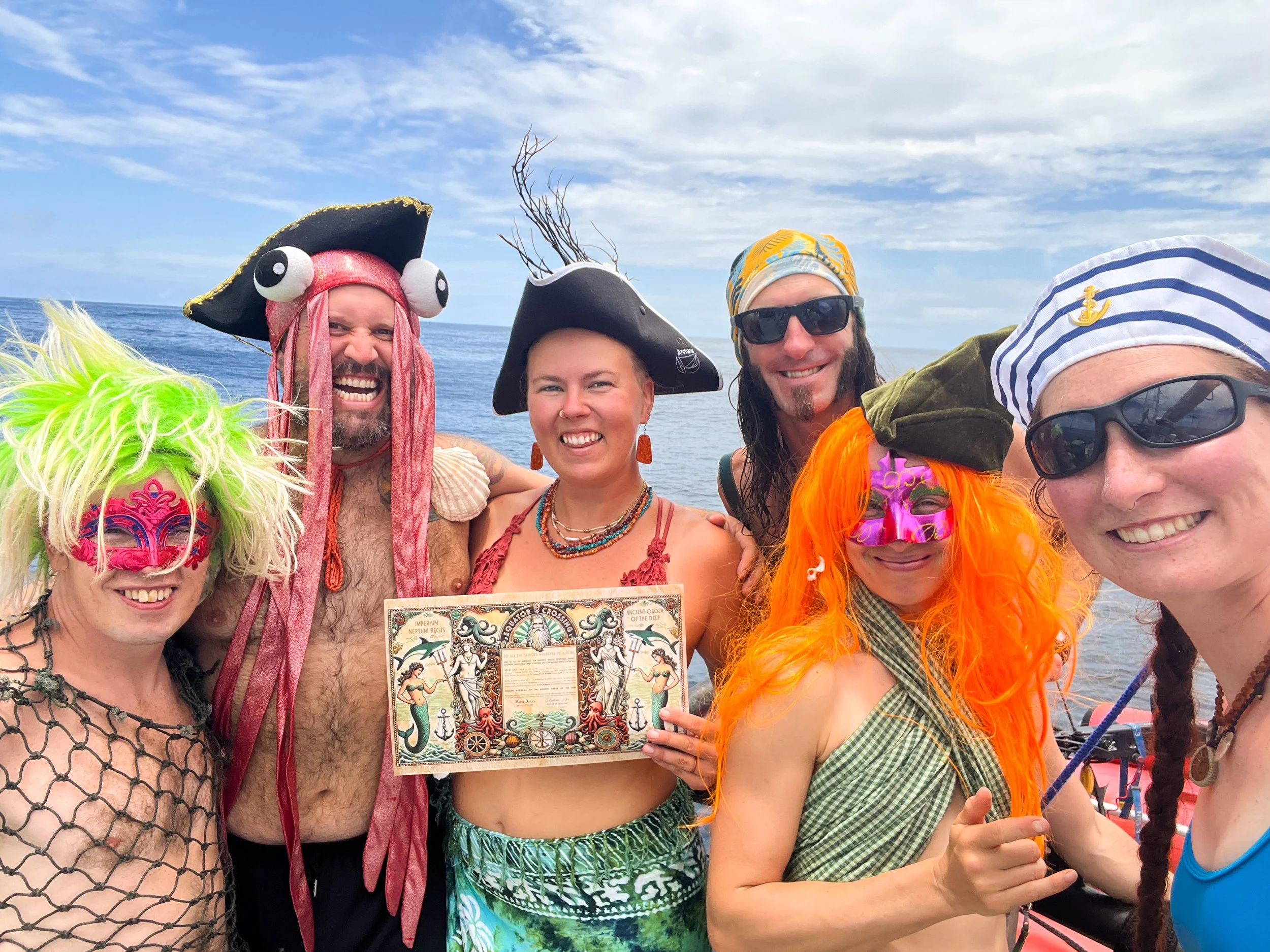
Equator Crossing Ceremony
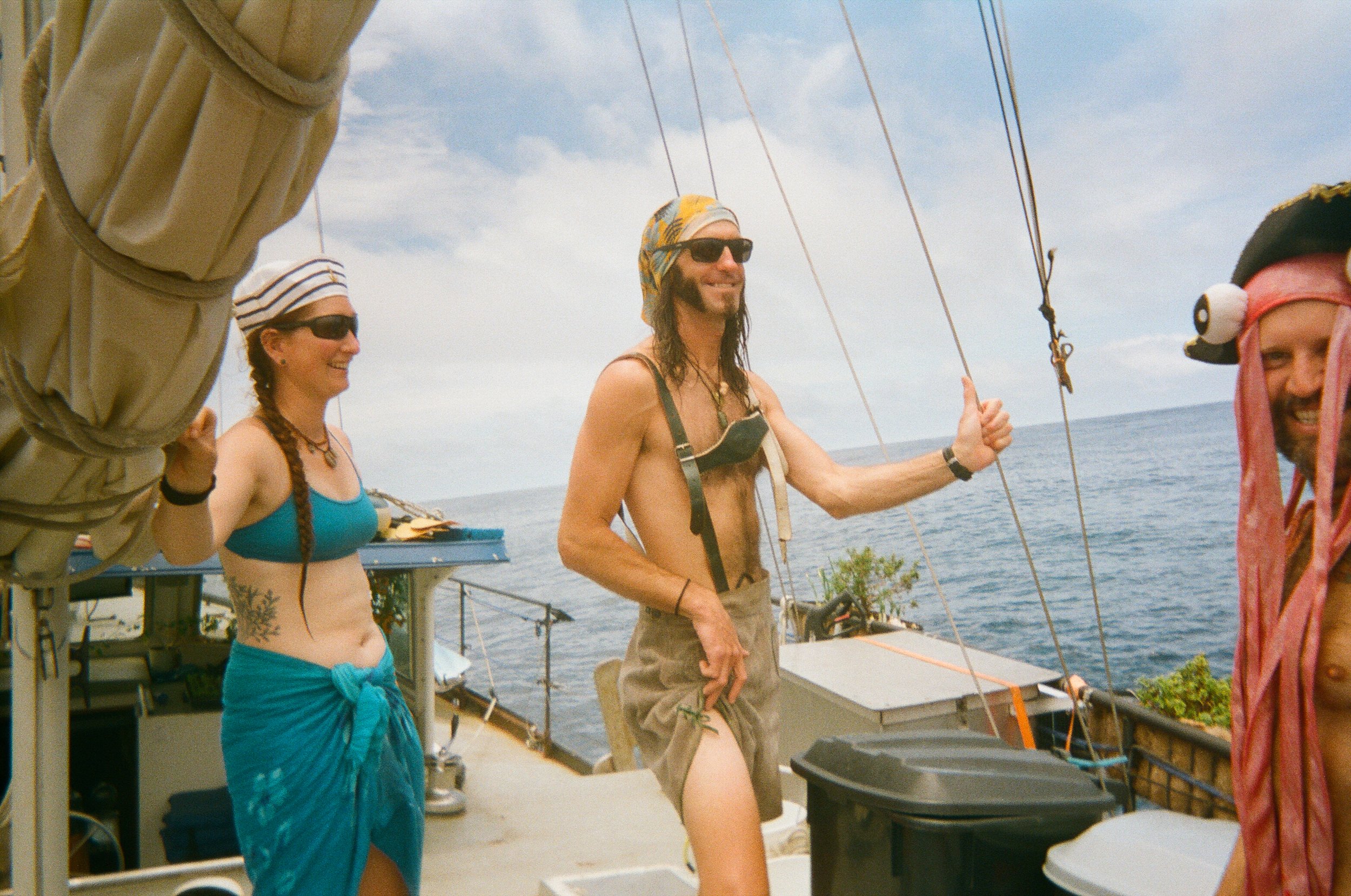
Equator Crossing Ceremony
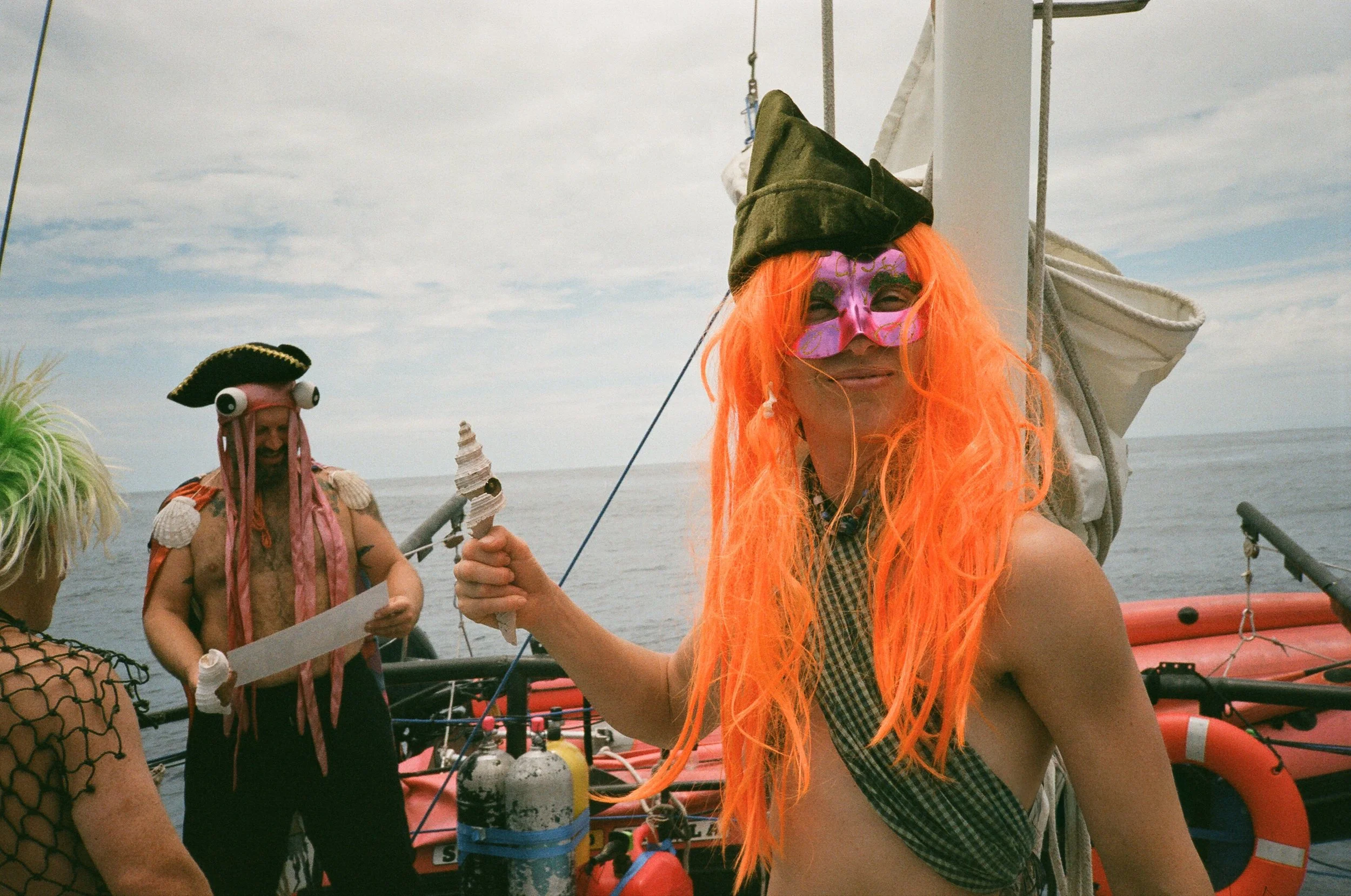
Equator Crossing Ceremony
Then we opened the one bottle of alcohol we had brought for the crossing, a bottle of port wine, and each had a small celebratory drink. For our equator snack, we harvested the tiny yellow tomatoes that had ripened aboard. That night, the sea remained calm enough that the stars appeared reflected across its surface. The Milky Way stretched overhead while bioluminescence shimmered behind us, and for a while it felt difficult to determine where the ocean ended and the sky began. We had entered the Southern Hemisphere.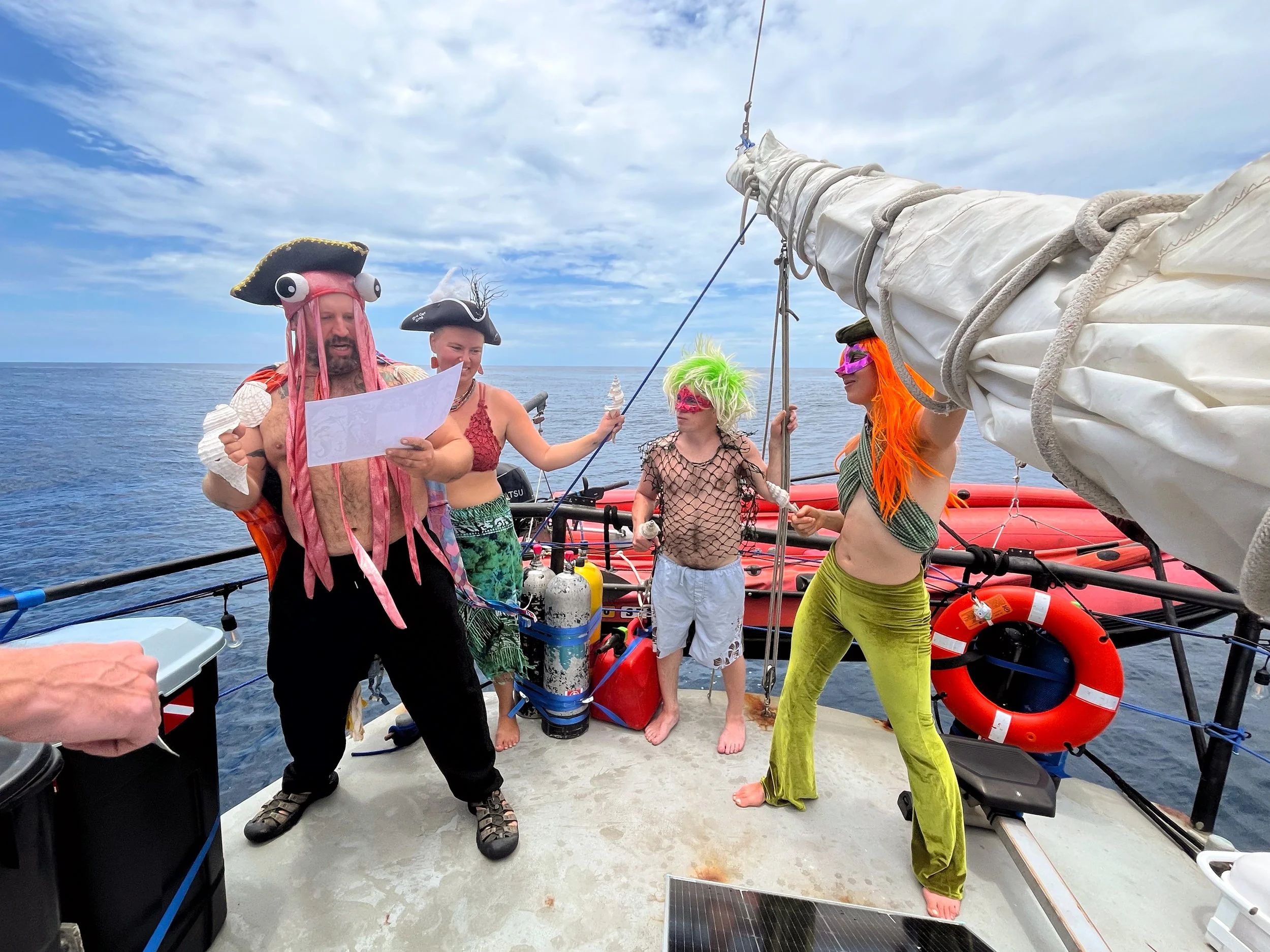
Equator Crossing Ceremony
The Final Miles
By the final few days, time had taken on a strange texture. We had been away from land long enough that our previous life felt almost abstract. Everything existed within the boundaries of the boat: meals, sleep, watches, repairs, books, weather, sail changes, conversation. The days were distinct in the logbook but increasingly difficult to separate in memory.Then, about 200 miles from land, the Pacific decided to offer one final dose of drama. Lightning storms appeared around us during the night. We were motoring directly toward a storm cell with lightning flashing in multiple directions, and although the conditions themselves were manageable, lightning aboard a sailboat is uniquely unnerving. We disconnected as many electrical systems as we reasonably could in case the mast took a strike and continued through the darkness.I had been waiting for an opportunity to write “Survived storm at sea!” in the logbook, mostly because of the line from Captain Ron. This technically counted. Thankfully, no lightning struck the boat.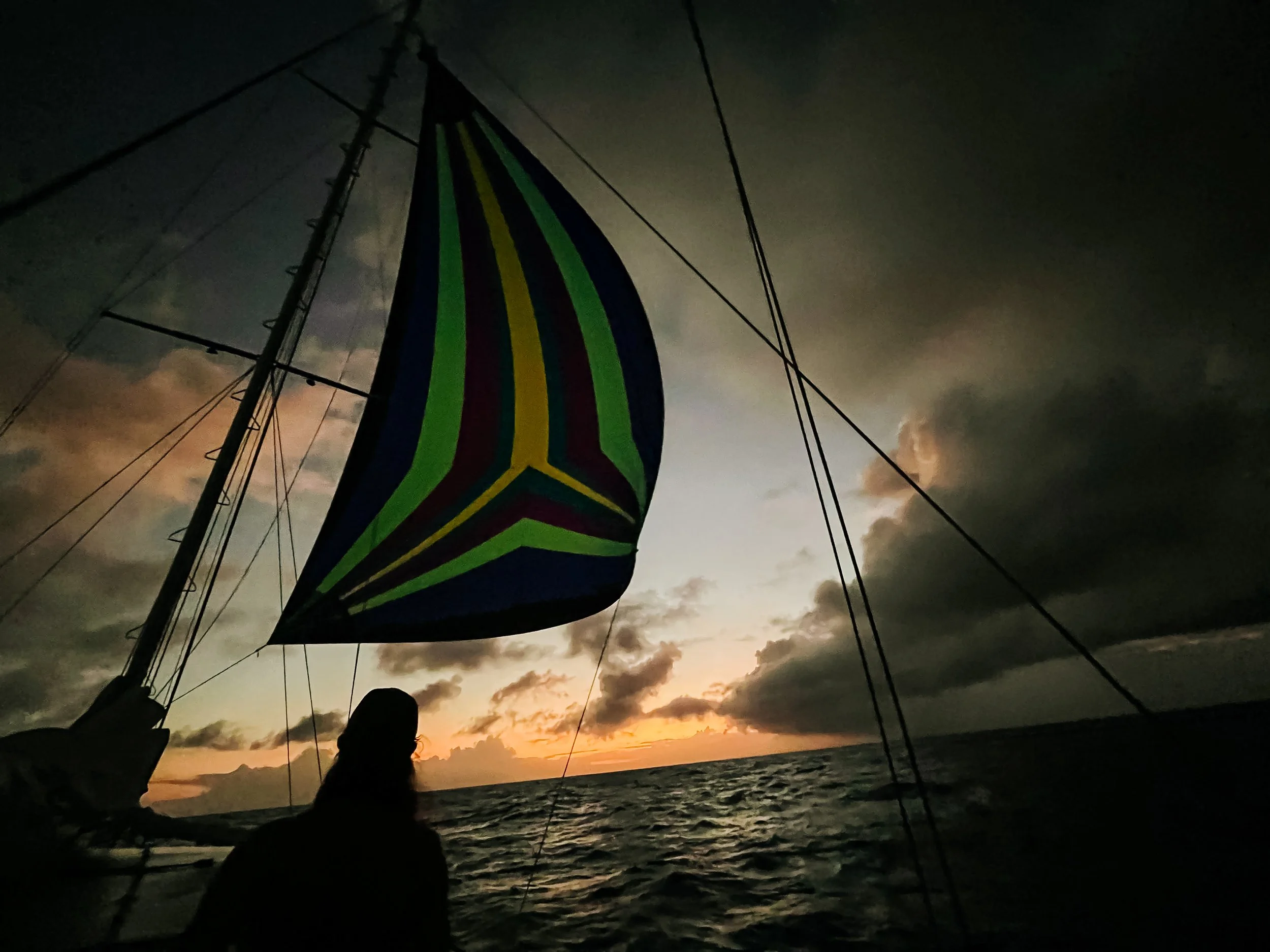
Arcturus under sail
The following day we knew we were close enough that land might appear before sunset. Every unusual cloud on the horizon inspired speculation. We stared beneath them looking for dark shapes, wondering what it would feel like to see mountains again after three weeks surrounded almost entirely by water. I spent the vast majority of my day scanning the horizon with binoculars, back and forth, back and forth.Louie made chilaquiles for breakfast. We continued to watch the horizon. Nothing. The hours passed. Still nothing.That evening brought one of the most beautiful sunsets of the crossing, and shortly afterward a pod of dolphins appeared around the bow. We joked that they were our welcoming committee, swimming out to tell us that we had finally reached French Polynesia. At some point the next day, or maybe even that night, we knew we would be anchored near land again. It was almost difficult to imagine after the long journey we had made.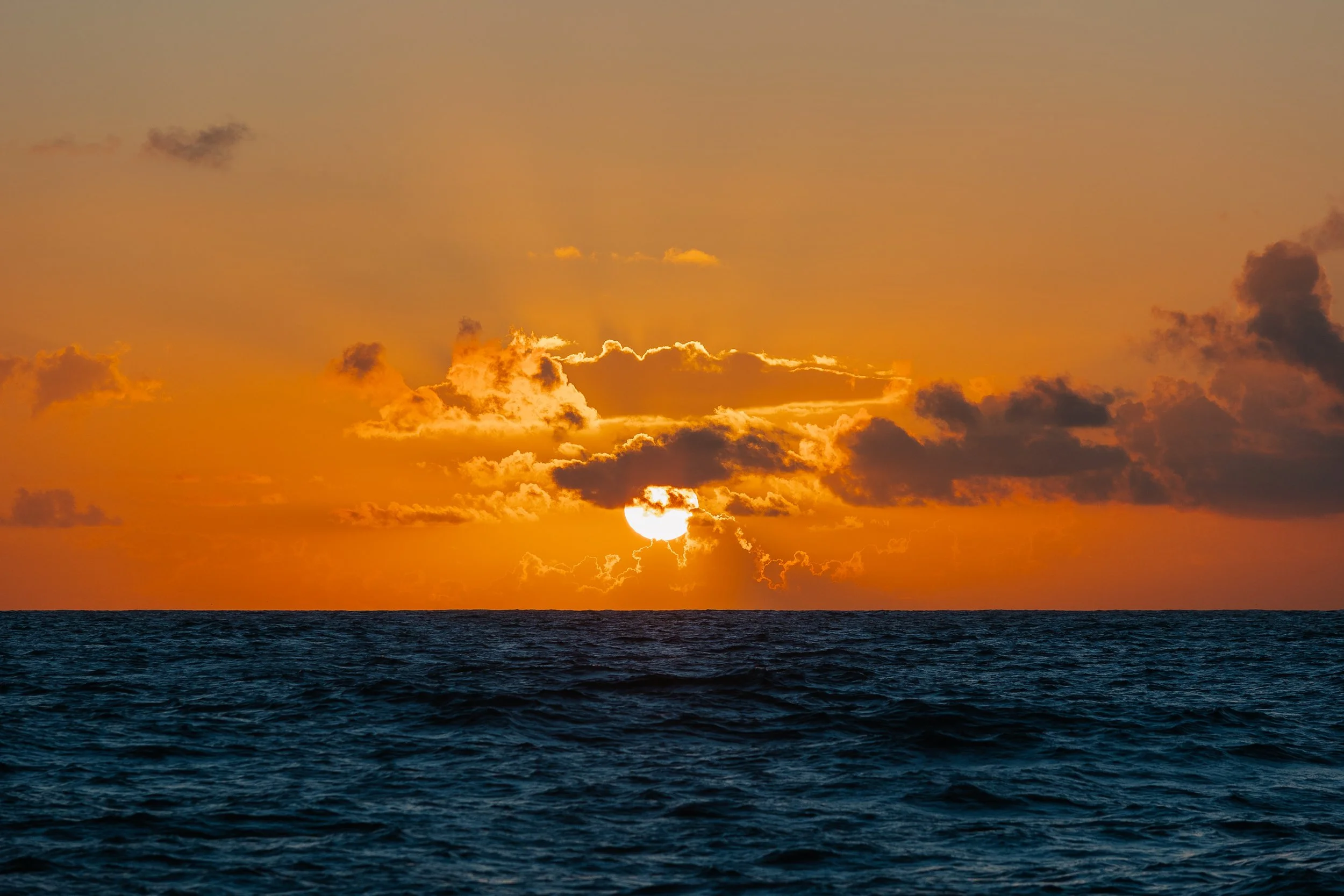
Last sunset underway
Last sunset underway
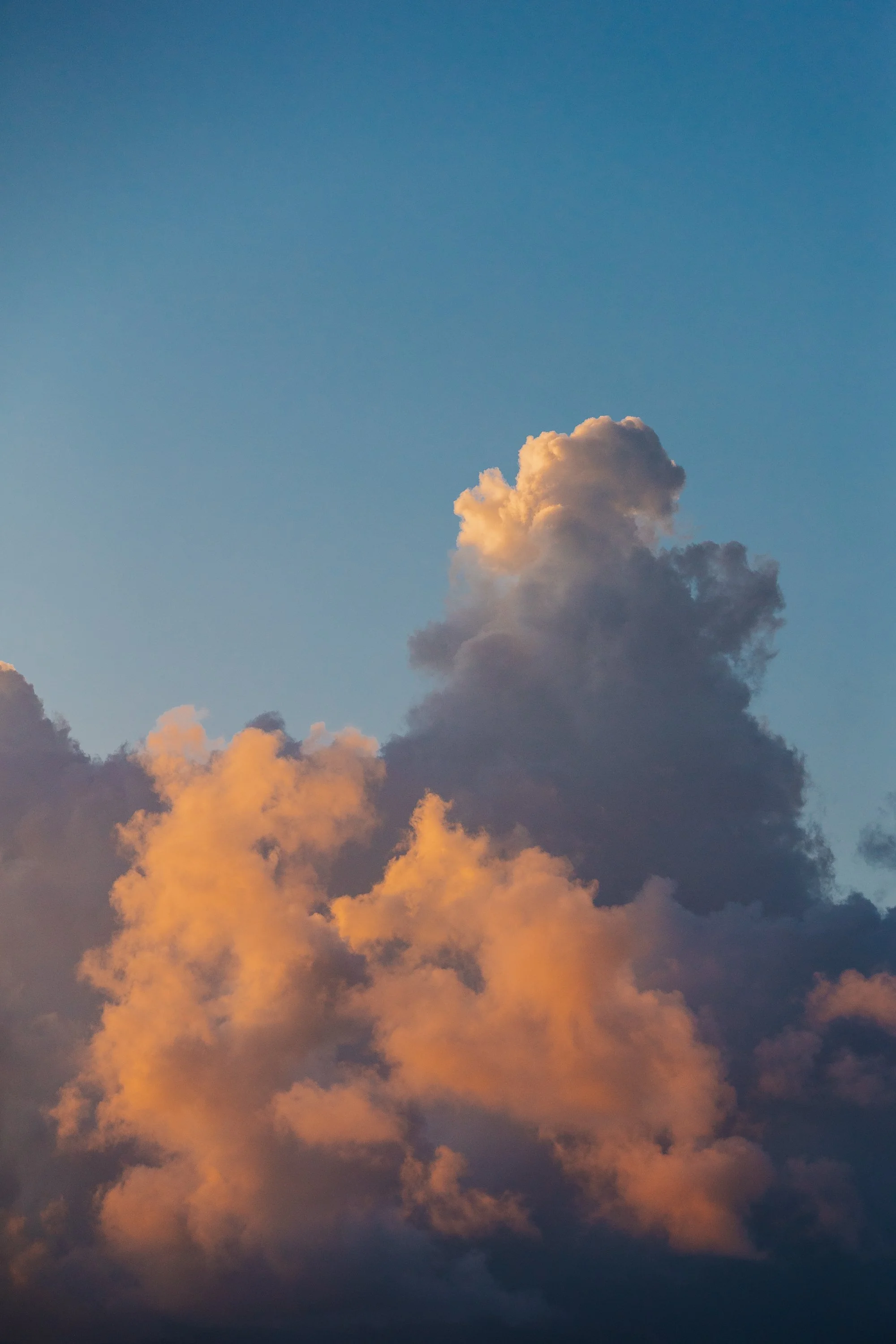
Last sunset underway
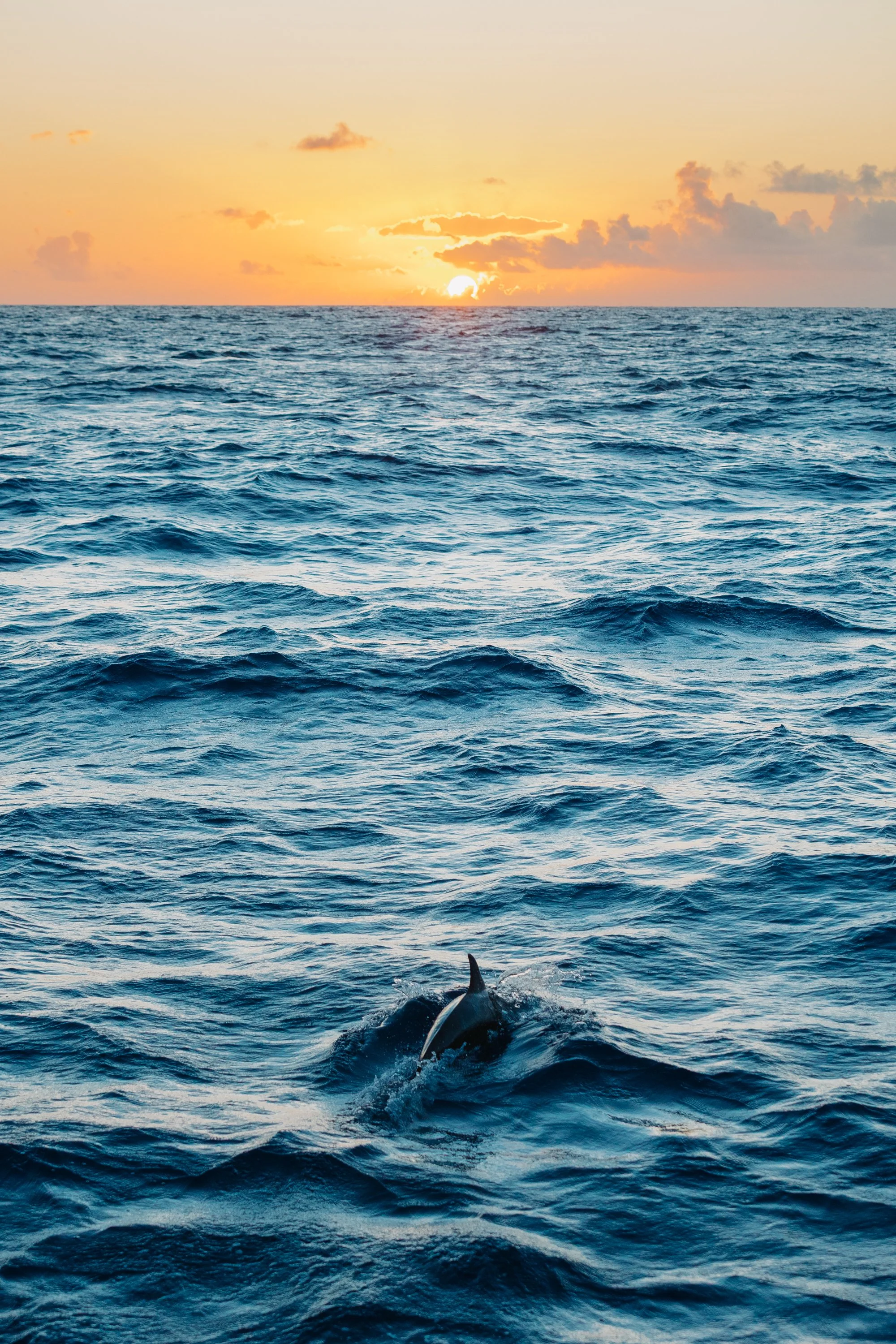
Last sunset underway with dolphins
Land Ho
Shortly before sunrise on our twenty-first day at sea, the words finally came from above: “Land ho!” called Louie. After three weeks of an uninterrupted horizon, Ua Huka appeared in the distance, one of the outlying islands of the Marquesas.There is something profoundly strange about seeing land after spending weeks without it. At first it almost seems artificial, a dark form rising where the mind has become accustomed to seeing nothing. Gradually the shape becomes undeniable: cliffs, ridgelines, mountains, something solid emerging from an otherwise endless world of blue.We had sailed approximately 3,000 nautical miles across the Pacific Ocean. Behind us were three weeks of changing sails, broken halyards, flying fish, midnight watches, tropical squalls, tuna dinners, rain showers, a lunar eclipse, an equator crossing and hundreds upon hundreds of miles during which the horizon had looked almost exactly the same. We had learned how relentlessly a boat moves offshore, how exhausting calm weather can be, how valuable fresh vegetables become, how much food can disappear beneath floorboards, and how quickly six people can become synchronized with the strange noises of a vessel.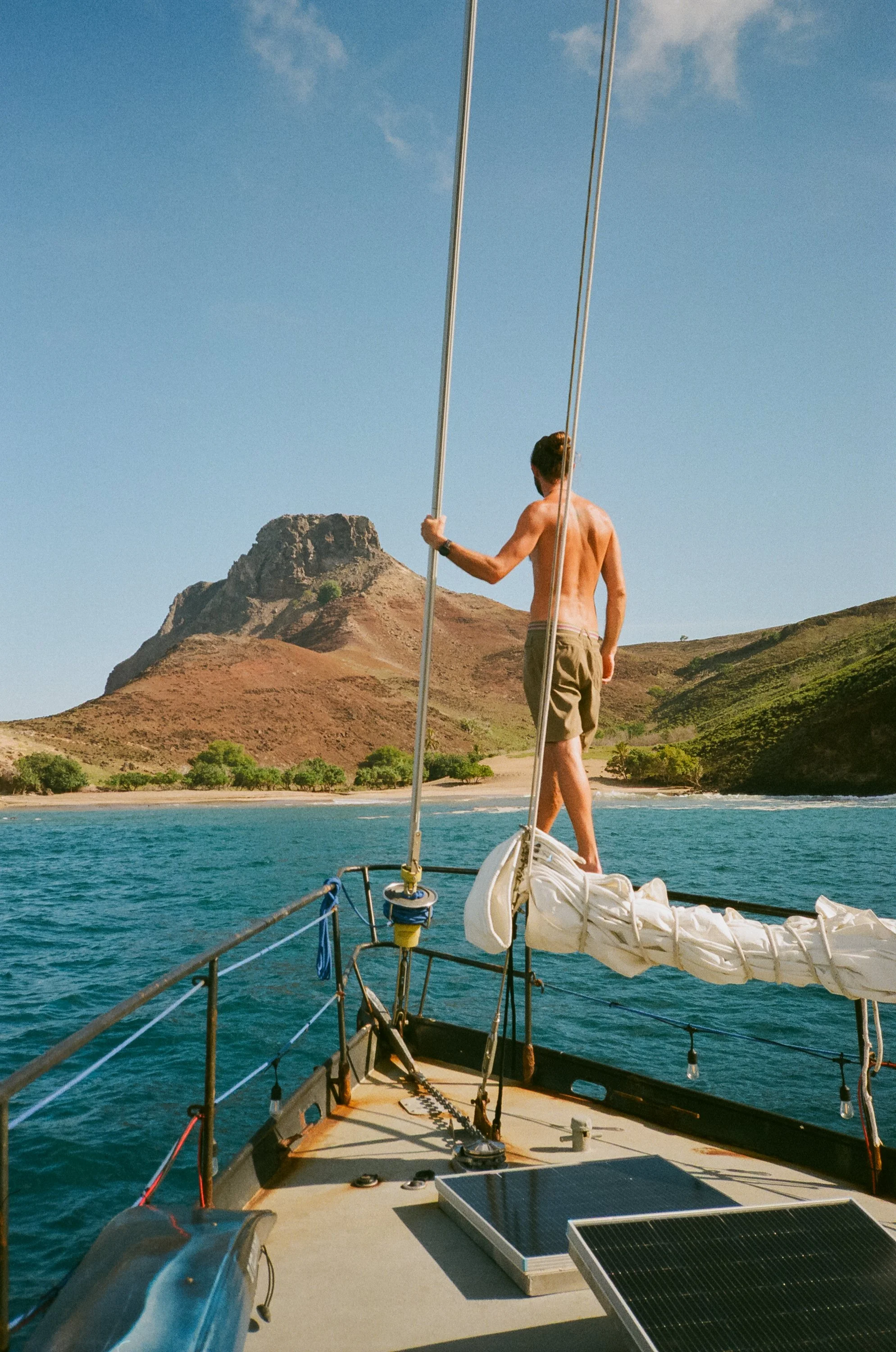
Arrival in the Marquesas, French Polynesia
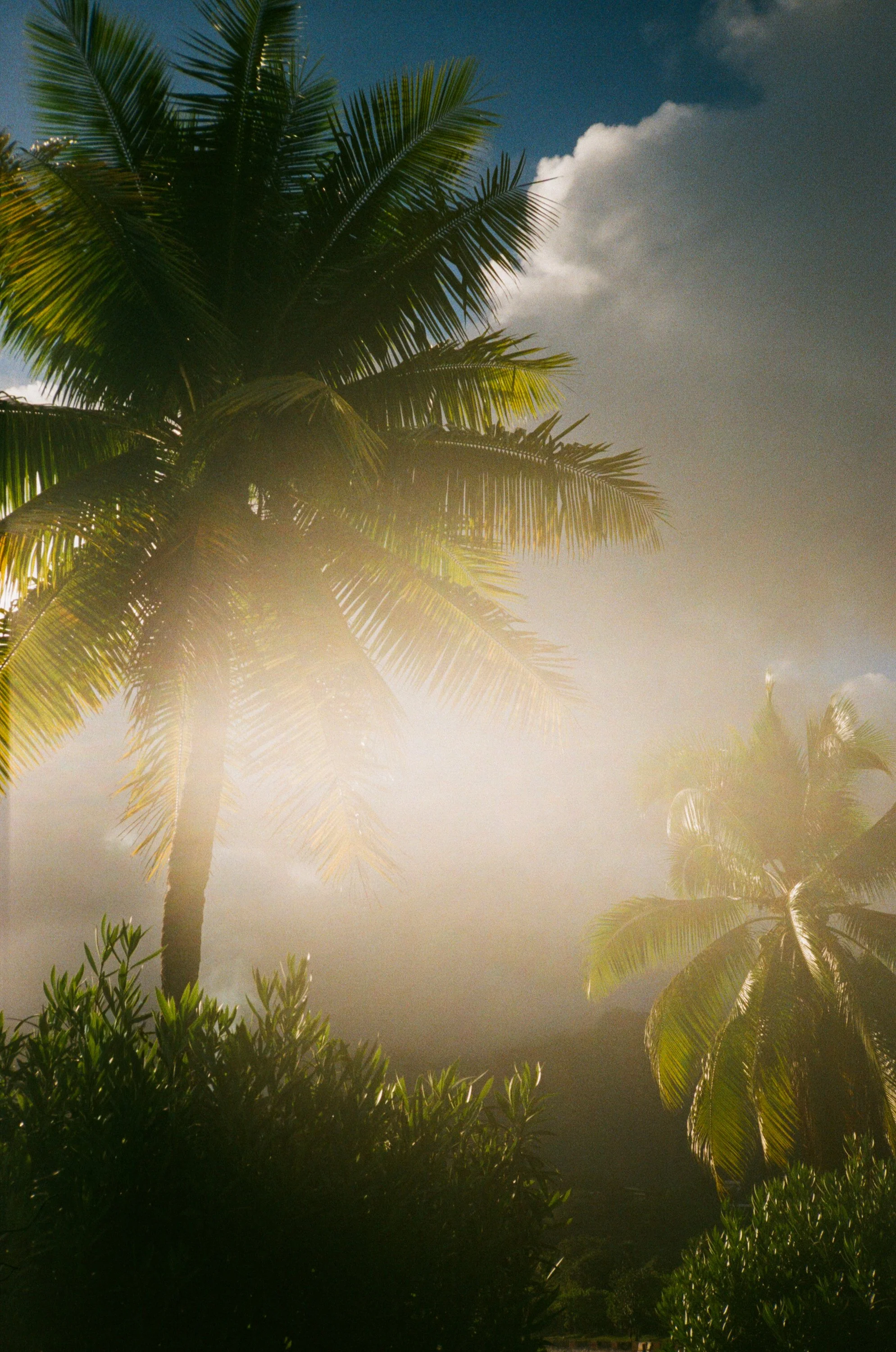
Nuku Hiva, The Marquesas
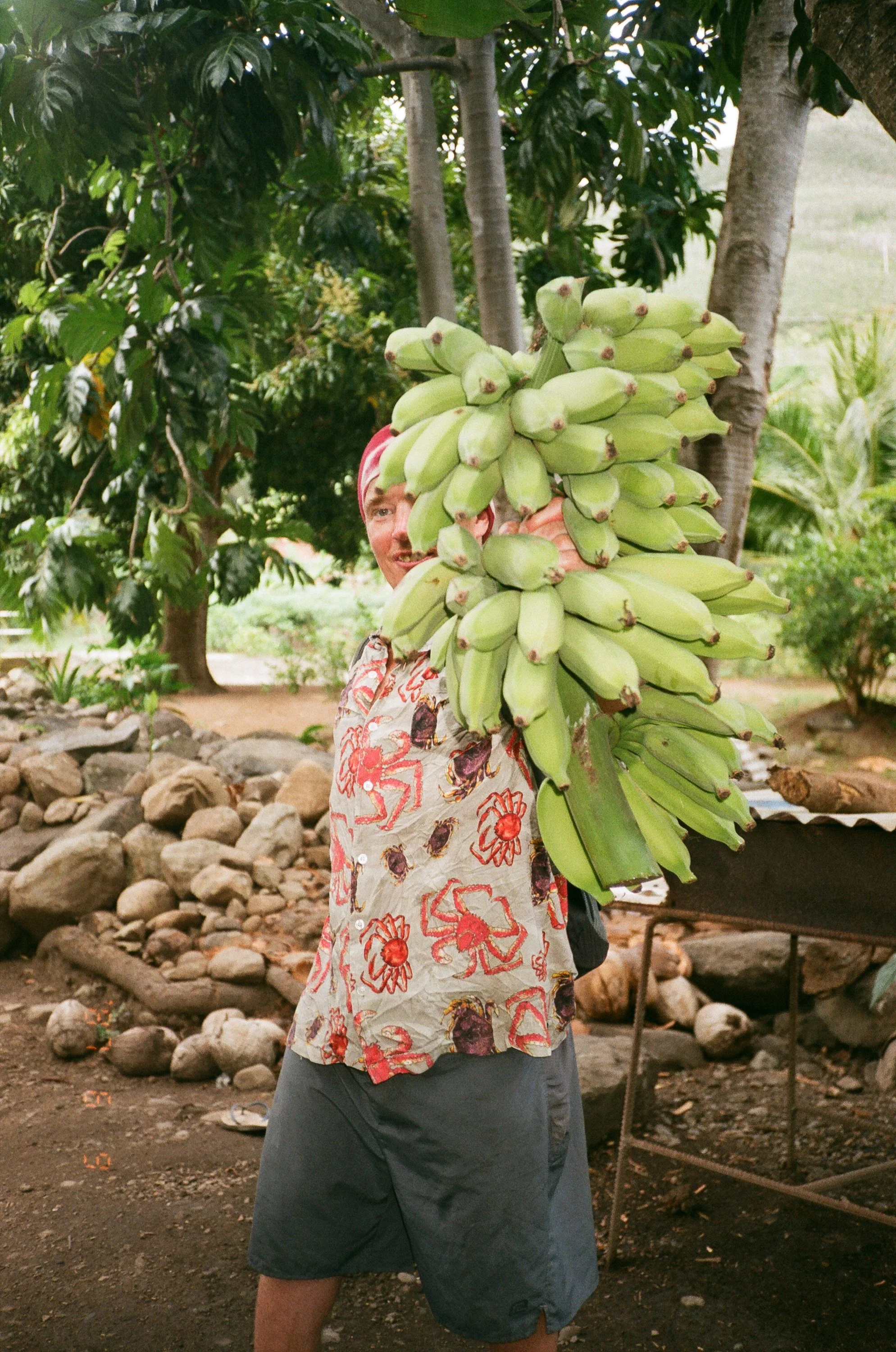
the Marquesas, French Polynesia
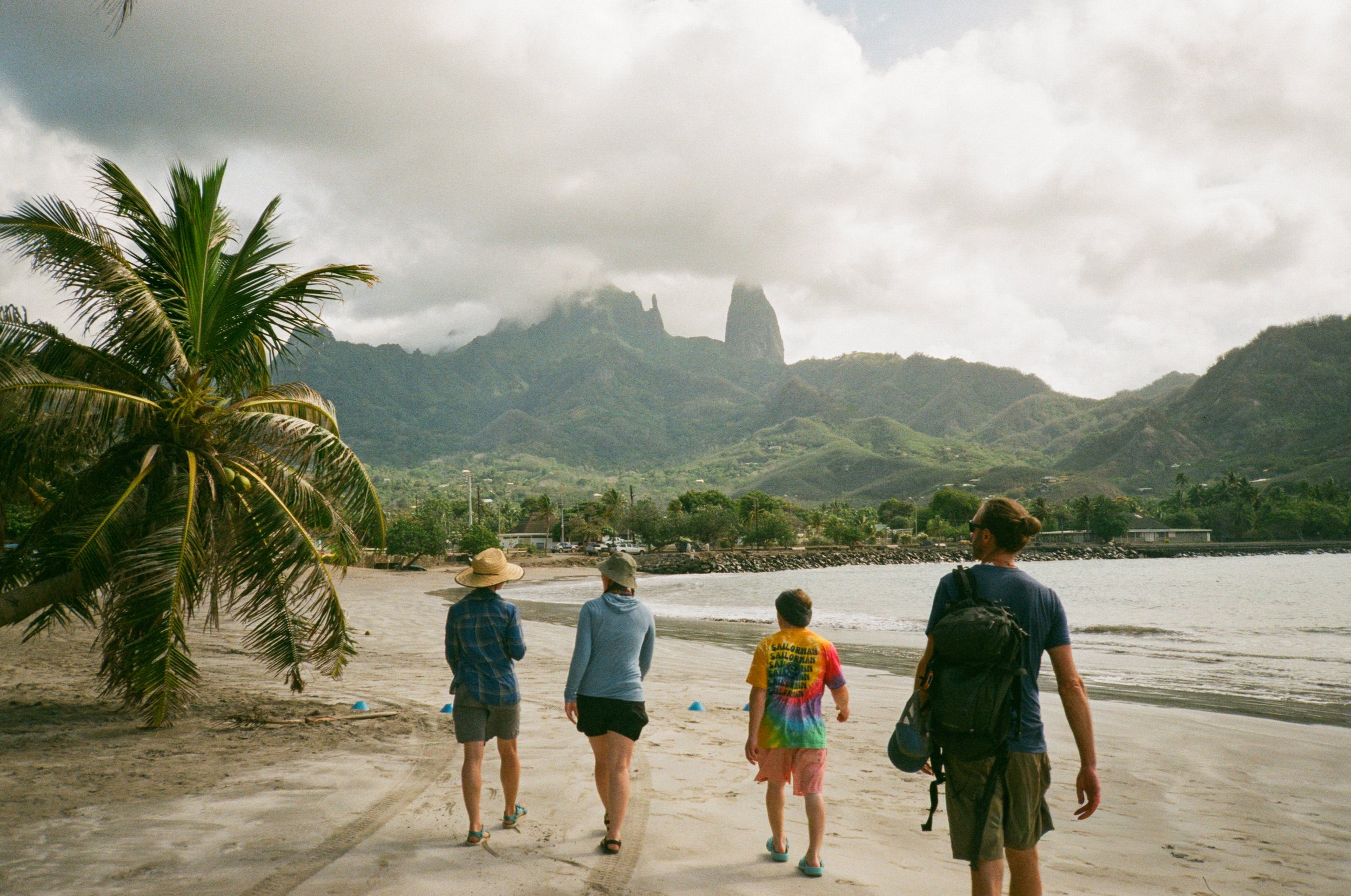
landfall on ua pou, Marquesas, French Polynesia
Perhaps most surprising was how ordinary life had become within something I once considered extraordinary. Before crossing the Pacific, the idea of spending three weeks at sea felt almost incomprehensible, unfathomable. Somewhere along the way, however, the enormity of it faded into routine: We woke up, we checked sails, we made food, we read books, we fixed things, we watched sunsets, and we took turns staring into the darkness while everyone else slept. And then we did it again the next day.There was something deeply humbling in realizing that thousands of sailors have repeated some version of this journey for centuries. Modern technology may have given us GPS, satellite weather forecasts and reliable communication, but the basic scale of the Pacific remains unchanged. It is still enormous, and the boat is still very small in the grand scheme of things. The nearest land can still be thousands of miles away.For twenty-one days, Arcturus became our entire world. Then, almost imperceptibly at first, mountains rose from the horizon. The Marquesas were waiting.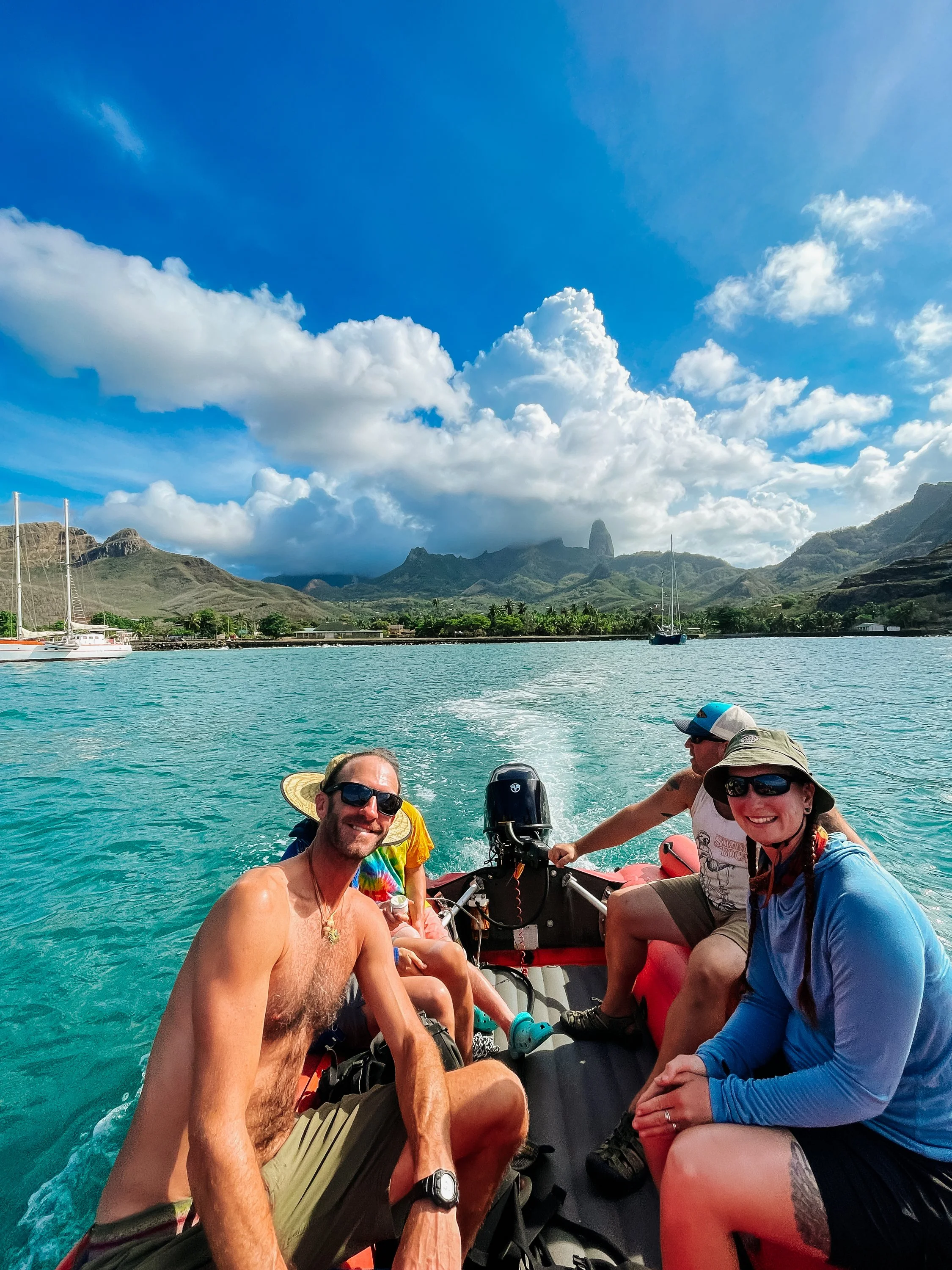
ua pou, Marquesas, French Polynesia
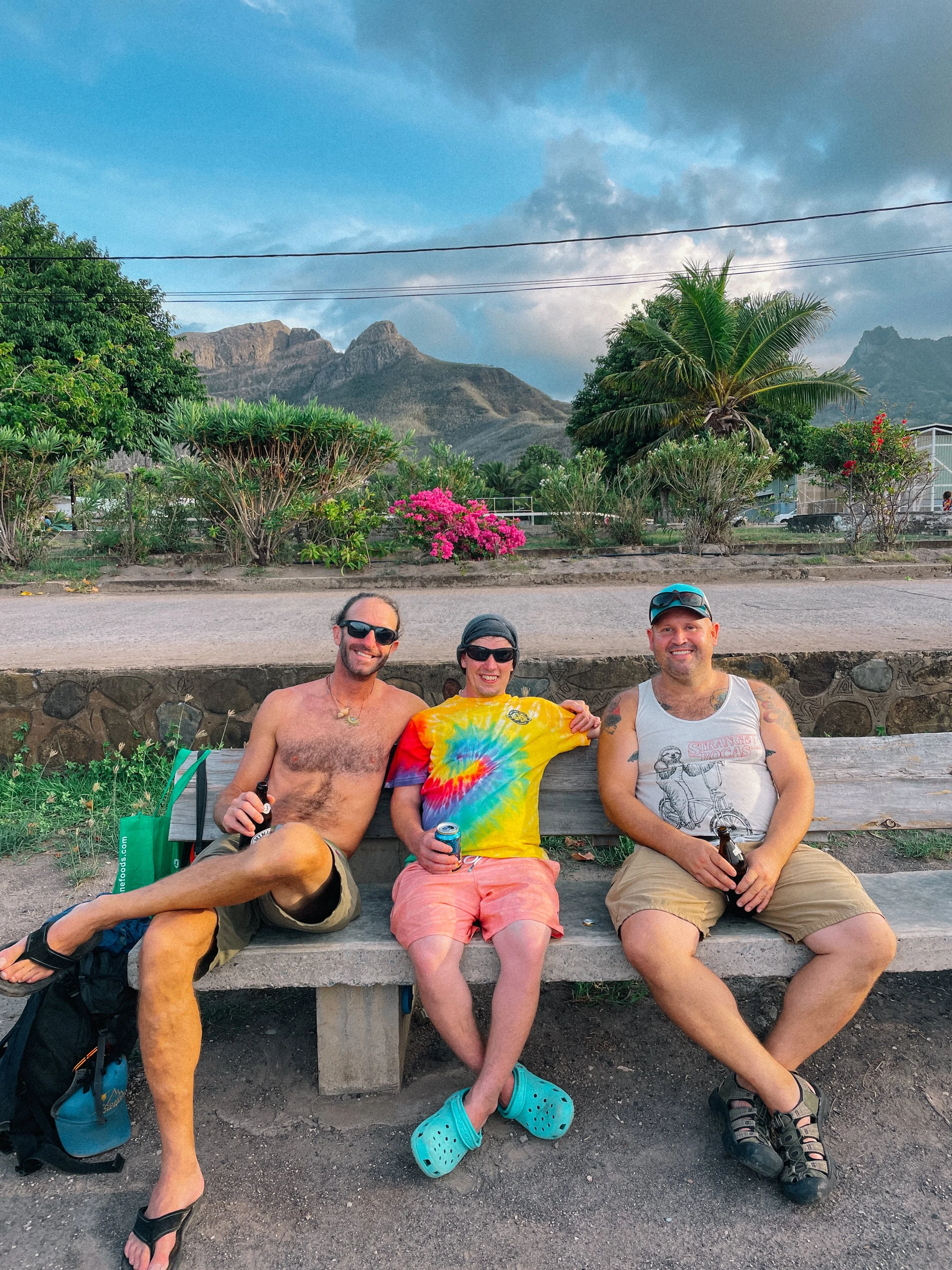
ua pou, Marquesas, French Polynesia
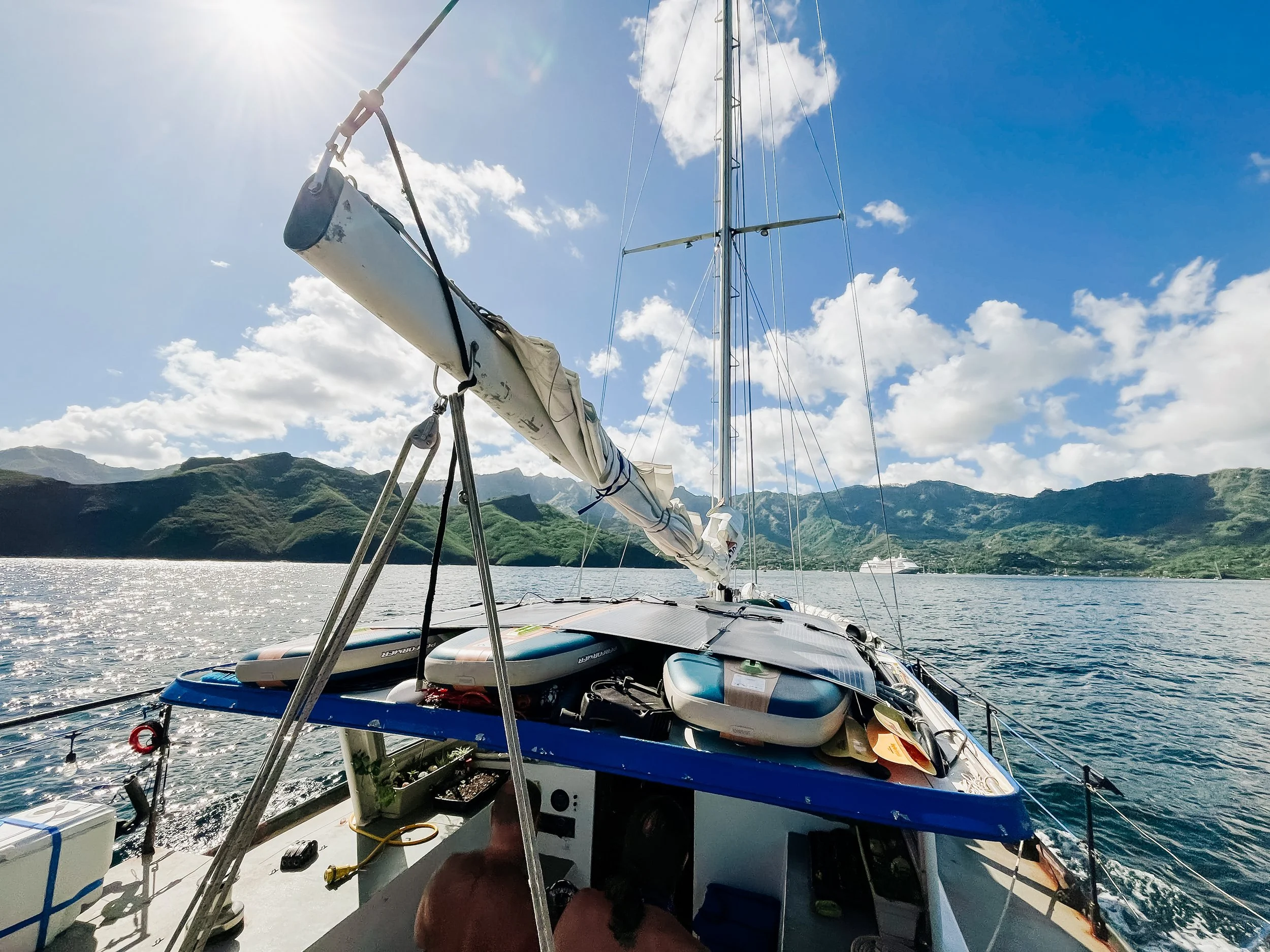
Arcturus sailing into Nuku Hiva, Marquesas, French Polynesia
Adventures, Words & Photos by Lerina Winter & Captain Louis Hoock
Originally Published: Oct 14th, 2026
See Where S/V Arcturus is now on No Foreign Land:


There is a peculiar point in preparing to cross an ocean when something that has existed for months as an idea suddenly becomes very, very real. For us, the Pacific had lingered on the horizon throughout our voyage south from Alaska in fall and winter of 2024/25: first as a line on a chart, then as a distant milestone, then as the next chapter waiting beyond Mexico. By the time we reached Baja California Sur, the Marquesas Islands of French Polynesia sat nearly 3,000 nautical miles across an enormous expanse of open water.